Carrageenan
noun (n.)
Definition
A carrageenan, or carrageenin, belongs to the family of gelling agents or thickeners extracted from certain seaweeds, particularly red algae, and used industrially mainly for the manufacture of dairy products or the creation of carragelose against the common cold.
The red alga Chondrus crispus contains 55% carrageenan:

The Irish moss Chondrus crispus is harvested manually for carrageenan extraction.
Explanations
A carrageenan is therefore a heavily sulfated galactan extracted from red algae. Carrageenans have the property of forming gels.
Origins and generalities
Carrageenan, or more accurately carrageenans (since it is a mixture of several galactose derivatives), fills the gaps in the cellulosic structure of the cell walls of certain algae from several families of Rhodophyceae. Chondrus crispus, the traditional seaweed source of carrageenan, known as "Irish moss", is small and lives in cold waters, being distributed along the North Atlantic coast.
These seaweeds have traditionally been used in Ireland for at least 600 years to prepare dairy desserts, simply by boiling them in milk to release the carrageenans.
In the 18th century, Irish immigrants moved to the United States. They found similar seaweeds that could also be used for the same applications. The name carrageenan comes from the place of Carrageen (Carragheen or Carrigeen), in County Waterford, Ireland. However, the place name probably originates from an old Gaelic phrase for the seaweed, "cosáinín carraige". The name "furcellaran" was formerly used for carrageenan obtained from Furcellaria, but is now obsolete, as it is the same product.
Carrageenan was first obtained in pure form in 1844, by alkaline extraction and alcohol precipitation, a method still used among others. Industrial production began in the United States in the 1930s and expanded during World War II due to the lack of agar">agar supplies from Japan. In the European Union, it corresponds to the food additive code E407 on food product packaging.
Types
There are three major types of carrageenan, each designated by a Greek letter: kappa, lambda, and iota.
Chondrus crispus produces a carrageenan that is a mixture of kappa and iota carrageenans. Carrageenans are also obtained by harvesting the seaweed Furcellaria fastigiata along the European coasts of the North Atlantic, Phyllophora nervosa in the Black sea, seaweeds of the genus Hypnea along the coasts of Brazil, and Gigartina in Argentina and Peru.
These seaweeds are large. Since the 1980s, a very significant share of global carrageenan production has been obtained by farming seaweeds of the species Kappaphycus alvarezii and Eucheuma denticulatum in the coastal areas of the Philippines and Indonesia. These seaweeds are harvested every three months.
The seaweed Eucheuma spinosum produces a carrageenan in which iota-carrageenan predominates, as do E. isiforme and E. uncinatum. The seaweeds Eucheuma cottonii, E. striatum, E. procrusteanum, and E. speciosum produce a carrageenan in which kappa-carrageenan predominates.
✅ In rhodophytes of the order Gigartinales, several types of carrageenans differ in their composition and conformation, resulting in a wide range of rheological and functional properties. Carrageenans are used in various commercial applications as gelling, thickening, and stabilizing agents, particularly in food products such as frozen desserts, chocolate milk, cottage cheese, whipped cream, instant products, yogurt, jellies, pet foods, and sauces. Beyond these functions, carrageenans are used in pharmaceutical formulations, cosmetics, and industrial applications such as mining.
Carrageenan is extracted from this seaweed in two ways. In native extraction, the seaweeds are processed into an aqueous solution and the residue is filtered out, leaving nearly pure carrageenan. The modified alkaline method is less expensive and easier. The seaweeds are mixed in an alkaline solution, leaving a mixture of carrageenan and cellulose that can be sold as semi-refined carrageenan.
Structure
Carrageenans are formed by galactose and/or anhydrogalactose units, sulfated or non-sulfated, linked by alternating alpha 1–3 and beta 1–4 bonds. The molecular weight is normally 300,000 to 400,000. Chain length is important because below a molecular weight of 100,000, carrageenan is not useful as a gelling agent. Depending on the degree of sulfation, the positions of the sulfate groups, and the presence of anhydrogalactose groups, several types of carrageenan exist, with distinctly different hydrocolloid properties. The higher the proportion of sulfate groups, the greater the solubility, and the higher the proportion of anhydrogalactose groups, the lower the solubility. Although there are about a dozen types, the most important are kappa, iota, and lambda carrageenans.
Kappa-carrageenin is formed by alternating units of galactose with a sulfate group on carbon 4 and unsulfated anhydrogalactose.
Iota-carrageenan consists of alternating units of galactose with a sulfate group on carbon 4 and anhydrogalactose with a sulfate group on carbon 2.
Lambda-carrageenin consists of alternating units of galactose with a sulfate group on carbon 2 and anhydrogalactose with two sulfate groups, one on carbon 2 and the other on carbon 6.
Both kappa-carrageenan and iota-carrageenan are capable of forming gels. At high temperatures, the chains are uncoiled and randomly arranged. As the temperature decreases, the polysaccharide chains associate through hydrogen bonds to form double helices, leaving the sulfate groups and anhydrogalactose bridges on the outside. These interactions are generally not sufficient to form a gel, because the charges of the sulfate groups cause repulsion between the helices. Depending on the presence of sulfate-neutralizing ions and the type of carrageenan, the helices can aggregate once formed, first producing gelation, in which the disordered zones retain most of the water, and eventually gel compaction and syneresis.
Properties
Carrageenans are soluble when heated, at temperatures around 80 °C (176 °F), and remain in solution upon cooling if they are in the sodium salt form. Carrageenan gels are thermally reversible. At neutral pH, heating hardly affects them, although the chains are broken by hydrolysis when heated in an acidic medium, particularly below pH 3.5.
Rheological properties, and especially the ability to form gels, vary greatly depending on the type of carrageenan. Lambda-carrageenan, which has the highest sulfate content and consequently the greatest negative charge, cannot form gels on its own. It forms pseudoplastic solutions with non-Newtonian viscosity behavior. Viscosity depends on the specific type, but is relatively unaffected by the presence of salts.
Kappa-carrageenan, on the contrary, forms rigid, brittle gels similar to those of agar in the presence of potassium ions. They are more opaque than agar, though transparency increases in the presence of sugar. These gels are very prone to syneresis, which increases with potassium concentration, and do not withstand freeze-thaw cycles, with syneresis being even greater in the presence of calcium ions. The properties of these gels are greatly improved if formed in the presence of locust bean gum, when the kappa-carrageenan helices associate with the unbranched regions of the locust bean gum. Konjac gum also acts in the same way, whereas other gums do not. Kappa-carrageenan is used at concentrations between 0.02% and 2%.
Iota-carrageenan forms elastic gels in the presence of calcium ions, without any tendency toward syneresis and with freeze-thaw stability. This type of carrageenan improves the properties of starch gels, preventing syneresis and yielding much stronger gels. It also makes it possible to produce a "béchamel sauce" that solidifies when cold, can be easily cut into pieces of the desired size and shape, and melts when heated.
Controversy
Carrageenan E407 (or carrageenin) has been the subject of numerous long-term dietary studies under defined regulatory conditions on the path to its current global regulatory status. While some indicate that carrageenan passes safely through the intestinal tracts of laboratory rats when used as a food ingredient, other animal studies have observed conditions such as colitis and ulcers, allergy induction, growth retardation, reduced absorption of essential minerals, and tumor promotion.
In the European Union, E407 has not been permitted as an additive in infant formula for babies under three and a half months of age since 1992. In the conclusions of the committee that reviewed it, it was stated that, although there was no direct evidence of harm, further studies were needed due to the special protection required for this group, since it could not be undeniably ruled out that carrageenan might affect the immune system of infants. In 2003, the European Union Scientific Committee on Food reaffirmed these conclusions due to the lack of sufficient studies, permitting its use in infants and adults from 16 weeks of age.
The peak of the controversy on this topic occurred in 2001, following the review by Dr. Joanne K. Tobacman of the scientific literature related to carrageenan safety, concluding that both degraded and undegraded forms of carrageenin are associated with the occurrence of abnormal ulcerations and tissue masses (neoplasms).
Since then, no definitive consensus has been reached, although carrageenans are permitted in the United States and Europe as unrestricted food additives (with the exception of the aforementioned products for infants under 14 weeks of age), and a few studies claim the opposite, namely that carrageenans boost the immune system and inhibit tumor formation. In any case, the debate over this substance continues today.
Synonyms, antonyms
Spanish translation: carragenano
2 synonyms (similar meaning) for "carrageenan":
0 antonyms (opposite meaning).
Related words and expressions to CARRAGEENAN are directly connected by general or specific meaning.
The word CARRAGEENAN is listed on page 1 of words starting with C in the dictionary glossary.
Related to "carrageenan"
agar

Agar is a linear polymer, composed of galactose, extracted from certain phycocolloid red algae (Rhodophyta).
agar
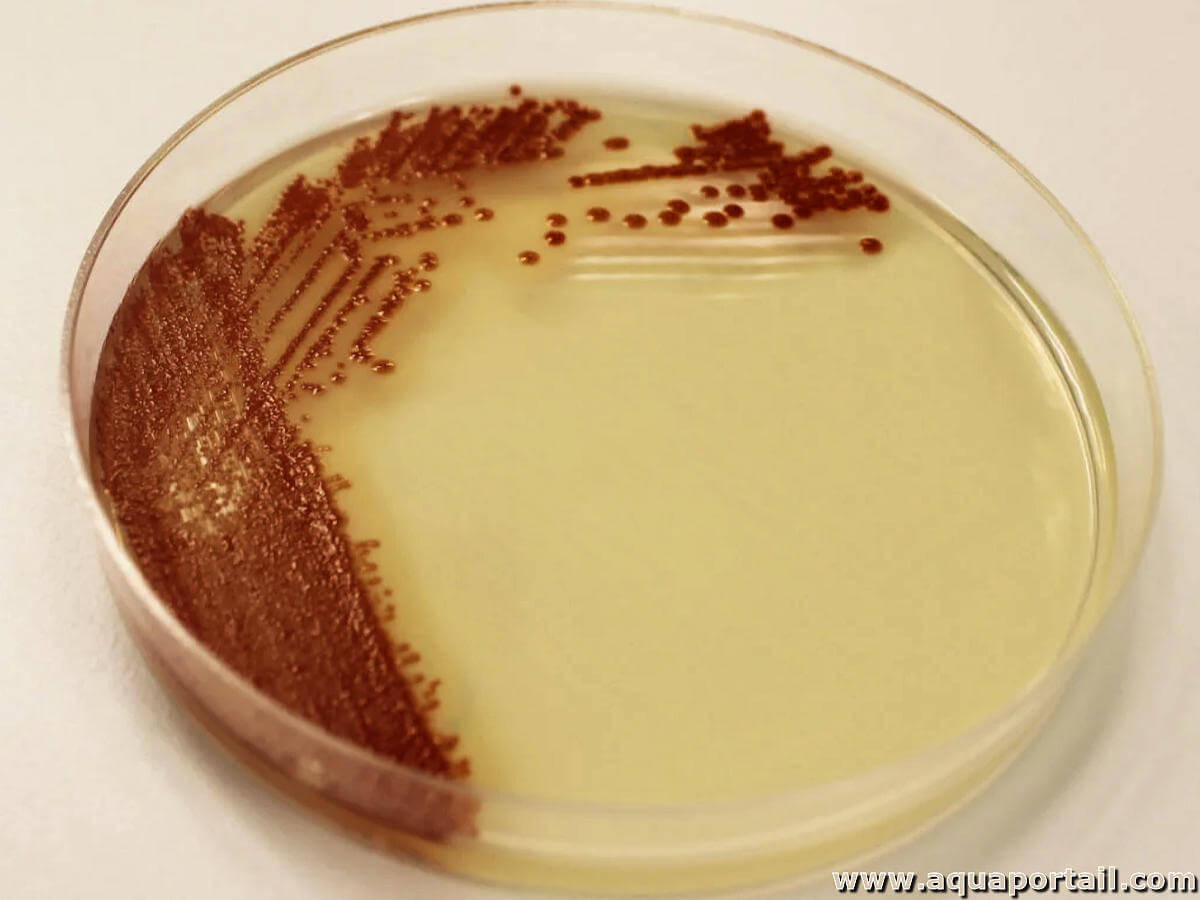
Agar is a complex polysaccharide extracted from marine red algae and used as a gelling agent in culture media.
agaropectin
An agaropectin is a molecule of the agar family, very similar in composition to agarose, yet more heavily sulfated and non-gelling.
agarose
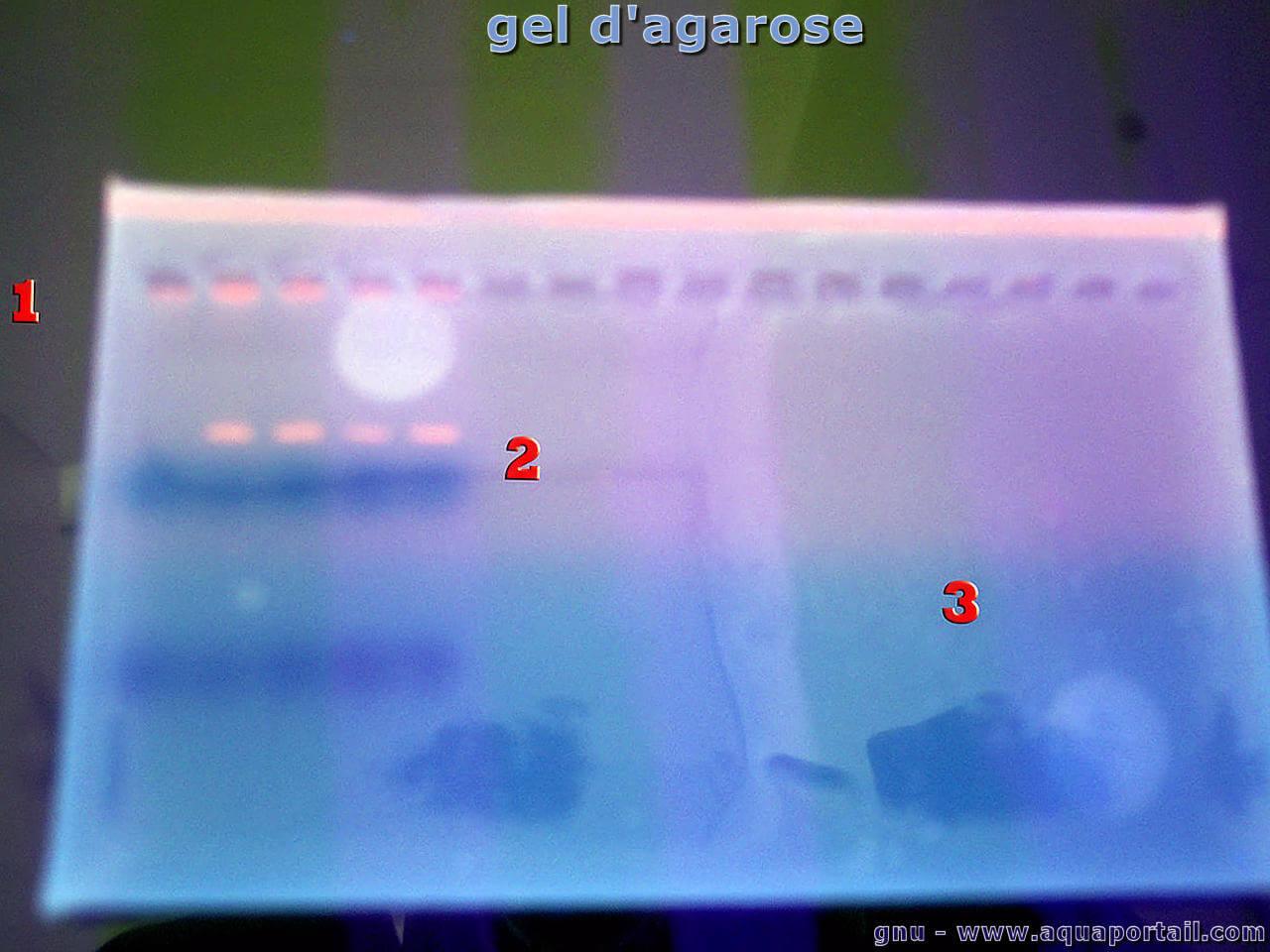
Agarose is a polymer of the agar family with very high gelling power, very low sulfate content, and composed of the regular repetition of a disaccharide unit.
