Tuber
noun (n.)
Definition
In botany, a tuber is a vegetative outgrowth of a root or stem (aerial or underground) where a plant's nutrient reserves accumulate. A tuber is a massive organ serving as a storage and reserve organ, with a swollen portion of a stem or root that stores carbohydrates and can give rise to a new individual through vegetative propagation. See tuberization.

Tubers of potatoes Solanum tuberosum must be ripe, not green as shown here, to be consumed. When nightshade tubers are unripe, they contain solanine, a toxic alkaloid contaminating the tuber.
Explanations
These tubers sometimes allow plants to survive certain winters or periods of drought without leaves; this is the case for the genus Orchis among European orchids, as well as annual aquatic plants such as Aponogeton capuronii, for example. However, bulbs contrast with stem-axis tubers, as in bulbs converted leaves perform the storage function.
Thus, a tuber is most generally a modified, thickened underground stem where reserve nutrients accumulate for the plant. It has a flat, circular central bud. It has no scales or any other protective layer, and it does not produce suckers. Reproduction in this type of plant occurs by seeds, although it can also be achieved by planting the tuber itself.
This is how the planting of the potato is almost always done. In addition, tubers serve as a medium for asexual reproduction with tiny buds called "eyes". These "eyes" grow, giving rise to new plants that draw their nourishment from the tuber until roots and leaves form.
Plant tubers are metamorphoses of the basic axis of plant organs (stem tuber, hypocotyl) or of the root (root tuber, stolon, rhizome). Root tubers are found in cassava Manihot esculenta, dahlia Dahlia, lesser celandine Ficaria verna, and yacon Smallanthus sonchifolius.
Some of the species that produce edible tubers are:
- potato Solanum tuberosum
- oca Oxalis tuberosa
- yams Dioscorea
- tiger nut Cyperus esculentus
- taro Colocasia esculenta
- malanga or tannia Xanthosoma sagittifolium
- ulluco Ullucus tuberosus
There are other species used in gardening that have tubers, such as tuberous begonia Begonia tuberosa, cyclamen, and Sinningia (a gloxinia). Other species, such as carrot, parsnip, sweet potato Ipomoea batatas, and dahlia, produce tuberous roots that resemble a tuber, but originate from a thickening of the roots.
In legumes, nodular bacteria live in root thickenings. However, these nodules are not tubers in the strict sense.
Root tubers show the typical structure of the cormophyte root; the central cylinder surrounded by a secondary endodermis with pericyclic strands, xylem, and phloem, and the surrounding cortex layer. This cortex layer is converted into a large-celled starch-storage parenchyma through the incorporation of numerous comparatively large amyloplasts. Furthermore, the differentiation of amyloplasts in the storage parenchyma formation zone around the central cylinder is visible.
✅ In vertebrate anatomy, see corpora quadrigemina for mammals and corpora bigemina for non-mammals.
⭐ See also the breeding tubercles (pearl organs) of many cyprinids.
Neurogem
In biology, a neurogem is a tubercle-shaped outgrowth on an animal's dermis that triggers a nerve impulse reaction. Neurogems can be sensory outgrowths of a nerve, a nerve cell, or the nervous system. By extension, a neurogen is a hypothetical specific primary organizer that induces the formation of neural structures in an embryo.
For example, the ampullae of Lorenzini (sensory sacs) of sharks and rays, components of the lateral line system, are neurogems.
In teleost bony fishes, bumps appear during spawning in cypriniforms and salmonids: these neurogems are popularly called nuptial tubercles with spawning eruptions.
In fishes of the genus Astyanax, including the blind cave fish and the Mexican tetra, olfactory and auditory functions also regress, while numerous taste buds (also called neurogems) appear.
Taste buds that transmit a nerve impulse directly to the olfactory lobes via the axons forming the nerve are also neurogems.
Synonyms, antonyms
Spanish translation: tubérculo
8 synonyms (similar meaning) for "tuber":
- bulb
- corm
- nodule
- outgrowth
- protuberance
- root vegetable
- storage organ
- tuberosity
0 antonyms (opposite meaning).
Related words and expressions to TUBER are directly connected by general or specific meaning.
The word TUBER is listed on page 1 of words starting with T in the dictionary glossary.
Related to "tuber"
central nodule

A central nodule, or median nodule, is a thickening located at the center of the valve between the two branches of the raphe in diatoms.
nodule

A nodule is a globular or elongated mass formed by certain organisms (or by a mixture of plant tissues and those organisms).
polar nodule
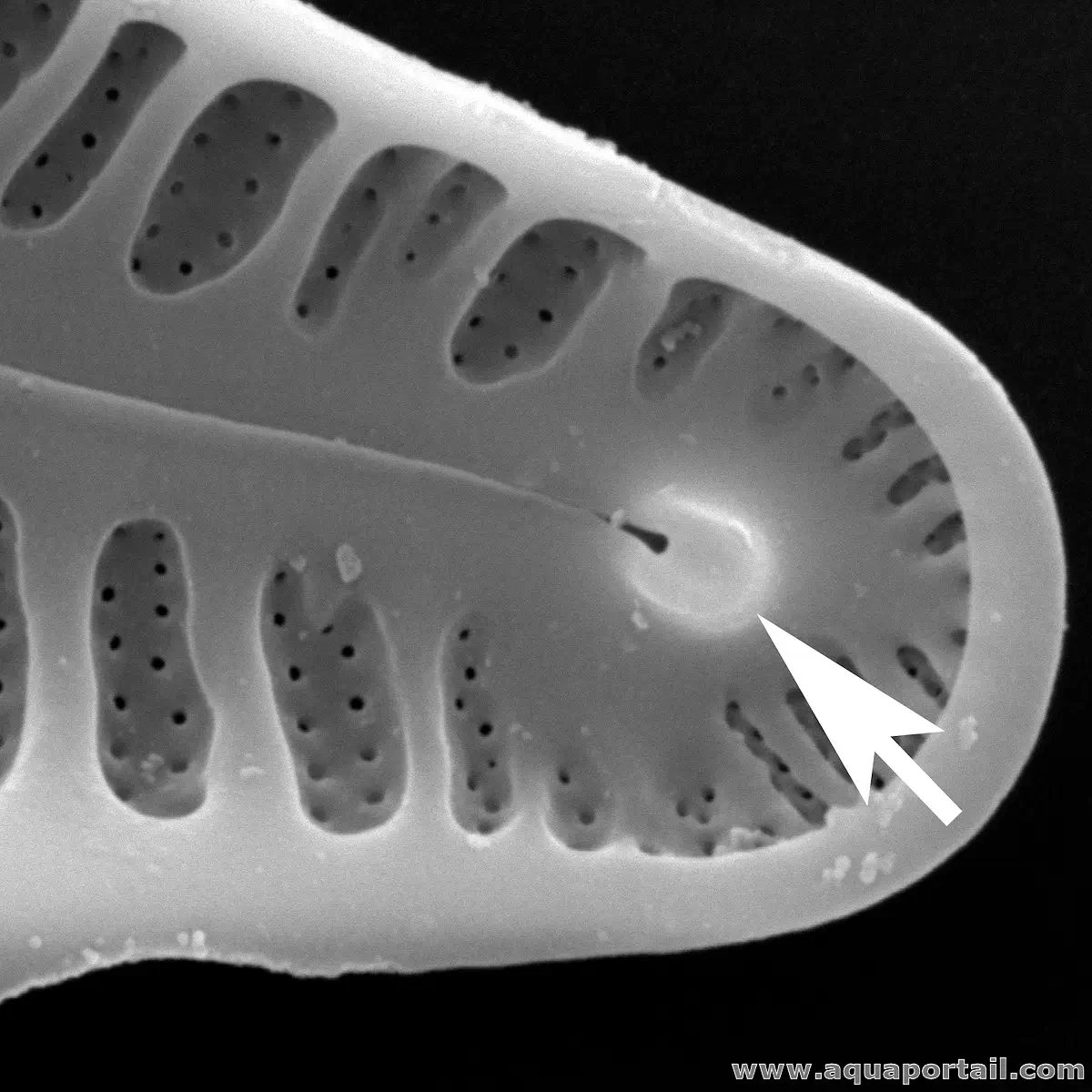
In botany, a polar nodule, or terminal nodule, is a valvar thickening forming a nodule located at the extremity near the valve margin, adjacent to each...
tagma

A tagma is a group of fused segments formed by series of metameres differentiated from the rest of an arthropod's body.
Simple summary
A tuber is a type of plant structure that serves as a storage organ for nutrients. Typically located underground, tubers are characterized by thickened, enlarged parts that store essential nutrients, such as starch. This adaptation allows the plant to survive unfavorable seasons and promotes new growth. Examples: potato and yam.
