Isomer
noun (n.)
Definition
Isomers are molecules whose molecular formulas are identical but which differ in the arrangement of atoms relative to one another. An isomer has the same molecular formula as the other molecule, yet with a different chemical structure.
⭐ In botany, isomerous describes a whorl whose number of parts is the same as that of the flower in general.
Two isomers of Platinum:

The two isomeric complexes, cisplatin and transplatin. As an inorganic example, cisplatin (see structure above) is an important drug used in cancer chemotherapy, whereas the trans isomer (transplatin) has no useful pharmacological activity.
Explanations
Isomers are two molecules having the same molecular formula but differing structurally. Consequently, isomers contain the same number of atoms for each element, yet the atomic arrangement differs. Despite the same molecular formula, the physical properties of each molecule may differ, particularly if the functional groups associated with each molecule are different.
Isomers do not necessarily share similar properties unless they also have the same functional groups. There are two main forms of isomerism: structural isomerism (or planar constitutional isomerism) and stereoisomerism (or spatial isomerism).
Isomerization is the process by which one molecule is converted into another molecule with identical atoms. This may occur spontaneously, or a reaction may be required to achieve this effect.
⭐ In nuclear physics, isomers are atomic nuclei that differ neither in the number of protons nor neutrons, but in their energy. To distinguish it from isomerism in chemistry, the term "nuclear isomerism" is also used.
✅ An isomerase refers to an enzyme that catalyzes the conversion of a compound into one of its isomers, or isomerization. See also an epimerase.
In chemistry
Isomerism is a property of these chemical compounds, particularly carbon chains, which, with the same molecular formula (unexpanded chemical formula) of equal relative proportions of the atoms making up its molecule, have different chemical structures and therefore different properties and configurations.
These compounds are called isomers. For example, ethyl alcohol or ethanol and dimethyl ether are isomers whose molecular formula is C2H6O.
⭐ See also a stereoisomer. ✅ Indeed, there are two main types of isomers, structural isomers and stereoisomers.
Although conformers may be classified as stereoisomers, they are rarely isolable in pure form.
Whereas structural isomers generally have different chemical properties, stereoisomers behave identically in most chemical reactions, except in their reaction with other stereoisomers.
However, enzymes can distinguish different enantiomers of a compound and organisms often prefer one isomer over the other.
Enantiomers are distinguished by the sign of their optical rotation in polarized light and are therefore sometimes described as optical isomers. However, this term is poorly defined and has also been used to describe other stereoisomers as well as enantiomers. Its use is therefore strongly discouraged and molecules should instead be described as enantiomers or diastereomers, as appropriate.
Structural isomers
There are two main types of isomers, structural isomers and stereoisomers. Structural isomers differ in the specific attachment of atoms and functional groups. Thus, depending on the specific isomers, they may not be classified in the same functional group and will have different IUPAC names.
Types of structural isomers include chain isomers (for example, hydrocarbon chains exhibiting different branching patterns); positional isomers, which differ according to the positioning of a functional group on the chain; and functional group isomers, in which a functional group is further divided into different functional groups.
Skeletal isomers exhibit different carbon chains. Another type of structural isomer is a tautomer.
Tautomers spontaneously interconvert between two structural isomers and exhibit different properties depending on the particular isoform. Sometimes, conversion into a tautomer can be so rapid that isolation of the two is not possible.
Enzymatic reaction
One of the most important functions of isomers in the human body is in enzymatic reactions. The orientation, functional groups, bond lengths, and overall 3D structure of a molecule impact its ability to bind to enzymes.
Enzymes generally recognize a specific molecular shape akin to a lock and key. Consequently, isomers that have a different physical shape will not be able to bind to a particular enzyme, even though they have the same molecular formula.
E.g.: the enzyme triose-phosphate isomerase, which is involved in glycolysis by catalyzing the interconversion of dihydroxyacetone and (R)-glyceraldehyde phosphate; however, the (S)-glyceraldehyde isomer does not undergo the same reaction because it does not fit into the triose-phosphate enzyme.
Enzymes that function to convert molecules into their isomers (for example, triose-phosphate isomerase) are called isomerases.
Examples of isomers
There are several examples of isomers, described as follows:
- Methoxyethane and propanol: the chemical structure, C3H8O, exists as several isomers of propanol, as well as the isomer methoxyethane. The two isomers of propanol consist of propan-1-ol and propan-2-ol (also known as isopropyl alcohol), which differ by the placement of an oxygen atom either on the terminal carbon atom or on the central carbon atom, respectively. Methoxyethane is also an isomer of C3H8O, but is an ether due to the placement of an oxygen atom in the center of the molecule, rather than connected to a single carbon atom.
- Methylacetylene and allene: methylacetylene and allene are an example of C3H4 isomers, which differ according to the type of bond exhibited by the molecules. Methylacetylene has a triple bond and a single bond between the carbon atoms, while allene features two double bonds between the carbons.
- Fulminate and cyanate: fulminate and cyanate are an example of CNO isomers. Fulminate features an arrangement in which N is bonded to the C and O atoms, whereas in cyanate, both O and N are bonded to the central C atom.
- Glucose and fructose: glucose and fructose are an example of C6H12O6 isomers, which differ according to the position of a double-bonded O atom. In glucose, O is located on the first C, whereas it is located on the second C in fructose.
In pharmacy
Isomers are extremely important in pharmaceutical development, because typically only one isomer of a particular molecule will exert the desired effect.
For example, only one isomer of ibuprofen will bind to the necessary target in the human body and induce pain relief. Similarly, cisplatin is an effective anticancer drug, whereas its isomer, transplatin, offers no anticancer benefit.
One of the most famous examples is thalidomide. Although one isomer of thalidomide is a potent morning sickness suppressant, it was administered in a 50:50 ratio with its stereoisomer, which was responsible for the birth defects observed in children born in the 1950s to mothers who took the drug.
In medicine
Isomers with different medical properties are common; for example, the placement of methyl groups. In substituted xanthines, theobromine, found in chocolate, is a vasodilator sharing certain effects with caffeine.
However, if one of the two methyl groups is moved to a different position on the two-ring core, the isomer is theophylline, which has various effects, including bronchodilation and anti-inflammatory action.
Another example exists in phenethylamine-based stimulant drugs. Phentermine is a non-chiral compound with a weaker effect than amphetamine. It is used as an appetite-suppressing medication and has mild to no stimulant properties.
However, a different atomic arrangement yields dextromethamphetamine, a more potent stimulant than amphetamine.
In medicinal chemistry and biochemistry, enantiomers are of particular concern because they can possess very different biological activity. Many preparation procedures yield a mixture of equal amounts of both enantiomeric forms.
In some cases, enantiomers are separated by chromatography using chiral stationary phases. They can also be separated through the formation of diastereomeric salts. In other cases, enantioselective synthesis has been developed.
In nuclear physics
A nuclear isomer is a metastable state of an atomic nucleus, produced by the excitation of one or more of its nucleons (protons or neutrons). The term "metastable" refers to the fact that these excited states have a half-life greater than 100 to 1,000 times the half-life of excited nuclear states that decay with a short half-life (typically on the order of 10-12 seconds).
Accordingly, the term "metastable" is restricted to isomers having a half-life of 10-9 seconds or longer. Some sources recommend 5 × 10⁻⁹ s to distinguish metastable isomerism from normal isomerism.
There are isomers whose half-lives are very long and can be measured in minutes, hours, and even years. A very remarkable case is 180mTa, whose half-life is so long that it has never been observed (at least 1015 years).
Sometimes, the gamma decay of a metastable state is given the special name isomeric transition, but apart from the temporary nature of the single-parent metastable nuclear isomer, this process resembles short-lived gamma decay in all external aspects.
The longer lifetimes of nuclear isomers (metastable states) are often due to the greater degree of nuclear spin change involved in gamma emission to reach the ground state. This requirement for large spin changes inhibits these decays and consequently delays them.
However, other reasons explaining the delay in emission, such as the small available decay energy, also affect the half-life.
Synonyms, antonyms
Spanish translation: isómero
2 synonyms (similar meaning) for "isomer":
0 antonyms (opposite meaning).
Related words and expressions to ISOMER are directly connected by general or specific meaning.
The word ISOMER is listed on page 1 of words starting with I in the dictionary glossary.
Related to "isomer"
ice sheet

An ice sheet constitutes vast, very thick glacial expanses covering a large terrestrial surface area, such as the Antarctic ice sheet for example.
ichthyologist

An ichthyologist is a scientist who studies fish in the field of ichthyology. They conduct research and fieldwork on fishes across all aquatic environments.
ichthyotoxin
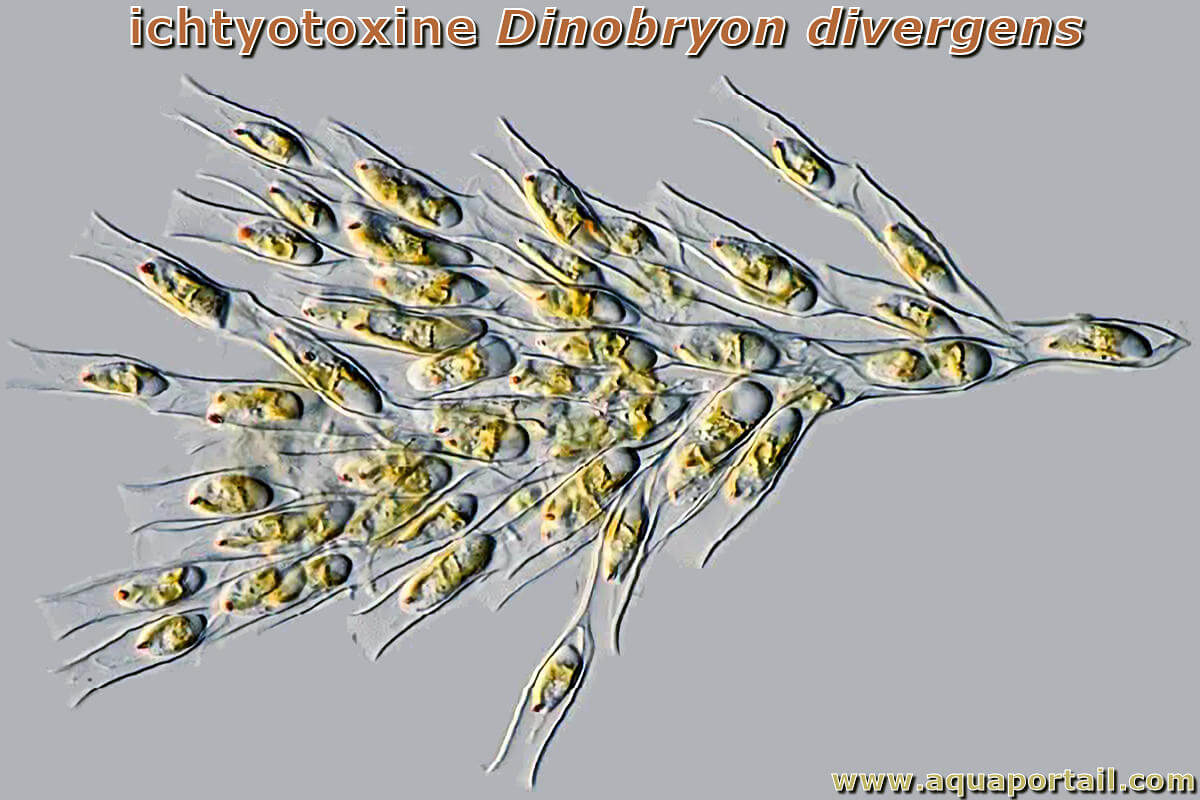
An ichthyotoxin is a toxic substance contained in blood serum or produced by fish. These endogenous toxins are contained in planktonic dinoflagellates...
illuvium

An illuvium is material displaced through a soil profile, from one layer to another, by the action of rainwater.
