Isotherm
noun and adjective (n. / adj.)
Definition
An isothermal element is always at the same temperature; it takes place or is maintained at a constant and equal temperature, generally through a partitioned system to create isothermy. For example, an insulated box, bag, or flask maintains a temperature equal to the initial one.
A small insulated box:

This insulated (food) box is made of styrofoam which acts as a thermal insulator: this box is adiabatic.
Explanations
Isothermal refers to a process or state in which the temperature remains constant. In the scientific field, it is often used to describe reactions or physical changes occurring at a stable temperature, thus ensuring the absence of temperature variation throughout the process.
In physics and mathematics, an isotherm is a line joining points of identical average temperature for a given period; it is therefore a line or surface passing through points of equal temperature. ✅ An isotherm is a line drawn on a map connecting points of equal temperature.
In cartography, an isothermal line is a line connecting points on a map that have the same temperature. Consequently, all points through which an isotherm passes have the same or equal temperatures at the indicated time. A 0 °C (32 °F) isotherm is called the freezing level. The term was coined by the Prussian geographer and naturalist Alexander von Humboldt, who as part of his research on the geographic distribution of plants published the first map of isotherms in Paris in 1817.
In geography, an isotherm is a mapped imaginary line passing through points on the globe where the average temperature is the same, defining climatic or even climax zones. It is an isallotherm when this imaginary line passes through points on the globe where temperature variations over a given time are the same.
A sorption isotherm is a curve giving the functional relationship between adsorbate and adsorbent in an adsorption process at constant temperature. A moisture sorption isotherm is a curve giving the functional relationship between humidity and equilibrium water content of a material at constant temperature.
See also isobath, isogram, isodiametric, isocline, isobar (pressure), isognathous, isohyet (for precipitation), isotonic, isopach, isopleth, isotach (wind), isotony... Water with a stable temperature is characteristic of homothermy.
⭐ With temperature isotherms: the same effect is clearly shown by tongue-shaped isotherms. In January, for example, the 14 °C (57.2 °F) isotherm, after following the northern coast of the Scandinavian Peninsula, turns southward along the Scandinavian Mountains, crossing the upper part of the northern Great lakes district. In July, by contrast, the isotherms show an almost constant temperature throughout the country, and tongue-shaped curves are absent.
Synonyms, antonyms
Spanish translation: isoterma
3 synonyms (similar meaning) for "isotherm":
- adiabatic
- constant temperature line
- temperature isopleth
0 antonyms (opposite meaning).
Related words and expressions to ISOTHERM are directly connected by general or specific meaning.
The word ISOTHERM is listed on page 1 of words starting with I in the dictionary glossary.
Related to "isotherm"
eurytherm

A eurytherm, often an ectotherm, is an organism capable of withstanding wide variations in the temperature of its environment, including its internal milieu.
ice sheet
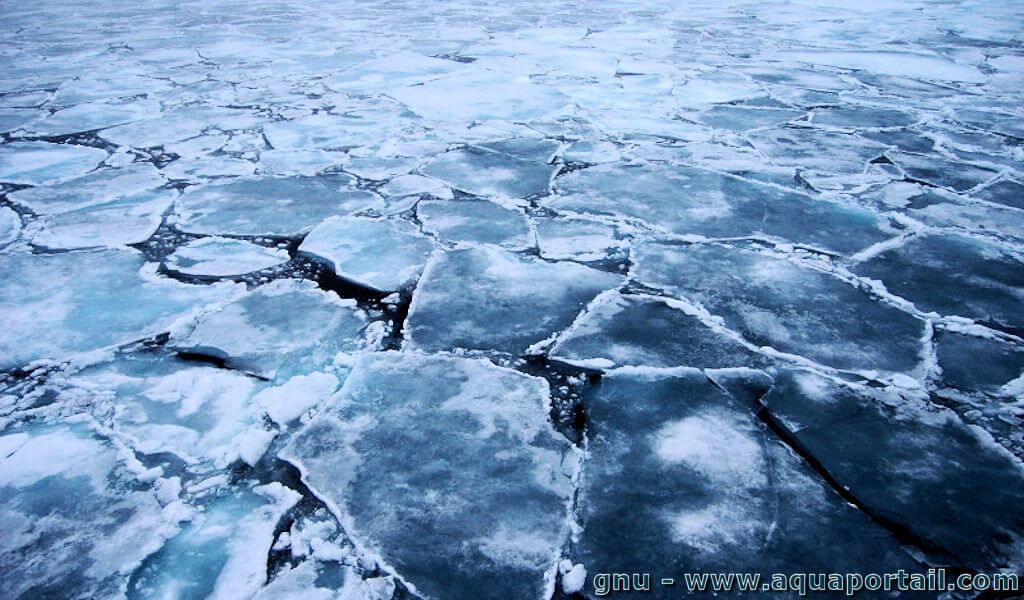
An ice sheet constitutes vast, very thick glacial expanses covering a large terrestrial surface area, such as the Antarctic ice sheet for example.
ichthyologist

An ichthyologist is a scientist who studies fish in the field of ichthyology. They conduct research and fieldwork on fishes across all aquatic environments.
ichthyotoxin
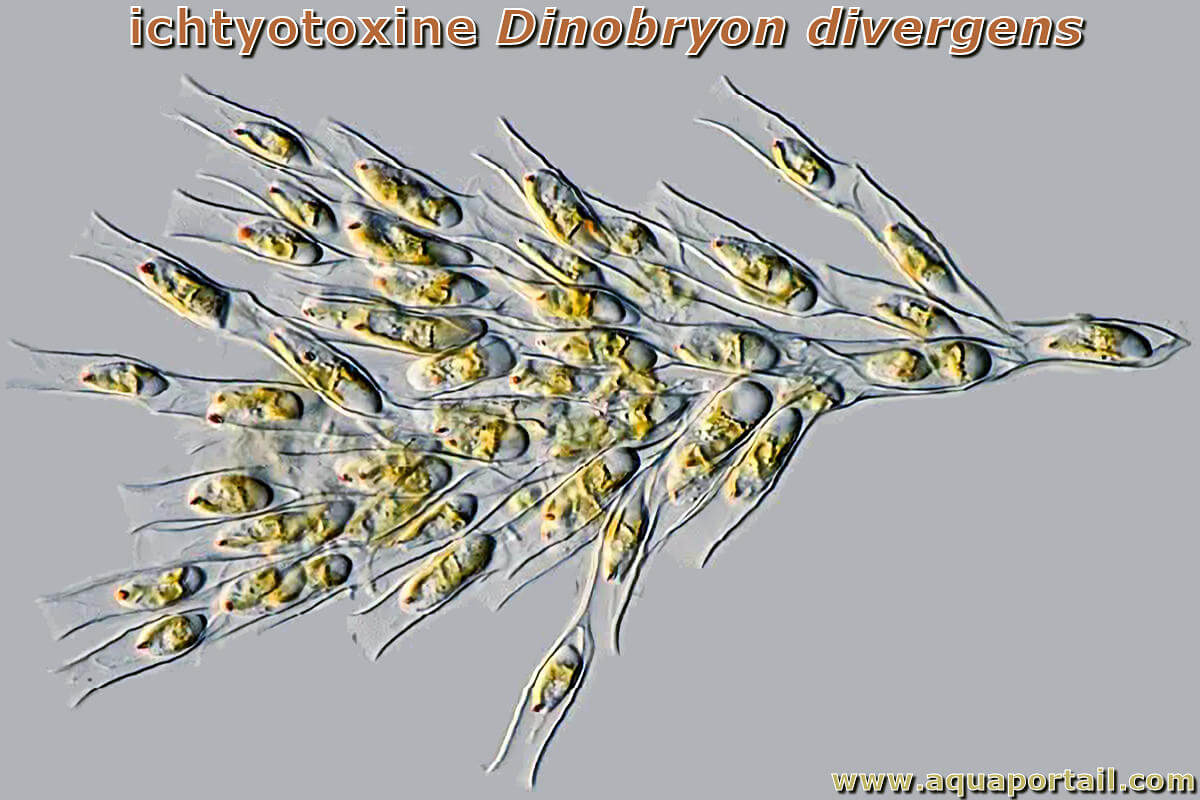
An ichthyotoxin is a toxic substance contained in blood serum or produced by fish. These endogenous toxins are contained in planktonic dinoflagellates...
Simple summary
An isotherm is a line drawn on a map or graph connecting points of equal temperature at a given time or over a defined period. These lines are frequently used in meteorology and climatology to represent zones of equal temperature, thus facilitating the visualization of temperature distribution across different regions.
