Pyrenoid
noun (n.)
Definition
A pyrenoid is a differentiated, more or less complex hyaline zone within the plastid of certain algae and hornworts. The pyrenoid is a non-membrane-bound organelle occurring in various photosynthetic organisms, consisting of a proteinaceous structure composed primarily of ribulose-1,5-bisphosphate carboxylase (rubisco).
A pyrenoid:
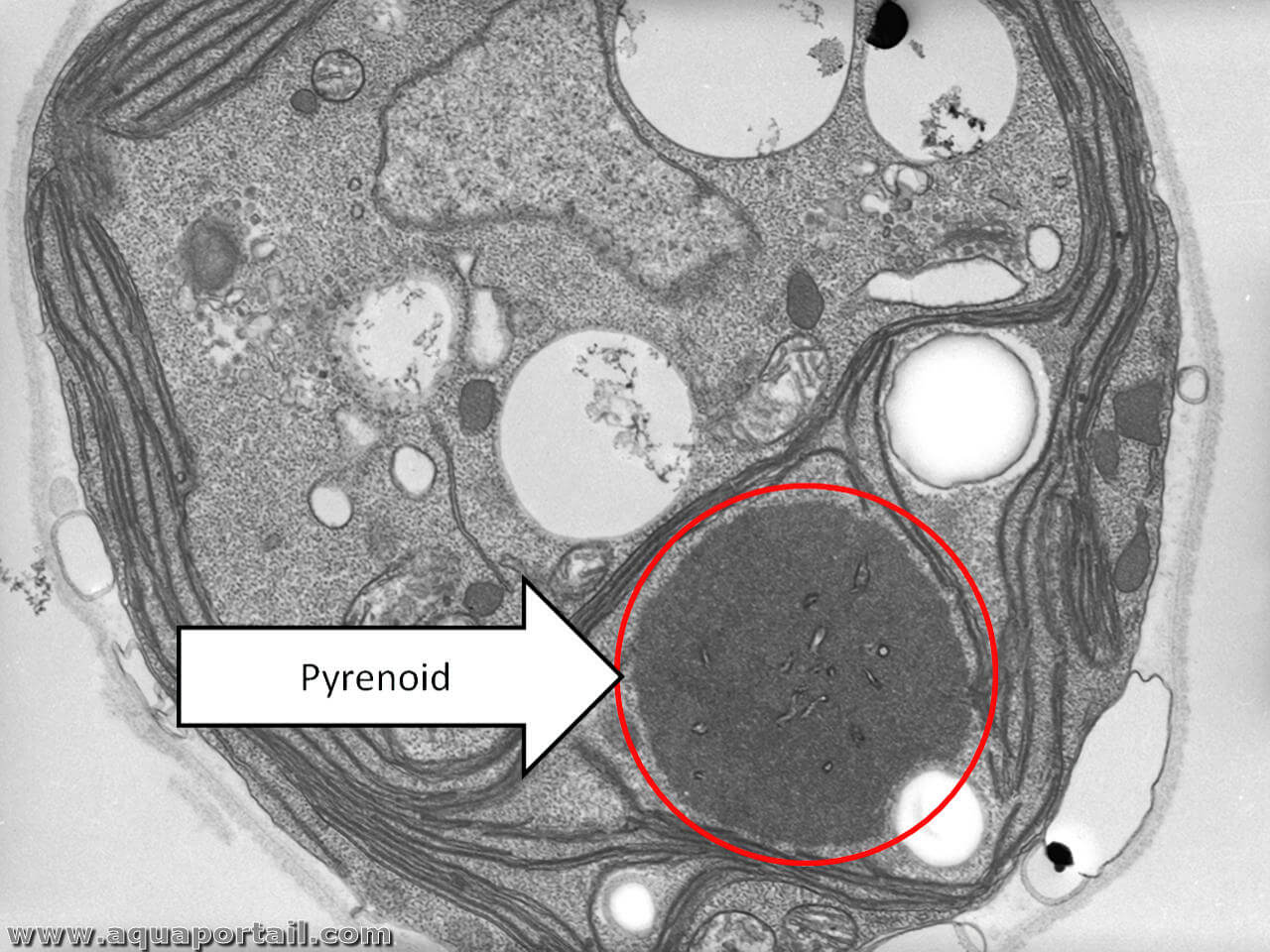
The pyrenoid is an algal microcompartment in which a major share of global CO2 fixation takes place.
Explanations
A pyrenoid is a proteinaceous body within the chloroplasts of algae and hornworts that participates in carbon fixation and starch synthesis and storage.
See also rudimentary pyrenoid and pyrenoid sac.
Function and role
The known function of pyrenoids is to promote photosynthetic CO2 fixation by the enzyme ribulose-1,5-bisphosphate carboxylase/oxygenase (RuBisCO).
Measurements of photosynthetic carbon dioxide fixation and RuBisCO activity in Euglena gracilis indicate that the primary function of the pyrenoid is CO2 fixation. This structure is often closely associated with storage reserves, though all aspects of its regulation are not yet fully understood.
The algal pyrenoid remains a somewhat intriguing microcompartment in cell biology and is not yet completely characterized.
Description
A pyrenoid is a hyaline, chemically complex globular body occurring singly or in multiples within the chloroplasts of certain algae. A rudimentary pyrenoid is the hyaline plastid zone of certain brown algae whose plastids normally lack a pyrenoid, resembling and interpreted as an atypical pyrenoid.
In brown algae, the pyrenoid sac is a vesicle, possibly derived from the Golgi apparatus.
Structure
Pyrenoid ultrastructure supports dividing Chlorella species into two groups based on cell wall chemistry and suggests evolutionary relationships. The pyrenoid structure of the symbiotic chlorella living inside the ciliate Paramecium bursaria resembles that of chlorellae possessing glucosamine-rich cell walls.
Pyrenoids are cellular microcompartments found in the chloroplasts of green algal cells (unicellular green algae have a single chloroplast and therefore a single pyrenoid). They are considered key components of the algal carbon-concentrating mechanism. They are not membrane-bound, although they maintain a defined physical shape and are, under certain conditions, surrounded by starch plates. Current understanding holds that the pyrenoid is a chloroplast region housing the majority of the chloroplast's RuBisCO.
What other constituents exist within the pyrenoid alongside RuBisCO is still under investigation, though electron micrographs reveal enlarged, tubule-like extensions of thylakoids traversing the pyrenoid, hypothesized to serve as the pathway delivering CO2 into the pyrenoid matrix.
Occurrence (presence)
The pyrenoid is a microcompartment in the chloroplasts of algae (particularly brown and green algae) and certain non-vascular plants such as hornworts.
However, several algal groups completely lack pyrenoids: "higher" red algae and extremophilic red algae, the green algal genus Chloromonas, and yellow-green algae. Pyrenoids are generally regarded as unreliable taxonomic markers and appear to have evolved independently multiple times.
Synonyms, antonyms
Spanish translation: pirenoide
1 synonym (similar meaning) for "pyrenoid":
0 antonyms (opposite meaning).
Related words and expressions to PYRENOID are directly connected by general or specific meaning.
The word PYRENOID is listed on page 1 of words starting with P in the dictionary glossary.
Related to "pyrenoid"
pyrenoid sac

In brown algae, the pyrenoid sac is a vesicle, possibly of Golgi origin, surrounded by an envelope consisting of two membranes.
rudimentary pyrenoid

The rudimentary pyrenoid (satellite pyrenoid) is the hyaline zone of the plastid in certain brown algae whose plastids normally lack a pyrenoid, resembling...
carotenoid

A carotenoid is a red-to-yellow pigment, including carotene, which imparts color to plant parts such as ripe tomatoes and autumn leaves.
P680-P700
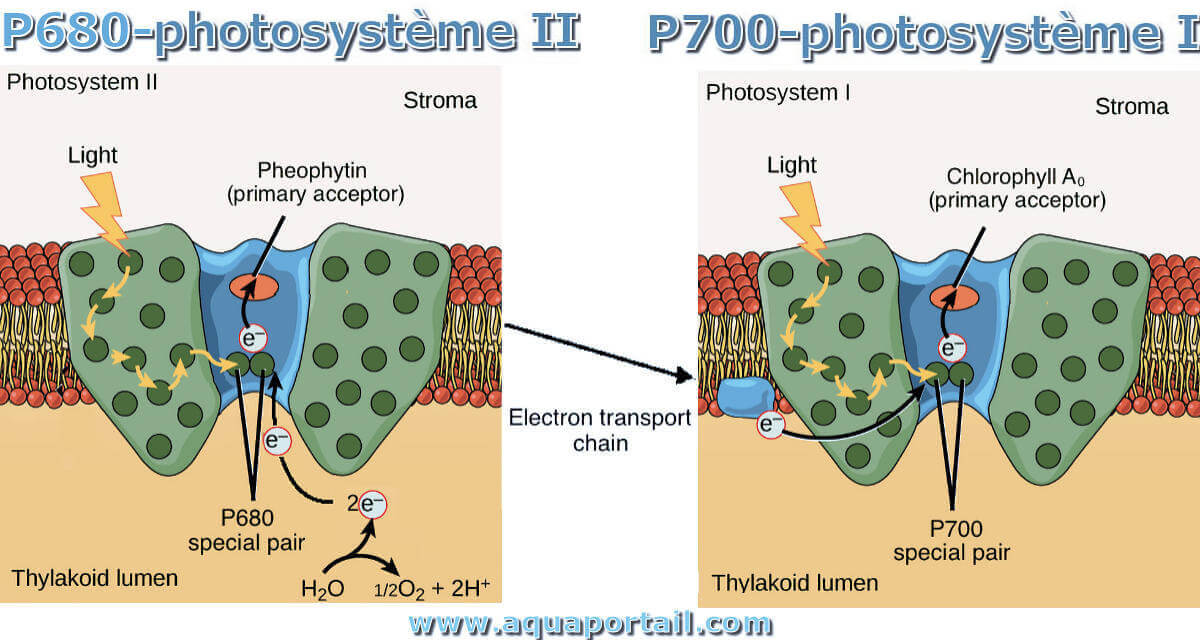
P680-P700 is an association of chlorophyll a molecules absorbing at 680 nm and 700 nm, respectively, possessing particular photochemical properties.
