Hyaline
adjective (adj.)
Definition
Hyaline describes something having the glassy transparency of clear glass. In mineralogy, a hyaline mineral has a vitreous, amorphous appearance (such as certain forms of quartz or silica). Clean, crystal-clear water is hyaline, as are the fins of many fishes.Hyaline cartilage:
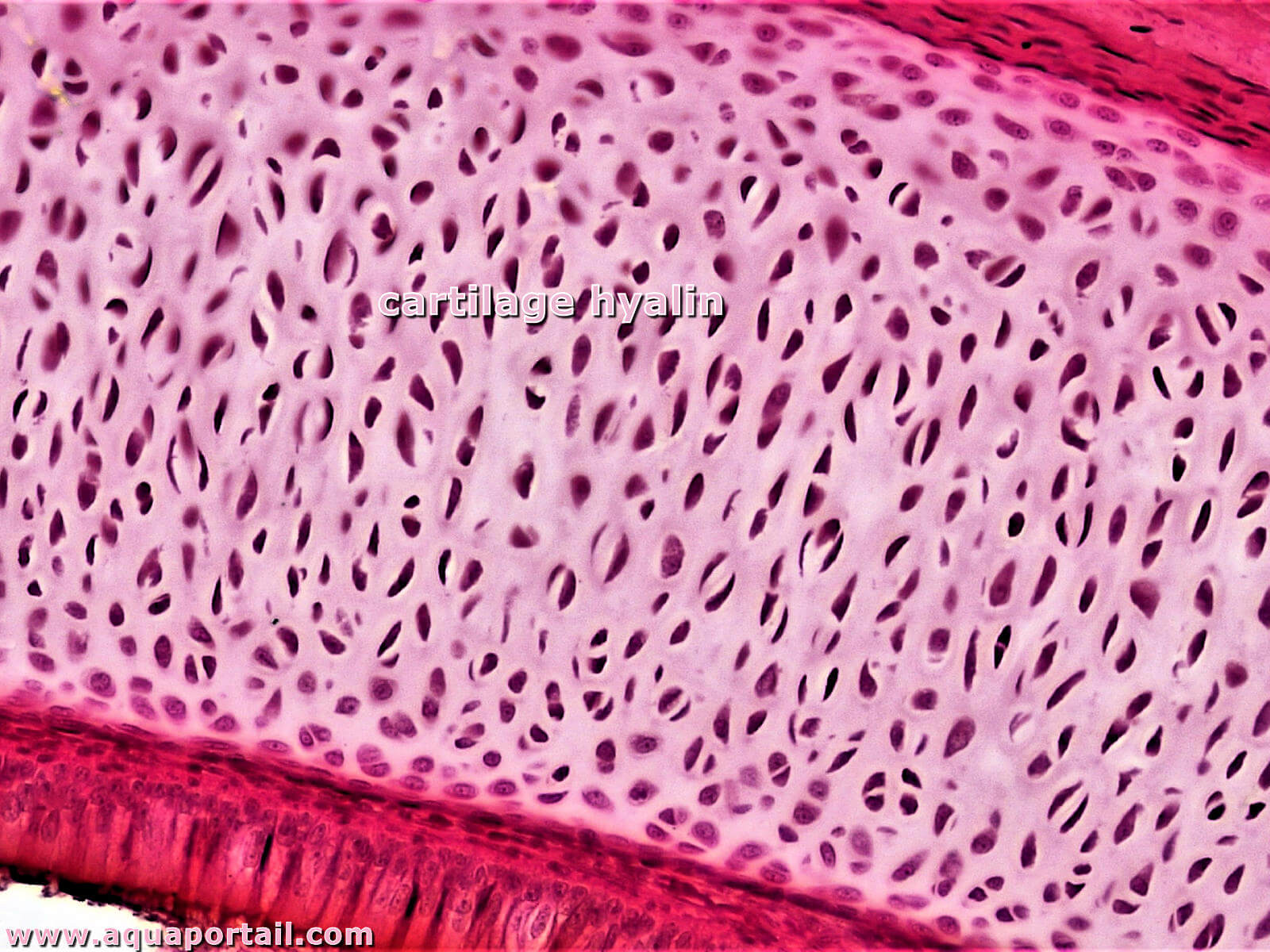
Hyaline cartilage, the most widespread type of cartilage, is composed of type II collagen and chondromucoprotein (sulfated glycoproteins associated with chondrocytes) and typically displays a glassy appearance.
Explanations
An irrational fear of glassy or transparent things is hyalophobia; when this phobia pertains specifically to water, it is termed thalassophobia or aquaphobia.
See also glassy volcanic rocks: hyalite and hyaloclastite.
⭐ Note the numerous chondrocytes in the image, each housed within lacunae and surrounded by the cartilage matrix they secrete. These cells possess relatively small nuclei and often contain cytoplasmic lipid droplets. Spindle-shaped cells of the perichondrium can differentiate into chondroblasts that subsequently mature into chondrocytes. This type of cartilage occurs in the nasal septum, at the sternal ends of ribs, and in the tracheal rings.
In biology and pathology
✅ Hyaline membranes are eosinophilic coagula of cellular debris, surfactant remnants, and serum proteins resulting from alveolar epithelial injury and leakage of soluble and insoluble proteins into alveolar air spaces.
Hyaline membranes represent accumulations of proteinaceous alveolar exudates lining the periphery of alveoli, adhering to alveolar septa and outlining the air spaces. In renal pathology, hyaline material deposits in the subendothelial spaces of affected capillary loops in some glomeruli but not all, which is why the terms focal and segmental are used.
Hyaline globules can be observed in salivary gland tumors such as pleomorphic adenoma, basal cell neoplasms, epithelial-myoepithelial carcinoma, and polymorphous low-grade adenocarcinoma. In basal cell neoplasms, hyaline globules are smaller, fewer, and more uniform, with cells typically displaying scant cytoplasm and uniform nuclear chromatin.
Sclerosing hyaline necrosis, a hallmark of severe alcoholic hepatitis, together with obliterative venous lesions, can drive the development of non-cirrhotic portal hypertension in patients with alcoholic liver disease. Sclerosing hyaline necrosis consists of zone 3 acinar injury featuring dense perivenular and perisinusoidal fibrosis (sclerosis), occlusion of hepatic venules, and hepatocyte necrosis.
Hyaline angiopathy (pulse granuloma) is a term used to designate a rare histological lesion reported in the oral cavity and skin, also known as giant-cell hyaline angiopathy.
Mallory hyaline bodies, identical in appearance and composition to those classically seen in ballooned hepatocytes in alcoholic steatohepatitis and other chronic liver diseases, may also occur in Wilson's disease. They consist of intracytoplasmic eosinophilic inclusions composed of misfolded cytoskeletal proteins, primarily keratins.
In urology and nephrology, hyaline casts are acellular cylindrical structures composed of a mucoprotein matrix (uromodulin). The occasional presence of a hyaline cast in urine can be normal, whereas elevated numbers indicate renal stress or kidney disease.
Synonyms, antonyms
Spanish translation: hialino
4 synonyms (similar meaning) for "hyaline":
- diaphanous
- translucent
- transparent
- vitreous
0 antonyms (opposite meaning).
Related words and expressions to HYALINE are directly connected by general or specific meaning.
The word HYALINE is listed on page 1 of words starting with H in the dictionary glossary.
Related to "hyaline"
hyalosome
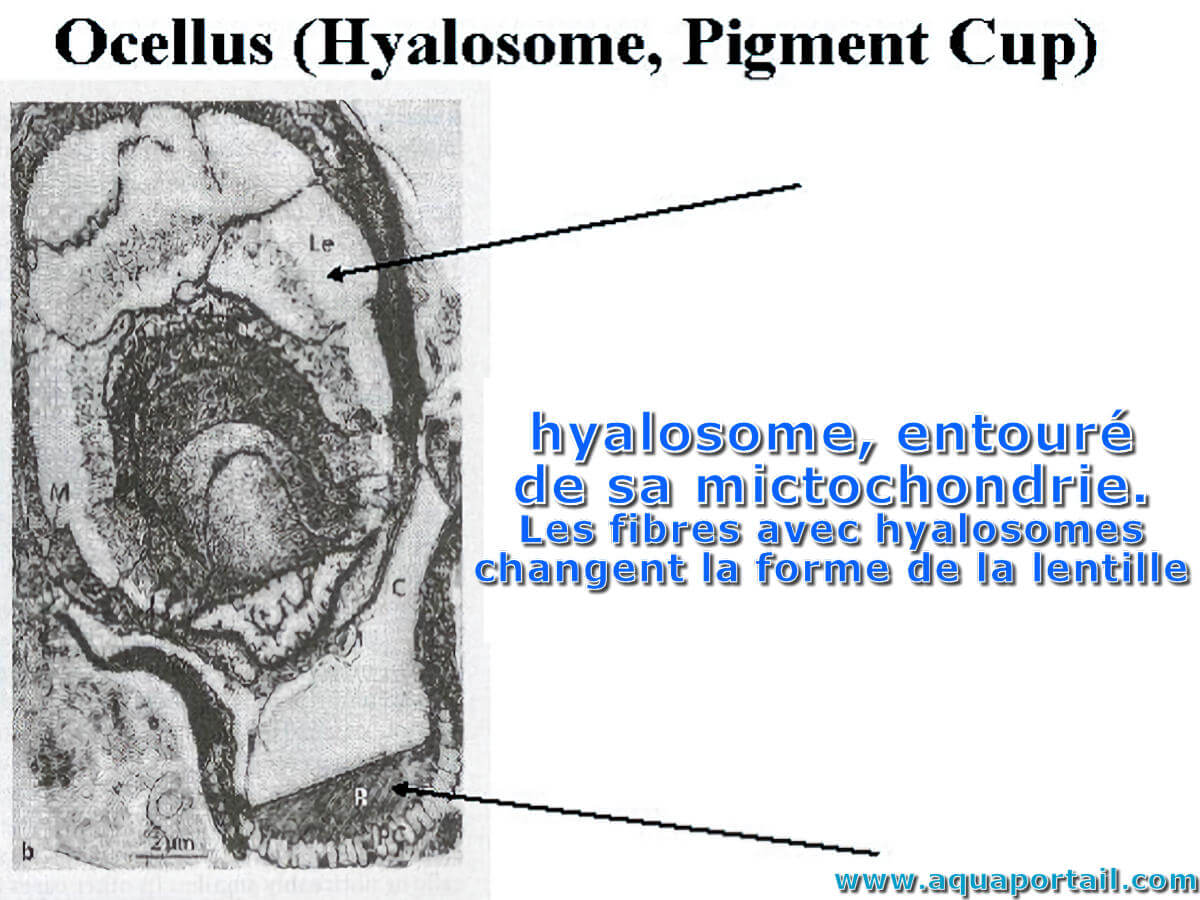
A hyalosome is a glassy, translucent, hyaline body. In cytology, a hyalosome is an oval or spherical structure inside a cell nucleus (intranuclear structure)...
euryhaline

A euryhaline organism describes an aquatic species capable of tolerating wide variations in the salinity of surrounding water, typically as in an estuary.
habitat

A habitat is the place or environment where an organism naturally lives and grows, its typical place of residence.
halitosis

Halitosis (bad breath) is primarily caused by sulfur-producing bacteria that normally live on the surface of the tongue and in the throat.
