Hospital
noun (n.)
Definition
A hospital is a public institution legally authorized to provide medical, surgical, and nursing care to sick or injured people. Hospitality for the sick (as well as the indigent, infirm, elderly, and dying) was historically managed by hospices.
A private hospital is called a clinic, fulfilling a similar role, though often more specialized (and limited).
A typical hospital:

A hospital is the entire building of a healthcare center, including an emergency department (most often).
Explanations
Hospitals are licensed institutions with multiple beds whose primary function is to provide patients with diagnostic and therapeutic services for multidisciplinary medical conditions. They have an organized medical staff and provide continuous nursing services under the supervision of physicians (or registered nurses). In addition to surgical operating rooms, hospitals generally have a medical testing laboratory and a pharmacy.
The type of care provided in hospitals falls under curative care, including intensive care. Preventive healthcare is another form of care aimed at preventing disease and has a more social character than medical care delivered in a hospital setting.
A hospital is required to have at least one physician on duty at all times, may offer inpatient accommodation, and can provide active medical and nursing care. Hospitals may be classified by type of service, size by bed count, and length of stay.
A hospital surgical operating room:
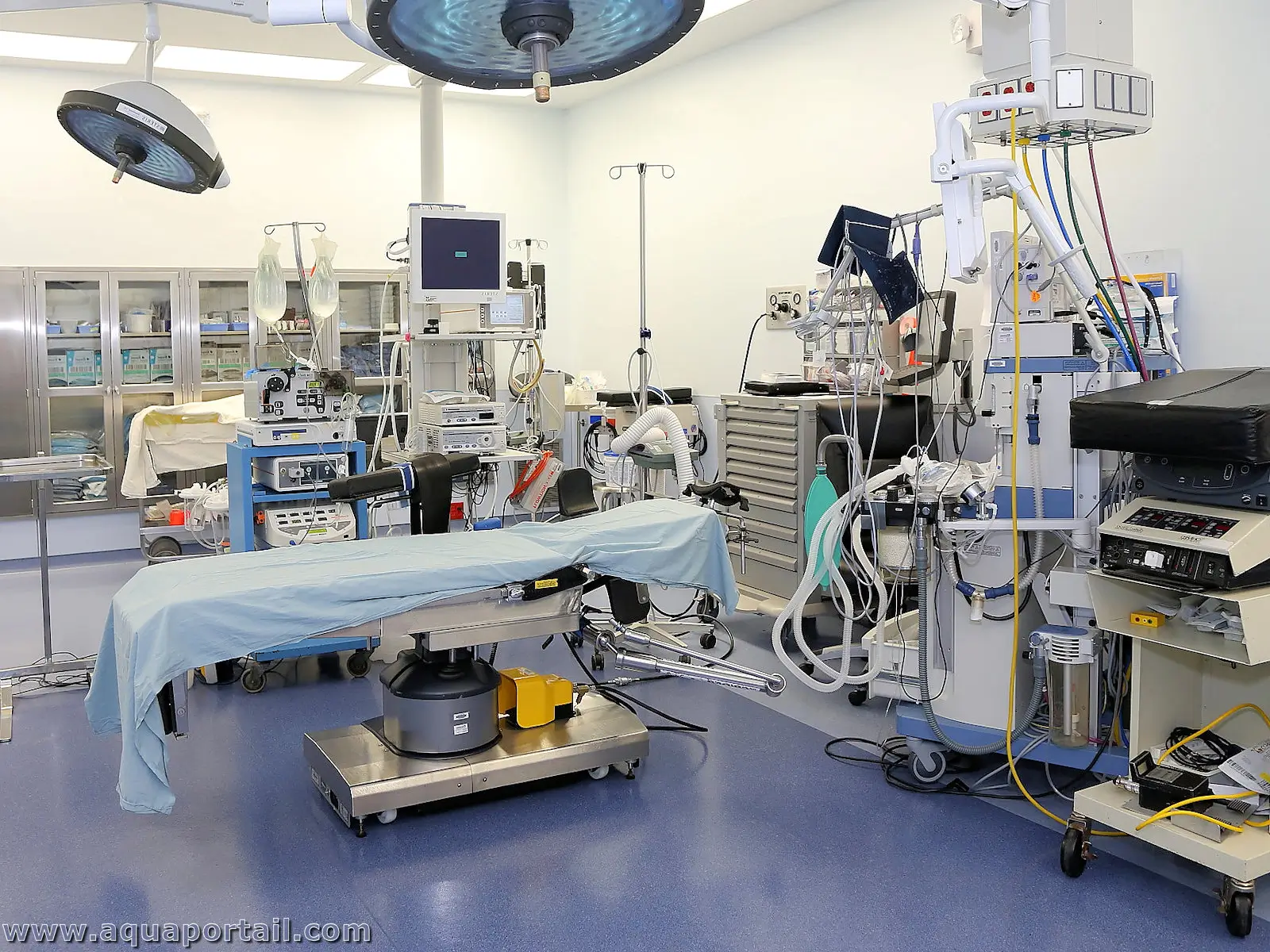
In a hospital, the surgical operating room is a vital resource for patients. Modern tools, technologies, and techniques enable surgeons to perform operations with a high level of skill and precision.
Specialized hospitals include obstetrics and gynecology (maternity); eyes, ears, nose, throat, and other organs; rehabilitation; orthopedics; and other specialized departments.
Hospital units in institutions such as prisons and university infirmaries are not open to the public and are housed within a non-hospital facility.
Types
Several types of hospitals are distinguished:
- general hospital;
- university hospital center (teaching hospital);
- day hospital;
- children's hospital;
- psychiatric hospital;
- hospital ship (hospital boat, hospital vessel);
- military hospital;
- field hospital.
Without being exhaustive, this list of hospital types summarizes the main models of hospital facilities. Those such as field hospitals are temporary, designed to address a specific, localized crisis.
History
In the past, a hospital was actually a guesthouse (hospice). Later, the sick were also cared for in this hospice. Providing care and shelter was often religiously inspired. This origin is also reflected in addressing nursing staff as "sister" or "brother" and in the names of certain hospitals (including "Trinity").
Infectious disease hospitals were also established on the initiative of municipal administrators. These plague houses and leprosaria were located outside the city due to the risk of infection. At the end of the 19th and beginning of the 20th century, people began to view good healthcare as a right to which everyone was entitled. Many new hospitals were established through private initiative. Later, some hospitals were affiliated with a university where medicine was taught. These are known as university hospitals.
Many community hospitals were created in the 20th century amid population growth based on the need for each region to have its own hospital. These are often foundations, which are still funded to a small extent by donations.
Synonyms, antonyms
Spanish translation: hospital
10 synonyms (similar meaning) for "hospital":
- asylum
- charity
- clinic
- dispensary
- hospice
- infirmary
- medical center
- nursing home
- sanatorium
- surgical unit
0 antonyms (opposite meaning).
Related words and expressions to HOSPITAL are directly connected by general or specific meaning.
The word HOSPITAL is listed on page 1 of words starting with H in the dictionary glossary.
Related to "hospital"
halitosis

Halitosis (bad breath) is primarily caused by sulfur-producing bacteria that normally live on the surface of the tongue and in the throat.
hallux

The hallux is the big toe (great toe) of a foot, homologous to the thumb of a hand. It is located on the medial (inner) side of the foot, whereas the little...
hand

The human hand, the most distal part of the upper limb, is a remarkable feat of engineering and evolution.
hardiness

Hardiness characterizes what is hardy, enduring time and weather like things living in the countryside.
