Halitosis
noun (n.)
Definition
Halitosis (bad breath) is primarily caused by sulfur-producing bacteria that normally live on the surface of the tongue and in the throat. Bacteria begin breaking down proteins at a very high rate, releasing odorous volatile sulfur compounds from the back of the tongue and throat.Halitosis is an oral health issue whose main symptom is bad breath. In most cases, identifying the cause of bad breath is the first step toward treating this preventable condition.
Phenomenon of halitosis (bad breath) :

Halitosis is the scientific term for bad breath when the oral cavity emits an odor considered foul.
Explanations
Halitosis can be caused by sulfur bacteria growing in the mouth, as well as by poor digestion with intestinal fermentation. Major causes of bad breath include dry mouth triggered by certain foods, smoking, poor oral hygiene, and a coated tongue. Treatment for halitosis depends on the underlying cause.
Approximately 2.4% of the adult population suffers from bad breath.
Causes
In addition to sulfur-producing bacteria colonizing the back of the tongue, other major causes of halitosis include:
- dental factors: such as periodontitis (gum infection around the teeth) or poor oral hygiene;
- dry mouth (xerostomia): caused by medications, alcohol, stress, or an underlying medical condition;
- smoking: which deprives the mouth of oxygen.
Bad breath (halitosis) is caused by bacteria:
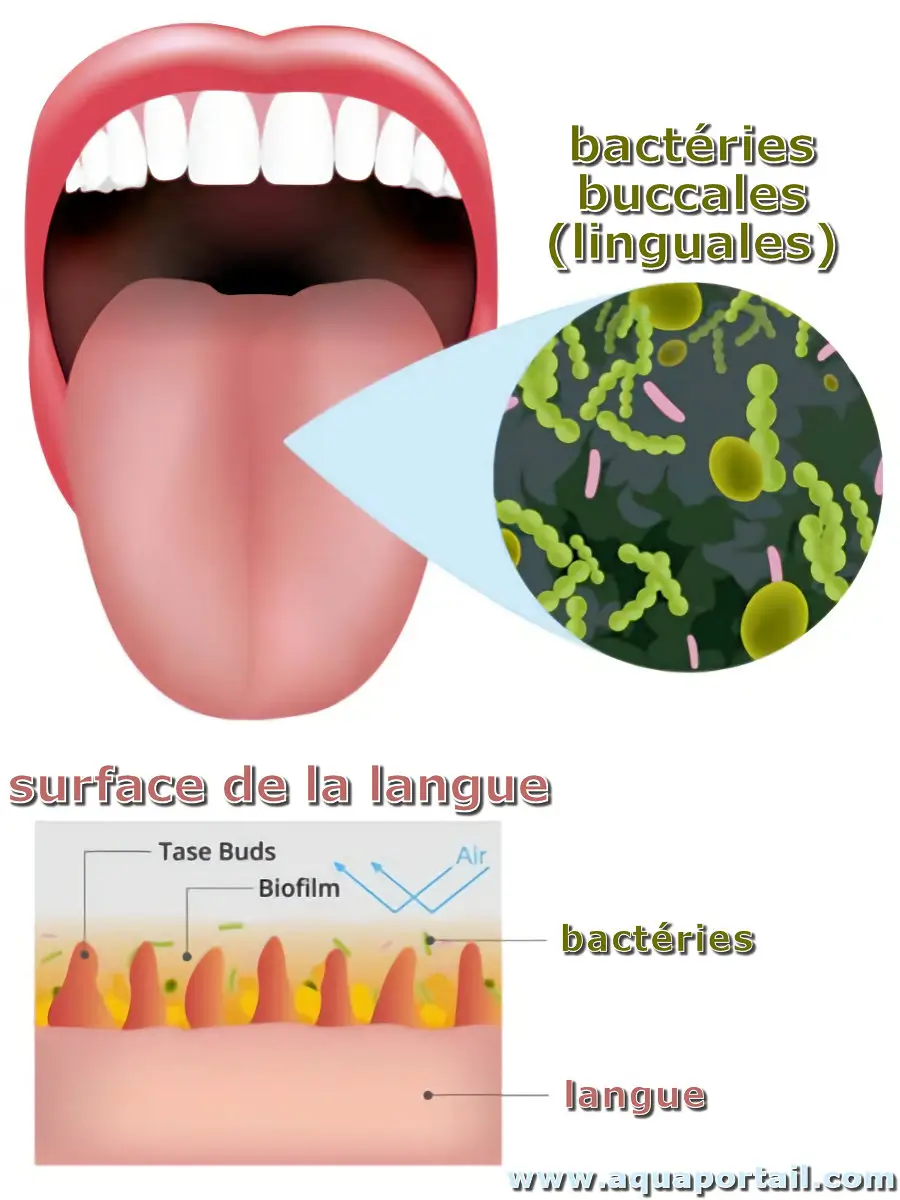
There are many causes of bad breath (halitosis), just as there are many sources of bacteria in the mouth.
Less common causes of halitosis include:
- acid and bile reflux from the stomach: typical of intestinal fermentation (diet);
- post-nasal drip: for instance, due to chronic sinusitis;
- foods: such as onions, garlic, or cauliflower, which generate specific odors. However, these effects are short-lived;
- kidney failure, various carcinomas, metabolic dysfunctions, and biochemical disorders: together account for only a very small percentage of halitosis cases;
Symptoms
Characteristics of halitosis may include:
- a white coating on the tongue, especially at the back of the tongue;
- dry mouth;
- buildup around the teeth;
- post-nasal or mucous discharge;
- morning bad breath and a burning tongue;
- thick saliva and a constant need to clear the throat;
- a persistent sour, bitter, metallic taste.
Halitosis can have a major impact on a person. Because of bad breath, others may step back or turn their heads away, leading to a loss of confidence and self-esteem.
Simple treatment
There is no single cure for halitosis; treatment depends on the root cause. It is important to avoid dehydration and maintain good oral hygiene, including brushing teeth and flossing. Certain mouthwashes, lozenges, and toothpastes can help combat halitosis.
Gentle yet effective tongue cleaning may also be necessary. A variety of tongue brushes and scrapers have been developed in recent years. The tongue should be brushed gently but thoroughly from back to front, bearing in mind that the hardest-to-reach back portion smells the worst.
People with chronic sinusitis may find regular use of a saline nasal spray helpful. antibiotic therapy effective against anaerobic bacteria (such as metronidazole, to reduce the overgrowth of sulfur-producing bacteria) can also be beneficial. Consult your dentist, physician, or pharmacist to identify the cause of your halitosis and find the most effective treatment for you.
Synonyms, antonyms
Spanish translation: halitosis
1 synonym (similar meaning) for "halitosis":
0 antonyms (opposite meaning).
Related words and expressions to HALITOSIS are directly connected by general or specific meaning.
The word HALITOSIS is listed on page 1 of words starting with H in the dictionary glossary.
Related to "halitosis"
breath

Breath is the air inhaled and exhaled during respiration, entering and leaving the lungs via the mouth and nose.
hallux

The hallux is the big toe (great toe) of a foot, homologous to the thumb of a hand. It is located on the medial (inner) side of the foot, whereas the little...
hand

The human hand, the most distal part of the upper limb, is a remarkable feat of engineering and evolution.
hardiness

Hardiness characterizes what is hardy, enduring time and weather like things living in the countryside.
