Terpenoid
noun (n.)
Definition
A terpenoid is a natural product or related compound structurally derived from isoprene (class of isoprenoids). Compared to a terpene, a terpenoid is distinguished by the presence of functional groups, whereas a terpene is a pure hydrocarbon.
Terpenoid aromatic compounds:

The chemical structures of certain terpenoid aromatic compounds.
Explanations
Terpenoids comprise a diverse class of natural substances or secondary metabolites of plant origin, notably from conifers, whose carbon skeleton is derived from isoprene units (C5H8)n.
Similar to terpenes, terpenoids can also be divided into groups based on the number of isoprene units.
A terpenoid is a terpenic substance related to terpenes, for example terpenic derivatives containing camphor, eucalyptol, menthol... A terpenoid refers to a group of derived substances widespread throughout the living world in plants, terrestrial and marine animals, and microorganisms. For instance, carotenoids are tetraterpenoids.
Traditionally, terpenoids were considered derivatives of 2-methylbutadiene, known as isoprene, a five-carbon molecule (C5 unit). The use of the so-called isoprene rule initially enabled their classification and study when many terpenes were isolated from higher plants, many of which held commercial value. It is now known that pleasantly aromatic terpenes are extracted from plant essences, others form the basis of conventional drugs or occur in medicinal plants, and some act as vitamin precursors or insecticides.
These compounds are found in the seeds, flowers, leaves, roots, and wood of higher plants as well as in mosses, algae, and lichens, while some occur in mammals.
See also monoterpenoids, diterpenoids, and triterpenoids.
Properties
The terms terpene and terpenoid are rarely separated and are commonly used interchangeably. Terpenoids include, among others, steroids, hopanoids, and carotenoids.
In terpenoids, one or more carbon atoms are more often removed or rearranged during biosynthesis, so the relationship to isoprene is not as straightforward and does not necessarily correspond to an exact integer multiple of the five carbon atoms of isoprene present. However, all terpenoids trace biosynthetically back to terpenes.
Terpenoids are important features in plant identification, since a specific constituent profile is characteristic of a particular plant (chemotaxonomy). There are over 30,000 known terpenoids, including terpenes. Roughly 8,000 of these are pure hydrocarbons and are therefore counted among terpenes in the strictest sense.
Terpenoids constitute the largest group of specialized (secondary) metabolites in plants. These natural chemical compounds possess a highly diverse chemical structure. Although there have been many excellent studies on terpenoids, most have focused on compounds consisting solely of isoprene units.
Iridoids
A subclass of terpenoids is the iridoids. They were first discovered in an ant species of the genus Iridomyrmex.
They consist of an iridodial skeleton. Typically, iridoids consist of ten carbon atoms—two isoprene subunits—and thus belong to the terpenes. However, there are eight- and nine-carbon iridoids formed by the removal of carbon atoms from the backbone; these belong to the broader group of terpenoids.
Polyterpenoids
Prenylquinones are terpenoids containing up to ten isoprene units, including vitamins K1 and K2, vitamin E, plastoquinone, and ubiquinones.
Synonyms, antonyms
Spanish translation: terpenoide
2 synonyms (similar meaning) for "terpenoid":
- polyterpenoid
- tetraterpenoid
0 antonyms (opposite meaning).
Related words and expressions to TERPENOID are directly connected by general or specific meaning.
The word TERPENOID is listed on page 1 of words starting with T in the dictionary glossary.
Related to "terpenoid"
terpene
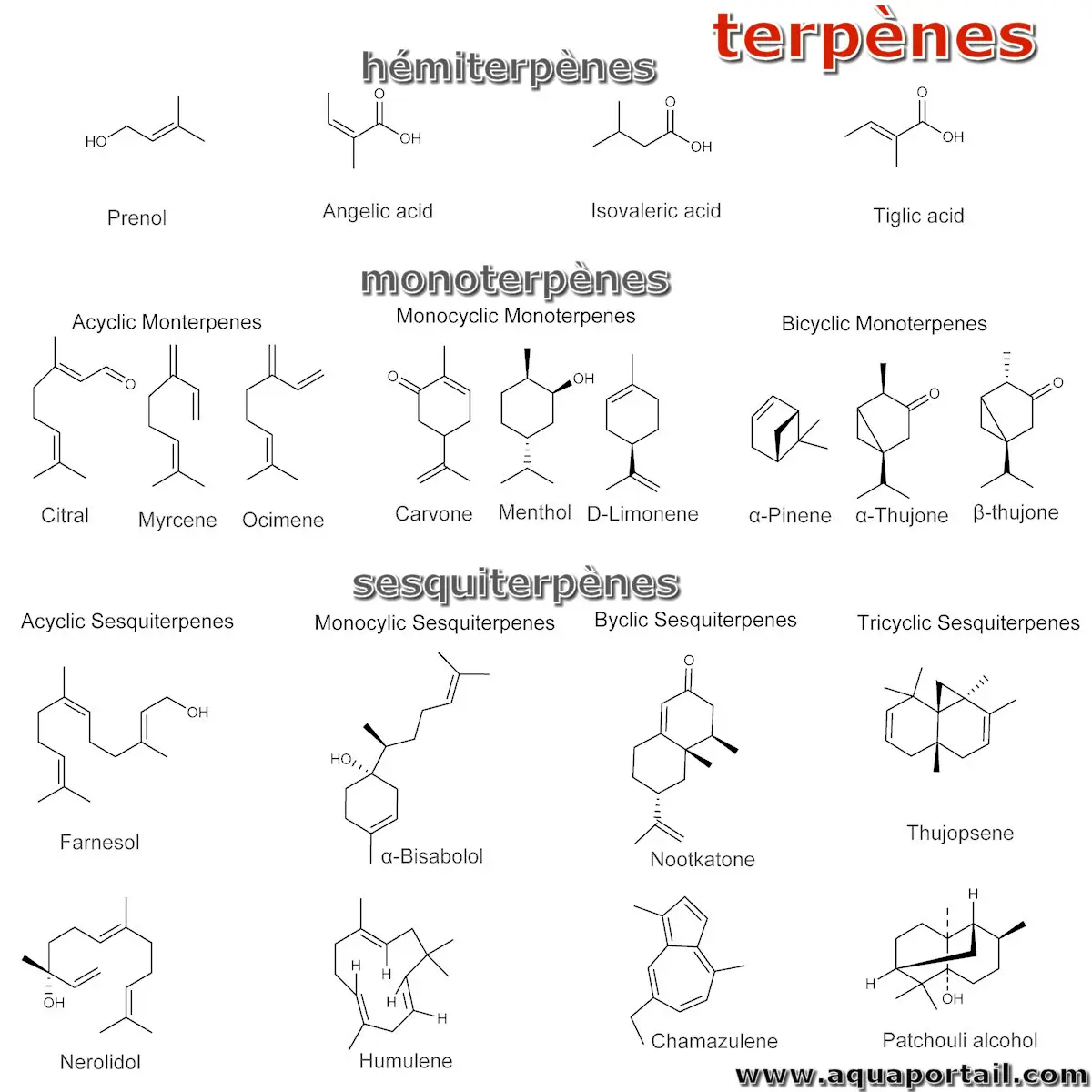
A terpene is a strongly scented chemical substance found in certain plants, notably conifers.
tagma

A tagma is a group of fused segments formed by series of metameres differentiated from the rest of an arthropod's body.
tapeworm
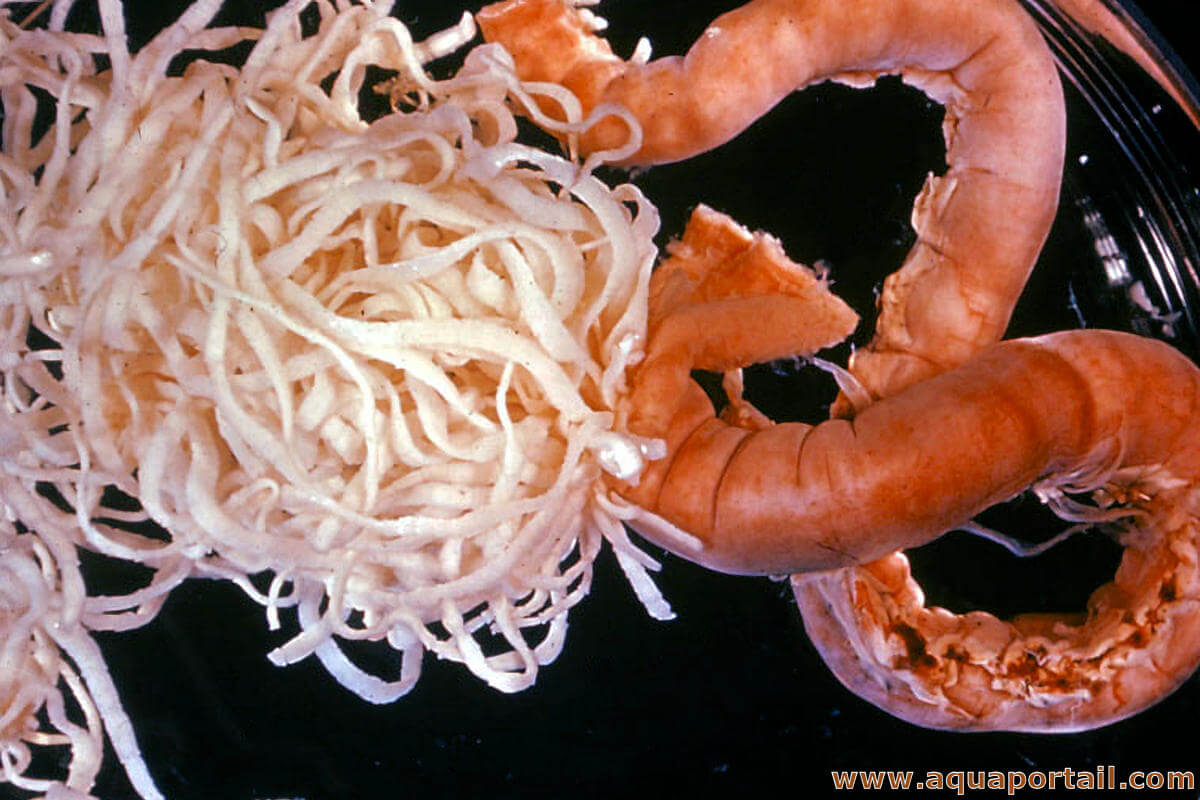
The tapeworm, or solitary worm, is a long, ribbon-like, segmented flatworm, a parasitic cestode of the genus Taenia.
taxon

In biology, a taxon is a taxonomic unit recognized by international codes within a given classification, or a systematic unit such as a family, genus...
