Tetrad
noun (n.)
Definition
A tetrad is a grouping of four elements. In biology, a tetrad is a structure formed by four chromosomes or chromatids. It occurs during the first phase of meiosis. It is the quartet of chromatids that forms when replicated homologous chromosomes align.
The formation of a tetrad:

A tetrad in meiosis consists of two homologous chromosomes that have replicated into a pair of sister chromatids. The long and short chromosomes are different chromosomes. The red and gray are different versions of each. Step 1 replicated them. Step 2 is alignment and tetrad formation. Step 3 is crossing over. Step 4 is separation of homologous chromosomes. Step 5 is separation of sister chromatids.
Explanations
Chromatid tetrads form when the homologs of each chromosome pair divide and become sister chromatids before pairing up (dyads) in the early stages of meiosis. In meiosis, each chromosome pair, called a tetrad or bivalent chromosomes, consists of four chromatids. At this stage, homologous chromosomes exchange genetic material through the process of crossing over (linkage group principle).
The chromatid tetrad must form for crossing over to take place. After crossing over, the synaptonemal complex breaks down and the cohesin linkage between homologous pairs is removed. By the end of prophase I, the pairs remain held together only at chiasmata. These pairs are called tetrads because all four sister chromatids of each homologous chromosome pair are now visible. By the end of prometaphase I, each tetrad is attached to microtubules from both poles, with one homologous chromosome facing each pole. Homologous chromosomes remain held together at the chiasmata. Furthermore, the nuclear membrane has completely broken down.
chromosomal crossover occurs when chromosomes are arranged in tetrads. In Chlorarachniophyceae, it also refers to a non-motile walled cell divided into four.
See also monad.
Example in humans
A set of 23 chromosomes is present in the egg contributed by the mother in humans. The father provides the other set of 23 chromosomes via the sperm fertilizing the egg.
Every cell of a multicellular organism carries copies of both original sets of homologous chromosomes. In prophase I of meiosis, homologous chromosomes form tetrads. In metaphase I, these pairs align halfway between the two poles of the cell to form the metaphase plate. Because there is an equal chance that a microtubule fiber will attach to a maternally or paternally inherited chromosome, the arrangement of tetrads at the metaphase plate is random.
Thus, any maternally inherited chromosome may face either pole. Likewise, any paternally inherited chromosome may also face either pole. The orientation of each tetrad is independent of the orientation of the other 22 tetrads.
In general
A tetrad denotes a group or set of four elements, and its meaning varies depending on context. In biology, the term is often used to describe a structure formed during prophase I of meiosis, where homologous chromosomes pair up to form four chromatids. In sociology, a tetrad refers to a framework of four interrelated questions used to analyze the effects of a technology or medium on society. Similarly, in mathematics or chemistry, it can designate a group or arrangement of four elements, atoms, or points.
The usage of the term thus reflects its etymological origin, derived from the Greek tetrádos, meaning "group of four."
Synonyms, antonyms
Spanish translation: tétrada
3 synonyms (similar meaning) for "tetrad":
- bivalent chromosomes
- nibble
- quartet
2 antonyms (opposite meaning):
Related words and expressions to TETRAD are directly connected by general or specific meaning.
The word TETRAD is listed on page 1 of words starting with T in the dictionary glossary.
Related to "tetrad"
tetraploid
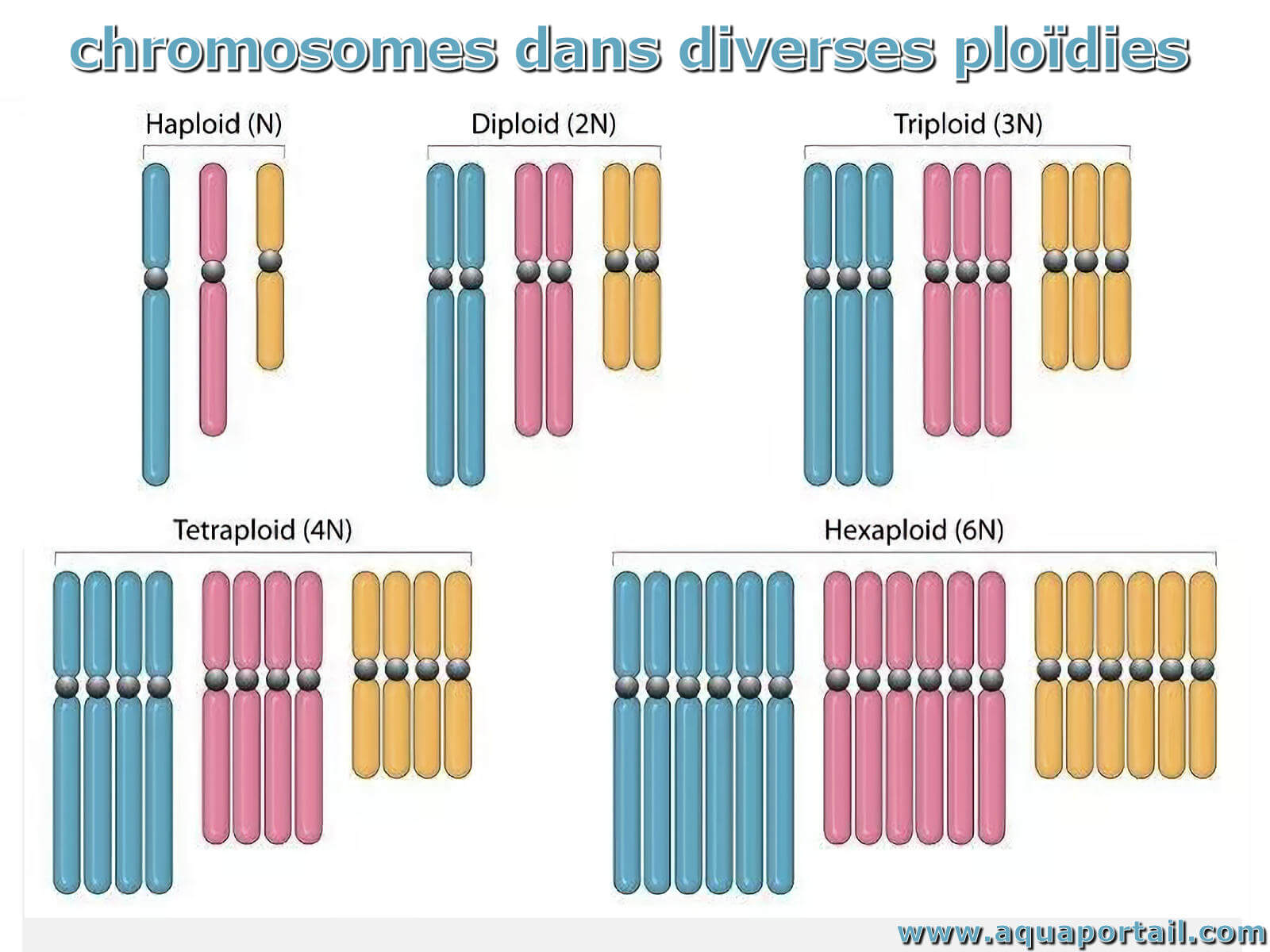
Tetraploid describes a polyploid organism or tissue whose cells possess 4n chromosomes, or put differently : an organism or cell in which each chromosome...
tetraspore
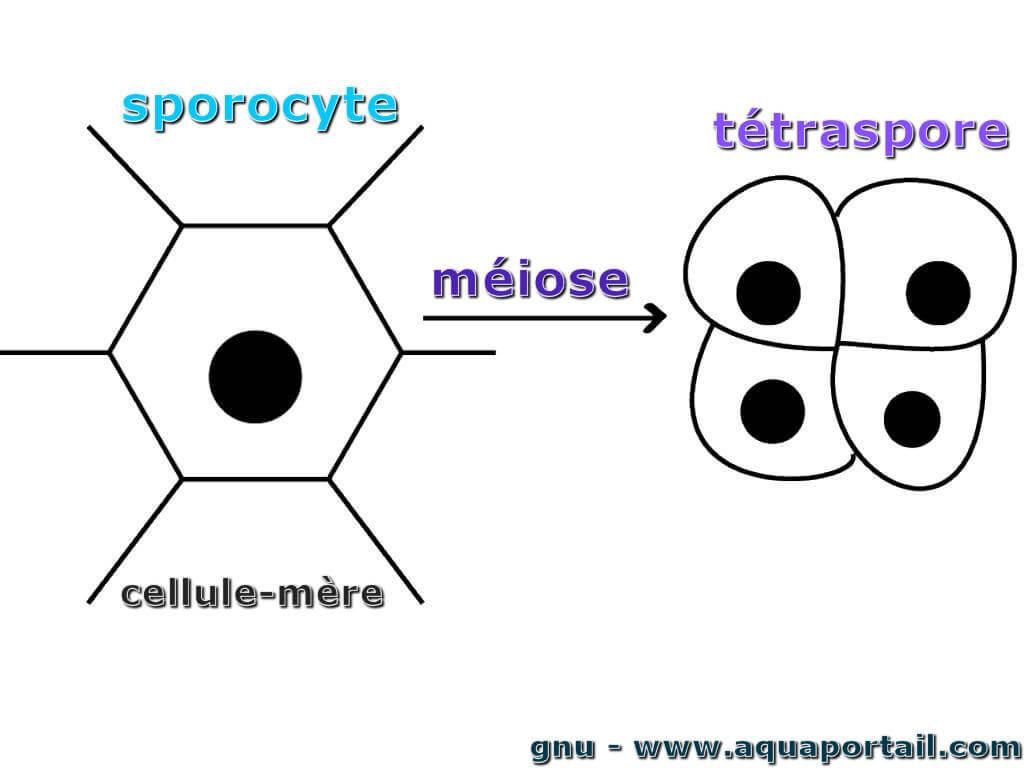
In botany, a tetraspore is a plant spore produced in a tetrasporocyst, ending at a prothallus stage in algae.
tetrasporocyst
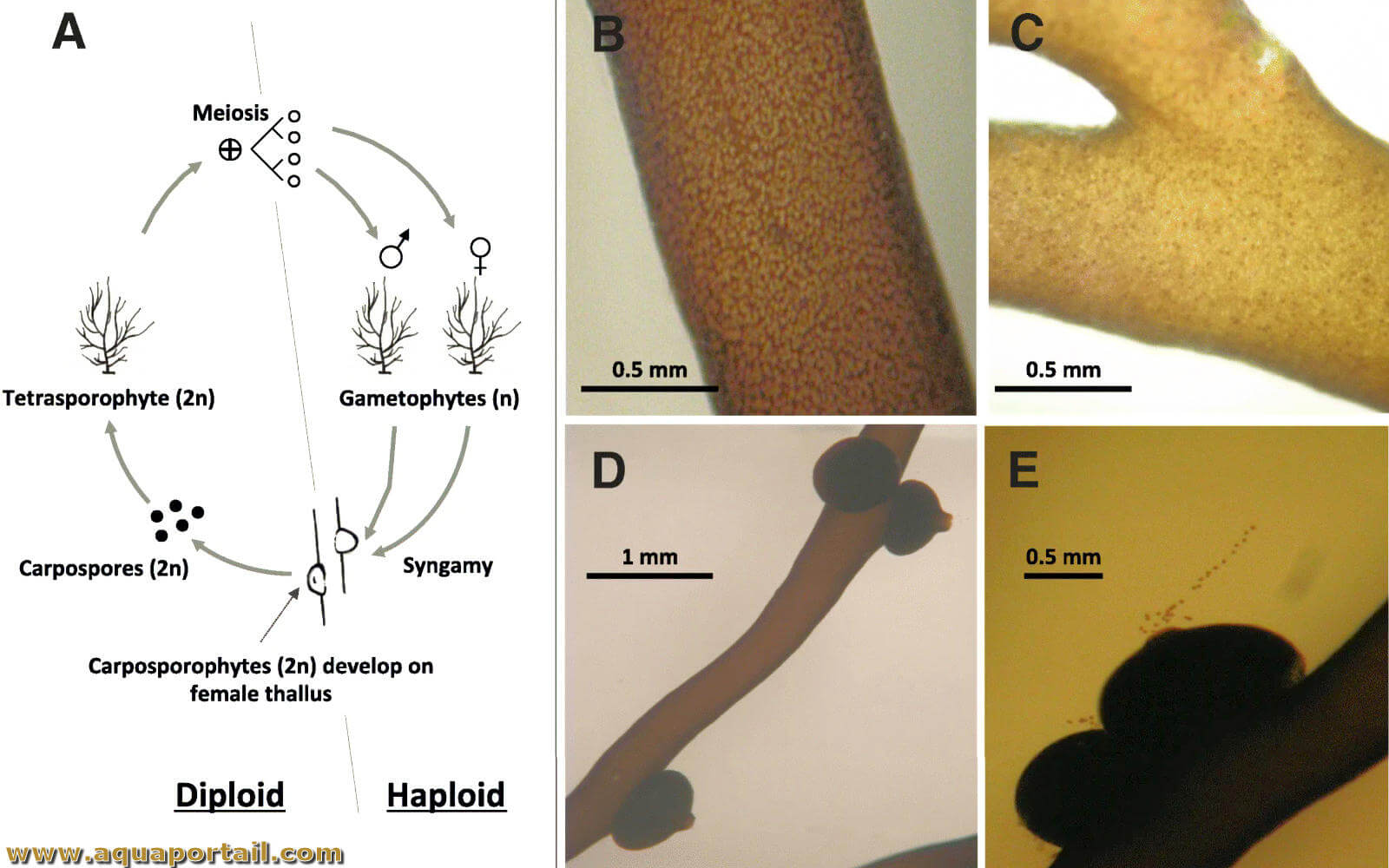
A tetrasporocyst is the structure in which tetraspores are produced in certain red algae, brown algae, and fungi.
tetrasporophyte
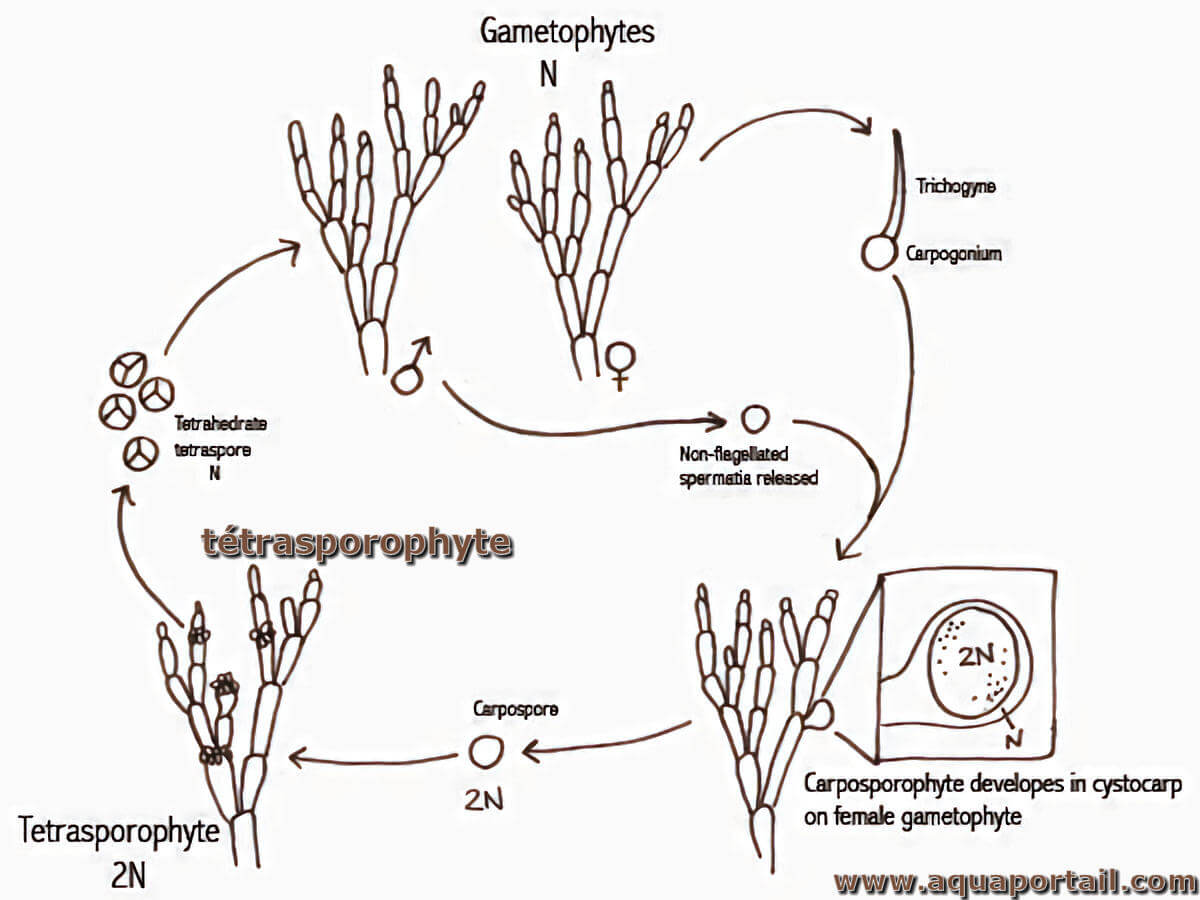
A tetrasporophyte is a stage in the trigenetic life cycle of certain red algae. Arising from a carpospore, the tetrasporophyte produces the tetraspores that...
