Tetraploid organisms result from an extremely rare chromosomal anomaly, polyploidy, when an affected individual possesses four copies of each chromosome instead of two in diploids. This organism has double the normal number of chromosomes in every cell.
diploid
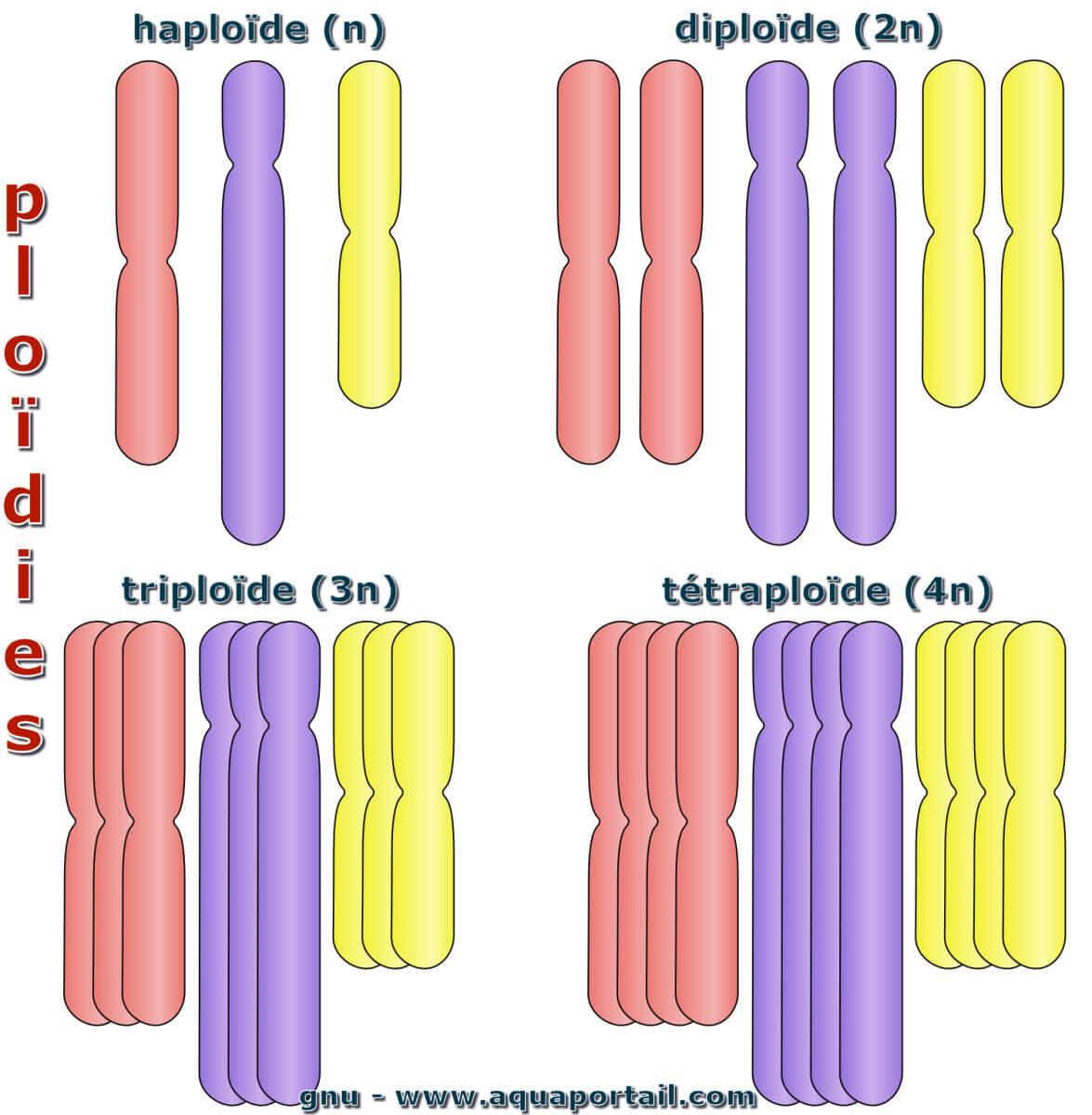
A diploid cell comes from an organism or tissue whose cells possess two sets of chromosomes, denoted 2n, as opposed to haploid with 1n chromosomes...
haploid
A haploid organism has cells possessing 1n chromosomes (the basic minimal chromosome number).
triploid
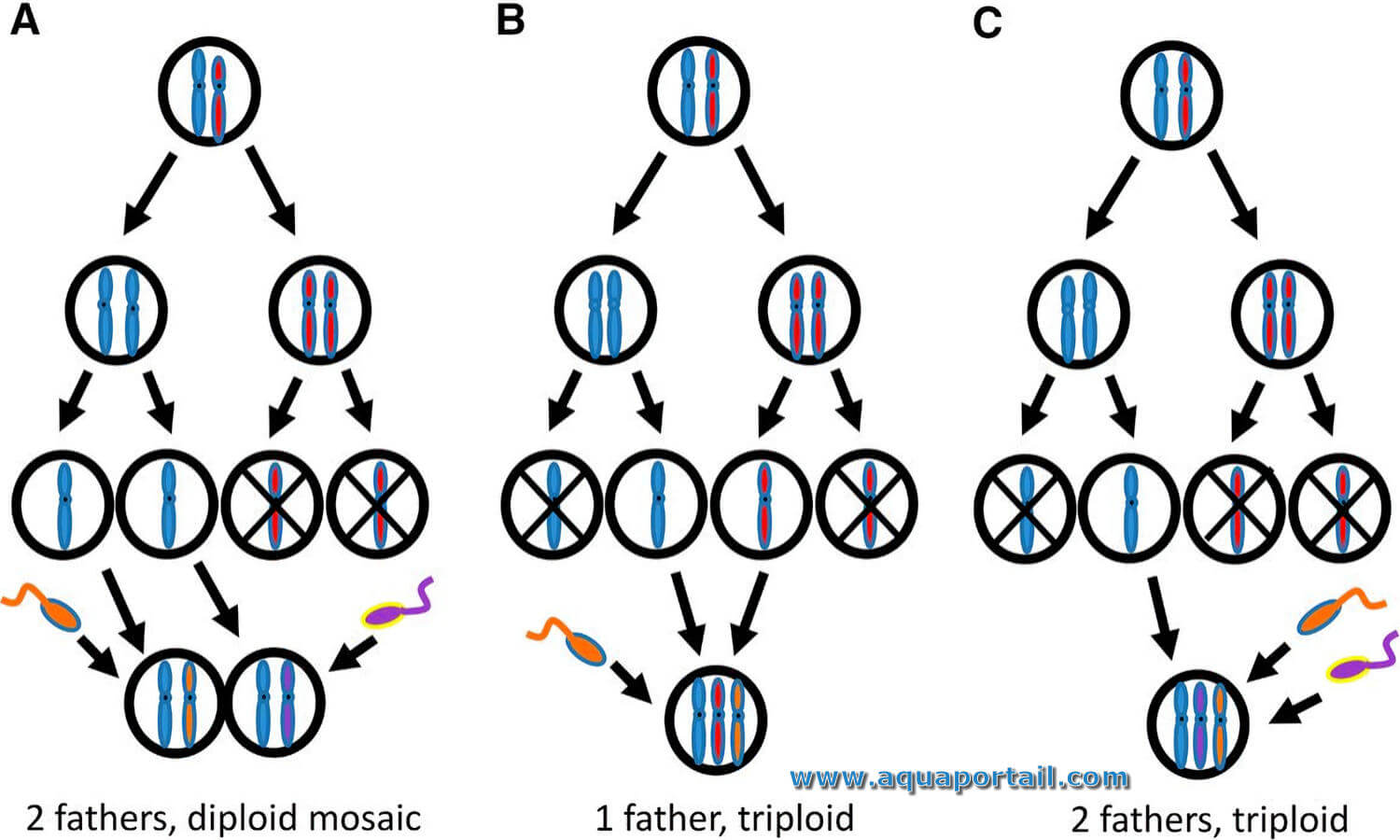
Triploid refers to an organism or tissue whose cells possess 3n chromosomes. It is an organism or cell in which three copies of each chromosome exist (cells...
tetrad

A tetrad is a grouping of four elements. In biology, a tetrad is a structure formed by four chromosomes or chromatids. It occurs during the first phase...
