Hydroquinone
noun (n.)
Definition
Hydroquinone (1,4-benzenediol) is a skin-lightening agent used topically to treat hyperpigmentation. It is a white, odorless crystalline solid with an extremely low vapor pressure. It is moderately soluble in water and very soluble in alcohol. Hydroquinone 1,4-DHB is one of the isomers of diphenol.Effects of hydroquinone on the skin:
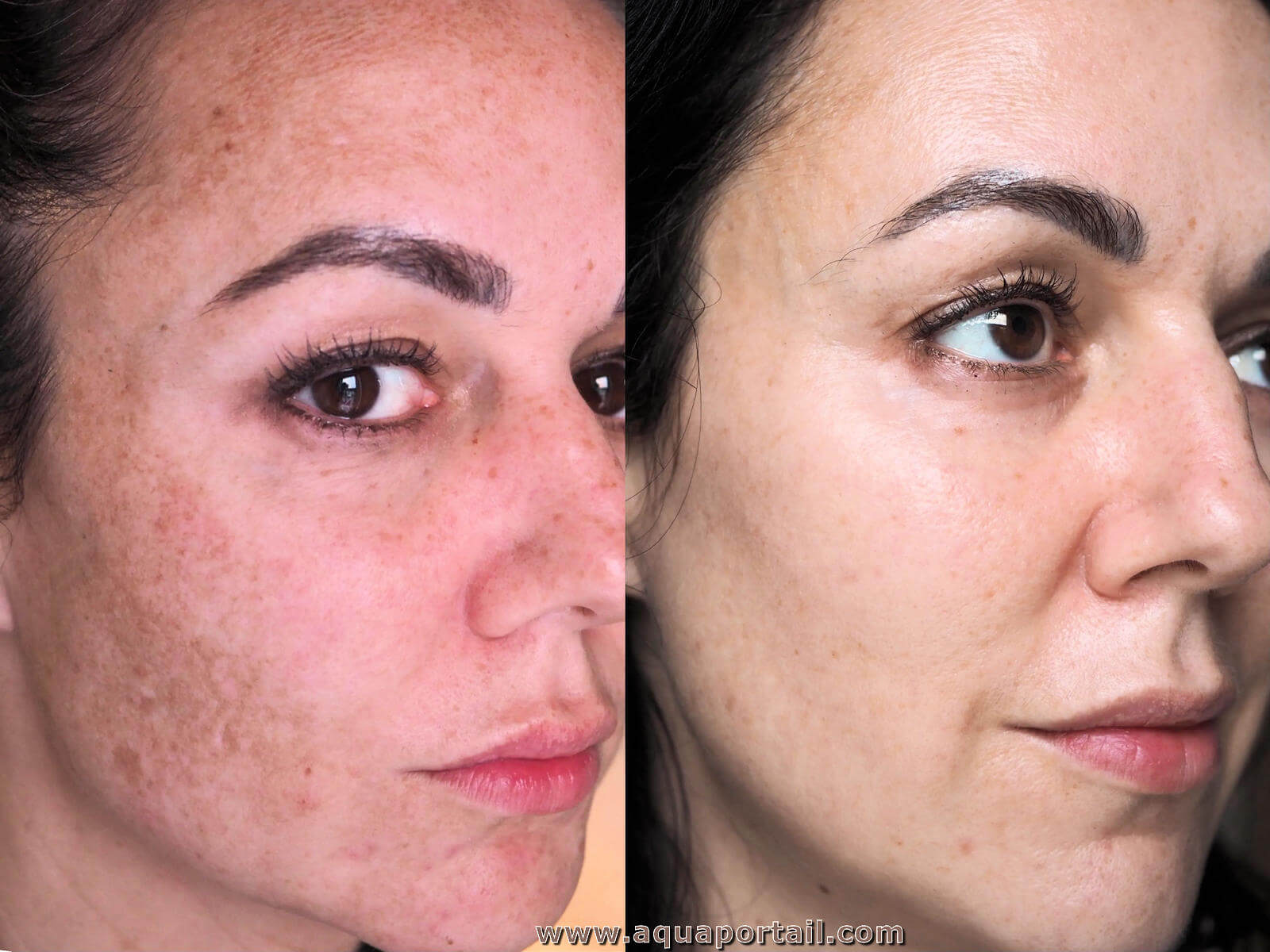
Hydroquinone is THE go-to product for treating melasma (chloasma). However, in several countries it is available only by prescription, and only concentrations up to 2% are available over the counter. Hydroquinone is controversial due to its ban by various health authorities (such as the FDA in the United States) over fears that it may cause cancer.
Explanations
Hydroquinone is present in the environment as a result of anthropogenic processes, as well as in natural products of plants and animals. In soil, hydroquinone is expected to biodegrade under aerobic conditions. It may be removed from soil by oxidation processes or by direct photolysis at the surface. Volatilization is expected to be minimal. In water, hydroquinone is expected to degrade under aerobic or anaerobic conditions.
Hydroquinone can also slowly oxidize to quinone, which is more volatile. In air, hydroquinone undergoes photochemical degradation. It is reported to undergo rapid biodegradation in a commercial activated sludge unit under aerobic conditions.
Estimated and experimental bioconcentration factors for hydroquinone of 40 to 65 have been obtained. These data indicate that hydroquinone is not expected to bioconcentrate significantly in fish and aquatic organisms. Moreover, hydroquinone does not persist in the environment.
Hydroquinone is present in biomass tar and tobacco smoke, likely resulting from the pyrolysis of lignin-type materials.
Chemical structure
Chemical structure of hydroquinone:
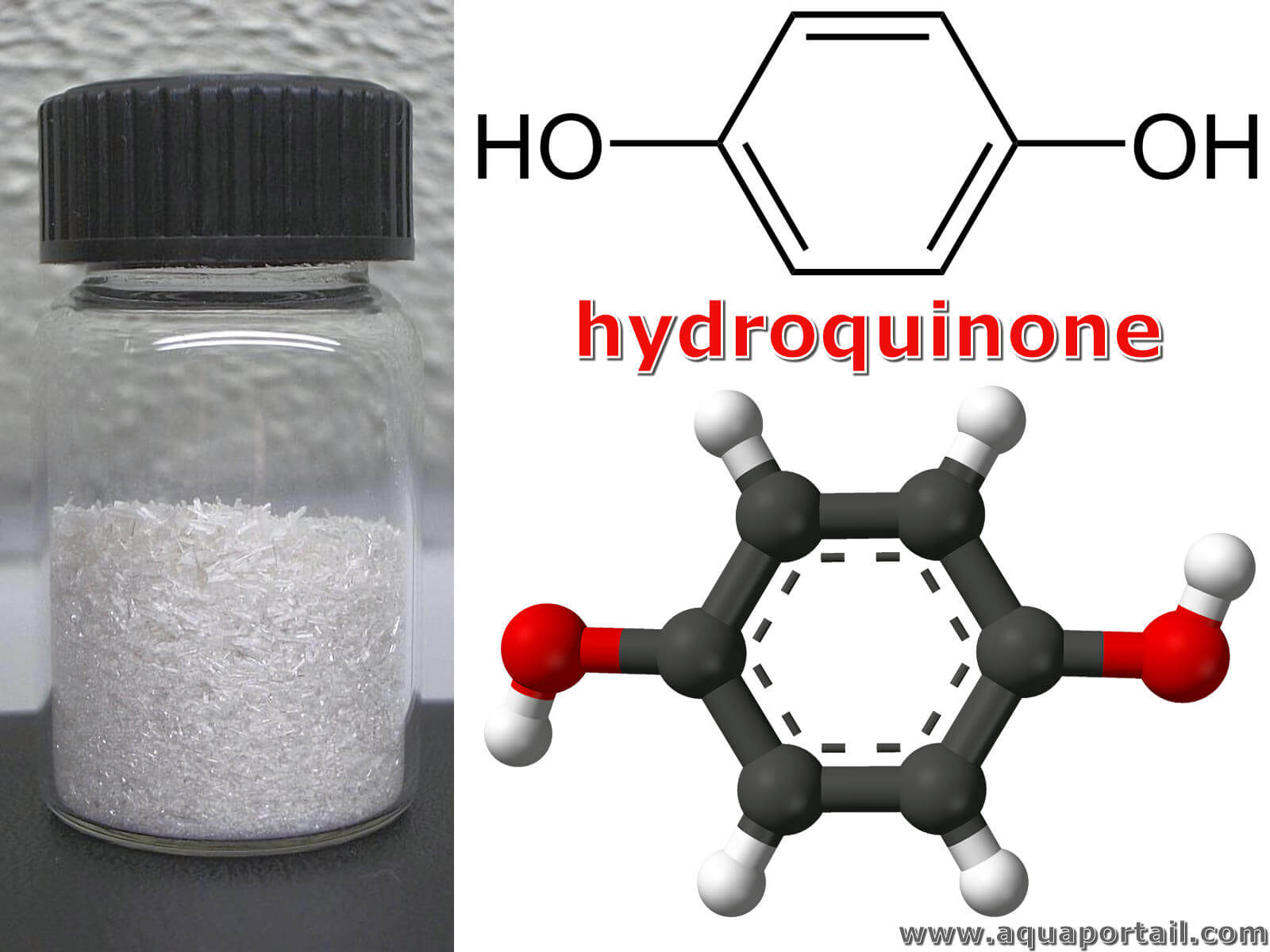
2D and 3D structure of a hydroquinone molecule. On the left, a crystal form of hydroquinone.
Labile hydroquinone is replaced by another quinone residing in a "quinone/hydroquinone pool".
It has been found that hydrogen bonding of quinone oxygen with α-hydroxy hydrogen leading to the reduction of quinone to hydroquinone and α-OH acidity located on the quinone ring generates a final electron transmission that gives rise to perezonate.
Pyrolysis of hydroquinone
Pyrolysis of hydroquinone is of concern not only due to the formation of PAHs, dibenzofuran, and dibenzo-p-dioxin, but also because of the potential formation of persistent free radicals such as p-semiquinone.
Hydroquinone is not as stable upon heating as catechol. Pyrolysis of hydroquinone was studied in a flow reactor with a residence time of 2 s. Below 650 °C (1,202 °F), the main pyrolysis product is benzoquinone, with a maximum yield of about 15% from the hydroquinone feed at 500 °C (932 °F). Above 700 °C (1,292 °F), substituted aromatic compounds formed, including phenol (maximum yield of 6% at 775 °C (1,427 °F)).
Pyrolysis of hydroquinone was also carried out in the presence of isopropyl alcohol as a hydrogen source. The addition of a hydrogen source aimed to simulate conditions in a fuel-rich flame where hydrogen sources are available. The presence of isopropyl alcohol generates hydrogen above 600 °C (1,112 °F) and affects the pyrolysis process of hydroquinone. In the presence of the hydrogen source, below 650 °C (1,202 °F), the main pyrolysis product of hydroquinone is benzoquinone.
Uses
Hydroquinone (HQ) is vital in a wide range of biological and industrial processes such as papermaking, coal tar production, and photography. HQ has been widely used in the production of skin-whitening dyes, cosmetics, antioxidants, polymers, pharmaceutical industries, and as an anticancer agent. HQ is a potentially carcinogenic substance, causing severe effects on the central nervous system.
Indeed, HQ is a serious environmental pollutant; for example, exposure to HQ can cause irritation of the eyes, nose, throat, and skin, as well as nail discoloration. Therefore, the determination and quantification of HQ is necessary to estimate its potential impact. Recently, the use of HQ to substitute unstable oxygen has attracted growing interest as an electron-transfer mediator in the construction of enzyme-based glucose biosensors.
A controversial skin agent
Hydroquinone is surrounded by controversy for several reasons. It has been banned from over-the-counter sale due to concerns regarding cancer, bleaching, hypopigmentation, and worsening of melasma.
The concern stems from the fact that benzene is metabolized into hydroquinone and benzene is a known carcinogen; it is therefore closely related to a carcinogenic molecule. There was a study in rats that showed the potential of hydroquinone to cause renal adenomas when the rats were fed huge doses of HQ.
It should be noted that hydroquinone has been manufactured and used for over 50 years, and no cases of skin cancer or internal malignancy linked to topical application of hydroquinone have been reported.
On the other hand, there are no adequate epidemiological data to document with certainty that hydroquinone is not carcinogenic in a rare individual. Results from occupational exposure studies suggest that individuals exposed to significant amounts of this chemical actually exhibit lower rates of disease and cancer than control populations. Benzene, by contrast, is a very hazardous substance and causes bone marrow toxicity in high percentages of exposed individuals in a dose-dependent manner.
Does hydroquinone bleach the skin? No!
Skin-lightening agents like HQ work in different ways. Above all, however, they generally slow down melanin production.
Most hyperpigmentation treatments act on the first step of melanin synthesis, namely the conversion of tyrosine to DOPA and dopaquinone by an enzyme called tyrosinase. Hydroquinone blocks the tyrosinase enzyme and competes with tyrosine to prevent its eventual conversion into melanin, rather than bleaching the skin.
❓ How does it just lighten hyperpigmentation? Do you simply target the affected area when using hydroquinone? Hydroquinone competes with tyrosine in melanin production, meaning it reduces melanin production rather than removing existing melanin. It does not have a strong enough effect to halt melanin production entirely; it simply reduces the amount of melanin. Thus, cells that overproduce pigment have their activity reduced, creating a level playing field in terms of pigment production.
However, melanocyte destruction is not a myth, and I was unaware of it! HQ can react with oxygen to form hydroxybenzoquinone, which can kill melanin-producing cells and thus bleach the skin. Consequently, excessive hydroquinone activity can cause depigmentation.
Could hydroquinone make skin darker? Ochronosis
There is a condition called exogenous ochronosis that gives the skin a dark blue-gray color. I wanted to know how common this condition is; I have never heard of anyone suffering from it in any of the skincare groups I belong to.
Ochronosis appears darker than melasma, and if you suspect you have it, it is best to see a dermatologist for an early diagnosis. This occurs when hydroquinone accumulates in the skin over a long period of time and polymerizes into homogentisic acid. It is not easy to treat; the best treatment option available is laser therapy.
Exogenous ochronosis was once thought to be a condition seen only in darker-skinned individuals from Africa; however, the condition has been shown to occur in people of Hispanic, Asian, and Caucasian descent.
Ochronosis appears to be a rare condition, but it is best to use hydroquinone under the supervision of a dermatologist using approved formulations in airless containers to prevent oxidation, rather than dubious lightening creams from the Internet.
Foods with quinones
Common foods ingested daily by most individuals contain significant amounts of naturally occurring hydroquinone and/or arbutin. Foods containing hydroquinone include:
- cranberries and blueberries
- coffee and tea (a major source of hydroquinone)
- red wine
- rice and onions (intermediate amounts)
- wheat germ, wheat, and wheat bread (arbutin)
A single pear can contain 620 µg of hydroquinone/arbutin. Pear skin in particular contains large amounts of hydroquinone or arbutin.
Synonyms, antonyms
Spanish translation: hidroquinona
1 synonym (similar meaning) for "hydroquinone":
0 antonyms (opposite meaning).
Related words and expressions to HYDROQUINONE are directly connected by general or specific meaning.
The word HYDROQUINONE is listed on page 1 of words starting with H in the dictionary glossary.
Related to "hydroquinone"
benzoquinone
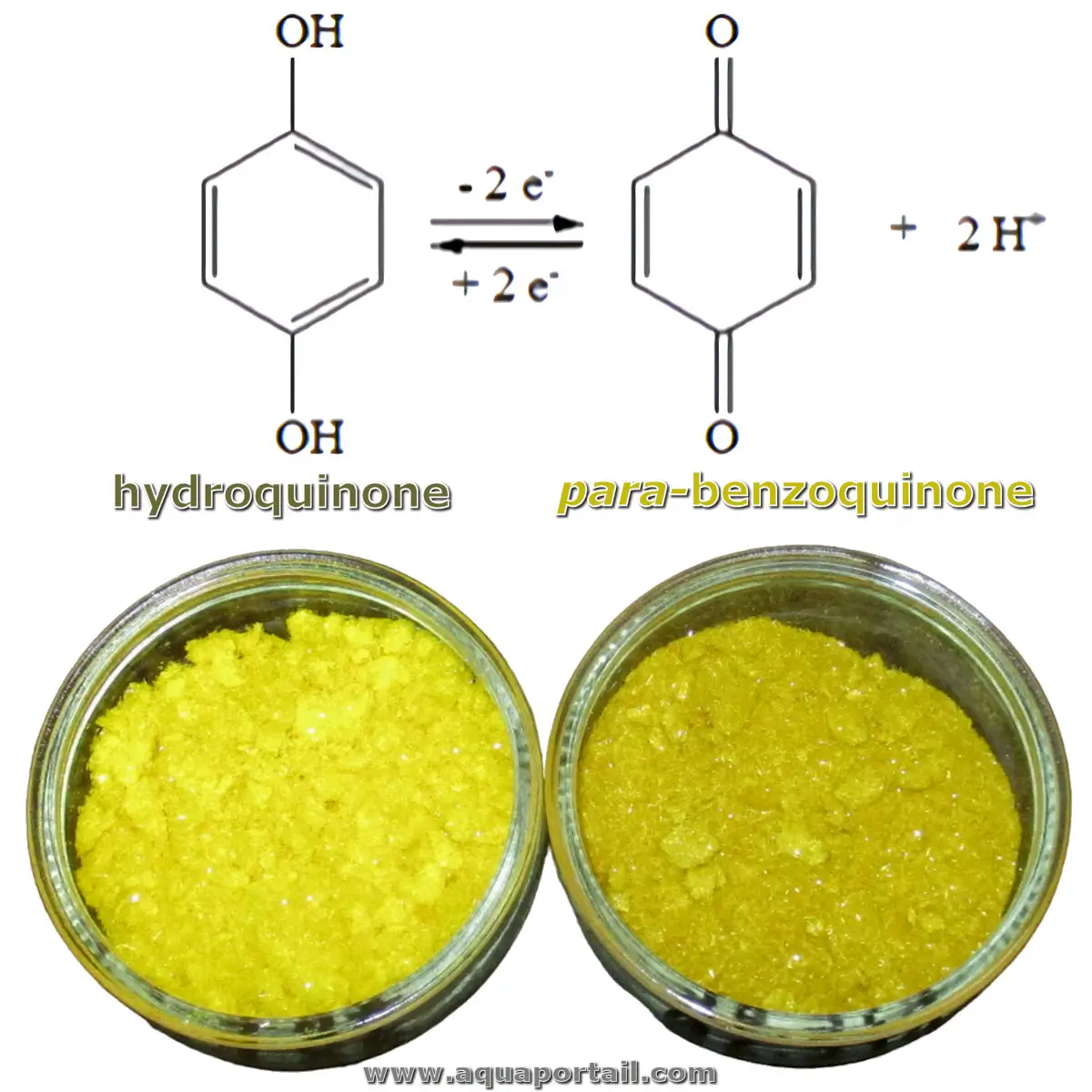
Benzoquinone is a simple quinone (a non-aromatic unsaturated cyclic compound) derived notably from the oxidation of hydroquinone, exhibiting the chemical...
ubiquinone
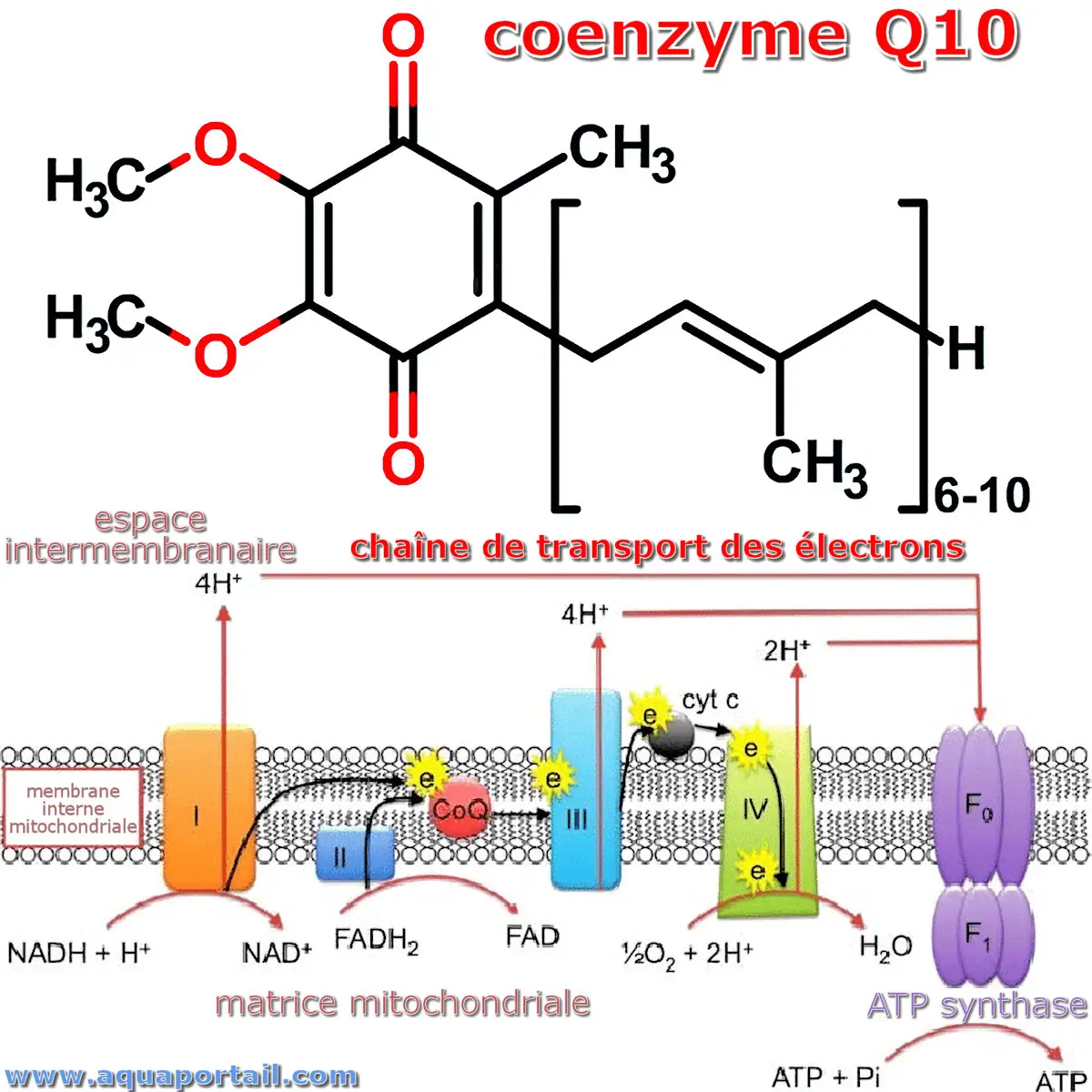
An ubiquinone, or coenzyme Q10, designates a class of non-protein carriers in an electron transport chain.
hydrocarbon

A hydrocarbon is an organic molecule composed exclusively of carbon and hydrogen atoms, representing the most fundamental class of organic compounds.
hydrodynamism
Hydrodynamism refers to the state of water motion and agitation encompassing all physical phenomena involved in water mass movement (currents, swell, tides...
