Hypertrophy
noun (n.)
Definition
Hypertrophy is the excessive enlargement or overgrowth of an organ, portion of an organ, cell, or tissue, contrasting with atrophy. In physiology, it specifically refers to the enlargement of muscle fibers driving muscle growth.Muscular hypertrophy:

Muscular hypertrophy occurs through a physiological process that increases the amount of contractile proteins (actin and myosin) within each muscle fiber under an appropriate training regimen.
Explanations
Cellular growth during hypertrophy results from heightened synthesis of structural components; because it occurs without cell division, it leads to an increase in individual cell volume. The nuclei of hypertrophied cells may also contain more DNA than normal cells.
✅ While hypertrophy is the enlargement of an organ or tissue resulting from an increase in the size of its constituent cells, it must not be confused with hyperplasia, the process of increasing cell number. Hypertrophy enlarges existing cells, whereas hyperplasia multiplies cell count in developmental or adaptive tissue remodeling.
Hypertrophy vs. hyperplasia:

Compared with normal cells, cellular hypertrophy produces an increase in cell volume and size, whereas hyperplasia drives increased cell proliferation.
Types
Three main types of muscular and organ hypertrophy are recognized:
- transient or acute hypertrophy, consisting of temporary muscle swelling ("pump") immediately following resistance exercise, which is short-lived
- chronic hypertrophy, subdivided into sarcoplasmic hypertrophy and myofibrillar hypertrophy
- compensatory hypertrophy, occurring when one organ of a paired set enlarges to compensate for impaired function or loss of the other
In sarcoplasmic hypertrophy, the muscle expands the volume of sarcoplasm—the semifluid cytoplasm surrounding the myofibrils—producing a lasting increase in muscle cross-sectional size without directly increasing maximal strength.
In myofibrillar hypertrophy, both the size and number of contractile myofibrils within each muscle fiber increase. During resistance training, muscle fibers undergo microscopic mechanical stress and subsequently repair and thicken, producing substantial gains in both muscle size and maximal strength.
Developing maximal strength through hypertrophy
The methodology for building maximal strength by increasing muscle cross-sectional diameter follows specific training principles. Mechanical overload, while below absolute one-repetition maximum, typically ranges from 75 to 90% of maximal force, balancing work intensity with repetition count per set. When applying isometric methods in high-level athletes, training adaptations appear above a tension threshold of 70% of maximal strength, with peak gains achieved at tensions of 90 to 100% of maximal force.
When targeting muscle cross-sectional growth, each repetition typically lasts between 3 and 6 seconds. When performing high training volumes to build maximal strength via muscle hypertrophy, slow-tempo exercises should be paired with speed-strength and explosive power drills; otherwise, fast-twitch type II muscle fibers may lose rapid contraction velocity due to diminished intramuscular coordination. Addressing this ensures that maximal strength development simultaneously supports speed and explosive power.
To establish an optimal set duration, muscle hypertrophy is stimulated when mechanical tension and metabolic demand tax structural and contractile proteins alongside ATP and phosphocreatine (PCr) stores.
This occurs when the repetition count per set sustains intense muscular effort for roughly 25 to 35 seconds. If effort is much shorter (5–10 seconds), remaining PCr stores rapidly replenish the ATP deficit without substantial structural protein turnover. Conversely, during prolonged sets (over 45 seconds), mechanical load is comparatively low, energy is supplied primarily via muscle glycogen, and myofibrillar protein breakdown remains modest. Active synthesis of new contractile proteins during post-exercise recovery drives supercompensation and muscle growth.
During dynamic resistance movements, the concentric (lifting) phase is generally executed roughly twice as fast as the eccentric (lowering) phase—for example, taking 1 to 1.5 seconds to lift a barbell and 2 to 3 seconds to lower it, resulting in 3 to 5 seconds per repetition and 30 to 45 seconds for a 10-repetition set.
To maximize strength and muscle cross-sectional area, an optimal balance between load magnitude and repetition number applies: empirical training literature indicates that sets of 6 to 12 repetitions are most effective for strength-hypertrophy, while 8 to 15 repetitions per set are widely favored for overall muscular hypertrophy.
Synonyms, antonyms
Spanish translation: hipertrofia
1 synonym (similar meaning) for "hypertrophy":
1 antonym (opposite meaning):
Related words and expressions to HYPERTROPHY are directly connected by general or specific meaning.
The word HYPERTROPHY is listed on page 1 of words starting with H in the dictionary glossary.
Related to "hypertrophy"
autotrophy

Autotrophy is the trophic mode of an organism capable of synthesizing organic matter from inorganic matter.
auxotrophy
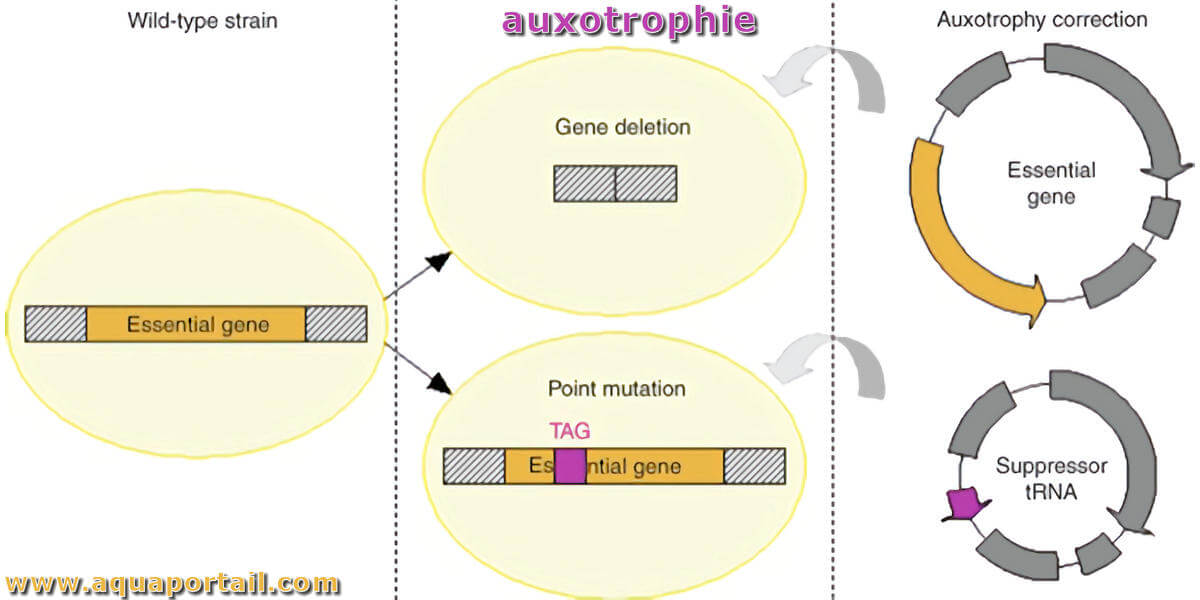
Auxotrophy is a trophic mode characterizing organisms, autotrophic for the vast majority of their needs, that cannot synthesize certain essential molecules...
heterotrophy

Heterotrophy is a trophic mode (heterotrophic nutrition) characterizing organisms that sustain themselves by assimilating organic compounds.
habitat

A habitat is the place or environment where an organism naturally lives and grows, its typical place of residence.
