Ubiquinone
noun (n.)
Definition
An ubiquinone, or coenzyme Q10, designates a class of non-protein carriers in an electron transport chain. Ubiquinones are chemical compounds common to all living beings. They act as electron and proton carriers in the respiratory chain.
Coenzyme Q10 and its role:
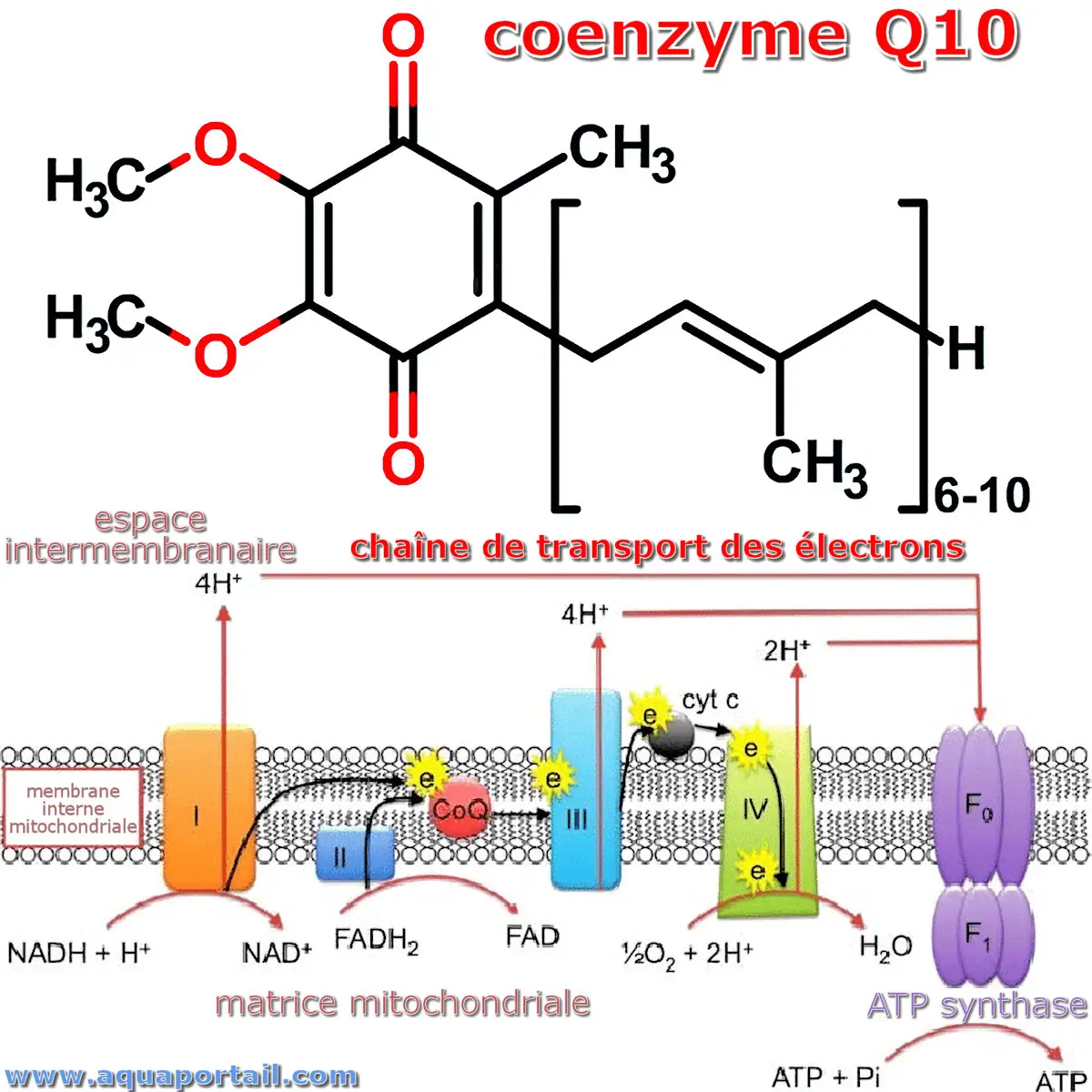
The structure of coenzyme Q10 shows a lipid-soluble component of the inner mitochondrial membrane. The mitochondrial electron transport chain reoxidizes reduced cofactors (NADH and FADH2) using molecular oxygen as the final electron acceptor, and the energy released during this process is captured as ATP. The electron transport chain (ETC) illustrates the position of coenzyme Q10 (in red) in the inner membrane.
Explanations
The core structure of ubiquinones is 1,4-benzoquinone, which contains a methoxyl group at positions 2 and 3, a methyl group at position 6, and an isoprenoid side chain (derived from isoprene) at position 5. Ubiquinones are designated by the number of isoprene units in the side chain as ubiquinone-1, ubiquinone-2, ubiquinone-3, etc., and abbreviated as Q-1, Q-2, Q-3, etc.
Ubiquinone is also called coenzyme Q or ubidecarenone. In humans, ubiquinone Q10 is predominantly active.
Chloroplasts contain plastoquinones similar to ubiquinones that participate in electron transport during the oxidation process of photosynthesis.
In the yeast Saccharomyces cerevisiae, the Q6 form is present; in the bacterium Escherichia coli, it is Q8; in rodents, Q9; and in most other mammals, including humans, coenzyme Q10 is predominant.
Ubiquinone was discovered in 1957 by Professor Fred L. Crane and his colleagues at the University of Wisconsin-Madison. A year later, its structure was described by Professor Karl Folkers and his colleagues at Merck.
Role of coenzyme Q10
Coenzyme Q10 (CoQ10) is a benzoquinone present in virtually all cells of the body that participates in ATP production processes.
Because it is essential to this process, organs with higher energy demands (such as the heart, brain, kidneys, and liver) have higher concentrations of CoQ10.
Biosynthesis
Coenzyme Q10 is mainly found in the vesicles of the Golgi apparatus, lysosomes, and the inner mitochondrial membrane, where it plays an important role in the electron carrier chain. Ubiquinone receives electron pairs from NADH of complex I and FADH2 of complex II, being reduced from Q to QH2 (ubiquinol). Subsequently, CoQH2 transfers electrons to cytochrome c, a process catalyzed by complex III, reoxidizing QH2 back into Q.
Diagram of a ubiquinone molecule:
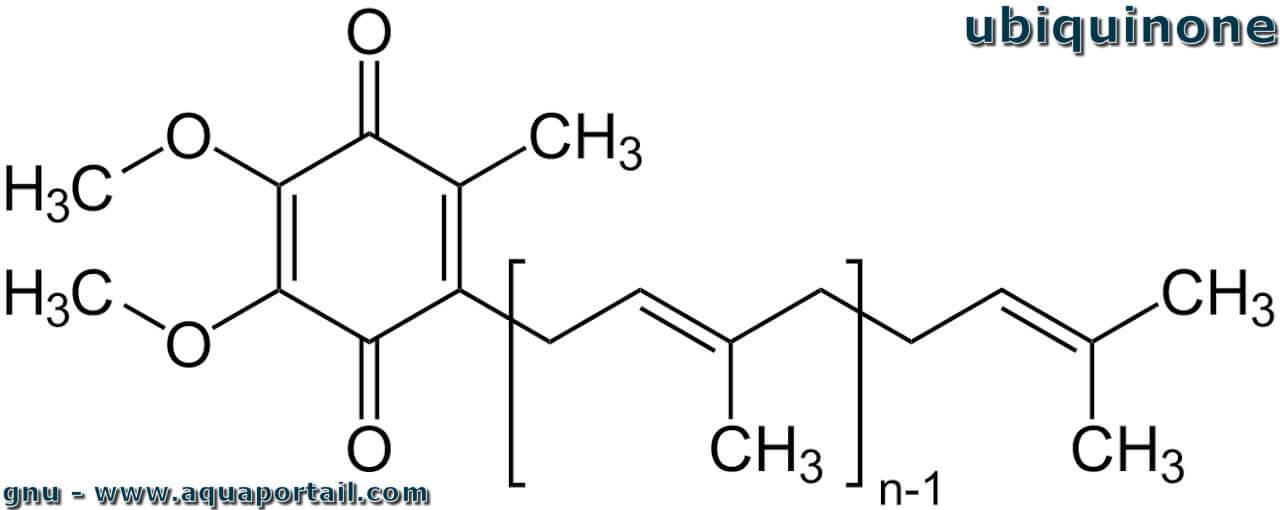
Ubiquinone, in its structural formula, has a number of isoprene units of n; in humans, n is usually equal to 10. Coenzyme Q10 is essential for electron transport in the mitochondrial respiratory chain. The enzyme carries electrons from complexes I and II to complex III, thereby participating in ATP production.
Part of coenzyme Q10 is synthesized from tyrosine, while another part is synthesized from acetyl-CoA via mevalonate, the same pathway used in the early stages of cholesterol biosynthesis. Because they share part of their synthesis pathway with this molecule, certain medications used to lower blood pressure and blood cholesterol levels inhibit coenzyme Q10 production.
Supplementation
Due to its ability to transfer electrons and thus act as an antioxidant, coenzyme Q is also used as a nutritional supplement. Coenzyme Q10 production decreases with age, increasing the need for supplementation, as a lack of CoQ10 can cause damage to the brain, other organs, and mitochondria throughout the body.
Synonyms, antonyms
Spanish translation: ubiquinona
3 synonyms (similar meaning) for "ubiquinone":
- coenzyme Q10
- CoQ10
- ubidecarenone
0 antonyms (opposite meaning).
Related words and expressions to UBIQUINONE are directly connected by general or specific meaning.
The word UBIQUINONE is listed on page 1 of words starting with U in the dictionary glossary.
Related to "ubiquinone"
benzoquinone
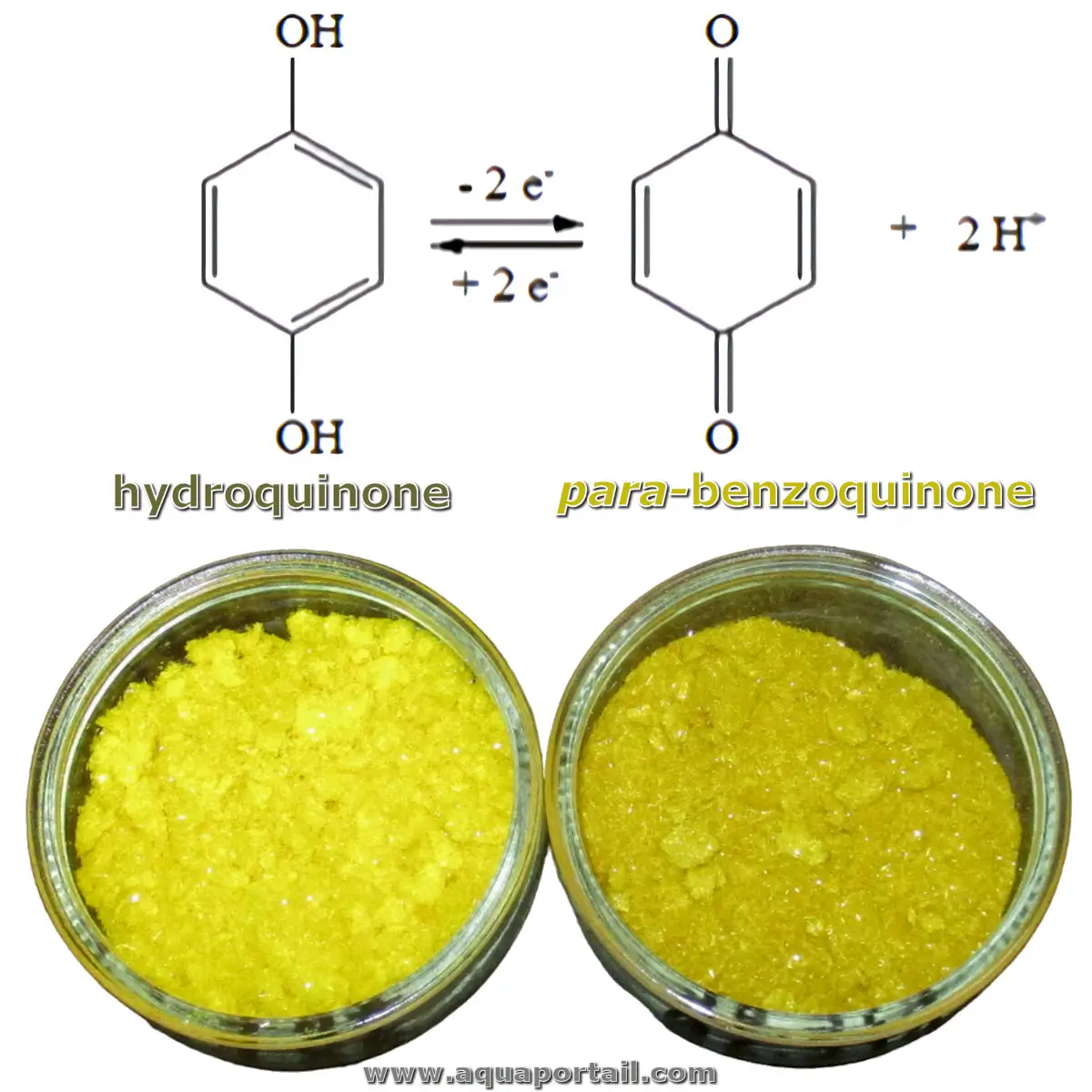
Benzoquinone is a simple quinone (a non-aromatic unsaturated cyclic compound) derived notably from the oxidation of hydroquinone, exhibiting the chemical...
hydroquinone

Hydroquinone (1,4-benzenediol) is a skin-lightening agent used topically to treat hyperpigmentation.
ultraviolet
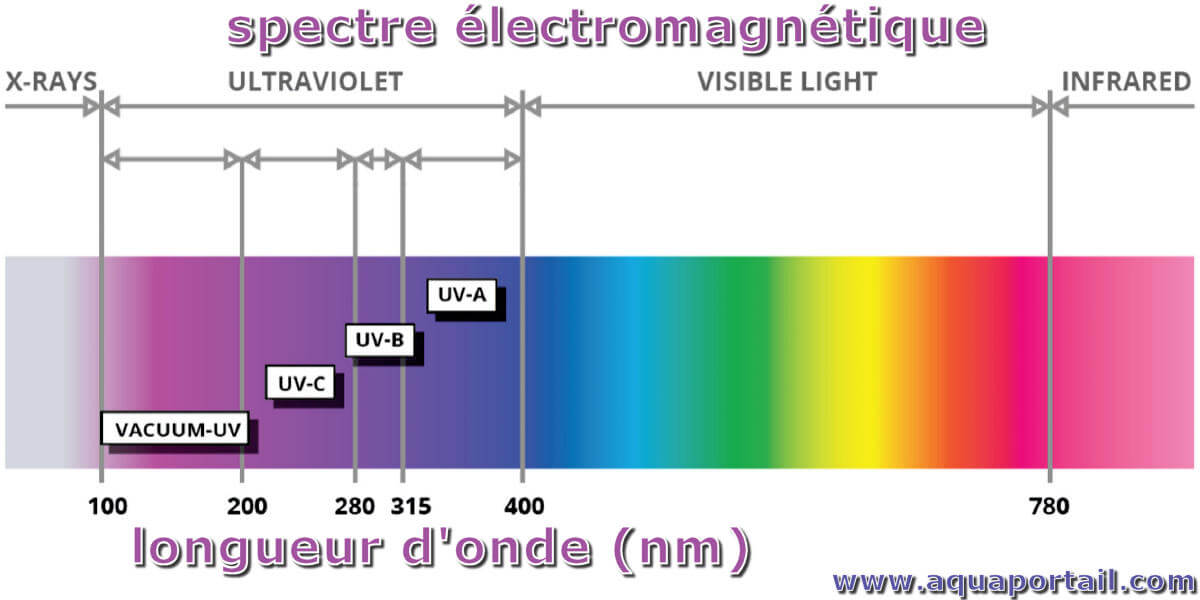
Ultraviolet, also abbreviated UV, refers to electromagnetic radiation with wavelengths between those of the violet end of the visible spectrum and those...
umami

Umami is one of the five basic tastes sensed by humans, alongside sour, sweet, bitter, and salty.
Simple summary
Coenzyme Q10 (CoQ10) is a compound naturally present in the cells of an organism for energy production within mitochondria, the true powerhouses of the cell. Furthermore, CoQ10 acts as an antioxidant, helping to protect cells against damage caused by free radicals. This compound is found in various foods and can also be taken as a dietary supplement. It is particularly useful for the proper functioning of the heart and muscles, and can help support overall cellular health.
