Mixotrophy
noun (n.)
Definition
Mixotrophy is a mode of nutrition of organisms capable of feeding through both autotrophy and heterotrophy. It characterizes a mixotroph that can utilize a mixture of different energy and carbon sources. Heterotrophic and autotrophic modes may operate simultaneously or alternately, leading to the utilization of inorganic and organic carbon in the presence of light.Alternations are possible between phototrophy and chemotrophy, between lithotrophy and organotrophy, between autotrophy and heterotrophy, or a combination thereof.
Phagotrophy, mixotrophy, and photoautotrophy:
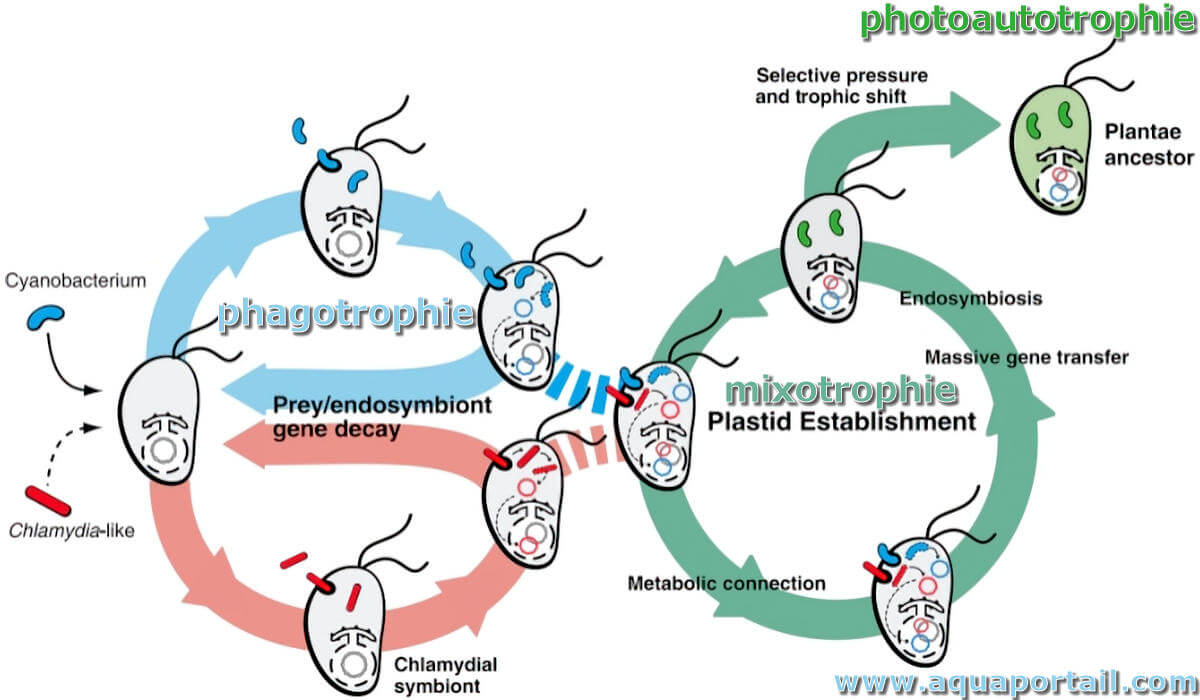
Mixotrophy is often accompanied by phagotrophy in certain organisms. It can lead to photoautotrophy (phototrophy).
Explanations
Overall, species-specific physiological tolerances, resource-uptake strategies, key ecophysiological traits (for example, motility, intracellular nutrient storage, nitrogen fixation, mixotrophy, grazing resistance, resting stages, and allelopathic compounds), and loss processes determine where and when particular groups thrive or fail. Consequently, environmental changes driven by climate and hydrodynamics (for aquatic organisms in estuaries and coastal systems) affect not only biomass, growth, and production, but also species composition.
✅ Some microalgal species have lost their photosynthetic capacity and become heterotrophic, meaning they use organic matter to grow as saprobiontic or parasitic organisms. Other species such as Chlorella are able to use both pathways and grow as either autotrophic or heterotrophic organisms; this ability is called mixotrophy. Based on this strategy, microalgal cultures can be grown under heterotrophic or mixotrophic conditions in fermenters filled with a liquid medium containing organic compounds.
Theoretical studies show that mixotrophy is advantageous in oligotrophic environments, whereas in more eutrophic environments, evolutionary specialization of autotrophs and heterotrophs occurs. Phagotrophy in mixotrophs is more often an important source of inorganic nutrients such as nitrogen, phosphorus, and iron rather than carbon, although under low light, prey ingestion can also aid carbon acquisition. One study suggests that mixotrophy may also be advantageous in fluctuating environments or those undergoing eutrophication or de-eutrophication.
In phototrophic mode, carbon requirements are met entirely by inorganic CO2, whereas in mixotrophy (also referred to as photoheterotrophy in certain culture contexts), cultures utilize both CO2 and organic carbon supplemented in the nutrient medium. Various organic carbon sources (maltose, malt extract, glucose, acetate, glycerol, sucrose, etc.) are used.
Case of evolutionary mixotrophy in plants
The ancestor of Plantae (plants as well as green and red algae) was a phagotrophic protist that consumed cyanobacteria as food and was parasitized by environmental Chlamydiae. Gene transfers from both prokaryotic sources to the host nucleus resulted in their reduction and loss or occasional gene replacement, as observed in modern protists.
The transition to mixotrophy was facilitated by the transfer and activation of key cyanobacterial genes such as those regulating the cell cycle. The mixotrophic ancestor of Plantae continued to consume bacterial prey, yet over time, by recruiting genes from Chlamydiae, eventually evolved a regulated metabolic connection (for example, for exporting fixed carbon compounds) between the newly established endosymbiont and the host cytosol, as well as a system for importing proteins into the endosymbiont using the host secretory system.
These developments cemented the relationship and LED to selection for massive gene loss in the endosymbiont and endosymbiotic gene transfer (EGT) to the host nucleus. Activation of at least 37 genes recruited from Chlamydiae further enhanced plastid functions. The final transition occurred in a prey-poor environment favoring phototrophy. Subsequently, this ancestral alga lost the capacity for phagotrophy and diversified into the extant lineages of green algae, red algae, and glaucophytes.
Synonyms, antonyms
Spanish translation: mixotrofía
4 synonyms (similar meaning) for "mixotrophy":
1 antonym (opposite meaning):
Related words and expressions to MIXOTROPHY are directly connected by general or specific meaning.
The word MIXOTROPHY is listed on page 1 of words starting with M in the dictionary glossary.
Related to "mixotrophy"
autotrophy

Autotrophy is the trophic mode of an organism capable of synthesizing organic matter from inorganic matter.
auxotrophy
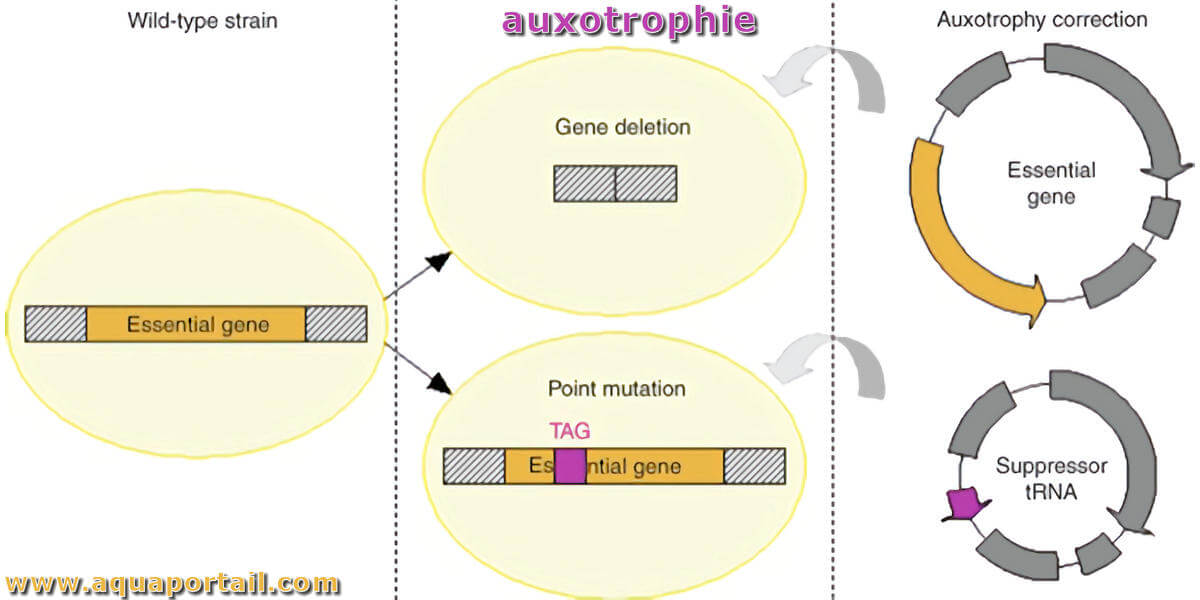
Auxotrophy is a trophic mode characterizing organisms, autotrophic for the vast majority of their needs, that cannot synthesize certain essential molecules...
heterotrophy

Heterotrophy is a trophic mode (heterotrophic nutrition) characterizing organisms that sustain themselves by assimilating organic compounds.
osmotrophy
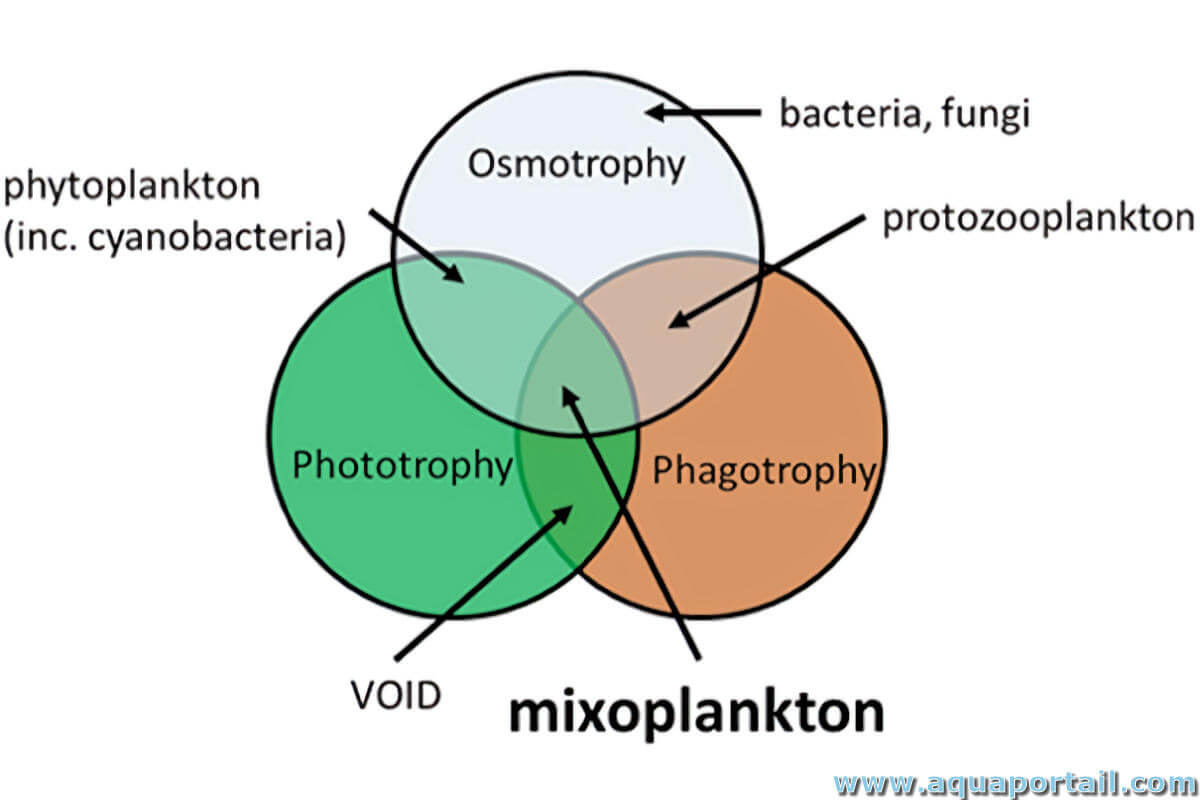
Osmotrophy is the behavior of cells or organisms that obtain nutrients by osmotic absorption of dissolved substances.
