Polyspermy
noun (n.)
Definition
Polyspermy is the fertilization of a female gamete by multiple male gametes. Several spermatozoa penetrate the egg during a polyspermic fertilization event.Polyspermy is blocked by the zona pellucida:

Among the blocks to polyspermy, the zona pellucida plays a major role.
Explanations
Physiological polyspermy normally occurs in yolk-rich eggs (such as in birds, sharks, and chimaeras), though only a single sperm nucleus then fuses with the egg nucleus.
The regulatory mechanisms of physiological polyspermy remain the subject of ongoing research.
Effects of polyspermy
Although many spermatozoa may bind to an egg, normally only one fuses with the egg's plasma membrane and injects its nucleus and other organelles into the oocyte cytoplasm. If fusion of more than one sperm occurs, and thus pathological polyspermy takes place, extra or multipolar mitotic spindles are generated, causing defective chromosome segregation during cell division; aneuploid or polyploid cells are formed and development generally arrests.
In sea urchins, fertilization by two spermatozoa yields a triploid nucleus, in which each chromosome is represented three times instead of twice. Worse still, because the centriole contributed by each sperm divides to form two poles of the mitotic apparatus, the triploid chromosomes are pulled toward four different poles by mitotic spindle fibers, forming four daughter cells with aberrant chromosomal complements. These cells die or develop abnormally.
In humans, polyploidy resulting from multiple fertilization is generally lethal to the embryo and is detected in roughly 10 to 20% of spontaneous abortions, notably in cases of dispermy.
Because of embryonic inviability following a polyspermic event, and despite the binding of numerous spermatozoa to the coats surrounding the egg, it is critical that only a single sperm fuse with the plasma membrane and deliver its nucleus into the cytoplasm. To achieve this, animals have evolved two main mechanisms.
Block to polyspermy
Due to embryonic inviability following a polyspermic event and despite the attachment of numerous spermatozoa to the layers surrounding the egg, it is essential that only a single sperm fuse with the plasma membrane and deliver its nucleus. To achieve this, animals have evolved two primary barriers: a fast block and a slow block.
Fast block
The fast block to polyspermy is achieved by a shift in the electrical potential of the egg's plasma membrane, which acts as a selective barrier between the cytoplasm and the extracellular environment. Thus, ion concentration differs significantly from one side to the other, notably for sodium (Na+) and potassium (K+) ions. In seawater, the external sodium concentration is particularly high. For this reason, this mechanism is especially widespread among marine invertebrates.
Accordingly, this type of block is accomplished by the opening of sodium-dependent channels that allow Na+ ions to enter the cell cytoplasm, depolarizing the membrane—that is, increasing positive charges inside (typically, the resting membrane potential sits around -70 mV, indicating an excess of negative charges inside the cell; upon sperm fusion, the potential shifts to positive values).
An experiment demonstrating the importance of sodium in the fast block to polyspermy was conducted by Laurinda Jaffe and her colleagues by altering the concentration of this ion in the medium. Reducing sodium concentration increased the number of polyspermic eggs, because channel opening failed to admit enough ions into the cytoplasm and the necessary potential shift did not occur.
There is not yet complete certainty regarding how a shift in membrane potential acts on sperm to block secondary fertilization. The most widely accepted hypothesis is that the sperm carries a voltage-sensitive component (perhaps a positively charged fusogenic protein) whose insertion into the oocyte membrane depends on the electrical charge across the egg membrane.
In Rana pipiens, the leopard frog, the membrane potential shifts to +8 mV within one second, slowly rising to +17 mV. This potential is maintained for 20 minutes. However, this mechanism does not operate in salamanders, nor is it effective in preventing polyspermy during cross-fertilization of Xenopus tropicalis eggs by salamander sperm. A fast block via membrane depolarization has also been demonstrated in the marine worm Urechis caupo, confirming the importance of the potential change itself rather than ion flux alone, as well as in fucoid algae (Fucus, a family of brown algae) and sea stars.
While many non-mammalian species use this type of electrical membrane block, in mammals it operates via a different mechanism, as no membrane depolarization is observed in fertilized eggs of mice, hamsters, and rabbits.
Slow block
A second mechanism to prevent multiple spermatozoa from entering the egg cytoplasm is required because the fast mechanism is transient: an egg's membrane potential remains positive for only a brief period. Thus, the second mechanism involves a lasting event, the cortical granule reaction (cortical reaction).
When the sperm fuses with the egg's plasma membrane, it triggers a local rise in cytosolic calcium that propagates across the cell as a wave. Evidence supports the idea that the Ca2+ wave or oscillations (in certain mammals exhibiting oscillations rather than a single wave) are induced by a protein introduced by the sperm (such as phospholipase C zeta). However, in sea urchins and mammals, the rise in calcium concentration is not due to entry of this ion from the extracellular medium, but rather to calcium release from intracellular stores. Specifically, calcium ions are stored in the egg's endoplasmic reticulum and released via activation of inositol trisphosphate (IP3)-gated calcium channels in the reticulum membrane. This pathway is activated upon contact with sperm factors. In sea urchins and frogs, the endoplasmic reticulum is prominent in the cortex and surrounds the cortical granules, with calcium directly driving propagation of the cortical reaction. Once released from stores, free calcium ions induce further release of sequestered calcium from storage sites (calcium-induced calcium release), thereby generating the propagating wave and exocytosis of cortical granules.
The mechanism of exocytosis proceeds as follows. Directly beneath the egg's plasma membrane lie thousands of cortical granules (about 15,000 in sea urchins), triggered to undergo exocytosis by the calcium wave propagating immediately after sperm entry. Through this process, vesicles located in the cortex fuse with the plasma membrane and release their contents. In sea urchins, the granules release several proteins into the space between the egg's plasma membrane and the fibrous mat of the vitelline envelope.
Among the released proteins are proteases that cleave the attachments linking the vitelline envelope to the cell membrane, while also stripping away binding receptors (to which sperm attach) as well as any supernumerary sperm bound to the egg. In addition, mucopolysaccharides are released, creating an osmotic gradient that draws water into this space and lifts the envelope, forming the fertilization membrane. A third released enzyme, an ovoperoxidase, hardens the fertilization membrane by cross-linking tyrosine residues in adjacent proteins.
Formation of the fertilization membrane begins at the point of sperm entry and continues expanding around the rest of the egg. This process also leads to formation of the hyaline layer through the release of a fourth protein bearing that name, whose function is to support blastomeres during embryonic cleavage.
Block in fish
Unlike many other organisms, contact between sperm and the egg of a teleost fish occurs only after the male gamete enters through a narrow canal, the micropyle, at a specific pole of the egg. Partly for this reason, most teleost fish lack an acrosome in their spermatozoa.
Consequently, mechanisms blocking polyspermy in fish differ considerably. This process is carried out in at least four stages. First, structural changes occur in the micropyle, which narrows to restrict the number of sperm reaching the egg's plasma membrane.
Next, formation of the fertilization cone, resulting from fusion between the membranes of the two gametes, plugs the micropylar opening. Subsequently, interactions take place between lectins released from cortical granules and supernumerary sperm in the micropylar vestibule: these proteins initially immobilize the sperm, which are then expelled from the vestibule by increased osmotic pressure of the perivitelline fluid. Thereafter, lectin-containing perivitelline fluid interacts with the exterior of the fibrous layer to abolish sperm orientation and attraction toward the micropyle. Finally, the cortical reaction hardens the chorion, thereby ensuring permanent closure of the micropyle.
Block in mammals
Several processes involving the female reproductive tract, such as sperm selection and retention in the isthmic oviductal reservoir, serve to regulate the number of spermatozoa reaching the fertilization site in many species.
In mammals, the block to polyspermy at the egg operates primarily at two levels: in the zona pellucida (analogous to the vitelline envelope in non-mammals) and at the plasma membrane. There is thus spatial differentiation, though unlike non-mammalian species where differentiation is also temporal, in members of this class both mechanisms act in a complementary fashion.
The block in the zona pellucida is fairly similar to that in non-mammalian organisms. Sperm fusion with the egg also induces a Ca2+ signal, initiated opposite the sperm fusion site, which activates the egg to undergo the cortical reaction. However, in mammals, no detached fertilization membrane is formed. Instead, biochemical modification of receptor glycoproteins in the zona pellucida occurs (cleavage of ZP2 by ovastacin), preventing binding of additional sperm. This process is called the "zona reaction".
Without a rise in Ca2+ concentration, cortical granule release does not occur, failing to prevent polyspermy or trigger resumption of meiosis and subsequent entry into embryonic cell cycles. Calcium transients have been observed in medaka (fish), sea urchins, frogs, mice, hamsters, cattle, rabbits, and humans.
In contrast, the membrane block of mammalian eggs differs markedly from the electrical depolarization mechanism found in organisms outside this class. In mammals, this block appears to be the culmination of multiple events that together alter the sperm receptivity of the egg membrane.
In support of a multi-step mechanism, McAvey and colleagues showed that the rate of sperm fusion with zona-free eggs increased when treated with an agent disrupting cytoskeletal actin, demonstrating involvement of the cortical cytoskeleton of the egg's plasma membrane without altering calcium oscillations or cortical granule exocytosis compared to control eggs.
Furthermore, experiments using fluorescent markers to track certain membrane lipids in mouse eggs suggest fertilization-induced rearrangements in their organization (notably shedding of the Juno protein). Finally, calcium waves regulated by sperm interaction have been shown to determine the timing of membrane block establishment, with this process occurring more slowly in eggs exhibiting one or more calcium waves. However, calcium appears to act as a facilitator of the membrane block, working alongside other fertilization-associated events still under investigation.
Synonyms, antonyms
Spanish translation: polispermia
2 synonyms (similar meaning) for "polyspermy":
- dispermy
- multiple fertilization
0 antonyms (opposite meaning).
Related words and expressions to POLYSPERMY are directly connected by general or specific meaning.
The word POLYSPERMY is listed on page 1 of words starting with P in the dictionary glossary.
Related to "polyspermy"
spermatogonium

A spermatogonium is a primordial male germ cell, a diploid stem cell that produces male germ cells, spermatids, and spermatocytes.
polysaccharide

A polysaccharide is a macromolecule formed by the polymerization of simple sugars. This biomolecule can be broken down by hydrolysis into multiple...
P680-P700
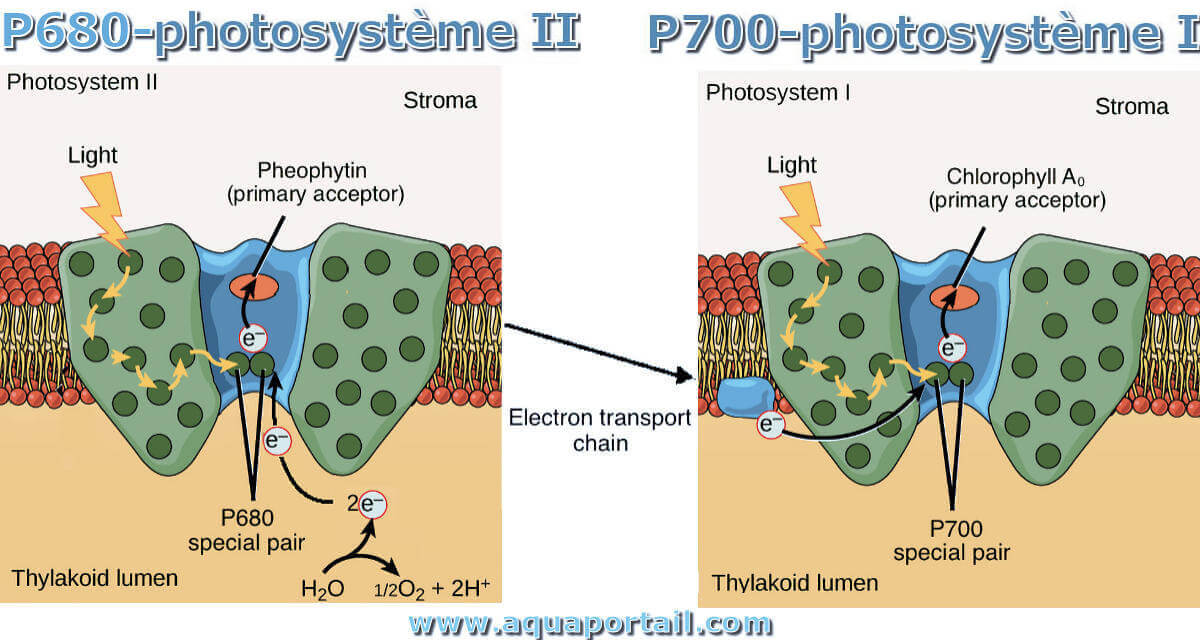
P680-P700 is an association of chlorophyll a molecules absorbing at 680 nm and 700 nm, respectively, possessing particular photochemical properties.
paedomorphosis

Paedomorphosis (juvenilization) is a phylogenetic change involving the retention of juvenile or even larval traits into a later (adult) stage.
