Canal
noun (n.)
Definition
A canal is a narrow, well-defined passage through which a fluid flows. It can be a navigable waterway like a channel, a means of communication, a radio frequency band, a transport tunnel like a duct, etc.
A canal in Amsterdam:

In hydraulics, a canal is an artificial trench, lined or unlined with a supporting material, intended for the passage of water. It often plays a role in supplying water to populations.
Water carrier
A canal is an artificial waterway connecting bodies of water, used primarily for navigation, irrigation, energy production, or other applications. A navigation canal is an artificial waterway that generally connects lakes, rivers, or oceans, or a natural passage formed by the distribution of different islands in archipelagos or other marine geographical features.
See also qanat and foggara (irrigation canals).
A hydraulic jump, in an open channel, consists of a sudden transition of water from a depth shallower than the critical depth to a depth greater than the critical depth, accompanied by energy dissipation. See also standing wave.
A diversion structure (splitter) refers to a diversion work placed on a feeder canal to divide its flow into two (T-type) or three (X-type) parts, or to raise the water level in a section of the canal, or to control water supply at the intake of a pond.
An elevated canal is a canal of special design and shape, used for transporting water by gravity; its walls are normally lined with bricks or concrete to allow a rapid water current.
In biology
In biology, a canal (or duct) is a tubular structure through which a substance flows or which provides passage for a nerve, vessel, or gland. ⭐ In cell biology, a channel is a membrane protein that allows the transport of a specific type of molecule down its concentration gradient or electrochemical potential gradient. It does not require ATP to operate.
If the channel is intended for the passage of ions, a more specific designation is used for the ion channel, while water molecules pass through aquaporins and similar proteins. Many channels can open and close in response to a signal originating from inside or outside the cell. There are approximately 400 genes in the human genome that encode the proteins making up channels.
See also bile ducts, common bile duct. For ion channels and a transporter, see also ion transporter.
In botany
In botany in Euglenophyceae, a canal designates a duct connecting the ampulla (reservoir) of euglenophyceans with the external environment.
In aquaculture
In aquaculture, a canal is an open structure for transporting water, generally trapezoidal in cross-section and excavated below the surrounding ground level or partially embanked. In overly permeable soils, it may be lined with, for example, stones, bricks, concrete blocks, concrete slabs, or a flexible membrane.
A protection canal designates a canal whose function is to keep excess runoff water away from a specific area in order to protect a road, a water supply canal, and/or a fish-rearing pond.
An epidermal canal, in fish, qualifies each of the canals of the lateral line system resulting from invagination of the epidermis and housing the neuromasts. There are 4 paired cephalic epidermal canals and a single paired trunk epidermal canal.
Applied to hydrozoans, the ring canal of hydromedusae is embedded in the outer rim of the bell, in the exumbrella, following its entire circumference. This jellyfish canal is connected to the gastric cavity via the radial canals, thereby forming a gastrovascular network enabling the distribution of nutrient particles and dissolved gases throughout all tissues of the jellyfish. There is also a radial canal.
Reach
A reach is a small watercourse corresponding to the section of an open channel between two cross-sections. Depending on the specific use of the reach, it may be a control reach or a headrace.
Control reach
A control reach, or control section, is a section of watercourse in which the stage-discharge relationship is unique. This section is generally an open channel or stream where discharge is determined solely by the water level immediately upstream. A section where flow depth does not change during a transition is called a controlled section.
The control section designates the downstream end of the level section of an open-channel earth spillway. The control reach elevation is the crest elevation of the open spillway. Deflection readings may be taken for main-line testing and control-section testing.
In an open channel, the flow control section is a section in which, for a given discharge, the flow depth is known or can be controlled. Thus, the control section for subcritical flow will be at the downstream location, and the control section for supercritical flow will be at the upstream location.
This can be understood through an example of flow in a mild-slope canal behind a dam when the flow is subcritical. Since we know that the backwater profile behind a dam is M1 and we know all flow elements such as depth and discharge at the dam site, we must work upstream to compute the gradually varied flow profile. Thus, the control section for subcritical flow is located downstream.
In subcritical flow, a disturbance can travel upstream, so the upstream condition can change. The downstream section will therefore serve as the control section.
In supercritical flow, a disturbance cannot travel upstream, so the upstream condition cannot change. Thus, the upstream section will serve as the control section.
Headrace
The headrace, or intake canal, is a watercourse corresponding to the channel or canal that conveys water to a waterwheel or turbine. This headrace is a waterway that supplies water to a mill, waterwheel, or turbine.
This watercourse forms a conduit or reach through which water flows from upstream. See also control reach.
The headrace tunnel takes water from connecting canals and conveys it to the forebay or directly to the penstock equipped with a surge shaft depending on project and site requirements.
Multichannel systems
A multichannel system consists of an exploration system capable of simultaneously detecting and recording data across multiple channels, preferably through the same objective.
In reef geology, a spur-and-groove structure (channel structure) exhibits a system of open channels or closed tunnels, deeply and irregularly incised into the reef flat toward the open sea. They are generally caused by erosion and drain water thrown onto the reef by surf.
Synonyms, antonyms
French translation:
canalSpanish translation: canal
2 synonyms (similar meaning) for "canal":
0 antonyms (opposite meaning).
Related words and expressions to CANAL are directly connected by general or specific meaning.
The word CANAL is listed on page 1 of words starting with C in the dictionary glossary.
Related to "canal"
mucilage ducts
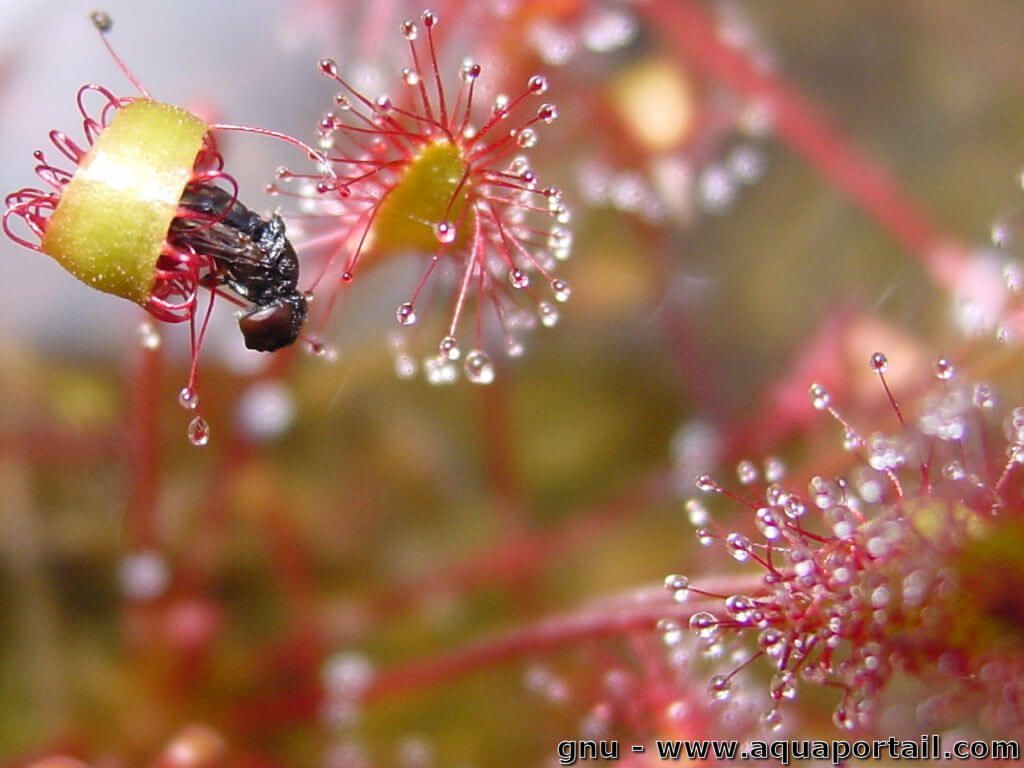
Mucilage ducts (mucilage canals) are anastomosing conduits formed by the separation of cortical cells; encountered in many species of kelps and carnivorous...
cactus

A cactus is a thick, fleshy plant that grows in many hot, dry regions of the world. Cacti do not have leaves, and many are covered with spines.
caecilian

A caecilian (gymnophione) is a limbless, burrowing, worm-like amphibian whose legs are vestigial or absent.
calcified

A structure is calcified when calcium carbonate (or calcium salts) has been deposited in it.
