Callose
noun (n.)
Definition
Callose is an amorphous polymer (β-1,3-glucan) that plugs the sieve pores of tracheophytes and those of the perforated septa of medullary hyphae in kelps. Plant calluses are formed by callose, a polysaccharide.Callose is a polymer of D-glucoses linked by β(1→3) bonds, synthesized by sieve tube cells to form a callus plug that halts the flow of elaborated sap and creates a barrier against bacteria and fungi during the unfavorable season or after cell death.
Callose in a plant plasmodesma:
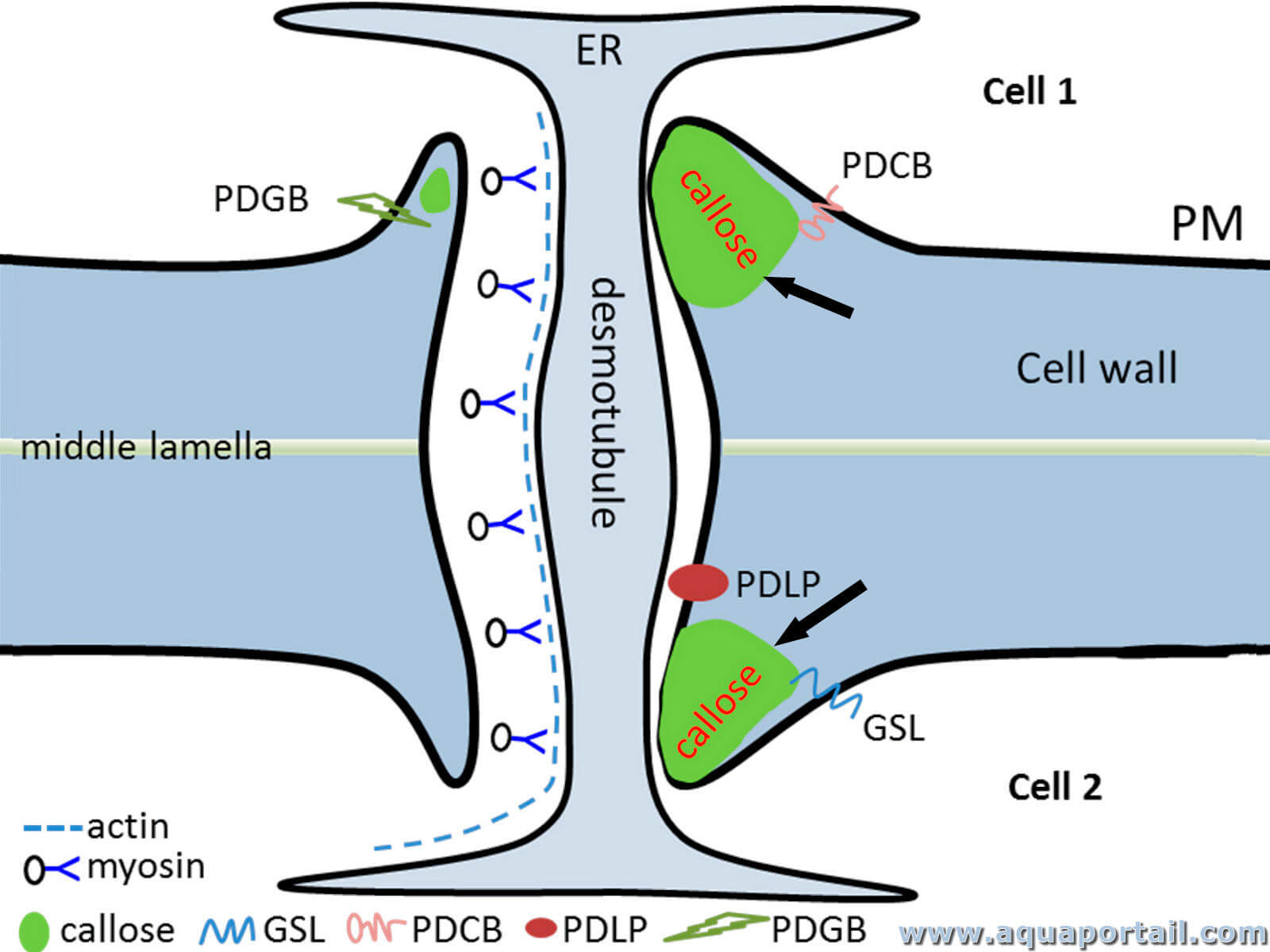
A simplified schematic representation of structural and functional proteins of plasmodesmata (PD). PD permeability in the plant cell wall is controlled by dynamic callose deposition (closed, right side) and degradation (open, left side) in the PD neck region. ER = endoplasmic reticulum; GSL = glucan synthase-like; MP = plasma membrane; PDCB = PD-associated callose-binding protein; PDGB = plasmodesma-associated β-1,3-glucanase; PDLP = PD-located protein.
Explanations
Callose (β-1,3-glucan) is a linear plant polysaccharide that plays an important role in various stages of individual development as well as in defense against unfavorable environmental factors. In plants, it is synthesized by callose synthases and degraded by β-1,3-glucanases.
The structure and function of callose in plant tissues, as well as its importance under stress conditions, are not yet completely elucidated. Despite considerable progress in clarifying the role of this polysaccharide in plants in recent years, many questions regarding its synthesis or involvement in defense responses remain to be resolved.
A deeper understanding of callose function in plants will require integrating different experimental approaches from chemistry, cell biology, genetics, and systems biology.
Plant cells are connected by plasmodesmata (PD), membrane-lined channels that allow symplastic movement of molecules between cells. However, little is known about the role of plasmodesma-mediated signaling during plant morphogenesis. Here, an Arabidopsis gene, CALS3/GSL12, is described.
Gain-of-function mutations in CALS3 lead to increased callose (β-1,3-glucan) accumulation at the plasmodesma, decreased plasmodesmal aperture, root developmental defects, and reduced intercellular trafficking.
Increased expression of CALS3 during phloem development suppressed loss-of-function mutations in the abundant phloem callose synthase, CALS7, indicating that CALS3 is a true callose synthase. CALS3 alleles have enabled spatial and temporal control of PD opening between plant tissues.
Movement of the transcription factor SHORT-ROOT and microRNA 165 between the stele and the endodermis is PD-dependent. Regulated callose biosynthesis at plasmodesmata is essential for cell signaling.
Recent studies also suggest that callose may play an important role in repairing cell wall damage in sieve tubes by blocking, with the aid of a mucilaginous protein known as "phloem protein" (P-protein)—particularly abundant in dicotyledonous angiosperms and also present in certain monocotyledons—potential problematic leaks of elaborated sap flowing through the vessel.
Synonyms, antonyms
Spanish translation: calosa
1 synonym (similar meaning) for "callose":
0 antonyms (opposite meaning).
Related words and expressions to CALLOSE are directly connected by general or specific meaning.
The word CALLOSE is listed on page 1 of words starting with C in the dictionary glossary.
Related to "callose"
amylose
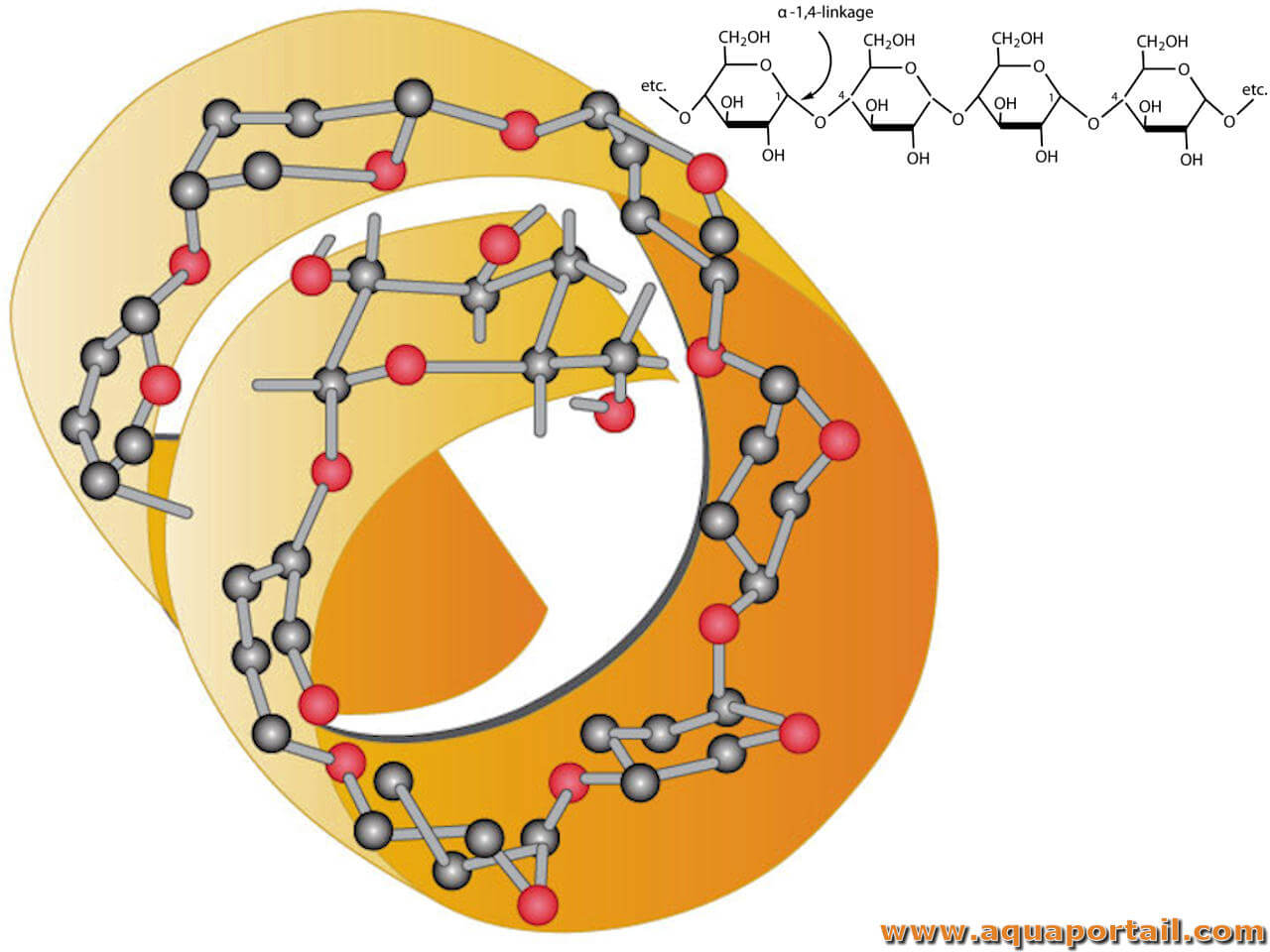
Amylose is a fraction of starch composed of unbranched polysaccharides (glucans) of 300 to 1,000 glucose units joined by α-(1,4) linkages.
xylose

Xylose is an aldehydic sugar (pentose) with the formula CH₂OH-(CHOH)₃-CHO. It is an aldopentose of the plant cell wall (hemicellulose). See xylene.
cactus

A cactus is a thick, fleshy plant that grows in many hot, dry regions of the world. Cacti do not have leaves, and many are covered with spines.
caecilian

A caecilian (gymnophione) is a limbless, burrowing, worm-like amphibian whose legs are vestigial or absent.
