Sea urchin
noun (n.)
Definition
A sea urchin is a globular marine invertebrate found at sea, in all the seas and oceans of the globe, and sea urchins are also called echinoids, sea chestnuts, or sea hedgehogs...
A sea urchin in the sea:

The sea urchin belongs to the echinoderms with a globular, rigid calcareous test equipped with spines, called radioles. Sea urchins live mostly between 0 and 80 m (0 and 262 ft) deep in the ocean, though there are approximately 950 species of echinoids inhabiting the world's oceans, from the intertidal zone down to 5,000 meters (16,404 ft) in depth. They are "grazers" of algae (or Posidonia seagrass in the Mediterranean Sea).
Explanations
Two major groups of sea urchins are distinguished: "regular" sea urchins, whose oral opening is directed downward. Aristotle's lantern (masticatory apparatus) is equipped with teeth.
Then, "irregular" sea urchins such as the genera Spatangus and Echinocardium, whose test is flattened and the anus is located on the ventral surface; the masticatory apparatus is reduced or absent because they live buried in soft sediments where they feed on organic particles.
The species commonly harvested and eaten in France are the purple sea urchin, Paracentrotus lividus, and the green sea urchin (of Brittany), Psammechinus miliaris. Some common names evoke their shape or color: diadema urchin, white urchin, sand dollar, etc.
While the long-spined sea urchin (Diadema setosus) is highly prized in marine and reef aquariums, the farming and cultivation of sea urchins is a specialization of echinoculture. Sea urchin larvae are echinoplutei.
Sea urchin spines can be venomous!
General information
Sea urchins inhabit all oceans. Their shell, or "test", is round and spiny, typically 3 to 10 cm (1.2 to 3.9 in) in diameter, though the largest species can reach up to 36 cm (14.2 in).
Common colors include shades of black and green, olive, brown, purple, and red. They move slowly, feeding mainly on algae and the bacterial biofilm on the surface of hard substrates.
Like other echinoderms, sea urchins have bilateral symmetry from birth at the echinopluteus stage: larvae have bilateral symmetry, but they subsequently develop fivefold symmetry as they mature. This is particularly visible in "regular" sea urchins, which have a roughly spherical body with five equal parts radiating from their central axis.
Several sea urchins, however, including sand dollars, are oval in shape with distinct front and rear ends, giving them a degree of bilateral symmetry. In these sea urchins, the upper surface of the body is slightly domed, while the underside is flat, and the sides lack tube feet.
This form of "irregular" sea urchin has a body that evolved to allow the animals to burrow into sand or other soft materials.
The lower half of a sea urchin's body is called the oral surface, because it contains the mouth and masticatory system, whereas the upper half is the aboral surface.
The internal organs are enclosed in a hard test composed of plates made of calcium carbonate, covered by a thin dermis and epidermis. The test is rigid and divided into five ambulacral zones separated by five interambulacral zones.
Each of these zones consists of two rows of plates, so the test comprises 20 rows in total. The plates are covered with rounded tubercles, to which the spines, or more precisely radioles, are attached.
The inner surface of the marine animal is lined by the peritoneum.
Sea urchins have podia emerging from the five ambulacral zones. The podia are moved by a water vascular system that operates by hydraulic pressure using water, enabling the sea urchin to pump water into and out of the tube feet: this phenomenon allows locomotion and movement.
Their predators are numerous despite their spiny defense, and the sea otter, wolffish, triggerfish, and other predators feed on them. Their "roe", or rather the gonads, is a delicacy in many cuisines, especially enjoyed during a sea urchin feast (oursinade).
The name "oursin" (sea urchin) is an old term for spiny hedgehogs with a round shape that resemble sea urchins. Sea urchins are members of the phylum Echinodermata, which also includes starfish, sea cucumbers (holothurians), brittle stars, and crinoids.
Like other echinoderms, they have fivefold symmetry, known as pentamerism, and move by means of hundreds of tiny, transparent, adhesive "tube feet". Symmetry is not obvious in the living animal, but is easily visible in the dried test. The term echinoderm means "spiny skin" from its Greek origin.
More specifically, the term "sea urchin" refers to "regular echinoids", which are symmetrical and globose. The term encompasses several different taxonomic groups: the order Echinoida, the order Cidaroida or "pencil urchins", which have very thick radioles and blunt spines, and others.
In addition to regular sea urchins, the class Echinoidea also includes three groups of "irregular" echinoids: flattened clypeasteroids, sea biscuits, and heart urchins.
Embryonic cleavage
Cleavage of sea urchin embryos during embryogenesis is of the radial holoblastic type. The first and second cleavages are always meridional and perpendicular to each other. The third cleavage is equatorial, perpendicular to the first two cleavage planes, and separates the animal and vegetal poles from one another.
The fourth cleavage, however, is very different from the other three, in which the four cells of the animal pole divide meridionally into eight blastomeres (called mesomeres). The vegetal pole undergoes an unequal equatorial division producing four large cells (macromeres) and four small cells (micromeres).
In the fifth cleavage, the eight mesomeres divide equatorially producing two tiers, an1 and an2. The macromeres divide meridionally, forming a tier of eight cells beneath an2. The micromeres also divide, forming a small cluster beneath the upper tier.
In the sixth cleavage, the animal pole cells divide meridionally, while the vegetal pole cells divide equatorially, and this pattern is reversed in the seventh cleavage. From this point on, the embryo is a 128-cell blastula, where the division pattern becomes less regular.
Synonyms, antonyms
Spanish translation: erizo de mar
1 synonym (similar meaning) for "sea urchin":
0 antonyms (opposite meaning).
Related words and expressions to SEA URCHIN are directly connected by general or specific meaning.
The expression SEA URCHIN is listed on page 1 of words starting with S in the dictionary glossary.
Related to "sea urchin"
hedgehog
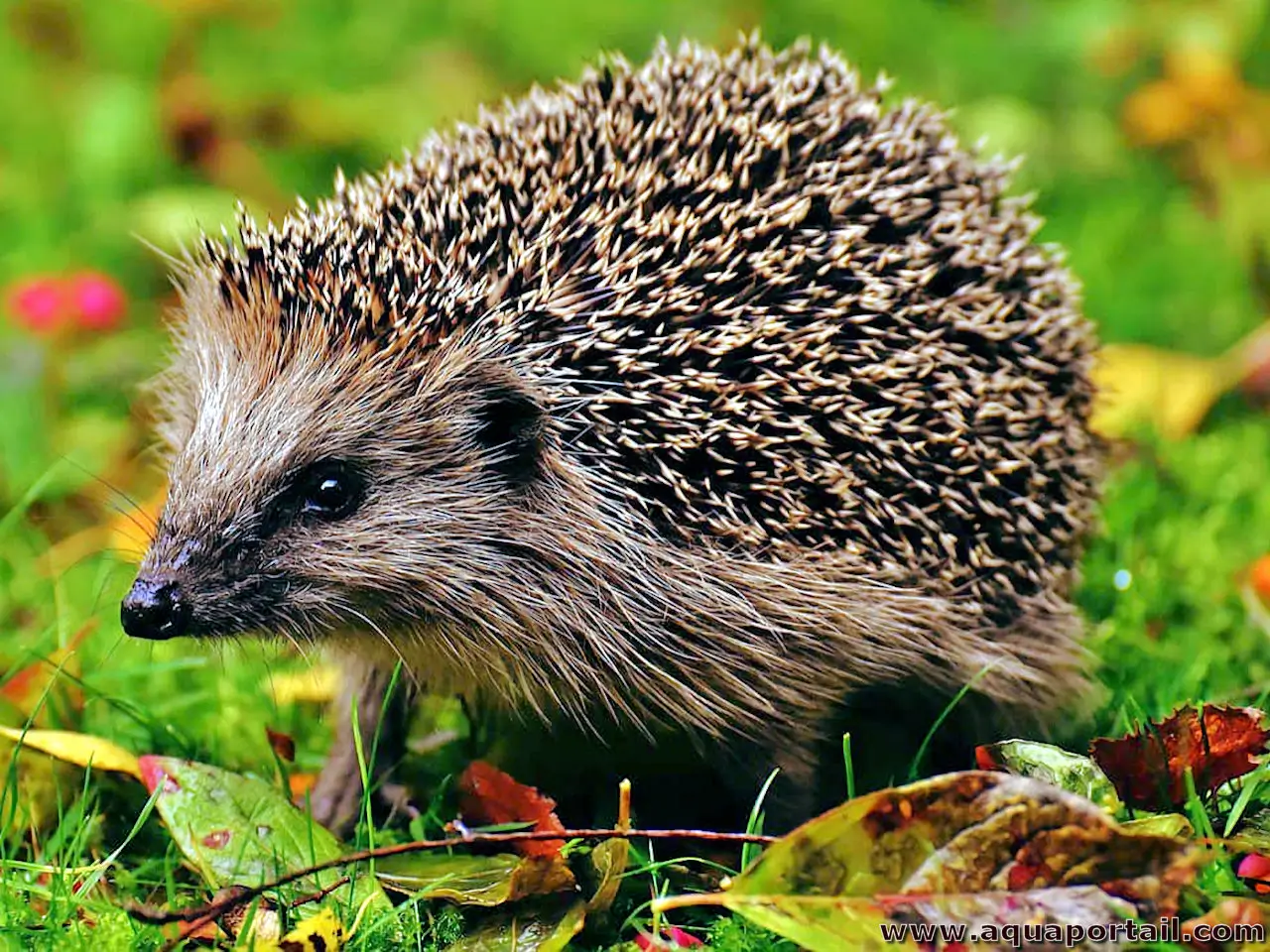
A hedgehog is a small nocturnal insectivorous, vermivorous, and molluscivorous mammal with a spiny coat of stiff quills.
saccharide

A saccharide is a carbohydrate, a biomolecule composed of carbon, hydrogen, and oxygen atoms, usually with a hydrogen-to-oxygen atomic ratio of 2 :1.
sagittocyst

A sagittocyst is a capsule containing a spindle-shaped needle produced by epidermal cells of certain flatworms (acoels).
salinity

Salinity is the measure of dissolved salts in water. It takes into account all salts, and not only sodium chloride (table salt NaCl). The average salinity...
