Hedgehog
noun (n.)
Definition
A hedgehog is a small nocturnal insectivorous, vermivorous, and molluscivorous mammal with a spiny coat of stiff quills. These animals use their spines for defense by curling into a tight ball when threatened. True hedgehogs belong to the family Erinaceidae, while superficially similar species belong to the subfamily Tenrecinae, such as the tailless tenrec.
The European hedgehog Erinaceus europaeus:
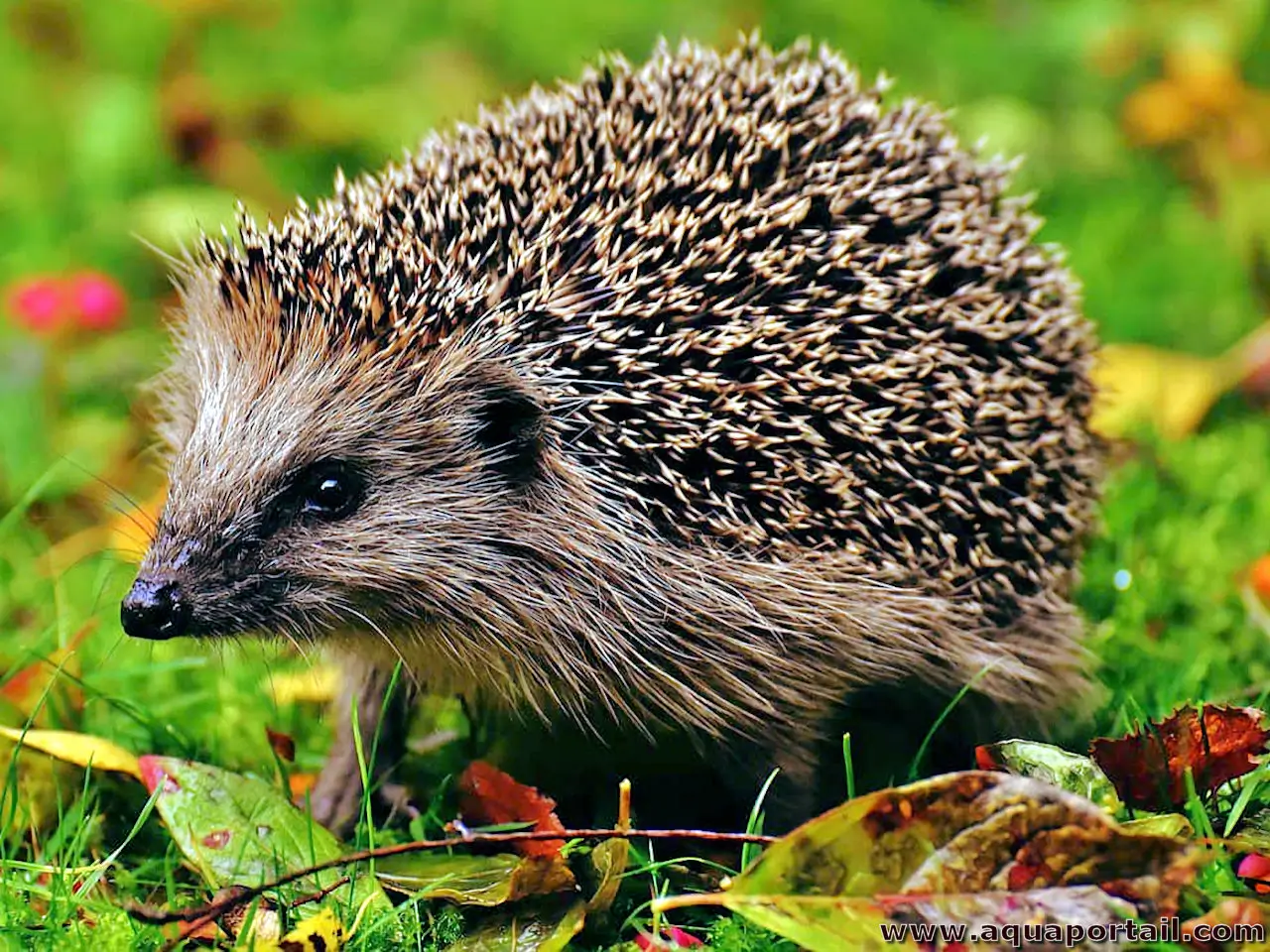
The European hedgehog, Erinaceus europaeus, is a species found throughout Western Europe. Its bristly, spiny coat is characteristic. Its ecological role is important because it helps regulate insect populations. Frequently encountered in rural and suburban environments, the European hedgehog is well adapted to diverse habitats such as woodlands, meadows, and gardens, where it can be observed from mid-spring until early autumn. The species is protected in France.
Explanations
Native to Europe, Asia, and Africa, the hedgehog is insectivorous, though its varied diet includes insects, small invertebrates, fruits, and vegetables. feeding on insects—some of which carry toxins—has conferred a natural resistance to certain venoms and poisons. Hedgehogs have been introduced to several regions, including New Zealand.
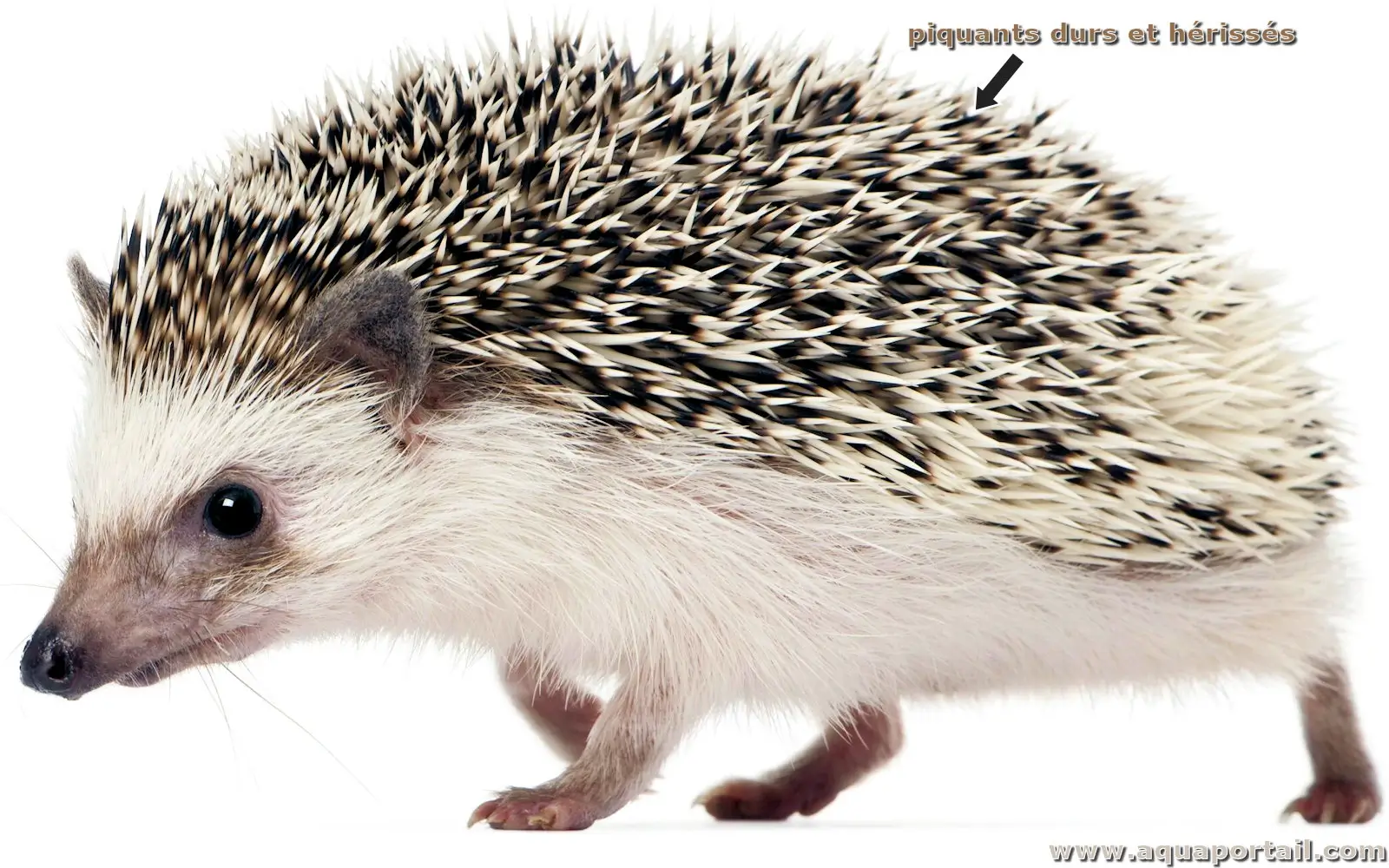
A hedgehog bears spines across most of its upper body. These spines are modified hairs composed of keratin and provide an effective defense mechanism against potential predators. When threatened, the hedgehog contracts specialized muscles to roll into a ball with its spines erected while emitting small snorting or whistling sounds. This evolutionary strategy, similar to that of porcupines, makes it a formidable target for many common predators.
See also the little skate Leucoraja erinacea and sea urchins.
Biology
Hedgehogs belong to the order Eulipotyphla and share common ancestors with other insectivorous mammals such as shrews and moles. Seventeen species of true hedgehogs are recognized worldwide, each showing slight variations in size, coloration, and habitat. On average, they measure between 15 and 30 cm (6 and 12 in) in length and weigh between 400 and 1,200 g (0.9 and 2.6 lb).
The four-toed hedgehog, Atelerix albiventris:
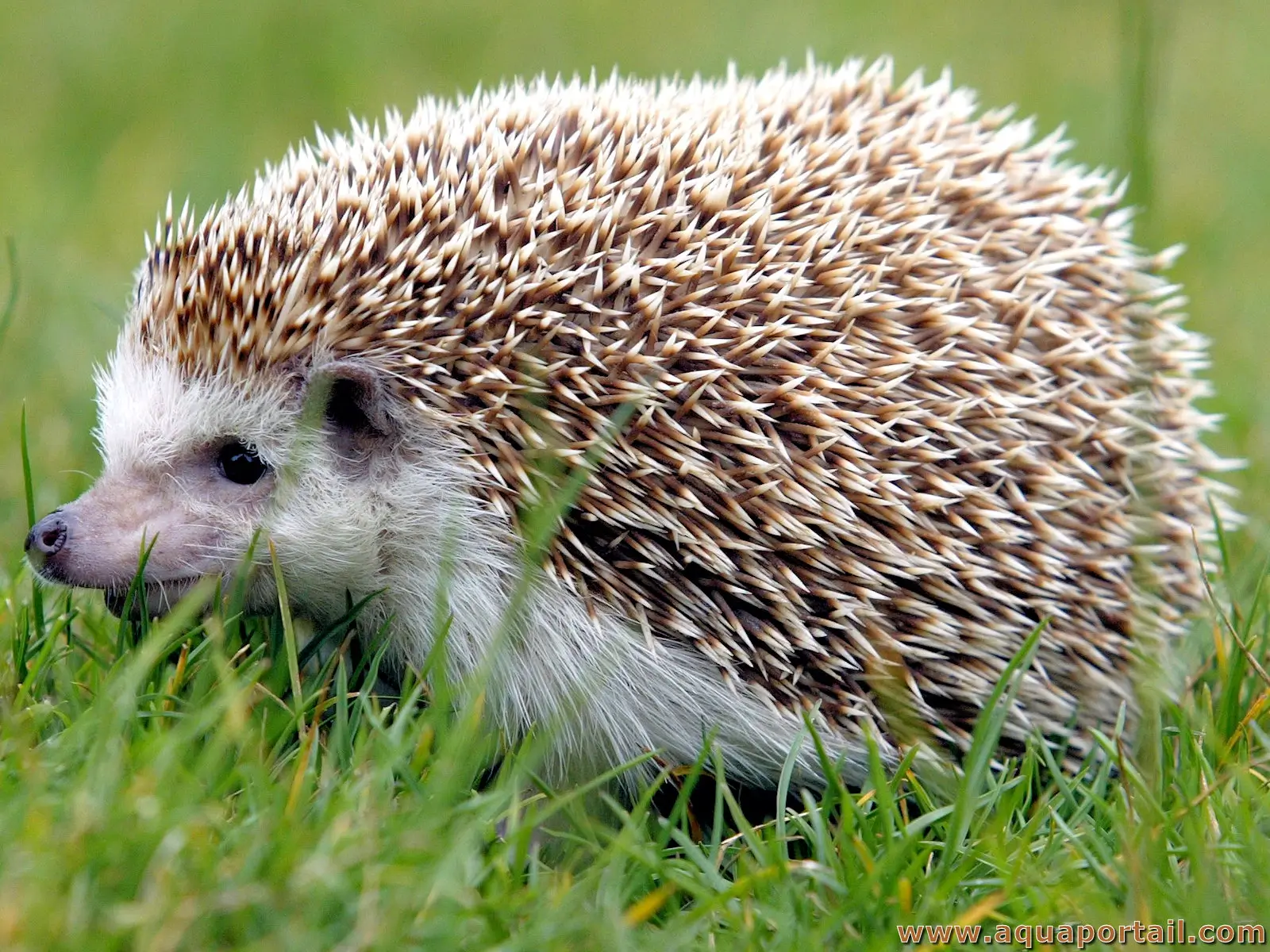
A solitary animal, hedgehogs such as Atelerix albiventris are appreciated for their endearing appearance, making them popular subjects in folklore and exotic pets in certain regions.
Opportunistic omnivores, hedgehogs feed primarily on insects, worms, snails, and small vertebrates, though they also eat fruits and plant matter when available. Their elongated snout is equipped with an acute sense of smell used to locate food sources.
Each individual requires a large foraging territory, with a minimum of 3 to 5 hectares (7.4 to 12.4 acres) per animal, traveling considerable distances every night in search of food. They are rarely seen in the same spot for long. Skilled swimmers and climbers, they also readily dig beneath fences.
Illustration of a hedgehog:
Female hedgehogs typically give birth to litters of 2 to 6 young after a gestation period of about 35 to 40 days in late spring. Newborns are altricial: they are born blind and without fully developed spines. Their soft initial spines harden within hours of birth, rapidly providing vital protection as they grow. As in most mammals, maternal care, including nursing, is essential for rearing the young, which become independent just a few weeks after birth.
Many hedgehog species inhabiting temperate climates undergo hibernation. During this period, they experience pronounced physiological shifts, including a sharp drop in body temperature and metabolic rate, enabling them to survive harsh winters when food is scarce. Prior to hibernating, hedgehogs build up substantial fat reserves to sustain them through the months of dormancy.
⭐ Self-anointing behavior in hedgehogs, in which they spread frothy saliva onto their spines after encountering strong scents, has intrigued researchers for decades.
Ecological role
The ecological role of hedgehogs in ecosystems should not be underestimated. Their diet plays a valuable part in regulating garden pests such as slugs, beetle larvae, and caterpillars, while their foraging behavior contributes to soil aeration and nutrient cycling.
Unfortunately, despite their ecological value, hedgehogs face numerous threats endangering their populations. Urbanization, agricultural intensification, and pesticide use have driven significant habitat loss and fragmentation.
Culture and folklore
Culturally, hedgehogs have held symbolic significance throughout history. In European folklore, they are often portrayed as wise and resourceful creatures, while certain traditions view them as omens or beings with mystical attributes due to their distinctive habits and appearance.
Among Romani communities, the hedgehog, known as "niglo" (as reflected in the French theme park Nigloland), is part of historical traditional cuisine, with preparation requiring the skin to be stretched taut so the spines can be removed prior to cooking—a cultural tradition now largely fading.
Synonyms, antonyms
Spanish translation: erizo
2 synonyms (similar meaning) for "hedgehog":
0 antonyms (opposite meaning).
Related words and expressions to HEDGEHOG are directly connected by general or specific meaning.
The word HEDGEHOG is listed on page 1 of words starting with H in the dictionary glossary.
Related to "hedgehog"
habitat

A habitat is the place or environment where an organism naturally lives and grows, its typical place of residence.
halitosis

Halitosis (bad breath) is primarily caused by sulfur-producing bacteria that normally live on the surface of the tongue and in the throat.
hallux

The hallux is the big toe (great toe) of a foot, homologous to the thumb of a hand. It is located on the medial (inner) side of the foot, whereas the little...
hand

The human hand, the most distal part of the upper limb, is a remarkable feat of engineering and evolution.
