Herbalism
noun (n.)
Definition
Herbalism is the study of the medicinal properties and applications of plants and their extracts, along with their commercialization. Beyond phytotherapy, herbalism sometimes encompasses fungi and bee-derived products, as well as minerals, shells, and certain animal parts.Principle of using herbs in herbalism:
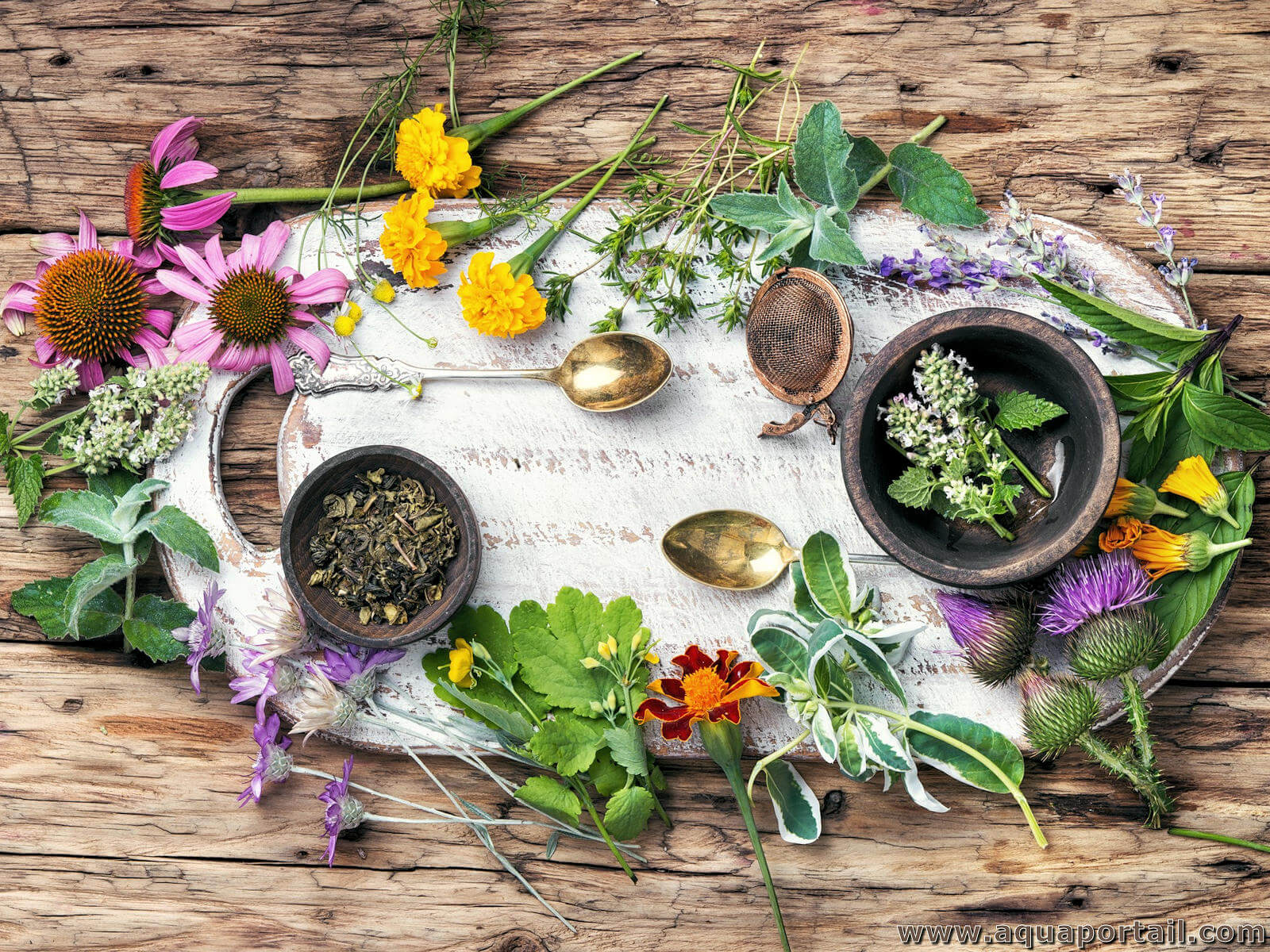
The principle of herbalism involves an interaction between herbs and the lymphatic system.
Explanations
Herbalism is the use of plants for officinal purposes, primarily in phytotherapy. Herbal medicine, practiced by an herbalist, is the field dealing with the study of medicinal, officinal, aromatic, and cosmetic plants, their cultivation, harvesting, production, storage, and trade for therapeutic purposes.
Herbalism is a plant-based biomedicine whose concepts and findings are also applied in cosmetics or nutritional products (supplements and nutraceuticals). "Herbal" preparations may be of plant, animal, or mineral origin.
The use of plants to combat disease is nearly universal in non-industrialized societies. The traditional use of medicinal substances is recognized as a way to identify potential future pharmaceuticals. In 2001, researchers identified 122 compounds used in conventional medicine derived from ethnomedical (ethnomedicine) plant sources; 80% of these compounds were used in the same or a similar manner to their traditional ethnomedical use.
Many plants synthesize substances beneficial for maintaining health in humans and animals. Among these are aromatic compounds, primarily phenols or their oxygenated derivatives, such as tannins. Many are secondary metabolites, of which at least 12,000 have been isolated—a figure estimated at less than 10% of the total. In many cases, substances like alkaloids serve as a plant defense mechanism against predation by microorganisms, insects, and herbivores. Many herbs and spices used by humans as seasonal foods produce useful medicinal compounds.
Sick animals tend to forage for foods rich in secondary metabolites such as tannins and alkaloids. A plausible case of self-medication (zoopharmacognosy) can be seen, as these phytochemicals often possess antiviral, antibacterial, antifungal, and anthelmintic properties. Some animals have digestive systems specially adapted to tolerate certain plant toxins. For example, the koala can subsist on the leaves and shoots of Eucalyptus, a plant toxic to most animals due to its high content of terpene compounds (eucalyptol) and tannins. A plant harmless to a particular animal may not be safe for human consumption. It is reasonable to infer that such findings were traditionally gathered by indigenous and traditional healers, who passed down knowledge and precautions.
The use of herbs and spices in cuisine developed partly in response to the threat of foodborne pathogens. Studies show that in tropical climates, where pathogens are most abundant, dishes are heavily spiced and tend to favor spices with the strongest antimicrobial agents. Across all cultures, vegetables are less heavily spiced than meat, presumably because they are more resistant to spoilage.
✅ The lymphatic system filters, circulates, and balances fluids in the body and plays an important role in fighting infections. Thus, spring is an optimal season to focus on lymphatic health, as herbs interact with this bodily system!
Synonyms, antonyms
Spanish translation: herboristería
3 synonyms (similar meaning) for "herbalism":
0 antonyms (opposite meaning).
Related words and expressions to HERBALISM are directly connected by general or specific meaning.
The word HERBALISM is listed on page 1 of words starting with H in the dictionary glossary.
Related to "herbalism"
phytotherapy

Phytotherapy is the use of plant products for the prevention, treatment, or alleviation of a wide variety of symptoms and diseases.
halitosis

Halitosis (bad breath) is primarily caused by sulfur-producing bacteria that normally live on the surface of the tongue and in the throat.
hallux

The hallux is the big toe (great toe) of a foot, homologous to the thumb of a hand. It is located on the medial (inner) side of the foot, whereas the little...
hand

The human hand, the most distal part of the upper limb, is a remarkable feat of engineering and evolution.
