Otter
noun (n.)
Definition
An otter is a carnivorous aquatic mammal among the mustelids, in the subfamily Lutrinae. There are 13 extant species, all semiaquatic (freshwater and marine habitats), with a varied diet consisting of fish, crustaceans, mollusks, amphibians, invertebrates, and other prey.
The Eurasian otter Lutra lutra:
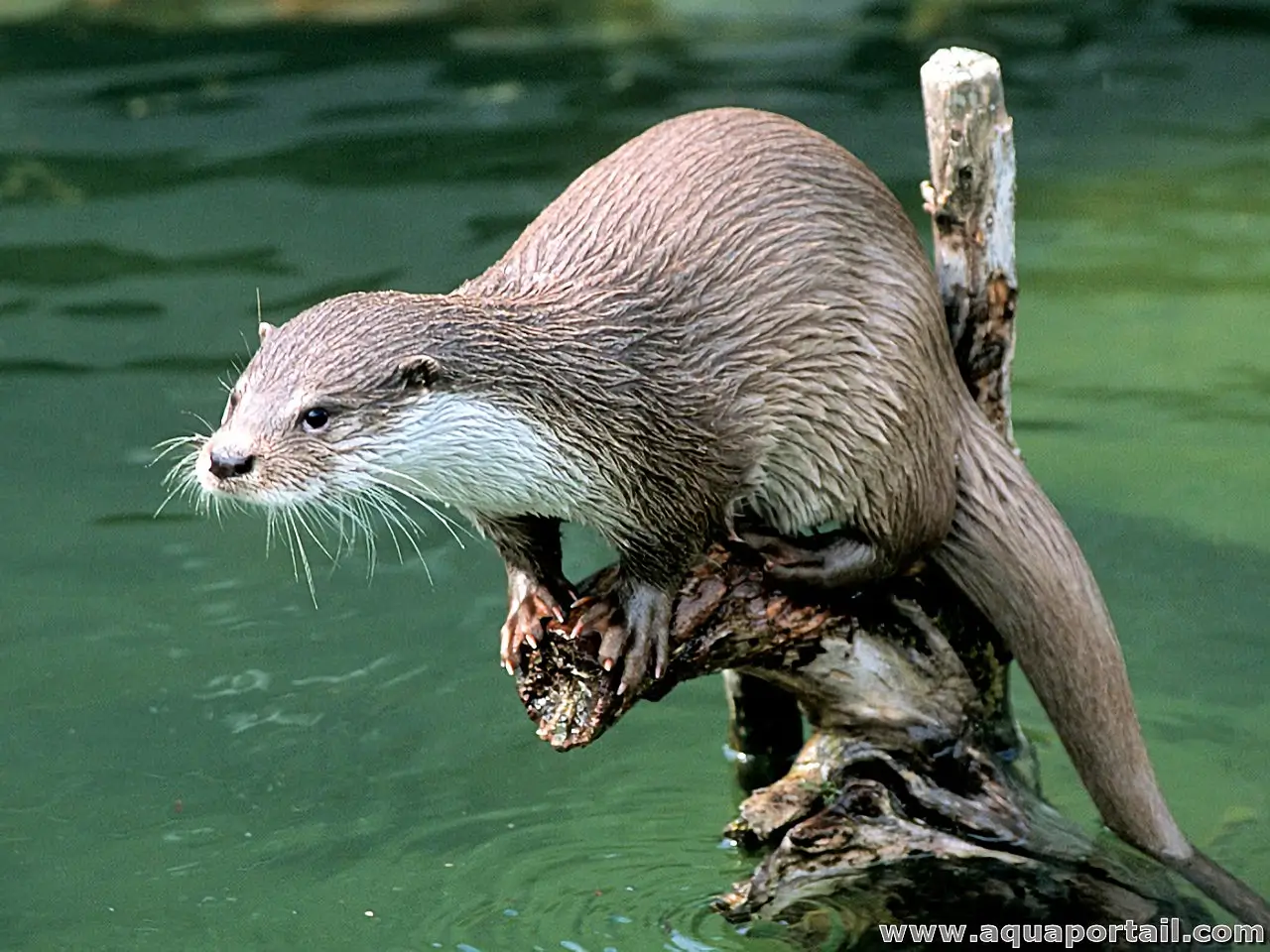
The Eurasian otter (Lutra lutra), subfamily Lutrinae, is a solitary otter with one of the widest distributions of any Palearctic mammal, from Ireland to China and down into Southeast Asia. Despite its broad range, its population is declining in many countries where it is not protected.
Explanations
Lutrinae is a branch of the family Mustelidae, which, in addition to otters, includes badgers, martens, weasels, and minks, among others. Species live up to 16 years on average, though the sea otter can reach over 20 years; a record of 22 years was reached by a Eurasian otter in a zoo.
Otters have a long, slender body and relatively short limbs. Their most striking anatomical features are powerful webbed feet used for swimming and seal-like abilities to hold their breath underwater. Most have sharp claws on their paws, and all except the sea otter possess a long, muscular tail. The 13 species range in adult size from 0.6 m (2 ft, Asian small-clawed otter) to 1.8 m (5.9 ft, giant otter) in length and from 1 to 45 kg (2.2 to 99 lb) in weight.
The African clawless otter Aonyx capensis:
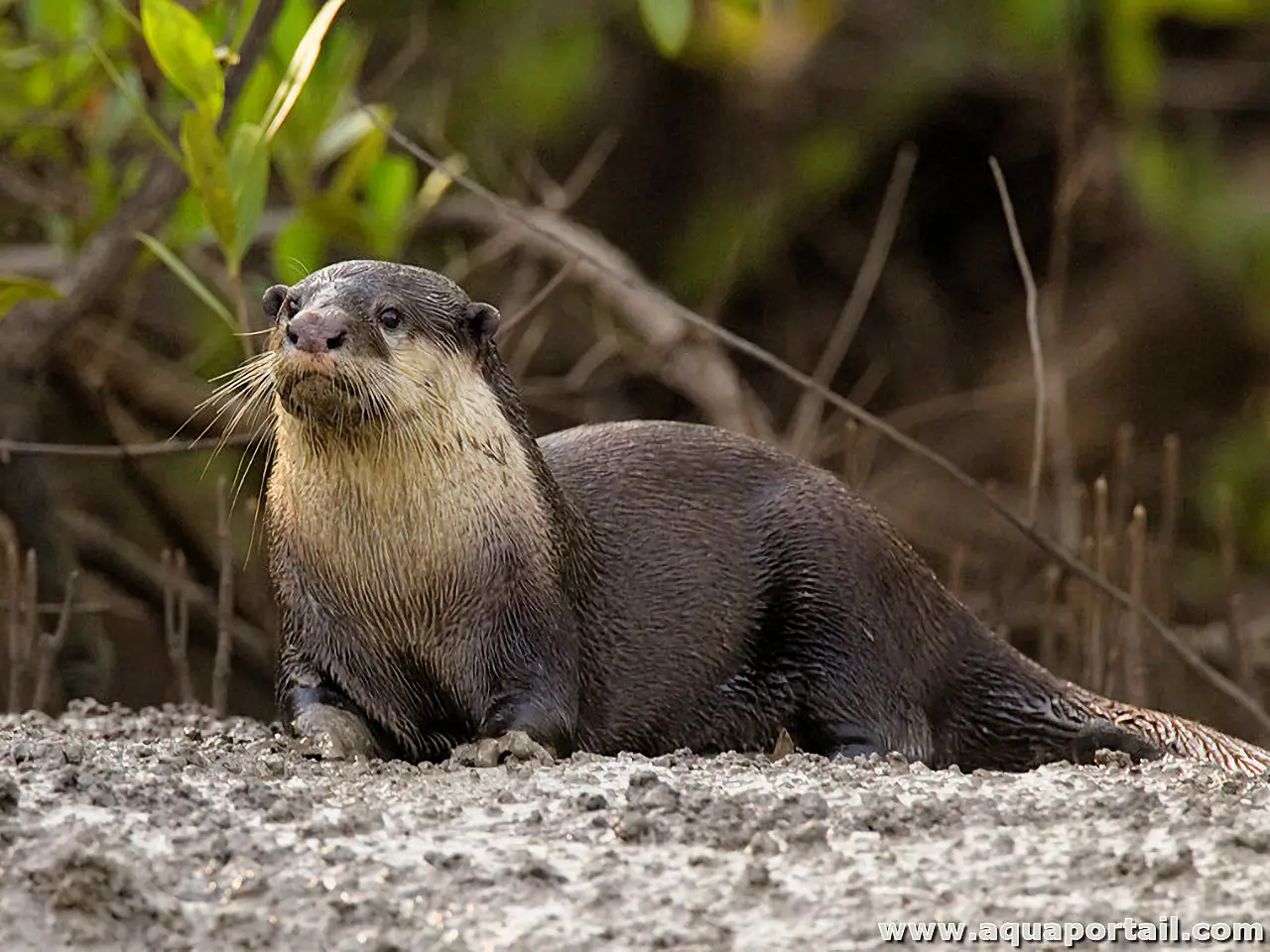
The African clawless otter Aonyx capensis is the third-largest otter species in the world. Clawless, it is highly adaptable and can be found from cities and heavily polluted rivers to pristine freshwater and marine habitats, provided freshwater is nearby to rinse off salt. It has crepuscular habits and can hunt in very turbid water using its long, sensitive whiskers.
Otters have a very soft, insulated underfur protected by an outer layer of long guard hairs. This traps a layer of air that keeps them dry, warm, and somewhat buoyant underwater. Several otter species live in cold waters and maintain a high metabolic rate to stay warm. Eurasian otters must eat 15% of their body weight each day, and sea otters 20 to 25%, depending on water temperature. In water as cold as 10 °C (50 °F), an otter needs to catch 100 g (3.5 oz) of fish per hour to survive. Most species hunt for three to five hours a day, and nursing mothers up to eight hours a day.
The smooth-coated otter Lutrogale perspicillata:
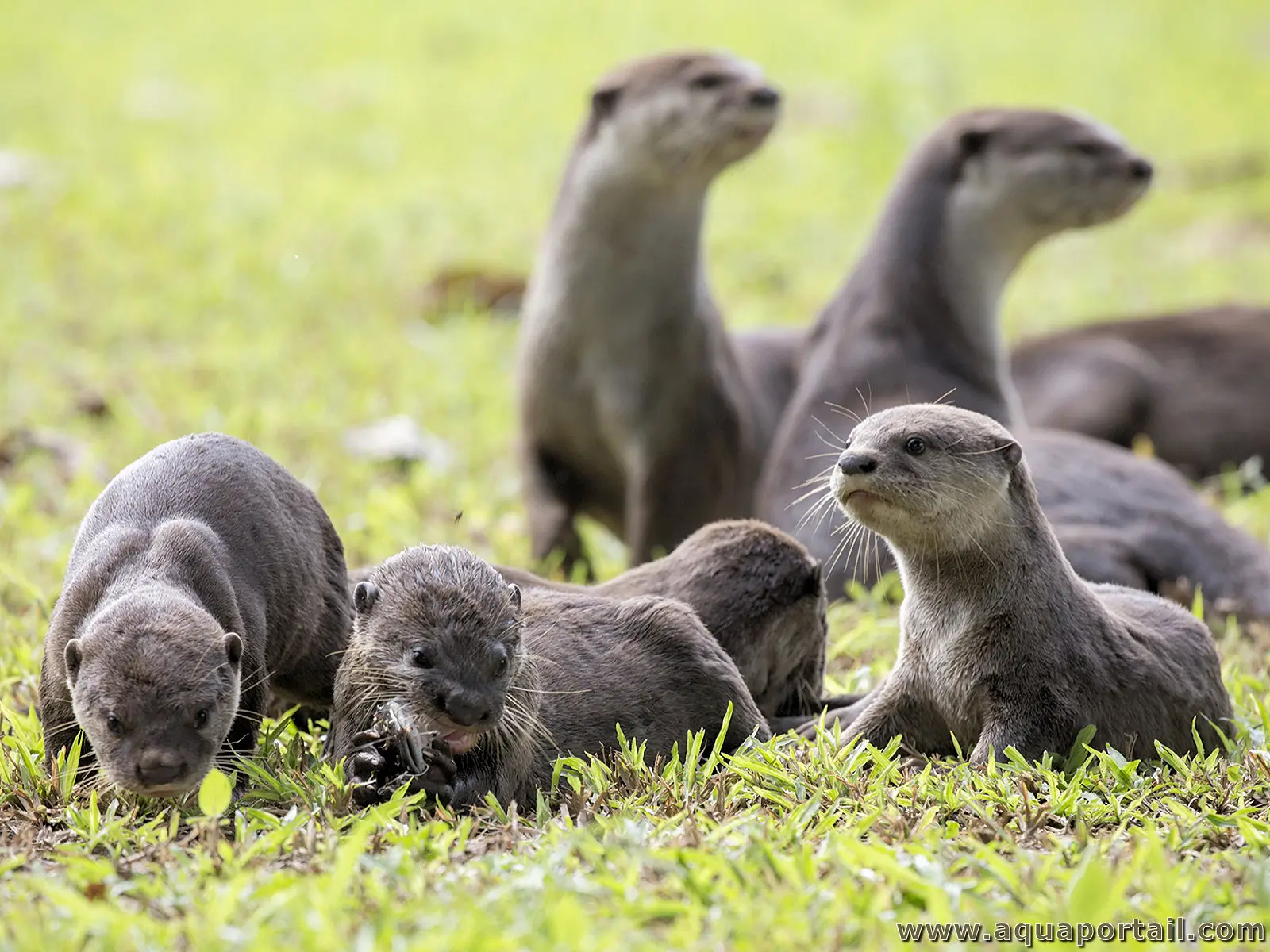
The smooth-coated otter Lutrogale perspicillata has a vast range that is slowly but steadily shrinking, evidenced by a remnant population in Iraq (its range once stretched from the Middle East to Southeast Asia). Its plight has always been tied to its greatest asset: a short, sleek, velvety coat, warm chocolate brown on the back and soft gray on the belly. These otters are primarily nocturnal, though they may be diurnal when undisturbed. Smooth-coated otters form large, vocal family groups, foraging together on fish, shrimp, frogs, crabs, insects, and birds.
For most otters, fish forms the staple of their diet, often supplemented by frogs, crayfish, and crabs. Some otters are adept at opening shellfish, while others feed on available small mammals or birds. Reliance on prey makes otters highly vulnerable to prey depletion.
Sea otters (Enhydra lutris) hunt clams, sea urchins, and other shelled creatures, notable for using rocks to crack open shells on their chests—a skill that must be learned by juveniles. Otters are active hunters, chasing prey in the water or foraging along the beds of rivers, lakes, or seas.
The giant otter Pteronura brasiliensis:
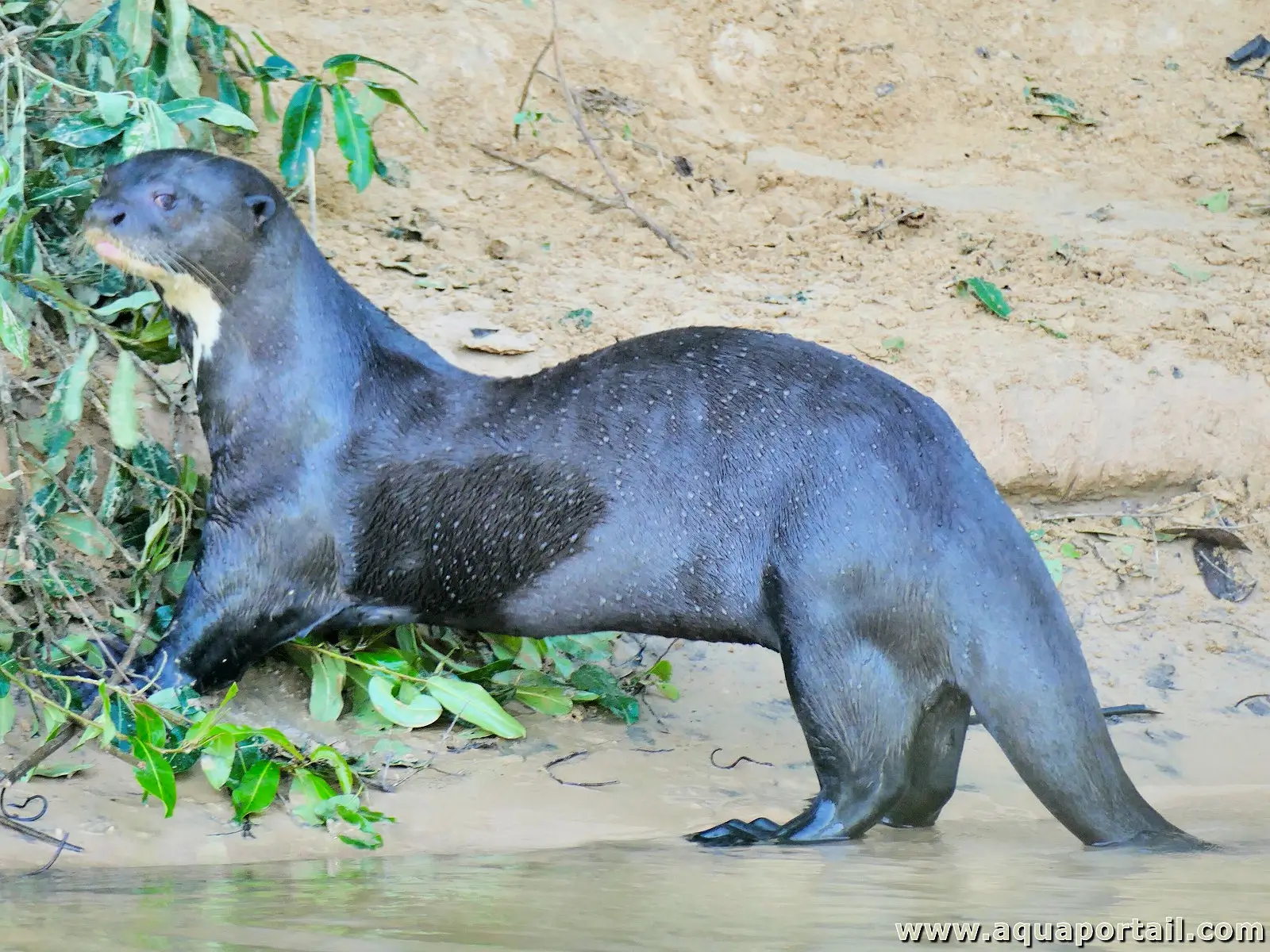
The giant otter Pteronura brasiliensis is the largest species of Lutrinae. Hunted nearly to extinction, it can reach up to 170 cm (5.6 ft) in length and lives in large social family groups that sleep, play, and hunt together. Typically, a monogamous pair that mates for life leads the group consisting of their offspring.
Most species live along the water's edge, though river otters generally enter the water only to hunt or travel, spending much of their time on land to prevent their fur from becoming waterlogged. Sea otters are considerably more aquatic and live in the ocean for most of their lives.
Otters are playful animals and engage in various behaviors for sheer enjoyment, such as making waterslides and sliding down them into the water, or finding and playing with small pebbles. Different species vary in social structure, some being largely solitary while others live in groups (which in a few species can be quite large).
Synonyms, antonyms
Spanish translation: nutria
1 synonym (similar meaning) for "otter":
0 antonyms (opposite meaning).
Related words and expressions to OTTER are directly connected by general or specific meaning.
The word OTTER is listed on page 1 of words starting with O in the dictionary glossary.
Related to "otter"
ocean basin

An ocean basin is a benthic environment taking the form of a depression in the ocean floor bounded by the lower part of the continental slope.
ocean floor

The ocean floor (seafloor) is the region of the deep seabed where the topography flattens out, typically just beyond the continental rise at the level...
oceanic

What is oceanic relates to the ocean and designates the marine zone, or ecological province, located far from the coast, beyond the continental shelf.
ocellus
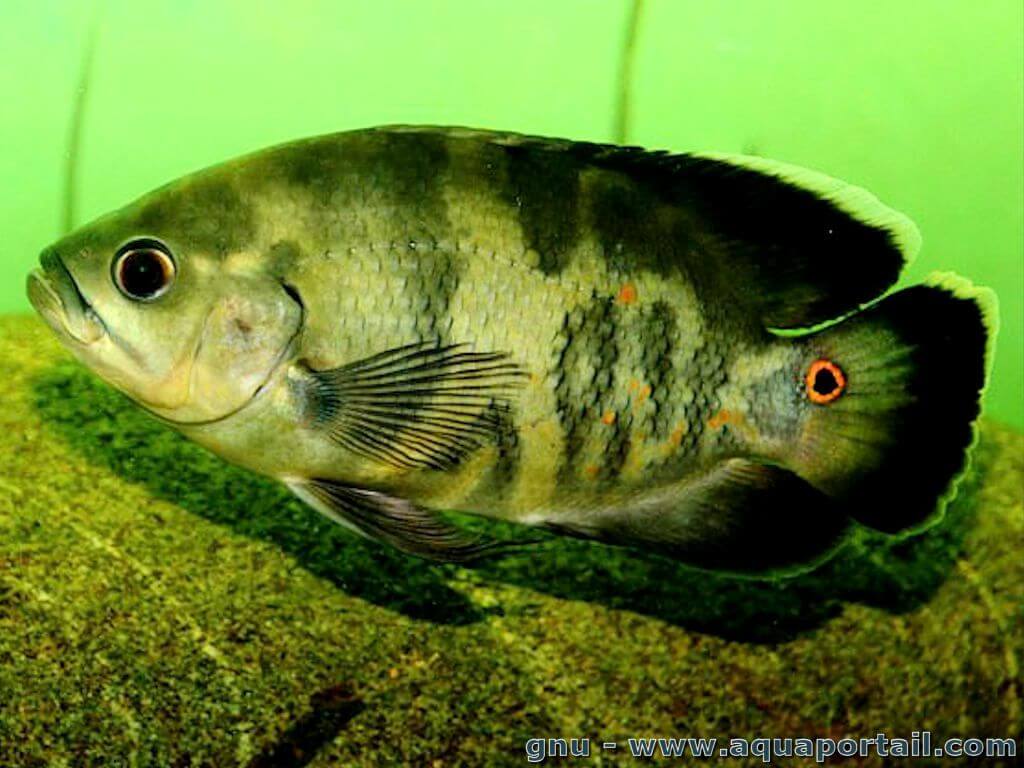
An ocellus (eyespot) is a ringed colored spot encircled by a zone of a different, usually sharply contrasting color, making it resemble an eye.
