Transit peptide
noun phrase (n. phr.)
Definition
A transit peptide is a peptide enabling a protein to be targeted to a plastid. Transit peptides are responsible for transporting a protein encoded by a nuclear gene to a specific organelle. This peptide forms part of a signal sequence.
Selective protein targeting by transit peptides:
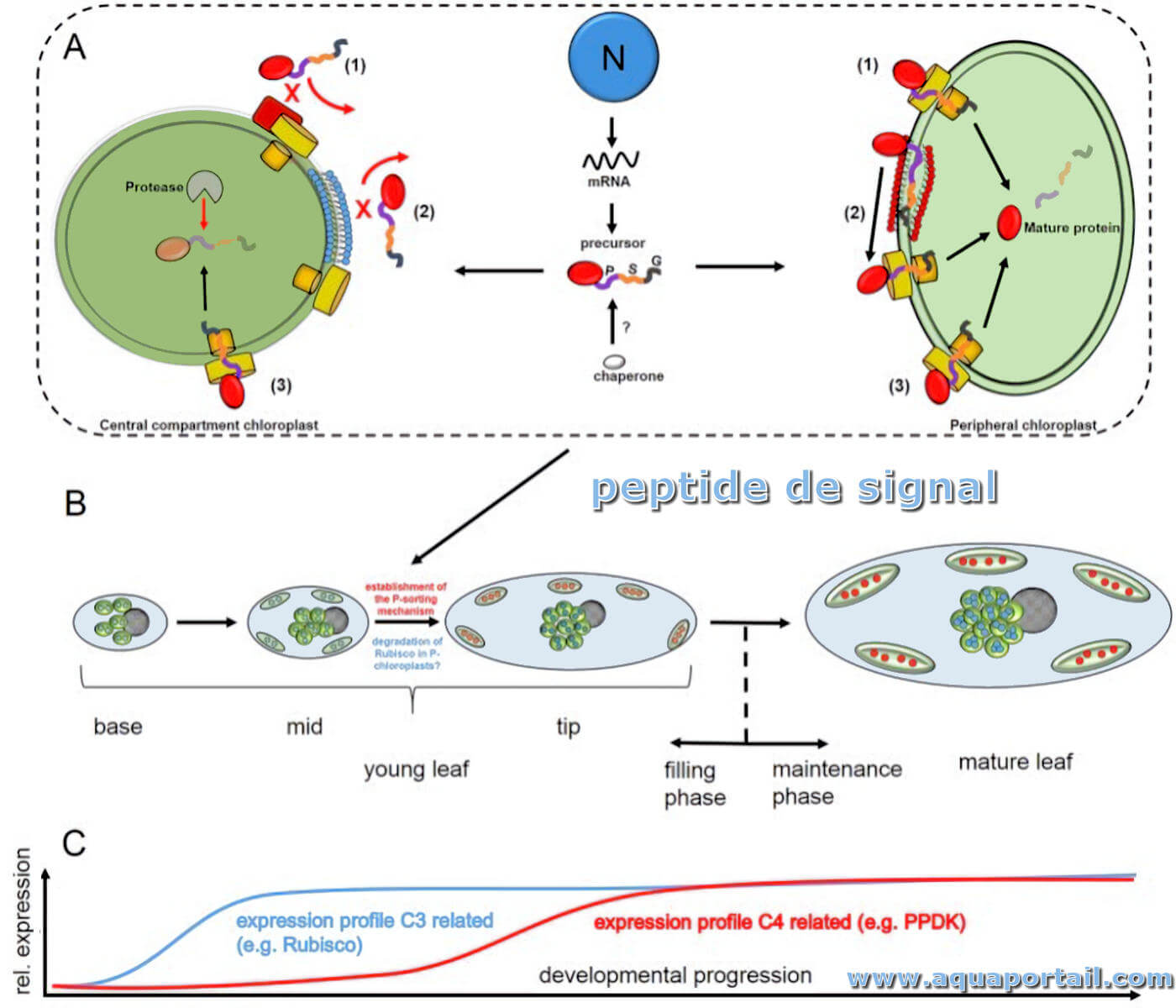
Transit peptides are involved in the selective targeting of proteins to two different types of chloroplasts in the single-cell C4 species Bienertia sinuspersici. These peptide elements are therefore also signal peptides.
Explanations
Transit peptides are generally cleaved from the mature protein and will therefore logically be found in proteins annotated with "sequence processing" information: the displayed sequence is subsequently processed into a mature form. The specific organelle to which a protein is targeted has a subcellular localization.
Two to three thousand different proteins are thought to be targeted to the chloroplast, and transit peptides acting as chloroplast targeting sequences are probably the largest class of targeting sequences in plants. At the primary structural level, transit peptide sequences vary widely in length, composition, and organization. An emerging concept suggests that transit peptides contain multiple domains that provide distinct or overlapping functions.
These functions include direct interaction with envelope lipids, chloroplast receptors, and the stromal processing peptidase. The genomic organization of transit peptides suggests that these domains may have originated from distinct exons that were shuffled and streamlined throughout evolution to yield a modern, multifunctional transit peptide. Although still poorly characterized, this evolutionary process could produce transit peptides with different domain organizations. The design plasticity of transit peptides is consistent with the diverse biological functions of chloroplast proteins.
List of transit peptides
To date, transit peptides are recognized for the following organelles:
Cyanelles are the plastids of glaucocystophyte algae.
Peroxisomes, hydrogenosomes, glyoxysomes, and glycosomes constitute the class of "microbodies", which are defined as small single-membrane organelles. Proteins can be targeted to microbodies via an N-terminal transit peptide (which is rare) or via a C-terminal motif (which is more common).
Chromoplasts are plastids containing pigments other than chlorophyll. They are found in flowers, petals, and fruits.
✅ In animals (Metazoa, such as Homo sapiens), a ribonucleoprotein composed of a catalytic RNA (called H1) and about ten protein subunits (hPop1, hPop5, Rpp40, Rpp38, Rpp30, Rpp29, Rpp25, Rpp21, Rpp20, and Rpp14) is responsible for RNase P activity in the nucleus. In animal mitochondria, a protein complex (MRPP1, MRPP2, MRPP3=PRORP) is responsible for RNase P activity. All of these proteins are encoded in the nuclear genome and imported into mitochondria via a transit peptide. The PRORP protein contains a metallonuclease domain, and this subunit is likely responsible for catalytic activity.
Plastid transit peptide paradox
The plastid transit peptide paradox is the conservation of function despite divergence in primary structure.
Transit peptides are N-terminal extensions that facilitate the targeting and translocation of cytosolically synthesized precursors into plastids via a post-translational mechanism. With the complete genome of Arabidopsis in hand, it is now evident that transit peptides direct more than 3,500 different proteins into the plastid during the life of a typical plant.
Deciphering a common mechanism for the function of this multitude of targeting sequences has been hindered by the realization that at the primary sequence level, transit peptides are highly divergent in length, composition, and organization.
Recent findings explain several of the diverse functions that transit peptides must fulfill:
- direct interaction with envelope lipids
- association with a cis-acting guidance complex
- recognition by envelope receptors
- insertion into the Toc/Tic translocon
- interaction with molecular motors
- recognition/cleavage by the stromal processing peptidase.
In addition to higher plants, transit peptides also direct protein import into complex plastids derived from secondary endosymbiosis. An emerging concept suggests that transit peptides contain multiple domains providing distinct or possibly overlapping functions. Although still poorly characterized, evolutionary processes could generate transit peptides with alternative domain organizations.
Synonyms, antonyms
Spanish translation: péptido de tránsito
1 synonym (similar meaning) for "transit peptide":
0 antonyms (opposite meaning).
Related words and expressions to TRANSIT PEPTIDE are directly connected by general or specific meaning.
The expression TRANSIT PEPTIDE is listed on page 1 of words starting with T in the dictionary glossary.
Related to "transit peptide"
peptide

A peptide is a molecule comprising at least two amino acid residues linked by a CO-NH peptide bond, formed by dehydration condensation between the NH₂ group...
peptidoglycan

A peptidoglycan is a structural molecule of the bacterial cell wall, consisting of a carbohydrate backbone associated with lateral tetrapeptides.
glycopeptide
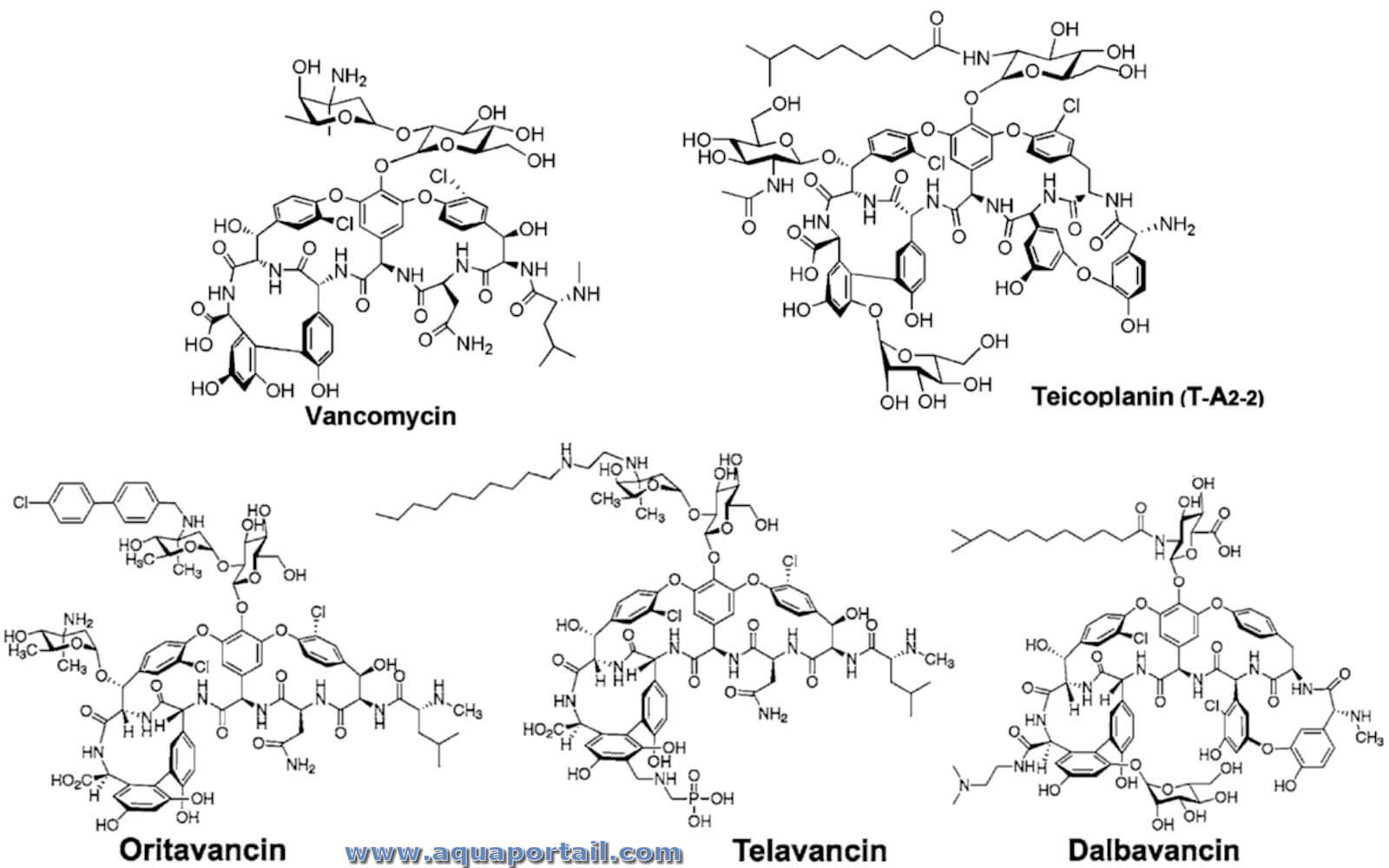
A glycopeptide is a compound formed of a peptide covalently linked to a carbohydrate moiety.
transcriptase
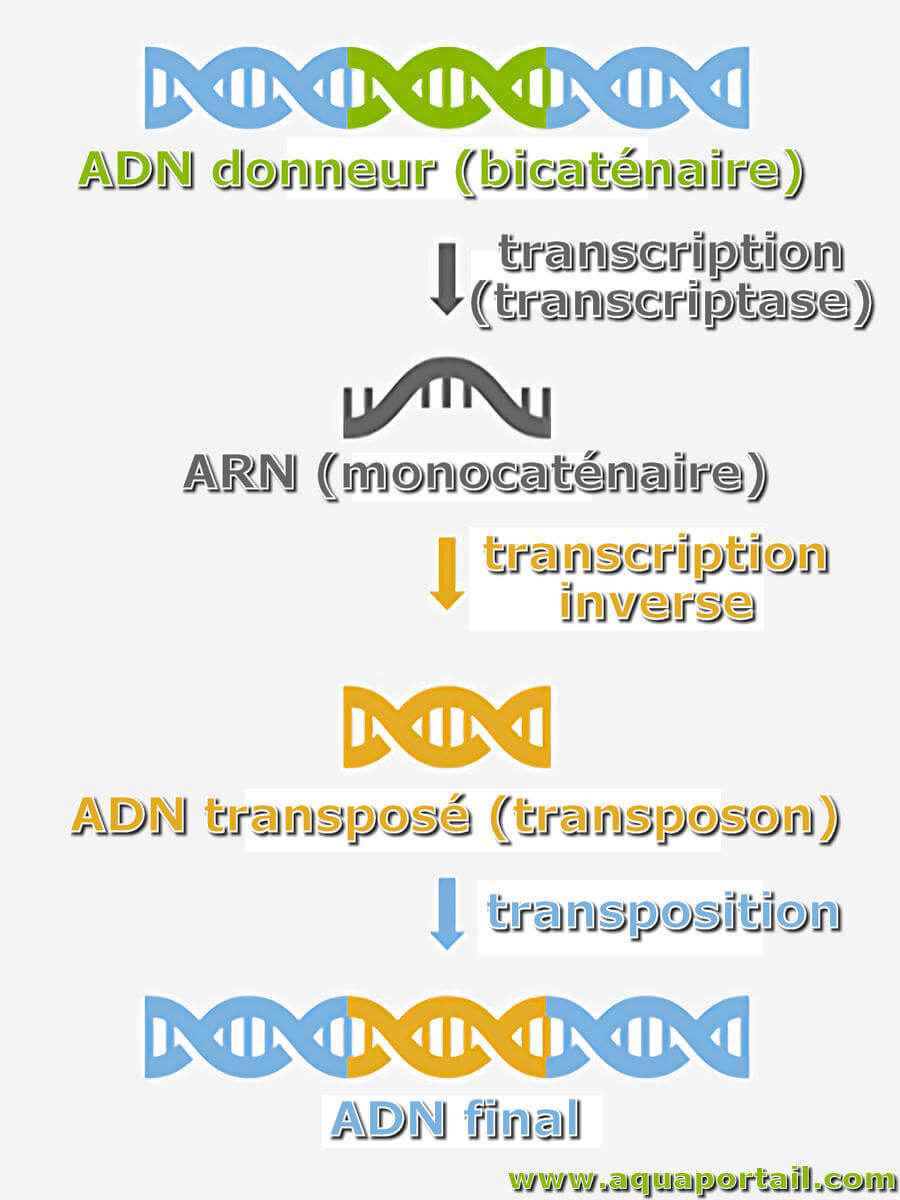
Transcriptase activity within an assembled virion catalyzes the synthesis of progeny positive-strand RNA from the parental double-stranded RNA (dsRNA)...
