Transcriptase
noun (n.)
Definition
Transcriptase activity within an assembled virion catalyzes the synthesis of progeny positive-strand RNA from the parental double-stranded RNA (dsRNA) template, accompanied by displacement of the parental positive strand and its release from the virion. Its role is the opposite of reverse transcriptase.The action of a transcriptase:
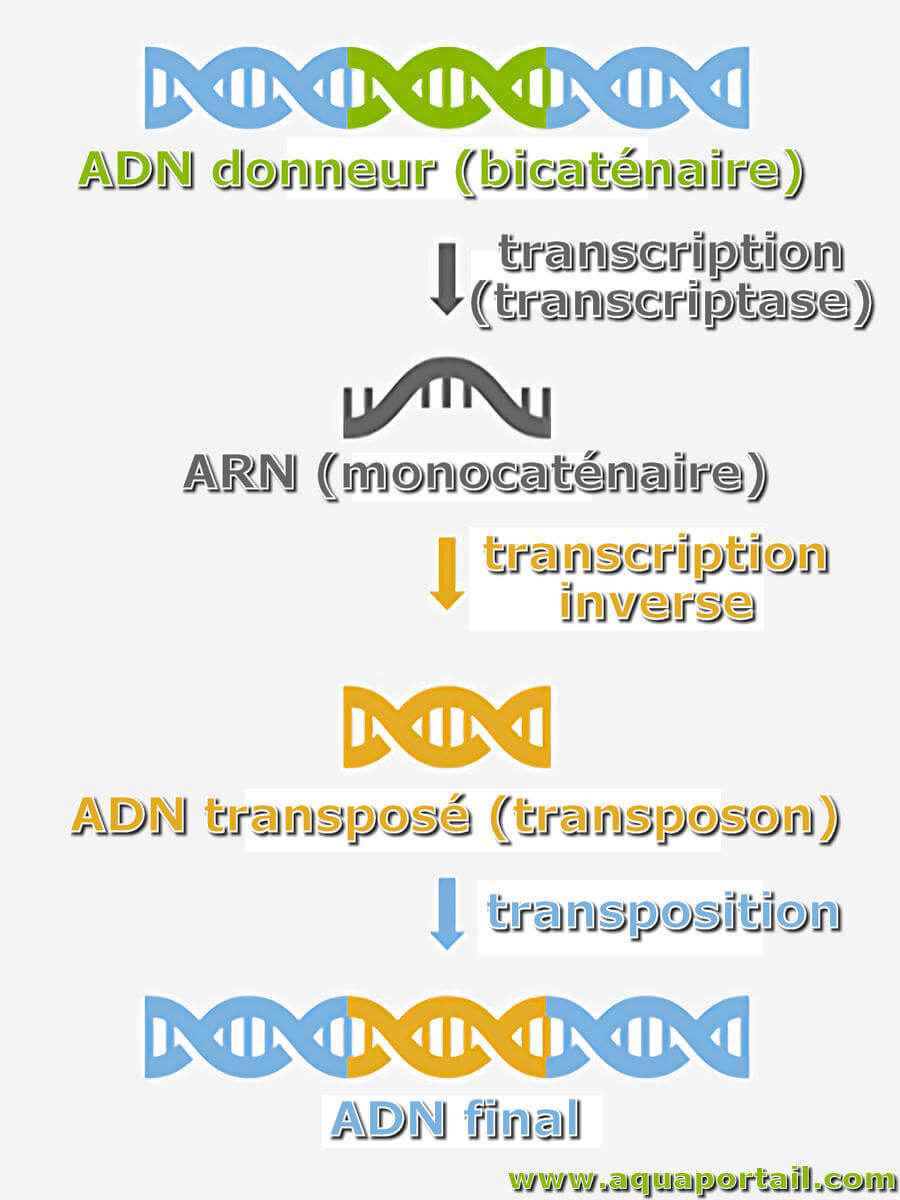
Regulation of transcriptase and replicase functions by 5′-structured RNA ligands is emerging as a common theme for sNSV polymerases.
Explanations
The switch from transcriptase to replicase is mediated by intrinsic and extrinsic factors. Whether N-polymerase binding affects the conformation of the cap-snatching domains and/or the functional outcome of initiation remains an open question.
However, N is not required for primed and unprimed RNA synthesis on short templates, suggesting that N-polymerase binding does not function in initial replicase or transcriptase licensing and likely serves as an elongation and processivity factor. It is also possible that polymerase architecture and function depend on N phosphorylation, which acts as a switch for N oligomerization on encapsidated RNA.
Action
During transcription, each segment of the double-stranded RNA genome must traverse the active site of the polymerase enzyme. The fully conservative nature of the transcriptase imposes certain topological requirements on the process. The two strands of the parental double-stranded RNA segments must unwind prior to transcription to allow the negative-sense (-) template strands to enter the active site of the polymerase.
However, the resulting parent-daughter strand duplexes must also be separated so that nascent RNA chains can be exported from the core particle, likely through pores in the VP3 (T2) subcore shell at the fivefold axes, allowing the parental strands of the dsRNA duplex to reanneal. VP6 (Hel) is a helicase and possesses ATPase activity utilizing energy released by the hydrolysis of ATP into ADP and Pi to separate double-stranded RNA into its component strands. This activity may facilitate RNA strand separation before or after transcription, or both.
Case of viruses (rotavirus)
The synthesis of viral transcripts is mediated by a viral RNA-dependent RNA polymerase (transcriptase) that possesses a number of enzymatic activities. The transcriptase is a component of the virion, and the properties of this enzyme (or enzyme complex) have been deduced by studying the characteristics of products from in vitro transcription reactions.
Rotavirus particles presumably contain the same enzymatic activities found in reoviruses, including transcriptase, nucleotide phosphohydrolase, guanylyltransferase, and two methylases. These activities are inferred because rotavirus transcripts produced in vitro in the presence of S-adenosyl methionine possess a methylated 5′-terminal cap structure, m7GpppGm, and transcription is inhibited by pyrophosphate. The particles also contain a poly(A) polymerase activity whose precise function remains unknown; it has been postulated to be responsible for synthesizing oligo(A) molecules.
The virus-associated transcriptase is latent in triple-layered particles and can be activated in vitro by treatment with a chelating agent or by heat-shock treatment. Such treatments result in the removal of outer capsid proteins with conversion of triple-layered particles into double-layered particles. In infected cells, it has been shown that triple-layered particles are uncoated to double-layered particles, and transcription within cells occurs from these particles. Transcription is asymmetric, and all transcripts are full-length (+) strands made from the (-) dsRNA strand. The intracellular site of transcription is unknown.
Activation of transcriptase activity is a poorly understood process. "Activation" may be a misnomer, because in reoviruses it has been suggested that this process does not actually alter the enzyme complex, but rather releases templates from structural constraints, allowing them to move past the catalytic site of the transcriptase. Rotavirus transcription requires a hydrolyzable form of ATP, and studies with analogs that inhibit transcription suggest that ATP is required in reactions other than polymerization.
ATP may be used for the initiation or elongation of RNA molecules, as described for the RNA polymerases of vesicular stomatitis virus or vaccinia virus. It remains unknown whether distinct polypeptides in transcriptionally active particles perform separate functions or whether inner core polypeptides operate as an enzymatic complex, though the localization of VP1 and VP3 as a structural complex at the fivefold axes favors the latter hypothesis.
VP1 has been cross-linked with a photoreactive nucleotide analog, indicating that VP1 is a component of the transcriptase. VP3 in viral particles and expressed alone in insect cells can bind GTP, suggesting that this protein is the guanylyltransferase. Whether VP3 also possesses transcriptase activity alone or in association with VP1 remains uncertain. Similarly, the role of VP2 in the transcription process is unclear.
Positive- and negative-strand RNA synthesis has been studied in SA11-infected cells and in a cell-free system. Optimization of an electrophoretic system enabling separation of positive and negative strands of rotavirus RNAs based on complementary strands migrating at different rates in acid urea-agarose gels has facilitated these studies.
Analysis of RNA synthesis kinetics in infected cells showed that positive- and negative-strand RNAs are initially detected at 3 hours post-infection, in agreement with other studies examining the timing of [3H]-uridine incorporation into rotavirus RNA. After 3 hours, transcription levels increase up to 9 to 12 hours, at which point plus-strand RNA levels peak. The ratio of plus-strand to minus-strand RNA synthesis shifts during infection, and peak minus-strand synthesis is observed several hours before the peak of plus-strand RNA synthesis.
It has been hypothesized that the delay in reaching maximal plus-strand RNA synthesis is due to a requirement for accumulating stoichiometric amounts of a protein (VP6) needed for transcriptase particle assembly. Both newly synthesized and preexisting positive-strand RNA can serve as templates for negative-strand RNA synthesis throughout infection, an unexpected finding based on earlier studies with reoviruses. The observation that RNA replication levels do not increase continuously in conjunction with rising plus-strand RNA levels suggests that RNA replication is regulated by factors other than the level of plus-strand RNA in the infected cell.
The synthesis of dsRNA has also been analyzed using a cell-free system to study rotavirus RNA replication. Components of this system include: (1) open-core particles prepared from purified double-layered particles or virus-like particles composed of VP1/2/3/6; (2) exogenously added viral mRNA or synthetic transcript; and (3) salts and nucleoside triphosphates. The in vitro replication system does not require nonstructural proteins and specifically replicates rotavirus templates.
In vitro dsRNA synthesis is an asymmetric process in which nuclease-sensitive positive-strand RNA acts as a template for negative-strand RNA synthesis. Following synthesis, dsRNA remains associated with subviral particles, suggesting that free dsRNA is not found in cells.
This in vitro system supports negative-strand RNA initiation using exogenous viral positive-strand RNA as a template. Conversion of exogenous mRNA into dsRNA by subviral particles provides a method to investigate (1) the specificity of viral proteins in recognizing and replicating rotavirus mRNAs, and (2) the effect of adding exogenous synthetic RNAs containing specific mutations on replication.
Finally, it is possible that nascent replicated dsRNA could be assembled into these viral particles within this in vitro replication system. Unfortunately, to date, the efficiency of the system has not been sufficient to achieve this goal. Taken together, these results suggest that a cell-free system supporting rotavirus RNA replication, transcription, and subviral particle assembly can be established.
This system should prove useful in helping define defects in rotavirus mutants and in studying the RNA sequences and proteins involved in viral replication and assembly. The roles of individual proteins and specific protein complexes in RNA replication and viral morphogenesis will likely not be resolved until studied in vitro with pure species of native rotavirus proteins and viral RNAs.
Synonyms, antonyms
Spanish translation: transcriptasa
0 synonyms (similar meaning) for "transcriptase".
2 antonyms (opposite meaning):
Related words and expressions to TRANSCRIPTASE are directly connected by general or specific meaning.
The word TRANSCRIPTASE is listed on page 1 of words starting with T in the dictionary glossary.
Related to "transcriptase"
reverse transcriptase
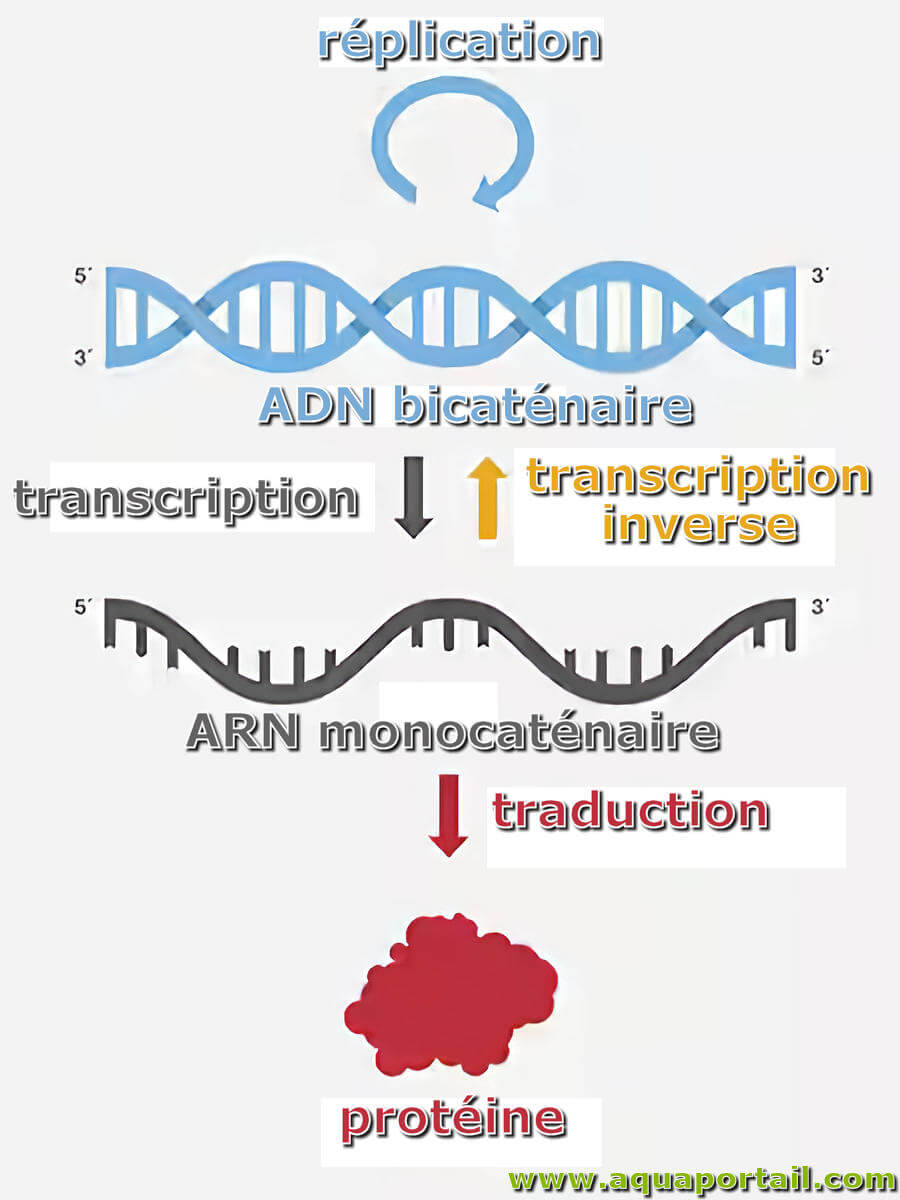
Reverse transcriptase, also called retrotranscriptase and RNA-dependent DNA polymerase, is a DNA polymerase that transcribes single-stranded RNA into DNA.
translocation
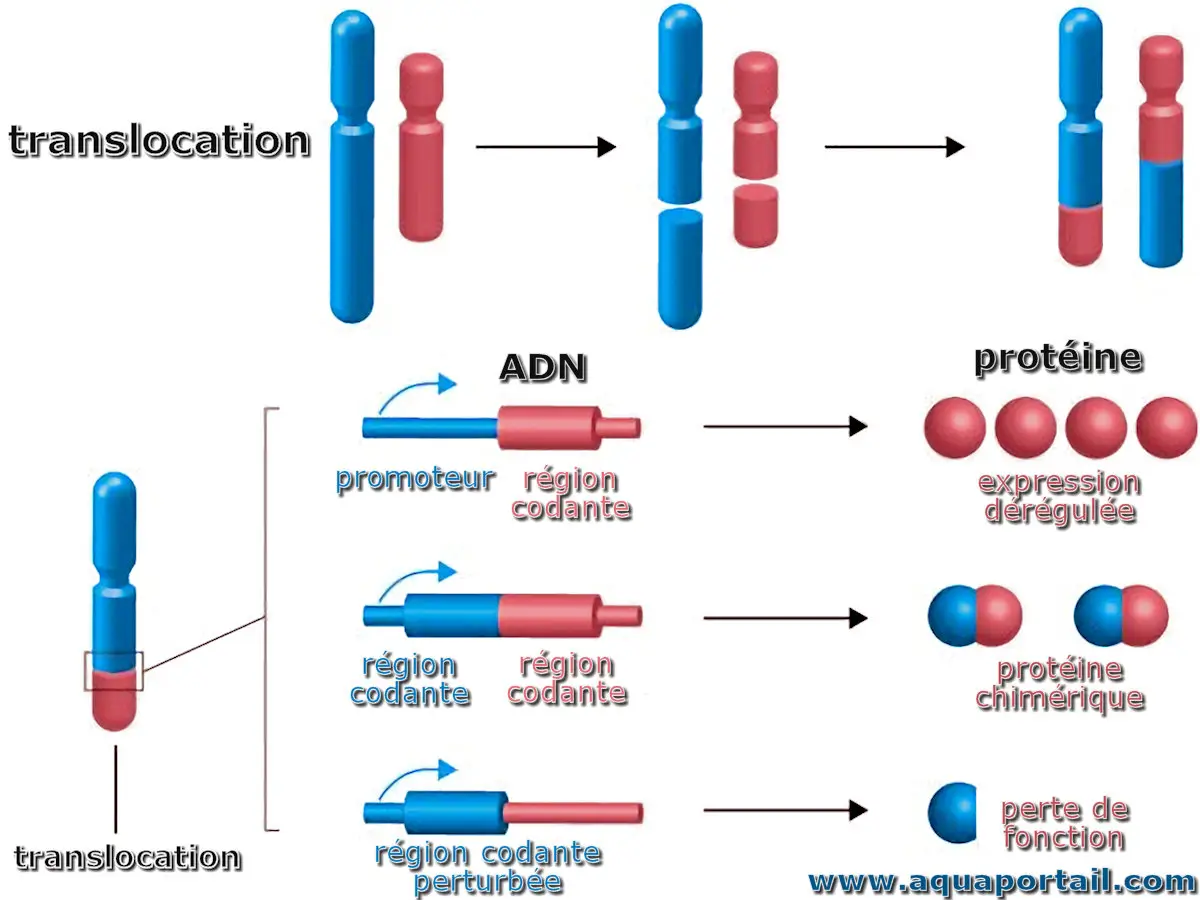
Translocation is a long-distance transport, such as group translocation, though the term takes on different meanings depending on the field considered.
transplantation

Transplantation is the act of transplanting, removing from one place and installing or introducing elsewhere.
tagma

A tagma is a group of fused segments formed by series of metameres differentiated from the rest of an arthropod's body.
