Excretion
noun (n.)
Definition
Excretion is a physiological process that enables an organism to eliminate toxic or unneeded wastes, thereby maintaining the osmotic and chemical balance (homeostasis) of body fluids.In biology, excretion is the elimination by an organism of waste products generated by metabolic activity. See also emunctory.
Organs of excretion:
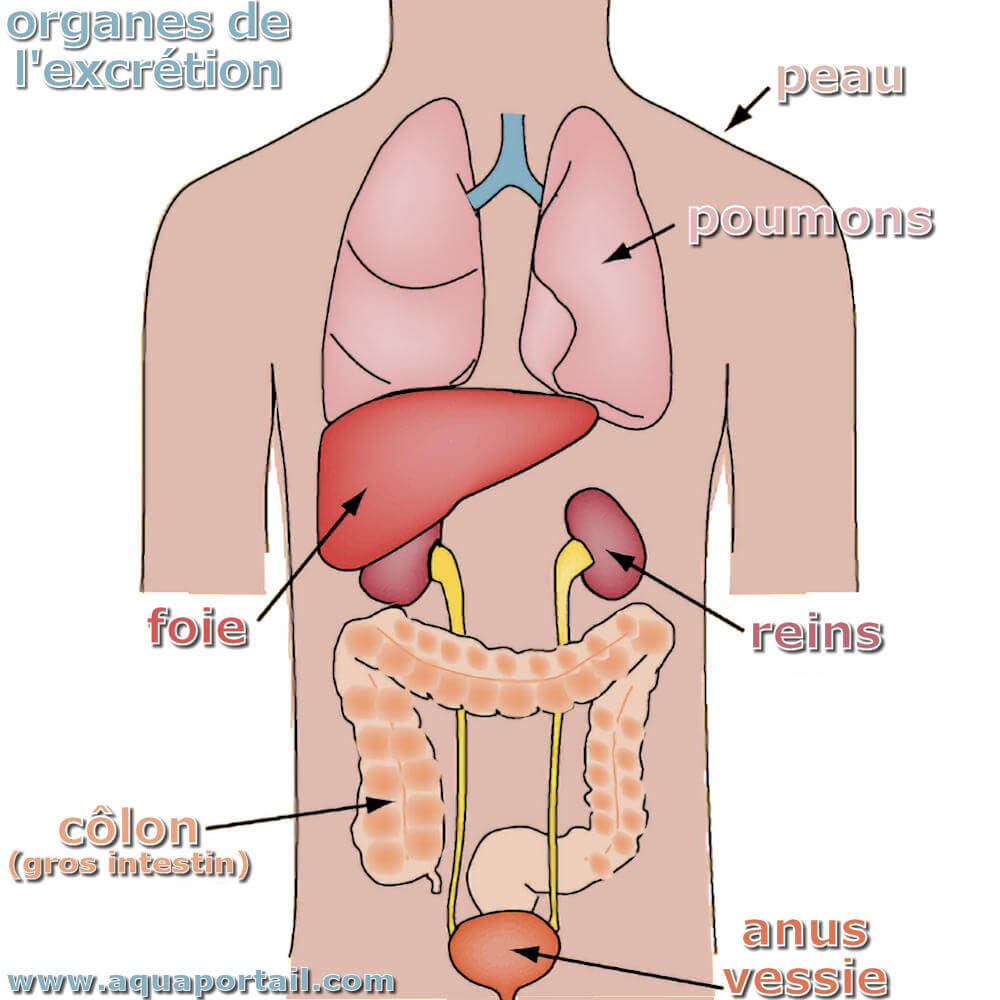
Body systems involved in excretion primarily include: skin, lungs, liver, kidneys, colon, bladder, and anus.
Explanations and overview
These products, called excretions (or "excreta"), include water, carbon dioxide (CO2), and nitrogenous compounds.
In everyday language, excretions often refer to excrement, but in a more precise biological sense, the term also applies to the discharge by a gland of its products into excretory ducts or the external environment.
It particularly designates the animal physiological function enabling the formation and subsequent expulsion of urine from the body. Solid wastes are evacuated via a terminal digestive tract (the anus in the case of feces).
As an action, excretion consists of expelling metabolic wastes from the body, whether liquid (urine, sweat) or gaseous (carbon dioxide), along with solid wastes (feces) by extension.
Excretory substances
Substances that must be expelled are highly varied, but the most abundant are carbon dioxide and nitrogenous compounds produced by the deamination of amino groups resulting from protein catabolism (breakdown).
The excreted substance may be:
- ammonia: excreted by aquatic invertebrates, bony fishes, and amphibian larvae. It is highly toxic, but due to its high solubility and rapid diffusion, surrounding water immediately dilutes and carries it away. Animals that excrete ammonia are called ammonotelic
- urea: synthesized in the liver by converting ammonia, making it far less toxic and highly soluble, though requiring more energy to produce. For these reasons, it can circulate in tissues without causing harm and be excreted in a more concentrated form. It is the primary nitrogenous waste of cartilaginous fishes, adult amphibians, and mammals. Animals that excrete urea are called ureotelic
- uric acid: characteristic of terrestrial animals conserving water. It is formed from ammonia and other nitrogenous derivatives. It is excreted as a white paste or solid given its very low toxicity and low solubility. It is characteristic of animals adapted to dry environments that lay eggs with impermeable shells and membranes, such as insects, pulmonate molluscs, reptiles (notably turtles), and birds. Animals that excrete uric acid are called uricotelic
- urine: in most vertebrates, water and solutes are excreted after passing through the kidneys via a process called diuresis. Diuretics and antidiuretics regulate urinary fluid production
- sweat (perspiration): in mammals, sweating is a secretory and excretory pathway for water and salts; in plants, the phenomenon of transpiration (or evapotranspiration) is analogous. Both processes also contribute to internal temperature regulation.
In mammals, for example, the two primary excretory processes are urine formation in the kidneys and carbon dioxide elimination in the lungs. These wastes are expelled via urination and respiration, respectively.
The skin and liver also participate in eliminating or transforming toxic substances. The skin acts through sweating, expelling salts and water.
In terrestrial arthropods, excretory organs (Malpighian tubules) generally empty into the anterior hindgut, incorporating excretory products into the feces. In mammals such as humans, however, only the liver discharges excretory substances (via bile) into the intestine.
Among these, only breakdown products derived from blood heme, such as bilirubin, are significantly eliminated in feces, whereas most bile salts are reabsorbed into the bloodstream (enterohepatic circulation).
Algal excretions
In marine aquariology, within a saltwater aquarium, the exact chemical nature of algal excretions still poses many questions to science; however, their beneficial effect on water quality and living organisms has been firmly established.
These excretions most likely consist of:
Natural chelators are by far the most important because:
- they rapidly mature fresh saltwater and make it less harsh on fish skin
- they bind heavy metals and other toxins, neutralizing their toxicity
- they form a protective film on the epidermis of fishes, making them less vulnerable to parasite attacks
- they form colloids that facilitate waste removal by protein skimmers
- they combine with certain organic matter to form compounds that facilitate bacterial breakdown in biological filters (live rock, live sand, etc.).
In fishes, excrement consists of feces.
Synonyms, antonyms
Spanish translation: excreción
9 synonyms (similar meaning) for "excretion":
- discharge
- elimination
- evacuation
- excrement
- excreta
- expulsion
- feces
- secretion
- sweat
1 antonym (opposite meaning):
Related words and expressions to EXCRETION are directly connected by general or specific meaning.
The word EXCRETION is listed on page 1 of words starting with E in the dictionary glossary.
Related to "excretion"
secretion

Secretion is the production of a specific substance by a given cell, tissue, or organ. It also refers to that secretory substance itself.
sweat

Sweat is a fluid composed of roughly 99 % water and 1 % electrolytes (salts) and organic compounds, excreted by the skin to cool the body.
E=mc2
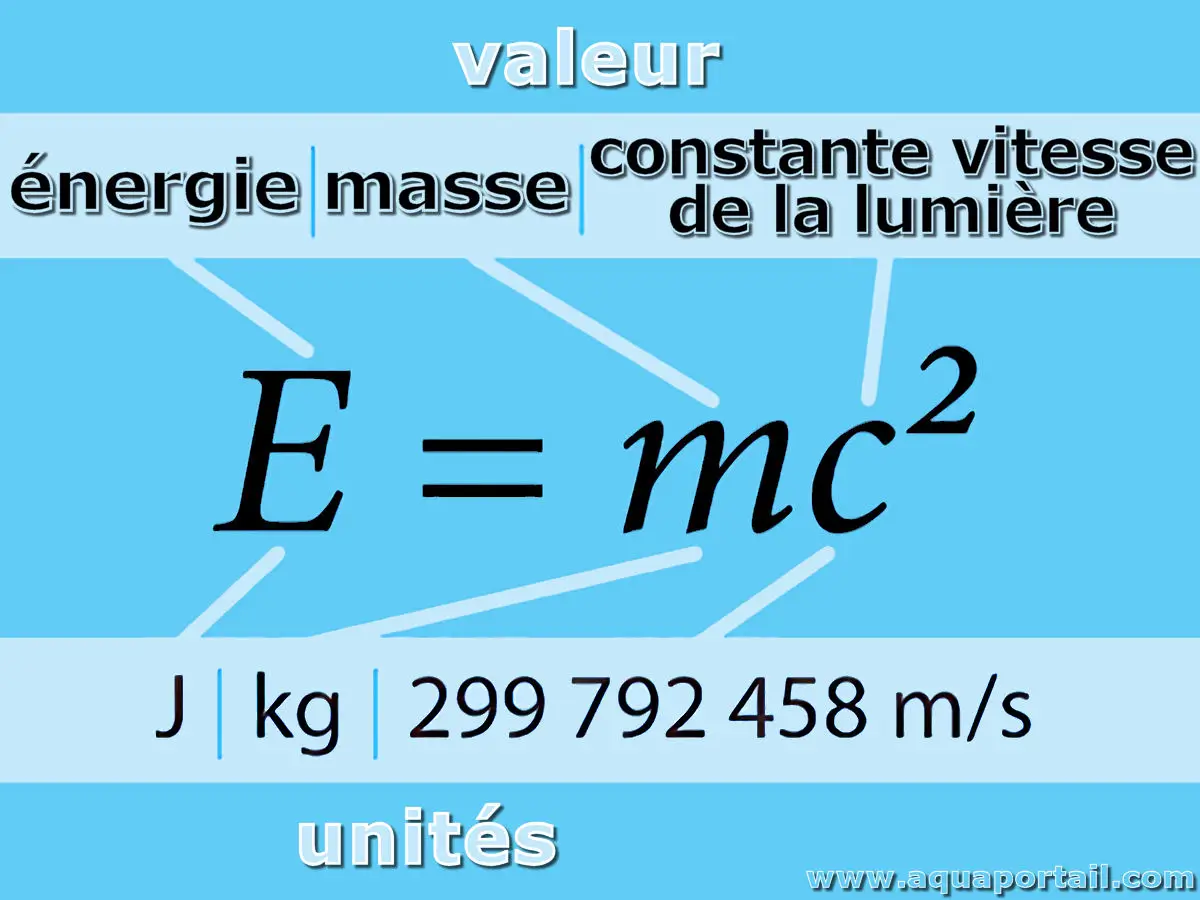
The formula E=mc2 (E = m. c²) is a mass-energy equivalence equation according to the theory of relativity developed by Albert Einstein. It expresses that...
ebb tide

Ebb tide designates the outgoing, falling tide of the sea that begins at high water, also known as reflux.
