Urination
noun (n.)
Definition
Urination (micturition) is the physiological process by which the urinary bladder expels urine when full. The bladder is compressed by surrounding organs when empty and gradually fills until wall tension exceeds a threshold, triggering a neurogenic reflex called the micturition reflex, which produces urination via contraction of the detrusor muscle. Below that threshold, bladder filling produces the conscious desire to urinate.The process of urination is voluntarily controlled most of the time. Urinary incontinence refers to impaired or absent control over urination. See also diuresis.
Diagram of reflex control of urination:
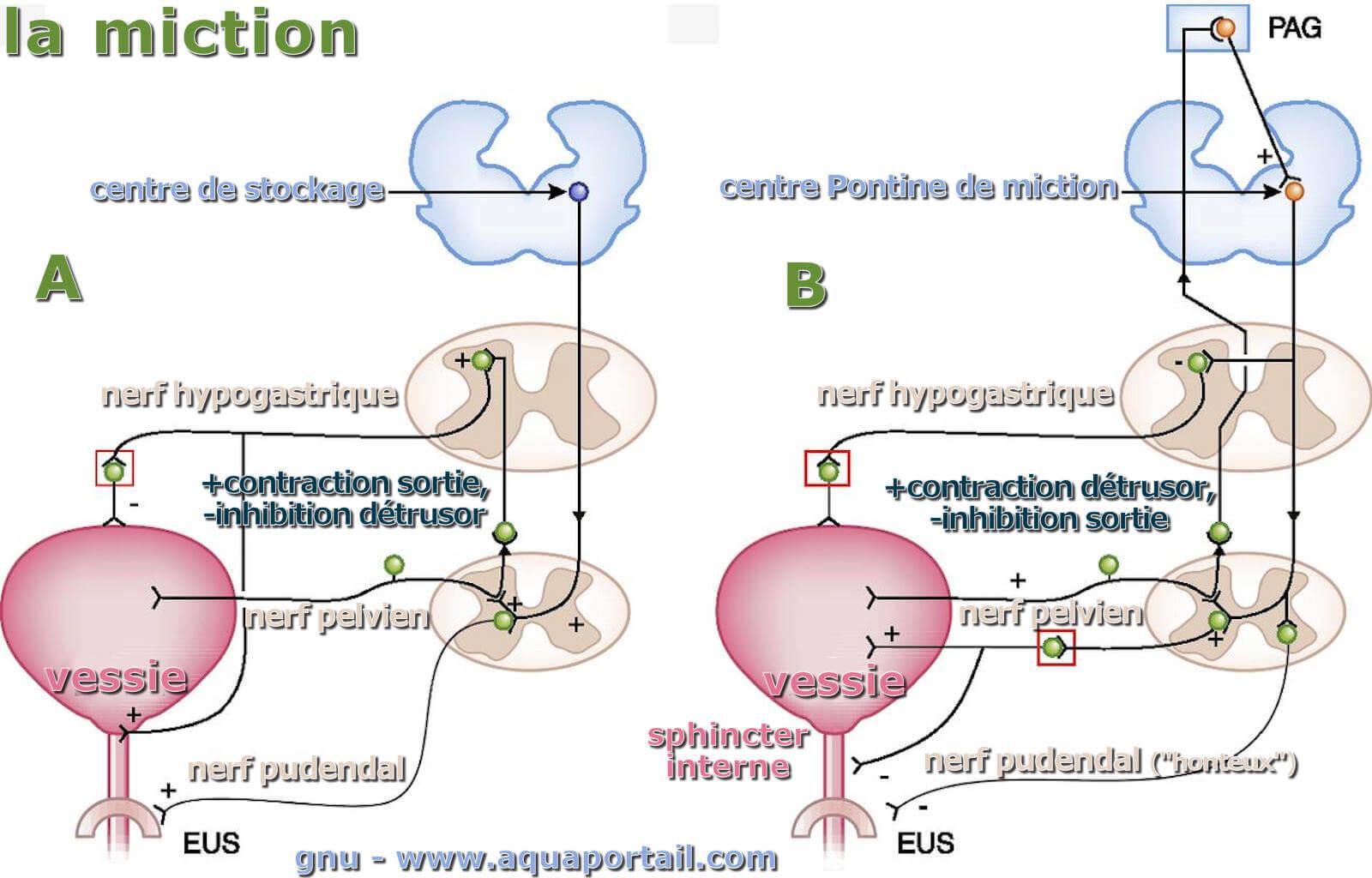
Urination involves neural regulation of both the storage phase and the voiding phase of urine produced by the kidneys.
Micturition reflex
The micturition reflex is an entirely autonomic spinal cord process. The bladder walls contain sensory receptors called bladder wall stretch receptors, which detect pressure and increasing bladder volume, with the most sensitive receptors located in the bladder neck. These sensory receptors generate action potentials transmitted via the pelvic nerves to sacral spinal segments S2 and S3.
Motor fibers of the parasympathetic nervous system originate in these sacral nuclei and terminate on ganglion cells within the bladder wall that innervate the detrusor muscle. This reflex arc repeats over several minutes with increasing intensity to raise intravesical pressure and is consciously inhibited by the brain if urination does not occur.
Occasionally, the micturition reflex becomes strong enough to send inhibitory impulses via the pudendal nerve to the external urinary sphincter. If this inhibition overrides voluntary signals from the conscious brain, involuntary urination (urinary incontinence) occurs.
Schematic explanations
In the urination diagram above, in (A) storage reflexes are engaged. During filling, afferent bladder fibers signal distension via the pelvic nerve, stimulating sympathetic outflow to the bladder neck and wall via the hypogastric nerve. This sympathetic stimulation relaxes the detrusor muscle and contracts the bladder neck at the internal sphincter. Afferent pelvic nerve impulses also stimulate pudendal (somatic) outflow to the external sphincter, causing contraction and maintaining continence.
In (B) voiding reflexes take over. At the onset of urination, high-intensity afferent activity signaling wall tension activates the brainstem micturition center. The spinobulbospinal reflex travels as an ascending afferent pelvic nerve signal (left side) through the periaqueductal gray matter to reach the pontine micturition center, then descends (right side) to trigger parasympathetic detrusor contraction and somatic relaxation via the pudendal nerve. EUS, external urethral sphincter; PAG, periaqueductal gray.
Brain control of urination
Urination can be inhibited or facilitated by the following brain centers:
- powerful facilitatory and inhibitory centers in the brainstem, notably located in the pons
- several centers located in the cerebral cortex, which are predominantly inhibitory but can also be excitatory
Encephalic control of urination operates through the following pathways:
- via the spinal cord, brain centers stimulate sacral parasympathetic centers so that, through the pudendal nerve, the external sphincter muscle relaxes when voiding is desired, accompanied by abdominal contraction and pelvic floor relaxation to facilitate urination
- via the spinal cord, brain centers stimulate sympathetic centers that contract the trigone and internal sphincter, thereby preventing urination
Urination symptoms
When suffering from a urinary tract disorder, unpleasant symptoms may occur during urination, such as:
- dysuria: painful or burning sensation during the passage of urine through the urethra, which alone or combined with other symptoms defines lower urinary tract syndrome
- pollakiuria (urinary frequency): increased number of urinations over 24 hours, usually in small volumes
- nocturia: increased nighttime urination (see also enuresis and parasomnia)
- hematuria: presence or expulsion of blood in the urine
- pyuria: presence or expulsion of pus in the urine
- suprapubic or hypogastric pain: lower abdominal pain experienced during urination
- urinary urgency: a sudden, compelling sensation of needing to urinate again shortly after voiding
- renal colic: severe spasmodic pain originating in the lumbar region and radiating toward the external genitalia
- anuria, oliguria: abnormally low urine output, with oliguria defined as less than 400–600 mL/day (13.5–20.3 US fl oz/day) or less than 20 mL/hour (0.68 US fl oz/hr) in catheterized patients, and output below 100 mL (3.4 US fl oz) in 24 hours classified as anuria
Disorders related to urination
Disorders and conditions affecting urination include:
- paruresis: inability to urinate in certain situations (shy bladder syndrome)
- urinary incontinence
- frequent urination syndrome: a condition causing a patient to urinate repeatedly throughout the night
- spinal cord injuries: transection of the spinal cord above the sacral segments (leaving sacral segments intact) abolishes voluntary supraspinal control while preserving an automatic reflex bladder, whereas a lesion within the sacral segment destroys the micturition reflex, leading to urinary retention, bladder distension, and overflow incontinence due to damage to the peripheral reflex arc
Synonyms, antonyms
Spanish translation: micción
2 synonyms (similar meaning) for "urination":
0 antonyms (opposite meaning).
Related words and expressions to URINATION are directly connected by general or specific meaning.
The word URINATION is listed on page 1 of words starting with U in the dictionary glossary.
Related to "urination"
bio-purification
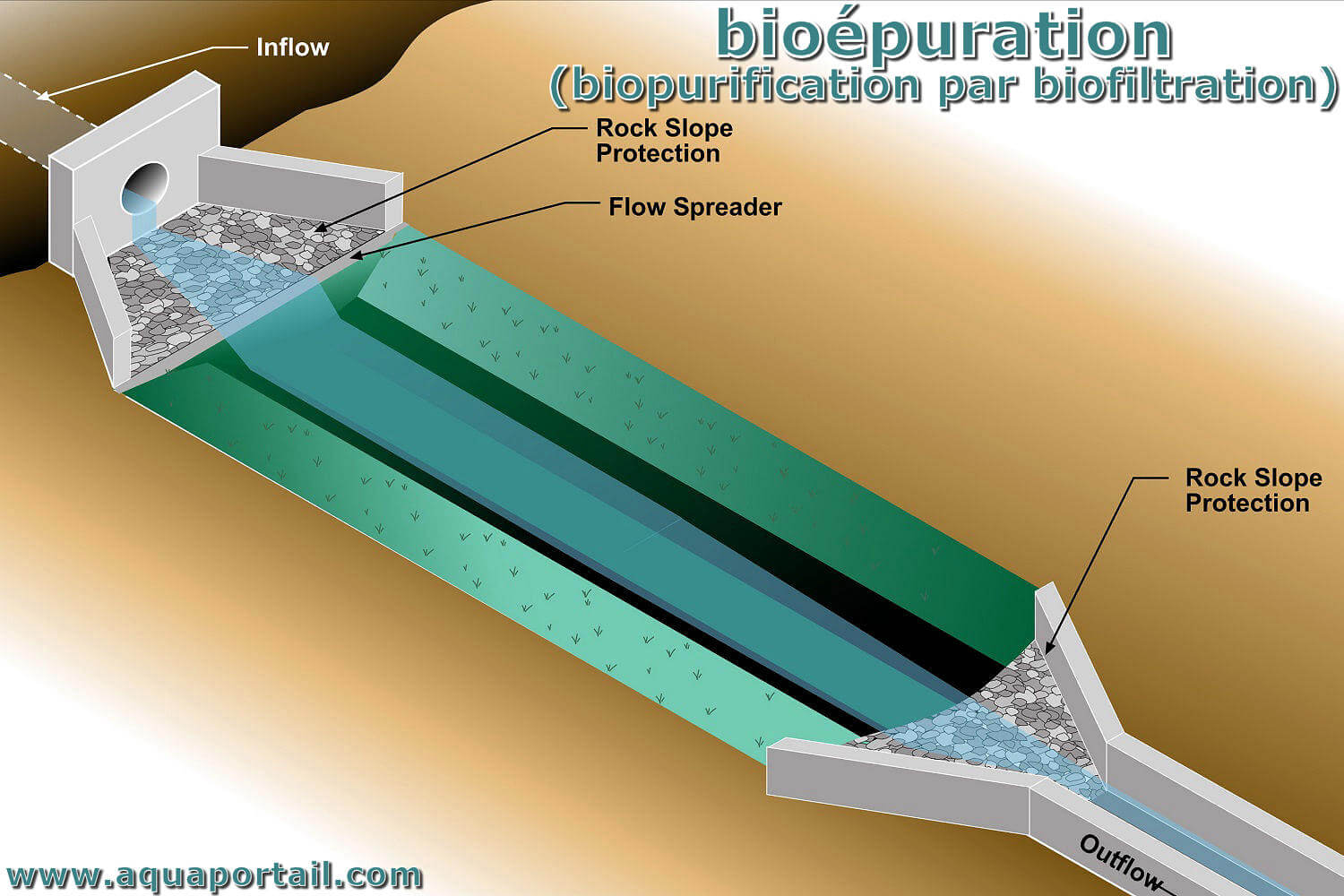
Bio-purification (biodepuration) refers to harnessing living organisms—such as plants, fungi, and symbiotic bacteria—to reduce pollution in an environment.
civilization

A civilization is generally defined as an advanced state of human society containing highly developed forms of government, culture, industry, and social...
cohabitation

Cohabitation is the simultaneous coexistence of several elements, similar or different, in the same place (habitat) over the same (extended) period.
concentration

Concentration (geographic) is the clustering of numerous elements around a central location.
