USDA hardiness zone
noun phrase (n. phr.)
Definition
A USDA hardiness zone is a region with known low temperatures defining plant hardiness zones. USDA zones are the standard by which gardeners and growers can determine which perennial plants are most likely to thrive at a given location.
The USDA hardiness zone map is based on the average annual extreme minimum winter temperature, divided into 13 main zones (with 26 tiers or half-zones). France is concerned by only 10 of the 26 USDA half-zones, from zone 6 to zone 10 (no climatic extremes).
Map of USDA zones in France:
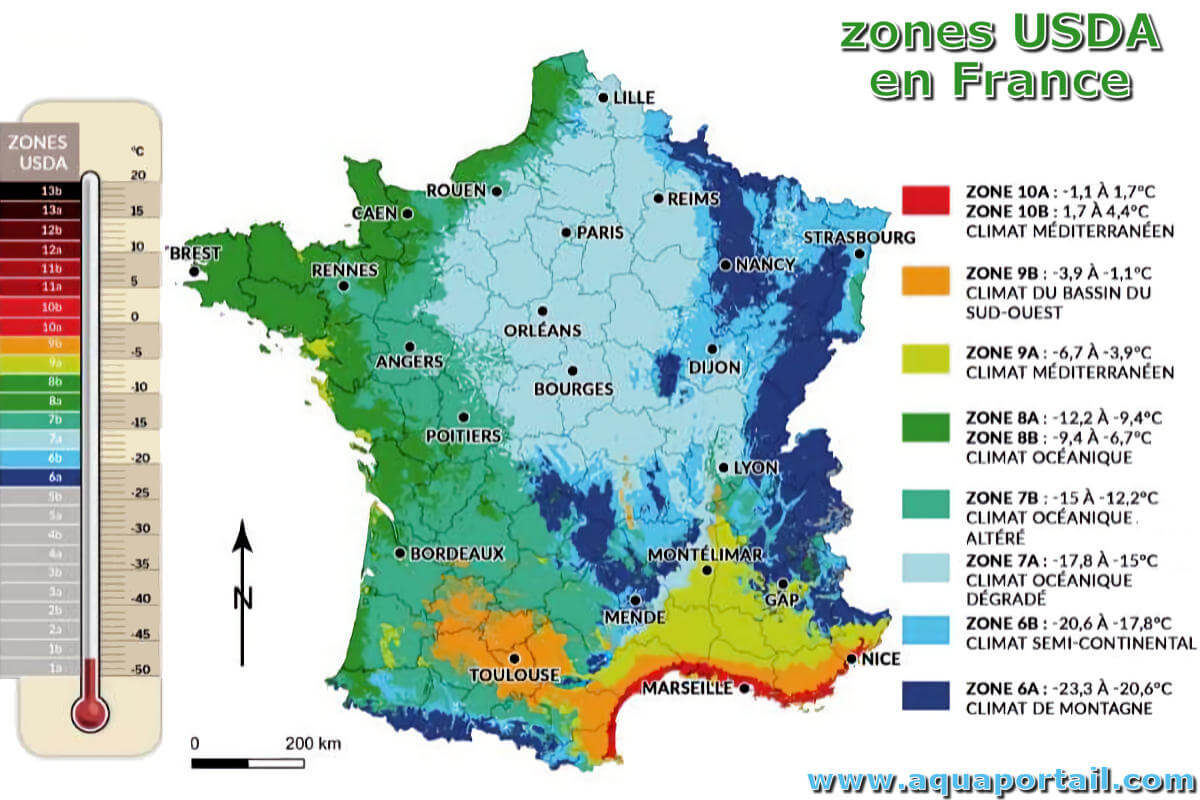
The map of metropolitan French USDA zones quickly gives the plant hardiness zone at your location. Areas in blue indicate the coldest climates, where only very hardy plants (-15 °C / 5 °F) should be planted. We apologize for Corsica (we could not find it!).
Explanations
USDA is the acronym (abbreviation) for the American organization United States Department of Agriculture. The principle of hardiness zones is therefore American, with a climatic classification in the form of 10 °F (Fahrenheit) zones and 5 °F half-zones. In °C (Celsius), the major zones are classified over a temperature range of about 5.5 degrees.
The USDA plant hardiness zone map runs from zone 1 (the coldest) to zone 13 (the warmest). Each zone is divided into half-zones designated by "a" and "b". For example, 7a and 7b are 5 °F (about 2.8 °C) increments representing the colder and warmer halves of zone 7, respectively. These designations serve as convenient labels and shortcuts for communicating and comparing extreme winter temperatures. Zone numbers are usually listed alongside perennial plant descriptions in catalogs and other sales materials produced by commercial nurseries, plant suppliers, etc.
The sequence of colors assigned to the zones mimics the color spectrum produced by a prism (that is, red, orange, yellow, green, blue, indigo, and violet), providing a graphical representation of plant hardiness zones. The overlay of colored zones on the map provides a practical tool for understanding and comparing plant cold tolerance and can help select suitable perennial plants based on their observed performance in other regions of the country.
List of zones
The USDA zones (and half-zones) in France are:
- USDA Zone 6 = cold climate (-23.3 to -17.8 °C / -10 to 0 °F):
- zone 6a (-23.3 to -20.6 °C / -10 to -5 °F): mountain climate;
- zone 6b (-20.6 to -17.8 °C / -5 to 0 °F): semi-continental and mountain margin climate;
- USDA Zone 7 = cool oceanic climate (-17.8 to -12.2 °C / 0 to 10 °F):
- zone 7a (-17.8 to -15 °C / 0 to 5 °F): degraded oceanic climate of the Central and Northern plains;
- zone 7b (-15 to -12.2 °C / 5 to 10 °F): altered oceanic climate;
- USDA Zone 8 = oceanic climate (-12.2 to -6.7 °C / 10 to 20 °F):
- zone 8a (-12.2 to -9.4 °C / 10 to 15 °F): typical oceanic climate;
- zone 8b (-9.4 to -6.7 °C / 15 to 20 °F): improved oceanic climate;
- USDA Zone 9 = altered north-Mediterranean and southwestern climate (-6.7 to -1.1 °C / 20 to 30 °F):
- zone 9a (-6.7 to -3.9 °C / 20 to 25 °F): altered Mediterranean climate;
- zone 9b (-3.9 to -1.1 °C / 25 to 30 °F): Southwestern basin climate;
- USDA Zone 10 = Mediterranean climate (-1.1 to +4.4 °C / 30 to 40 °F):
- zone 10a (-1.1 to +1.7 °C / 30 to 35 °F): true Mediterranean climate;
- zone 10b (+1.7 to +4.4 °C / 35 to 40 °F): frost-free Mediterranean climate.
The extreme zones are USDA Zone 1 (down to a minimum of -51 °C / -60 °F) and USDA Zone 13 (down to a minimum of +21.1 °C / +70 °F).
The USDA zone scale, from 1 to 13, with temperatures in °F and °C:

Temperature scale used to define the 13 USDA hardiness zones. These are annual extreme minima (a zone is assigned to an area by taking the lowest temperature recorded there during a given year).
The hardiness zones on the map are based on the average annual extreme minimum temperature over a 30-year period in the past, rather than the lowest temperature that has ever occurred in the past or is likely to occur in the future. Gardeners should keep this in mind when selecting plants, especially if they choose to "push" their hardiness zone by growing plants not adapted to their zone.
Microclimates
Microclimates, which are small-scale climatic variations, can be small heat islands, such as those caused by asphalt and concrete, or cool spots (frost pockets) caused by small hills and valleys. Individual gardens can also have very localized microclimates. Your entire yard might be slightly warmer or cooler than the surrounding area because it is sheltered or exposed.
You may also have pockets in your garden that are warmer or cooler than the general zone of your area or the rest of your yard, such as a sheltered spot in front of a south-facing wall or a low spot where cold air collects first.
No hardiness zone map can replace the detailed knowledge that gardeners gain about their own garden through hands-on experience.
General advice
All plant hardiness zone maps (PHZMs) should serve as general guides for growing perennial plants. They are based on average lowest temperatures, not the lowest ever recorded.
Therefore, growing plants at the extreme limit of the coldest zone to which they are adapted means they may experience a year with a rare, extreme cold snap lasting only a day or two, and plants that have thrived happily for several years could be lost. Gardeners and nursery operators must keep this in mind and understand that past weather records cannot provide a guaranteed forecast of future weather variations. They should consult other knowledgeable growers and gardeners or extension services with extensive expertise in local conditions.
⭐ The zones on the map above are based on weather data from 1991 to 2010. This does not represent the coldest it has ever been or ever will be in an area, but is simply the average lowest winter temperatures for a given location over that 20-year period. The map above dates from 2012: it would need to be updated to account for climate change.
In addition, gardeners must recognize that many other environmental factors, besides hardiness zones, contribute to plant success or failure. wind, soil type, soil moisture, pollution, snow, and winter sun can greatly affect plant survival.
Warm-season heat and water balance are particularly important in this regard. How plants are placed in the landscape, how they are planted, as well as their size and state of health, can also influence their survival.
Many perennial plant species gradually acquire cold resistance in autumn as they experience shorter days and cooler temperatures. This hardiness is normally lost gradually in late winter as temperatures warm and days lengthen. A period of extremely cold weather in early autumn could damage plants even if temperatures do not reach the average lowest temperature of your zone. Similarly, unusually warm weather in mid-winter followed by an abrupt shift to seasonal cold weather can also damage plants. Such factors could not be accounted for in USDA zones.
A plant rated for USDA zone 4 (very, very cold) can obviously be planted in USDA zone 7, but the overly warm zone 10 should certainly be avoided (some plants require a harsh winter).
Planting criteria
Some additional criteria to consider alongside USDA zones:
- Light: To thrive, plants must be planted where they will receive the right amount of light. For example, plants that require partial shade and are at the limits of hardiness in your area could be damaged by too much sun during winter, as this could cause rapid changes in the plant's internal temperature.
- Soil moisture: Plants have different soil moisture needs, and these can vary by season. Plants that might otherwise be hardy in your zone could be injured if soil moisture is too dry in late autumn and they enter dormancy while suffering from water stress.
- Temperature: Plants grow best within an optimal range of cool and warm temperatures. This range can be wide for some varieties and species, but narrow for others.
- Duration of cold exposure: Many plants that can survive a brief period of cold exposure may not tolerate prolonged cold spells.
- Humidity: High relative humidity limits cold damage by reducing moisture loss from leaves, branches, and buds. Cold damage can be more severe if humidity is low, especially for conifers.
- Wind: Wind cools the atmosphere, can cause desiccation, etc. It is important to plan planting locations according to this criterion.
Synonyms, antonyms
Spanish translation: zona USDA
1 synonym (similar meaning) for "uSDA hardiness zone":
0 antonyms (opposite meaning).
Related words and expressions to USDA HARDINESS ZONE are directly connected by general or specific meaning.
The expression USDA HARDINESS ZONE is listed on page 1 of words starting with U in the dictionary glossary.
Related to "USDA hardiness zone"
hardiness

Hardiness characterizes what is hardy, enduring time and weather like things living in the countryside.
biogeographic zone

A biogeographic zone is a geographically defined area based on its floristic and/or faunistic composition, its biocenosis, its biotope, and the ecology...
growth zone
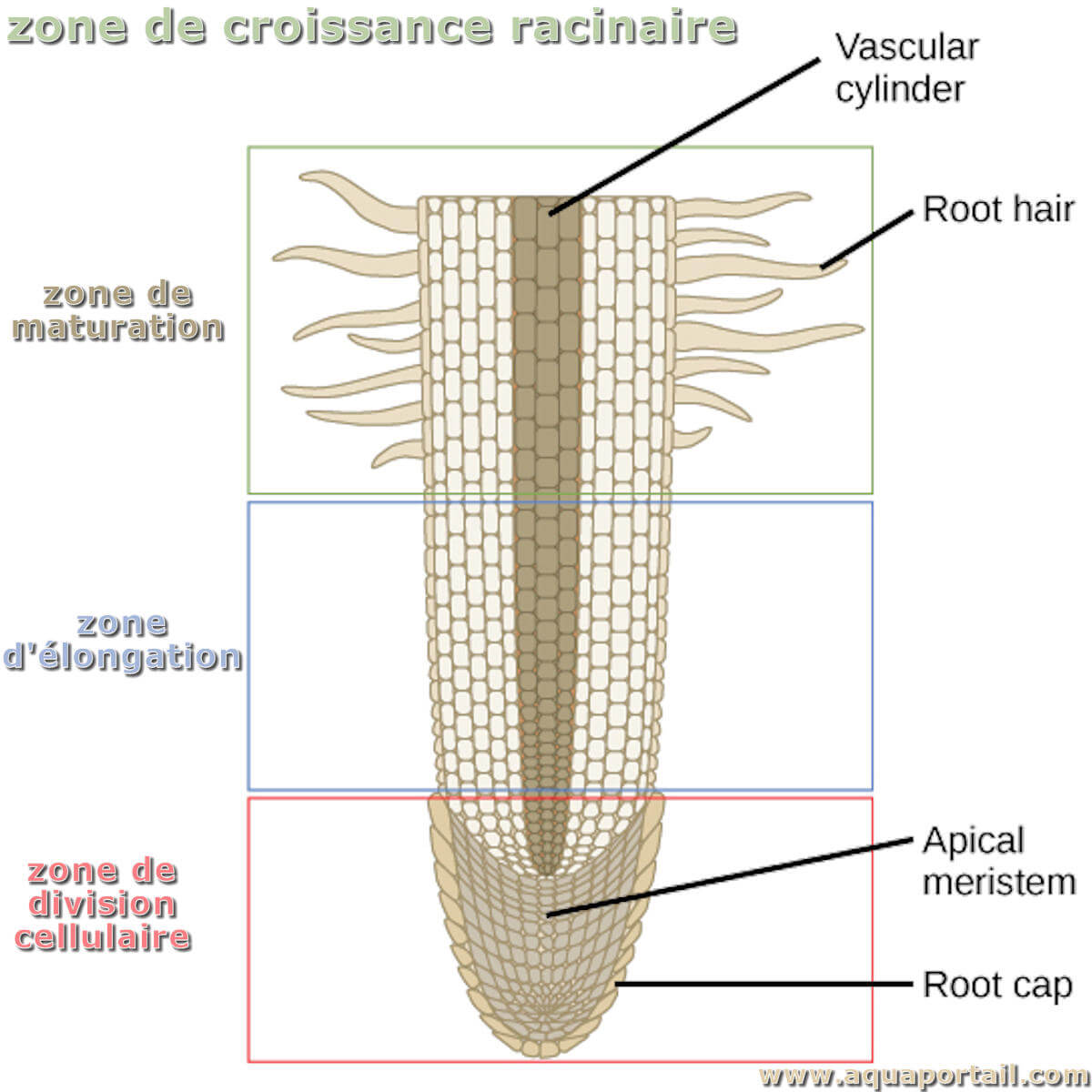
A growth zone, in biology, is a region where tissues grow through cell division and/or an increase in the size of these cells.
umami

Umami is one of the five basic tastes sensed by humans, alongside sour, sweet, bitter, and salty.
