Tannin
noun (n.)
Definition
The term tannin was originally used to describe certain organic substances used to transform raw animal hides into leather. Tannins are extracted from plants using water (or water and alcohol), which is then decanted and allowed to evaporate at low temperature until the final product is obtained.
Gallic acid, a tannin:
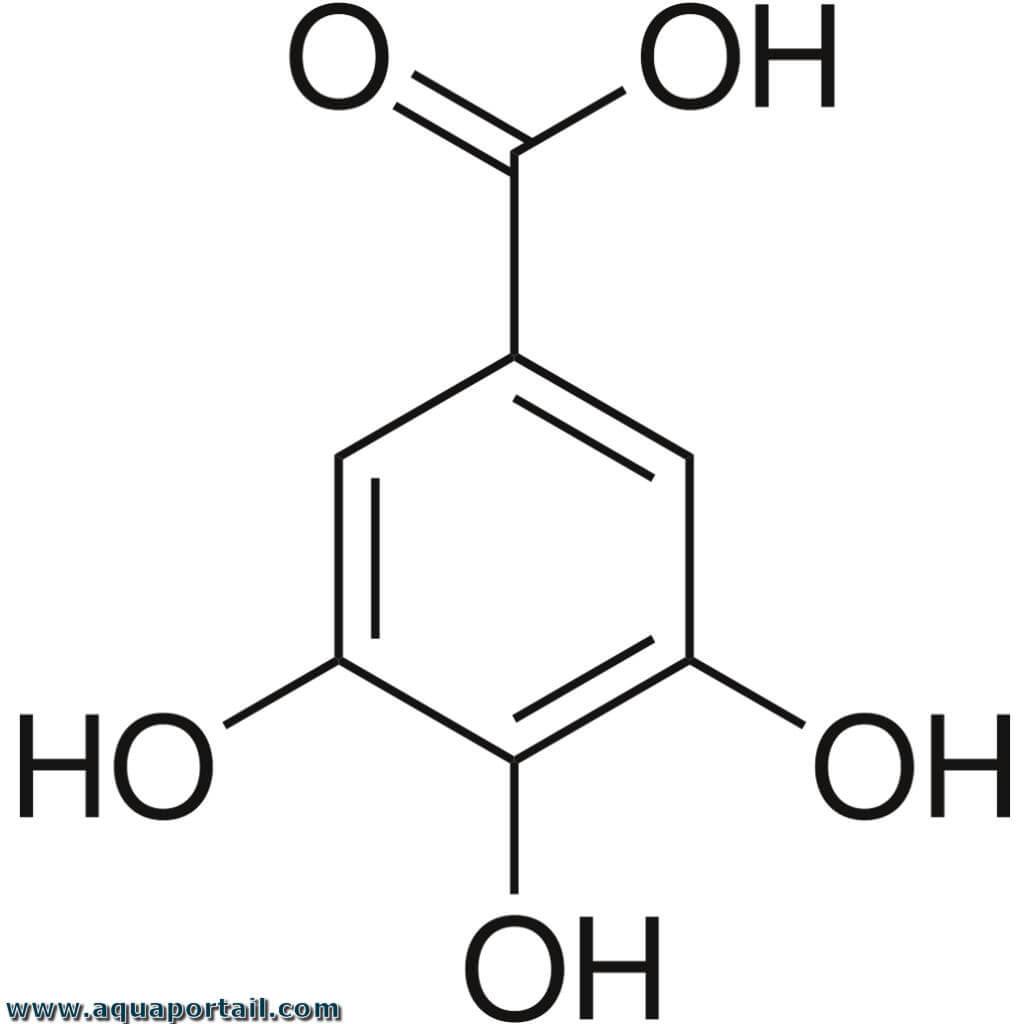
A tannin may be a gallic acid derivative among phenolic acids. Tannins are polyphenolic compounds with antiseptic properties produced by most plants. They slow down protein biodegradation in soils or water by binding to proteins.
Explanations
A tannin, or gallic acid derivative, is an amorphous substance widely distributed in the wood, bark, leaves, and/or roots of many plants, capable of converting hide into leather. Tannin is an astringent, bitter plant polyphenolic compound. Tannins have a slight characteristic odor, a bitter and astringent taste, and range in color from yellow to dark brown.
When exposed to air, they darken and lose their effectiveness for tanning. Tannins are used in tanning because they react with the collagen proteins present in animal hides, cross-linking them together; in this way, they increase the hide's resistance to heat, water-induced putrefaction, and microbial attack.
Chemically, they are nitrogen-free phenolic secondary plant metabolites, soluble in water and alcohol, but insoluble in nonpolar organic solvents. They abound in the bark of oaks (where they are particularly concentrated in the branches) and chestnut trees, among other trees.
The tannins contained in wine originate from the seeds, skins, and stems of grapes; they are polyphenolic compounds present in wine that contribute to its organoleptic balance. The avocado, fruit of the avocado tree, has a very high tannin content in its large seed.
Tannin is thus a family of plant glycosides derived from polyphenolic acids such as gallic acid, stored within cell vacuoles.
Classification
The formula C14H14O11, regarded in some textbooks as that of common tannin, is only approximate, as tannins are complex polymers. Two categories of tannins are distinguished according to their biosynthetic pathway and chemical properties: condensed tannins and hydrolyzable tannins:
- condensed tannins, or proanthocyanidins, are polymers of a flavonoid called anthocyanidin, commonly found in the wood of woody plants
- hydrolyzable tannins are heterogeneous polymers formed by phenolic acids, particularly gallic acid, and simple sugars; they are smaller than condensed tannins and are more readily hydrolyzed (dilute acid alone suffices), with most having a molecular mass between 600 and 3,000.
Functions
In plants, tannins serve defensive functions against herbivory. Tannins in general are toxins that markedly reduce the growth and survival of many herbivores when added to their diet. Moreover, they can induce feeding deterrence ("antifeedant" effect) across a wide diversity of animals. Mammals such as cattle, deer, and monkeys characteristically avoid plants or plant parts with high tannin content. Unripe fruits, for instance, often contain high levels of tannins, which may be concentrated in the outermost cell layers of the fruit.
Interestingly, humans generally appreciate a certain level of astringency in tannin-containing foods such as apples, blackberries, and red wine. Recently, red wine tannins have been shown to inhibit the formation of endothelin, a signaling molecule that causes blood vessel constriction, which may reduce heart disease risk in moderate red wine consumers.
Although specific tannins can be beneficial, they are generally toxic due to the very properties that make them effective for tanning: their ability to bind proteins non-specifically. It was long thought that tannins formed complexes with proteins in the herbivore gut via hydrogen bonds between their hydroxyl groups and electronegative sites on the protein, but more recent evidence also supports covalent bonding between tannins (and other plant phenolics) and the proteins of herbivores that consume them. The foliage of many plants contains enzymes that oxidize phenols into their quinone forms in the herbivore gut. Quinones are highly reactive electrophiles that react with nucleophilic -NH2 and -SH protein groups. Regardless of the mechanism of tannin-protein binding, this process negatively impacts herbivore nutrition. Tannins can inactivate herbivore digestive enzymes and form complex, poorly digestible aggregates of tannins and plant proteins.
Herbivores that regularly feed on tannin-rich matter exhibit notable adaptations to neutralize tannins in their digestive tract. For example, certain mammals such as mice and rabbits produce salivary proteins rich in proline (25–45%), which has a high affinity for tannins. secretion of these proteins is induced by ingesting tannin-rich foods and substantially mitigates the adverse effects of tannin ingestion. The high proportion of proline residues gives these proteins a highly flexible, open conformation and a high degree of hydrophobicity that facilitates binding to tannins.
Plant tannins also act as defenses against microorganisms. For example, the heartwood of many trees contains high concentrations of tannins that help prevent decay from pathogenic fungi and bacteria.
The procedure for extracting tannins from plants begins with grinding, reducing plant parts into chips or shavings. Extraction is then carried out, which may be rural (artisanal) or industrial.
In rural-style extraction, chips are placed in several large wooden vats or clay pots; water is first added to the initial vessel to completely cover the plant material and prevent oxidation. The next day, water is added to the second vessel and hot (non-boiling) water to the first; on the third day, the liquid is transferred from the second to the third and from the first to the second, refilling the first with water. This cycle is repeated for about 12 days, during which a reserve tank is filled with liquor deemed sufficiently enriched in extracted tannins.
To prevent tannins from spoiling during processing, the water used (called "tanning liquor") must be free of lime or iron ("soft" water) and is generally filtered beforehand. Equipment must be made of clay, wood, copper, brass, or basketry, never iron, as iron reacts with tannins to form dark iron tannates.
Industrial extraction procedures include the following methods, each suited to extracting tannins from specific plant parts:
- open-vat diffusion, suited for bark, fruits, and leaves, uses large wooden or copper vats with steam-heated water in which shredded material is agitated so fresh water continuously contacts the most leached material in countercurrent flow; temperatures must remain below boiling (typically 60 to 82 °C / 140 to 180 °F) to prevent tannin precipitation and darkening, with the entire process lasting 3 to 4 days
- leaching (percolation), recommended for bark and leaves, fills a tank with shredded material subjected to steam and then sprayed with hot water, drawing off the resulting "tanning liquor" from the bottom of the tank in half the time required for open-vat diffusion
- decoction (cooking), used for wood, finely shreds the material in chippers (similar to wood pulp preparation, but finer) and loads it into water-filled tanks; once maximum tannin concentration is reached, the "liquor" is transferred to a second and then a third tank, while heating forms iron tannate that is treated in the final stage by adding sodium sulfite or sodium disulfite in cold water, taking one day and leaving spent wood chips usable for paper, particleboard, or fuel
- autoclaving, also used for chipped wood, operates above the boiling point of water with modern loading and unloading cycles lasting only a few minutes, completing extraction in about 45 minutes at lower cost due to reduced water consumption, while yielding residual wood suitable for paper, particleboard, and fuel
- countercurrent or continuous leaching systems place material in compartments while solvent flows continuously in countercurrent (rather than batch tank-to-tank transfer) until concentrated at the first-compartment discharge, commonly using a 2- to 6-compartment "multi-stage classifier".
Regardless of the method used, extraction yields a dark concentrated liquid containing non-tannin impurities. For filtration, the liquid is passed through filter press cloths cleaned by hot-water injection. Filtration removes impurities and renders the liquid translucent, though still reddish-brown. The next step is decolorization via chemical treatment with sulfur dioxide (called "sulfitation") or direct evaporation. Sulfitation can be performed using two methods: the "ladder" method and the obsolete "cascade" method.
In the "ladder" method, liquids descend by gravity from above while SO2 rises from below by diffusion. In the "cascade" method, towers 15 to 30 m (49 to 98 ft) high packed with limestone and siliceous stones were used: liquid was released from the top while SO2 was injected through small nozzles. Finally, the last step is evaporation of the resulting liquid to concentrate the tannins. This may be carried out in closed or open tanks (the latter prohibited for decolorized tannins because SO2 is released into the atmosphere), heated with an agitator that continuously prevents tannin from sticking to the bottom.
Processing continues until the desired concentration is reached. Concentrates kept in liquid form require moderate evaporation, whereas powdered concentrates are produced by concentrating up to 45% tannin under vacuum and then drying to 5% moisture. The most common commercial forms are:
- liquid presentation at 25 to 45% tannin, a liquid concentrate subjected to extended evaporation with roughly 20% moisture
- solid presentation at 45–65% tannin, a liquid concentrate processed in tanks or presses until solidified
- powder presentation at 55–70% tannin, a fully dried concentrate.
Synonyms, antonyms
French translation:
taninSpanish translation: tanino
3 synonyms (similar meaning) for "tannin":
0 antonyms (opposite meaning).
Related words and expressions to TANNIN are directly connected by general or specific meaning.
The word TANNIN is listed on page 1 of words starting with T in the dictionary glossary.
Related to "tannin"
phlorotannin

A phlorotannin is a type of tannin composed of polymers of phloroglucinol (a benzene ring bearing three hydroxyl groups).
tagma

A tagma is a group of fused segments formed by series of metameres differentiated from the rest of an arthropod's body.
tapeworm
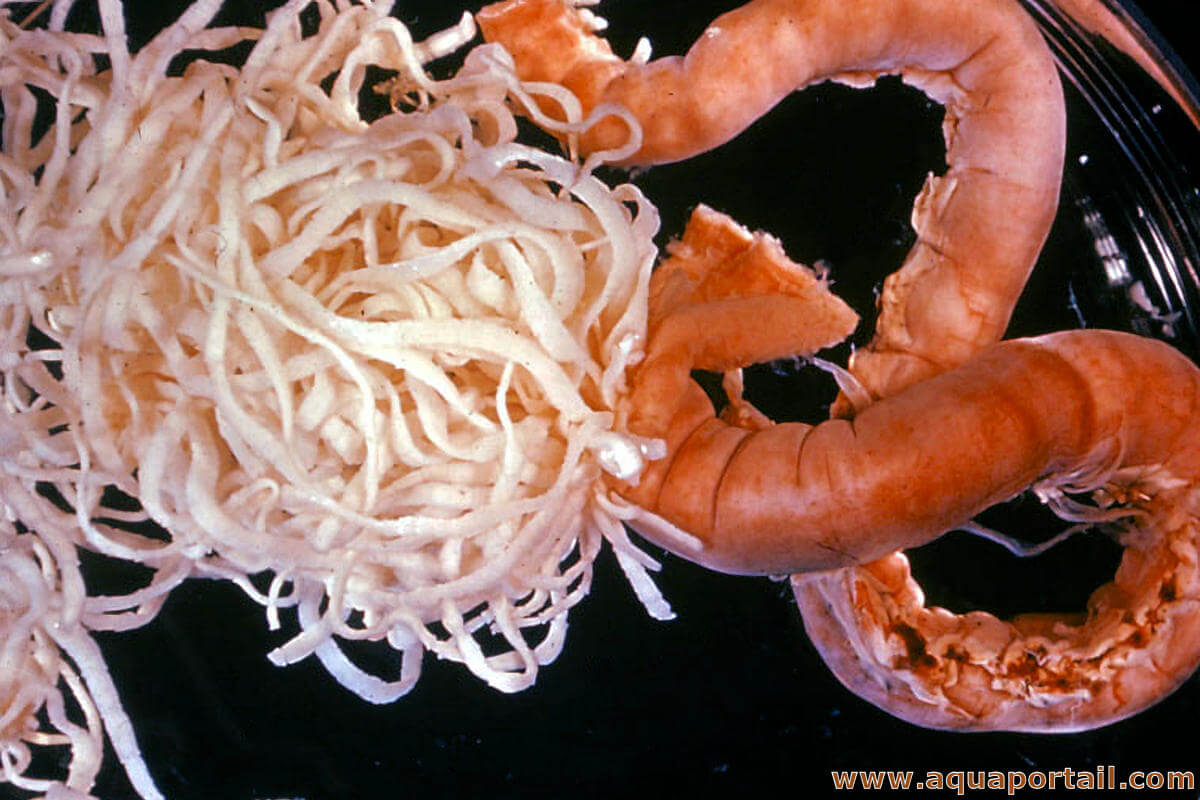
The tapeworm, or solitary worm, is a long, ribbon-like, segmented flatworm, a parasitic cestode of the genus Taenia.
taxon

In biology, a taxon is a taxonomic unit recognized by international codes within a given classification, or a systematic unit such as a family, genus...
