Siliceous
adjective (adj.)
Definition
Siliceous describes what is formed of silica, or composed of or containing silicon dioxide. By extension, a glass-like substance is siliceous. Siliceous rocks form a subset of sedimentary rocks whose common characteristic is a high silica (SiO2) content.These rocks include siliciclastic rocks, which are composed primarily of quartz grains. In this process, there is no organic origin, and the term clastic refers to their composition of fragments from other rocks.
Arkose is a siliceous rock:
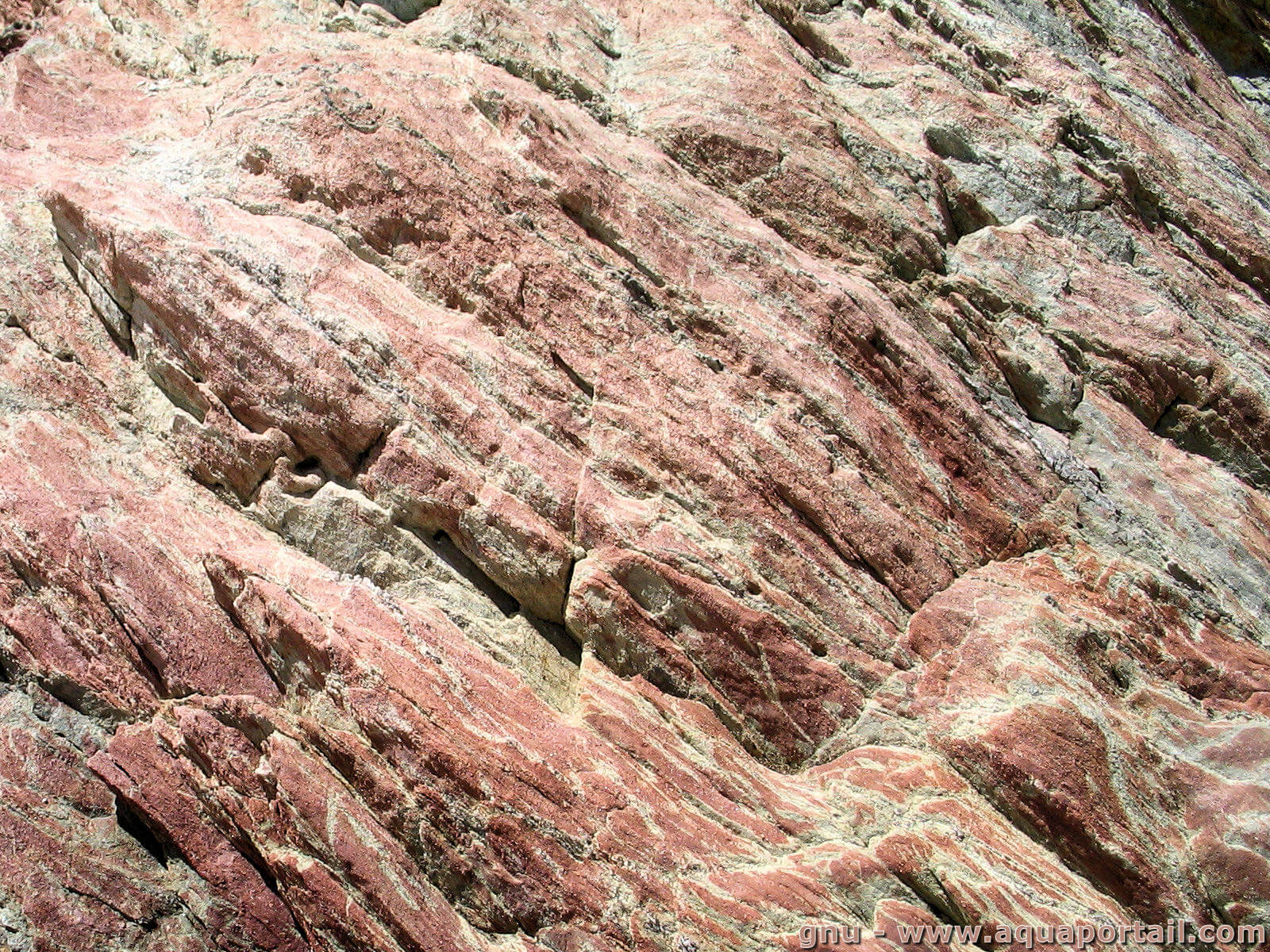
Red arkose is a siliceous rock consisting of poorly rounded quartz sandstone. These sandstones are composed of quartz and feldspar grains with a predominantly calcareous cement.
Explanations
Siliceous cherts originate primarily from the sedimentary accumulation of tests or skeletons of siliceous organisms (radiolarite, diatomite, and spiculite). They also arise from the secondary formation of concretions during diagenesis. In these later silicified sedimentary rocks (for example, chalk or sandstone), silica is finely dispersed within the rock matrix or occurs as nodules (flint).
For example, quartz sandstone (or siliceous sandstone) is composed almost exclusively of quartz grains with an argillaceous matrix and siliceous cement.
Siliceous soil is composed of silica grains and has a sandy appearance. It is poor in lime and dries out rapidly.
Siliceous terrain supports distinctive vegetation adapted to the specific conditions of this soil type.
Regarding marine oozes, siliceous oozes are generally dominated by radiolarians, diatoms, and sponges in lithified form. For a diatom nodule, see central nodule.
Siliceous organism
Siliceous marine organisms, such as diatoms and radiolarians, use silica to build skeletons through a process known as biomineralization. Diatoms and radiolarians have evolved to take up silica in the form of silicic acid, Si(OH)4.
Once an organism has sequestered Si(OH)4 molecules in its cytoplasm, the molecules are transported to silica deposition vesicles where they are converted into biogenic opal silica (bSiO2). Diatoms and radiolarians possess specialized proteins called silicon transporters that prevent premature mineralization during the uptake and transport of silicic acid within the organism.
Silt and ooze
In the deep ocean near the poles, much of the seafloor ooze consists of the skeletons of microscopic unicellular algae and animal-like protists, including diatoms, silicoflagellates, and radiolarians. Diatoms are photosynthetic algae and are particularly abundant in the "opal belt" of the North Pacific and the Southern Ocean. In both regions, nutrient-rich waters upwell to the surface and fuel massive blooms of opal-producing organisms during the polar spring and summer. Most of this opal dissolves again as the shells sink toward the ocean floor, though enough survives to accumulate in deep-sea sediments.
Synonyms, antonyms
Spanish translation: silíceo
0 synonyms (similar meaning) for "siliceous".
0 antonyms (opposite meaning).
Related words and expressions to SILICEOUS are directly connected by general or specific meaning.
The word SILICEOUS is listed on page 1 of words starting with S in the dictionary glossary.
Related to "siliceous"
silica

Silica (silicon dioxide, SiO₂) is a very hard mineral chemical compound found in large quantities in Earth's crust.
silicate
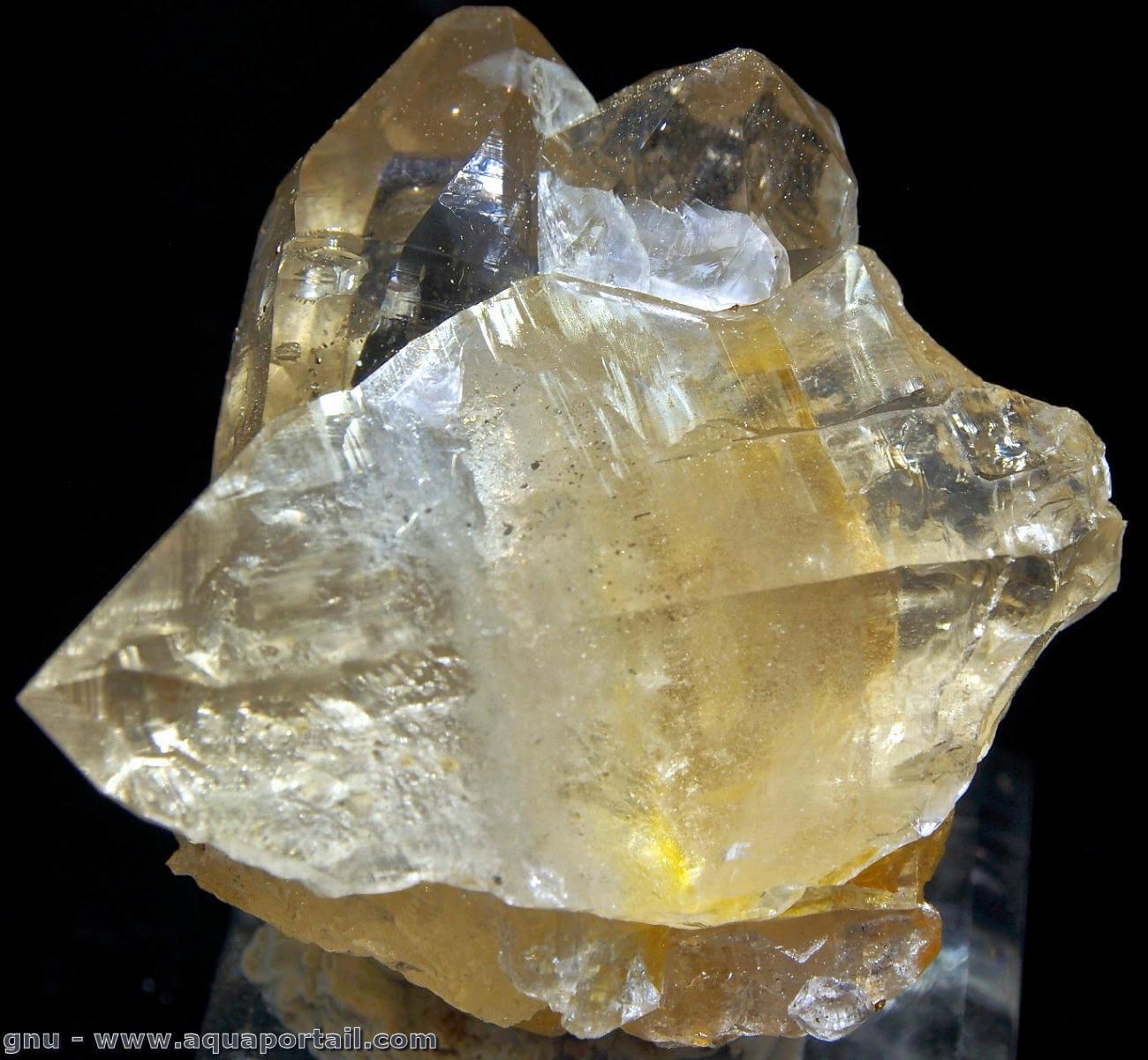
In mineralogy, a silicate is a crystalline (sometimes amorphous) mineral formed from the basic chemical compound SiO₂.
saccharide

A saccharide is a carbohydrate, a biomolecule composed of carbon, hydrogen, and oxygen atoms, usually with a hydrogen-to-oxygen atomic ratio of 2 :1.
saccule

A saccule is a flattened cellular cavity shaped like a small concave disk and bounded by a membrane, a stack of which forms a dictyosome.
