Silt
noun (n.)
Definition
Silt is an incoherent clastic sediment transported in suspension by rivers and wind, which is deposited on the bed of watercourses or on flooded land. Silts form fine soils with unconsolidated clastic sediments whose constituents are mainly mineral.Dry silt:

Silt is an inert fine-grained material, intermediate between coarser sands and finer clays, which is transported in suspension by rivers and deposited on the bed of watercourses or on flooded soils. It is also present in ponds and marshes. It may originate from aggregate processing plants and, more specifically, from the sedimentation of aggregate wash water itself.
Explanations
Silt may mix with mud and occupies an intermediate position between coarser sand and finer clay. In pedology, silts are mineral particles whose diameter varies between 0.002 and 0.02 mm in the international system (DIN 4022) and between 0.002 and 0.063 mm in the USDA system (ISO 14688, valid since 2002). Silt grain size divides it into fine, medium, and coarse:
- fine silt between 0.002 and 0.0063 mm
- medium silt between 0.0063 and 0.02 mm
- coarse silt between 0.02 and 0.063 mm.
Silt-sized particles are contained to a large extent in cohesive soils or sediments, which are called loams. In geosciences, clastic sedimentary rocks with a predominance of grain size in the silt range are called siltstones.
Organisms that live in or on silt are limnophilous, limnicolous, and may have a limnophagous diet. Not to be confused with the limnion.
Field determination of grain size
Silty grains are so small that they cannot be resolved individually with the naked eye or a hand lens. A distinction between silt and clay particles is therefore not visually possible in the field. However, due to the special properties of the respective minerals, silt particles generally consist of relatively hard minerals, mainly quartz, whereas clay particles consist of much softer clay minerals.
In the preliminary study of weakly to moderately consolidated sedimentary rocks in geology and soil science, fieldwork can therefore differentiate between siltstone or silty claystone and pure claystone by means of the "crunch test". A tiny corner of the rock in question is bitten and chewed. A characteristic crunching of the rock between the teeth indicates the presence of silt in the sampled rock.
See also silt content.
Distinguishing silty soils from fine clay soils or unconsolidated sediments is done in the field by finger testing. Unlike relatively pure clay, moist silt or silt-poor clay is only moderately malleable between the fingers. Moreover, the larger grain size reflects light more diffusely, so the material does not shine when rubbed between the fingers, as is typical for relatively pure clay.
Silt grain size distribution
Because during laboratory particle-size analysis of a sediment or soil, separating the silt fraction from the clay fraction and separating the subfractions of the silt fraction cannot be performed by sieving due to the small grain size, but must be carried out by sedimentation in suspension, clay and silt particles are grouped together in this context under the term fine fraction (or mud).
The Wentworth scale used internationally to classify sediments is based on the base-2 logarithm; classification according to ISO and DIN, on the other hand, is based on the decimal logarithm. The latter standards thus allow intervals in the important range from 0.002 to 20 mm (0.8 in) to be uniform on a logarithmic grain-size scale.
Consequently, the boundaries of the grain classes of the two systems differ. According to the Wentworth scale, silt has a grain size of 0.004 to 0.063 mm (rounded). Therefore, when using literature from different sources, particular attention must be paid to the respective underlying reference system.
Classification of silt-containing sediments
All clastic sediments, the majority (greater than 50%) of which fall within the silt (or loam) size range, are called silts. Depending on which fraction dominates the silt grain size, a distinction can be made between fine, medium, and coarse silt analogous to the corresponding grain-size designations. Fine and medium silt as well as clay sediments belong to pelites; coarse silt and sands belong to psammites.
In sediments containing a high proportion of clay and silt, nomenclatural gradations such as silty clay (clay still dominates), clayey silt (silt dominates), and very clayey silt are possible.
A relatively strongly solidified clastic sedimentary rock consisting mainly of silty grains is called siltstone. In English nomenclature, all clastic sedimentary rocks in which grain sizes smaller than fine sand predominate are grouped together as mudstones.
Fine-grained, dense carbonate rocks can be classified as calcareous silt, dolomitic silt, etc., keeping in mind that carbonate particles of this size are generally not clastic, but are generated in the depositional area (in situ) by organisms (bioerosion, active secretion of calcium carbonate by unicellular organisms), although subsequent reworking of these particles may of course take place.
Synonyms, antonyms
French translation:
limonSpanish translation: limo
2 synonyms (similar meaning) for "silt":
0 antonyms (opposite meaning).
Related words and expressions to SILT are directly connected by general or specific meaning.
The word SILT is listed on page 1 of words starting with S in the dictionary glossary.
Related to "silt"
saccharide

A saccharide is a carbohydrate, a biomolecule composed of carbon, hydrogen, and oxygen atoms, usually with a hydrogen-to-oxygen atomic ratio of 2 :1.
sagittocyst

A sagittocyst is a capsule containing a spindle-shaped needle produced by epidermal cells of certain flatworms (acoels).
salinity

Salinity is the measure of dissolved salts in water. It takes into account all salts, and not only sodium chloride (table salt NaCl). The average salinity...
salt marsh lamb
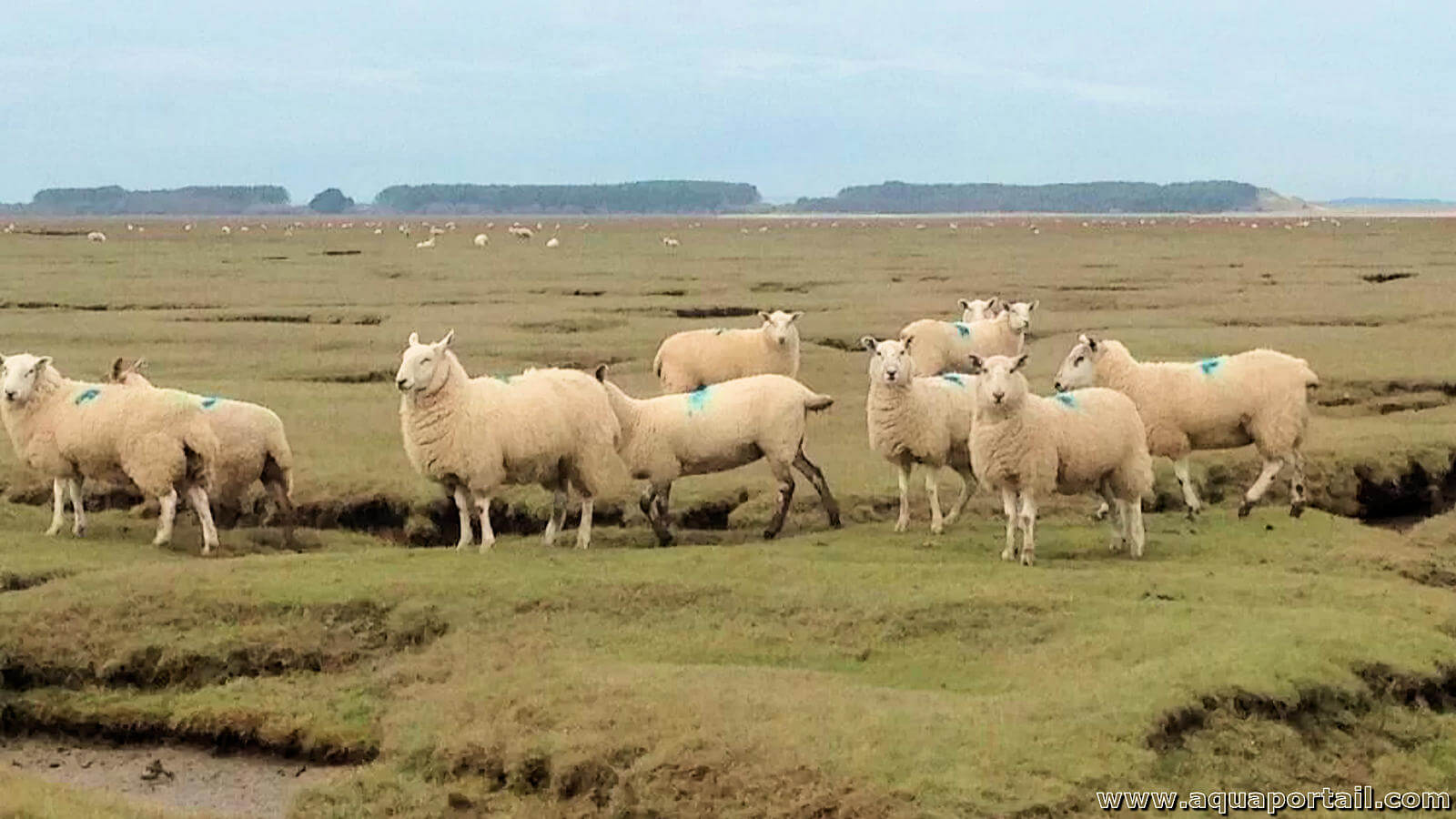
A salt marsh lamb (pré-salé) is a sheep that grazes habitually on coastal salt marshes, feeding on salt-tolerant grasses and herbs.
