Saxitoxin
noun (n.)
Definition
Saxitoxin (STX) is a major representative of neurotoxins. It is the best-known paralytic phycotoxin, produced by several species of dinoflagellate microalgae of the genera Alexandrium, Gymnodinium, and Pyrodinium, as well as by cyanobacteria. Related compounds include neosaxitoxin (NSTX), gonyautoxin (GTX), and decarbamoylsaxitoxin (dcSTX).Saxitoxin (and Gymnodinium):

Chemical formula of saxitoxin and a dinoflagellate alga of the genus Gymnodinium.
⭐ Saxitoxins are toxic alkaloids with neuromuscular action produced by certain bacteria, cyanobacteria, and dinoflagellates (both freshwater and marine). See also cyanotoxins, microcystins, and anatoxins.
Explanations
🚩 When saxitoxins are present in shellfish (mussels, clams, oysters, etc.) and consumed by humans, they cause shellfish poisoning (mytilism), known as paralytic shellfish poisoning (PSP). Consequently, this group of poisons is also called PSP toxins. The primary source of these toxins is dinoflagellates, which form part of the plankton serving mainly as food for mussels. Cyanobacteria, which occur mainly in fresh water, are also capable of synthesizing saxitoxins.
Dinoflagellate algae are unicellular aquatic organisms that, under favorable conditions, can multiply rapidly, reaching concentrations of millions of cells per liter (quart) of water. Under these conditions, the saxitoxin produced by the algae accumulates in other marine organisms, primarily bivalve mollusks, as well as crabs and even gastropods and planktivorous fish. Mollusks are unaffected by saxitoxin, but if ingested by humans (typically via shellfish contaminated by toxic algal blooms), they cause a poisoning known as paralytic shellfish poisoning syndrome, which can be very severe.
There has been an apparent increase in PSP poisonings since the year 2000. However, it remains uncertain whether this increase is real, whether it reflects improvements in identification, detection, and medical reporting, or whether it stems from expanded shellfish farming and consumption. Around twenty countries have regulations governing PSP toxins, in most cases referring to PSP toxins as a group.
Natural sources and occurrence in seafood
Saxitoxin (STX) is a neurotoxin naturally produced by certain species of marine dinoflagellates (Alexandrium sp., Gymnodinium sp., Pyrodinium sp.) and cyanobacteria (Anabaena sp., Aphanizomenon spp., Cylindrospermopsis sp., Lyngbya sp., Planktothrix sp.).
Dinoflagellates and their cysts have been found primarily in waters off North America, Europe, and Japan, although reports of their occurrence in Asia are increasing. In northeastern Canada, PSPs were discovered over 100 years ago.
Although most filter-feeding mollusk species are relatively insensitive to STX toxins, the mechanism and response of each species differ. Under similar conditions, mussels, for example, generally appear to accumulate more PSP toxins than oysters. In temperate zones, shellfish associated with PSP cases include mussels, clams, and, to a lesser extent, oysters, scallops, and cockles.
Mechanism of action
Saxitoxin is one of the most potent natural toxins known to humans. It acts on voltage-gated sodium channels in neurons, blocking normal cellular function and leading to paralysis.
The voltage-gated sodium channel is essential for normal neuronal function. These channels exist as integral membrane proteins interspersed along the axon of neurons and have four domains spanning the cell membrane. Channel opening occurs when there is a change in voltage or when specific ligands bind properly. Without this ability, the nerve cell becomes incapable of transmitting signals, and the body region it innervates is isolated from the nervous system. This can result in paralysis of the affected area, as occurs with saxitoxin.
Saxitoxin binds reversibly to the sodium channel directly within the pore of the channel protein, obstructing the opening and preventing the flow of sodium ions across the membrane.
Biosynthesis
Although the biosynthesis of STX appears complex, organisms from two different kingdoms (marine dinoflagellate species and freshwater cyanobacteria) are capable of producing these toxins. While the prevailing theory for dinoflagellate production involves symbiotic mutualism with cyanobacteria, evidence suggests that dinoflagellates themselves also possess the genes required for its synthesis.
Saxitoxin synthesis represents the first non-terpenoid alkaloid pathway described in bacteria, although the exact biosynthetic mechanism remains a theoretical model. The mechanism of binding to enzymatic substrates is still unknown, and while some of the genes involved have recently been identified, others remain uncharacterized.
Two biosynthetic pathways were proposed in the past, differing from a more recent proposal by Kellmann based on both biosynthetic considerations and genetic evidence unavailable when the earlier models were formulated. The most recent model describes a gene cluster (SXT) used to drive a more favorable reaction.
Toxicity
lethal doses of saxitoxin in mice have been described for different routes of administration: intraperitoneal (LD50 = 10 µg/kg), intravenous (LD50 = 3.4 µg/kg), or oral (LD50 = 263 µg/kg). In guinea pigs, the LD50 is similar.
In humans, the concentration causing poisoning varies considerably, mainly due to individual differences in sensitivity and fluctuations in measurement methods. Mild symptoms have been observed with an oral intake between 144 and 1,660 µg STX eq/person, and fatal poisoning from ingestion between 456 and 12,400 µg STX eq/person, calculated from remnants of toxic mussels and noting that these values can vary widely. In some cases, an oral intake of 300 µg of PSP toxins per person caused death, whereas in other cases no toxic symptoms were observed following an oral dose of 320 µg of toxins per person.
Saxitoxin-producing species
Saxitoxins represent a large family of toxins known as paralytic shellfish poisoning (PSP) toxins. When toxigenic marine dinoflagellates are consumed by shellfish, the toxins concentrate and are passed on to shellfish consumers. These toxins have also been reported in freshwater cyanobacteria, notably Aphanizomenon flos–aquae, Dolichospermum circinalis, Lyngbya wollei, Planktothrix spp., and a Brazilian isolate of Raphidiopsis raciborskii.
Synonyms, antonyms
Spanish translation: saxitoxina
2 synonyms (similar meaning) for "saxitoxin":
0 antonyms (opposite meaning).
Related words and expressions to SAXITOXIN are directly connected by general or specific meaning.
The word SAXITOXIN is listed on page 1 of words starting with S in the dictionary glossary.
Related to "saxitoxin"
brevetoxin

Brevetoxins are a group of very potent polycyclic polyether compounds produced by the dinoflagellate Karenia brevis.
ichthyotoxin
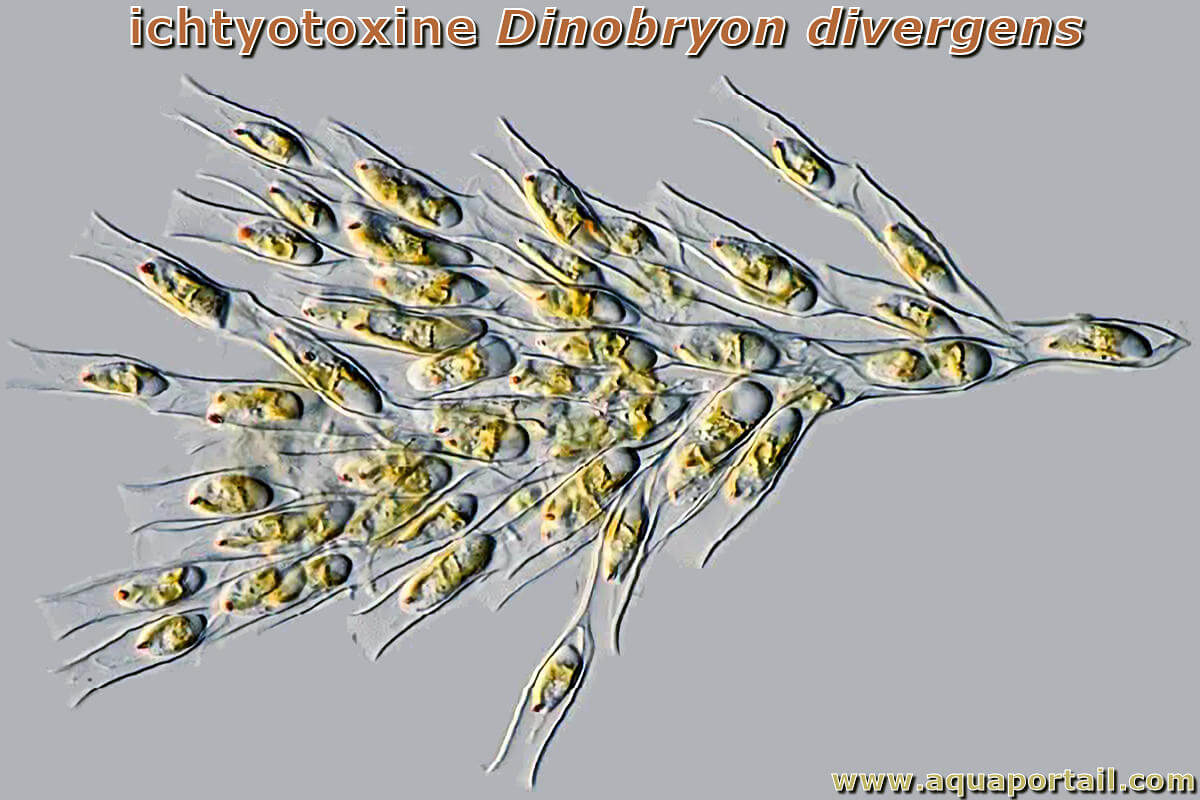
An ichthyotoxin is a toxic substance contained in blood serum or produced by fish. These endogenous toxins are contained in planktonic dinoflagellates...
neurotoxin

A neurotoxin is a toxin that acts specifically on nervous system tissue, even at low doses. The active substance is toxic or destructive, with adverse effects...
saccharide

A saccharide is a carbohydrate, a biomolecule composed of carbon, hydrogen, and oxygen atoms, usually with a hydrogen-to-oxygen atomic ratio of 2 :1.
