Saprophyte
noun and adjective (n. / adj.)
Definition
A saprophyte is an organism that derives its sustenance from decaying organic matter, or lives at the expense of a host without causing disease. Saprophyte applies primarily to plants and fungi, but a bacterial organism deriving nourishment from dead or decaying organic matter (for example, forest litter, mud, feces, or silt) may also be described as saprophytic, such as bacterial flora (commensal saprophytes) or a germ. This includes predators and parasites living within this substrate.
Saprophytic fungi:

Saprophytic fungi feed on decaying matter in a tree trunk. Besides wood-decaying fungi, bacteria and certain plants can exhibit this saprophagous nature.
General explanations
By complementarity, saprophagy in saprobionts applies primarily to the animal kingdom, though terms such as sapromycetophagy or saprorhizophagy are more specific.
The subset of organisms that feed directly on dead material itself are called saprophages. The associated lifestyle is sometimes termed saprobiontic. Few authors use the term saprobionts differently, as a generic term encompassing both saprophytes and saprophages.
A facultative saprophyte, bacterium or fungus, appears on stressed or dying plants and may combine with living pathogens.
Most nutrients taken up by these organisms must supply carbon, proteins, vitamins, and, in some cases, ions. Due to the carbon composition of most organisms, dead organic matter provides rich sources of disaccharides and polysaccharides such as maltose and starch, as well as the monosaccharide glucose.
In terms of nitrogen-rich sources, saprotrophs require combined proteins for protein synthesis, facilitated by the uptake of amino acids, usually from rich soils. Although ions and vitamins are scarce, thiamine or ions such as potassium, phosphorus, and magnesium promote mycelial growth.
In botany
A saprophyte is a plant living off dead organic matter. The term was formerly used as a noun for saprotrophic bacteria and fungi treated under botany. However, plants never directly utilize dead organic matter. Furthermore, the term was also applied to flowering plants lacking green leaves whose diet relies on fungi, such as coralroot (Corallorhiza trifida, an orchid). These saprophytes are actually parasites of those fungi.
A holosaprophyte denotes a plant or fungus lacking chlorophyll, neither parasitic nor symbiotic, which must therefore feed on dead organic matter. Examples include certain orchids such as Corallorhiza trifida and Limodorum abortivum.
In aquatic environments
Saprobic organisms (saprobia) are aquatic (freshwater) species used as bioindicators to classify water quality within the saprobic system. Saprobic organisms include both saprophagous species as well as herbivores and predators, with a variety of preferred habitats and lifestyles. Thus, most of them are not saprobionts.
Symbioses and commensalisms
Saprophytic microorganisms live as symbionts in the digestive tracts of mammals (cattle, humans) and insects (termites). There, they break down organic matter that cannot be digested by the host animal's digestive enzymes.
Vascular plants that have little or no chlorophyll and are not haustorial parasites were formerly called "saprophytes". However, it has never been demonstrated that vascular plants can feed directly, for example by enzymatic digestion of dead organic matter in soil (detritus). At best, a parasitic symbiosis with saprotrophic fungi is conceivable, though even this possibility has been proven in very few cases. Instead, most myco-heterotrophic plants live in parasitic symbiosis with ectomycorrhizal fungi and indirectly source organic carbon compounds from their symbiotic partners, forest trees. This mode of nutrition differs fundamentally from saprotrophy and is called epiparasitism. Examples include the two species of pinesap (Monotropa) associated with spruces, as well as orchids such as coralroot (Corallorhiza trifida), bird's-nest">nest orchid (Neottia nidus-avis), and violet limodore (Limodorum abortivum).
Holosaprophyte
A holosaprophyte denotes a plant or fungus lacking chlorophyll, neither parasitic nor symbiotic, which must therefore feed on dead organic matter. Examples include certain orchids such as Corallorhiza trifida and Limodorum abortivum.
Synonyms, antonyms
Spanish translation: saprófito
3 synonyms (similar meaning) for "saprophyte":
- holosaprophyte
- saprobiont
- saprophage
0 antonyms (opposite meaning).
Related words and expressions to SAPROPHYTE are directly connected by general or specific meaning.
The word SAPROPHYTE is listed on page 1 of words starting with S in the dictionary glossary.
Related to "saprophyte"
carposporophyte
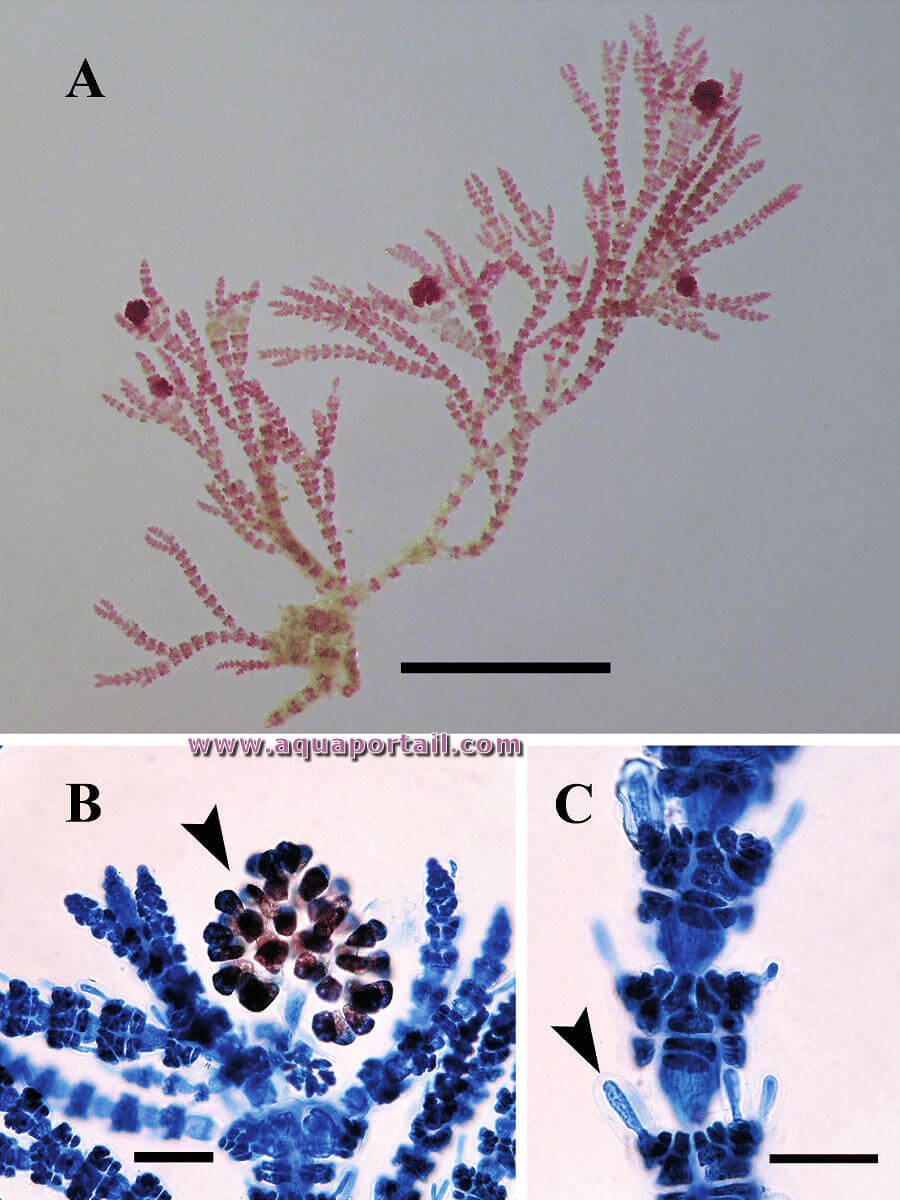
A carposporophyte comprises the gonimoblasts, the cystocarp, and the first sporophyte generation.
tetrasporophyte
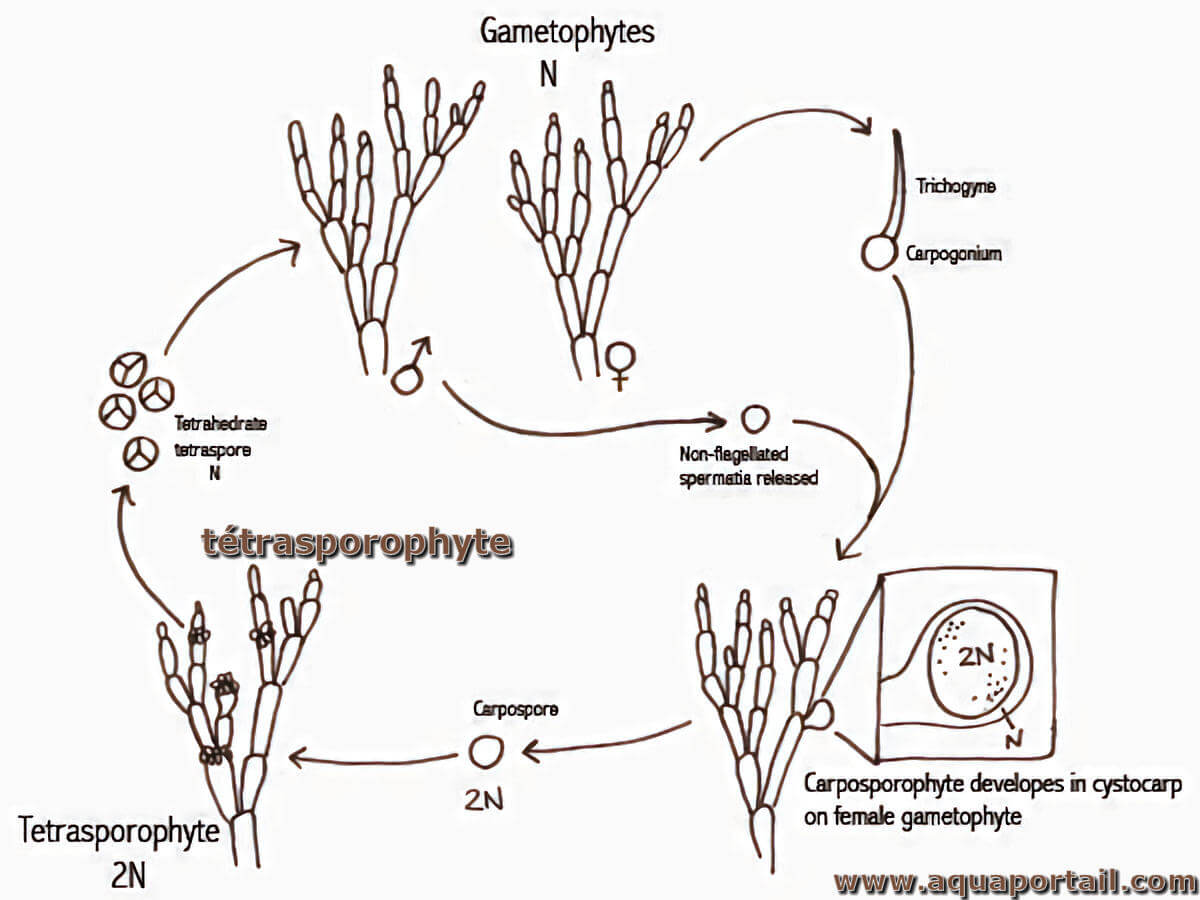
A tetrasporophyte is a stage in the trigenetic life cycle of certain red algae. Arising from a carpospore, the tetrasporophyte produces the tetraspores that...
endophyte

An endophyte is a plant, fungal, or animal organism living inside a plant without necessarily being a parasite, though it is sometimes termed a plant...
saccharide

A saccharide is a carbohydrate, a biomolecule composed of carbon, hydrogen, and oxygen atoms, usually with a hydrogen-to-oxygen atomic ratio of 2 :1.
Simple summary
A saprophyte is an organism, typically a fungus or bacterium, that derives its nourishment from decaying organic matter. Saprophytes are vital in ecosystems because they break down dead plants and animals, thereby recycling nutrients back into the environment.
