Symbiont
noun (n.)
Definition
In biology, a symbiont is one of the partners in a symbiosis, one of the two symbiotes (the smaller one). Symbiotic relationships include associations in which one organism lives on another, with an ectosymbiont, such as mistletoe, or where one partner lives inside the other, with an endosymbiont such as lactobacilli and other bacteria in humans or zooxanthellae in corals.
Growth and dependence of symbionts:

Experimental designs for testing the effect of symbiosis on host fitness (left) and symbiont fitness (right).
Image comments
(A) Both experiments involve measuring growth or other fitness parameters in the presence and absence of their partner. Host fitness experiments have been conducted in various systems, but the equivalent experiment on symbiont fitness is rarely performed.
(B) Experimental design to measure the relative growth of two groups of squid symbionts among naturally infected hosts. Competition assays were performed to test within-host fitness by inoculating the seawater of a hatchling squid with one symbiont strain from each symbiont group (left). A separate experiment confirmed that the symbionts had an equal ability to colonize the squid after single-strain inoculations.
Symbiont growth was tested in the environment by inoculating filtered (middle) and unfiltered (right) seawater from the natural habitat of the squid and the symbiont.
Explanations
Symbionts are also bacteria housed in complex organs and nourished by the animal's body, making its body brighter and giving rise to cases of bioluminescence. Certain symbionts can be pathogenic, like pathogenic bacteria, or form part of the intestinal flora for the benefit of digestion.
Symbiont specifically designates the smaller of the two symbiotes, the other most often being the host.
bacterial symbionts have evolved in various families of bivalves. It was only in the early 1980s that bivalves were recognized as having bacterial symbionts.
Microbial associations are an integral part of all eukaryotes. Mutualism, the interaction of two species to the benefit of both, is an important aspect of microbial associations, demonstrating that multicellular organisms, in particular, benefit from microbes. However, the microbe's perspective has been largely ignored, and it remains unknown whether most microbial symbionts benefit from their associations with hosts.
It has been assumed that microbial symbionts receive host-derived nutrients or a competition-free environment with reduced predation, yet few empirical tests or critical evaluations of these hypotheses have been conducted. Available evidence indicates that reduced competition and predation are not universal benefits for symbionts.
Some symbionts receive nutrients from their host, but this has not always been linked to a corresponding increase in their morphology. Incorporating symbiont fitness into symbiosis research provides a better understanding of the evolution of mutualistic interactions and cooperation in general.
Interspecific interactions between microbes and eukaryotic hosts fall along a continuum ranging from parasitism to mutualism. The effects of these interactions on fitness are routinely studied in hosts, but both partners must be considered to understand how interactions evolve and persist.
A solid framework exists for understanding how parasitic interactions promote the fitness of parasitic microbes (pathogens), but the microbe's perspective has been largely overlooked in putatively mutualistic interactions, and it is unknown whether most non-parasitic microbes benefit from host association.
Entomosymbiont
An entomosymbiont designates a bacterium or fungus living in association with specific insects, present in certain of their organs, such as their gut, and whose biological relationships with their animal host fall under symbiosis.
Symbiotype
In parasitic biology, a symbiotype designates the name of the host specimen used to indicate the host organism from which the biological type sample was obtained. It is the type of the symbiont, analogous to a holotype.
It extends the host system in a symbiosis. In the case of parasites, the terms "standard host" or "symbiotype" designate the organism in which the type was first observed and described.
The original description of a species includes a diagnosis of the similarities and differences of the type relative to neighboring taxa. In addition to the type locality, which is the place where the type was found, the official description indicates where the type is deposited and will subsequently be preserved.
In cases of parasitism or symbiosis, the description must also specify the type host, or symbiotype (symbiotic type, locus type), i.e., the host organism from which the parasite's type was obtained.
Synonyms, antonyms
Spanish translation: simbionte
3 synonyms (similar meaning) for "symbiont":
- ectosymbiont
- endosymbiont
- symbiote
0 antonyms (opposite meaning).
Related words and expressions to SYMBIONT are directly connected by general or specific meaning.
The word SYMBIONT is listed on page 1 of words starting with S in the dictionary glossary.
Related to "symbiont"
endosymbiosis
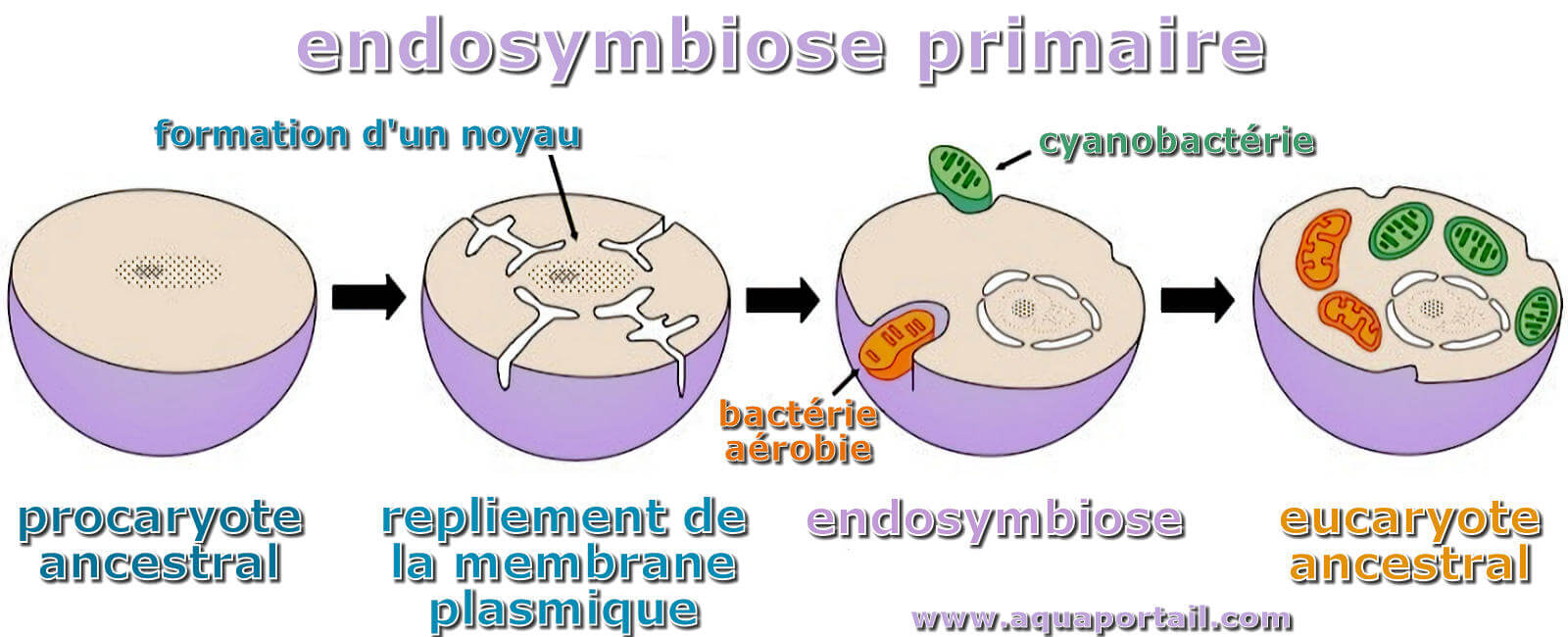
Endosymbiosis refers to an evolutionary theory proposing that the plastids and mitochondria of eukaryotic cells originated from endosymbiotic bacteria.
endosymbiotic

Endosymbiotic describes any organism living in symbiosis inside the tissues or cells of another organism that acts as its host partner.
symbiosis

Symbiosis is an interactive relationship between two different organisms living in close physical association.
chlorobiont

A chlorobiont (Chlorobionta) is a green photosynthetic plant organism. The chlorobionts as a whole encompass terrestrial green plants (Embryophyta) as well...
