Sulfur cycle
noun phrase (n. phr.)
Definition
The sulfur cycle is the set of processes by which sulfur moves between minerals and living systems. These biogeochemical cycles affect numerous minerals. For life, sulfur is an essential element, as a component of many proteins and coenzymes.
Diagram of the sulfur cycle:
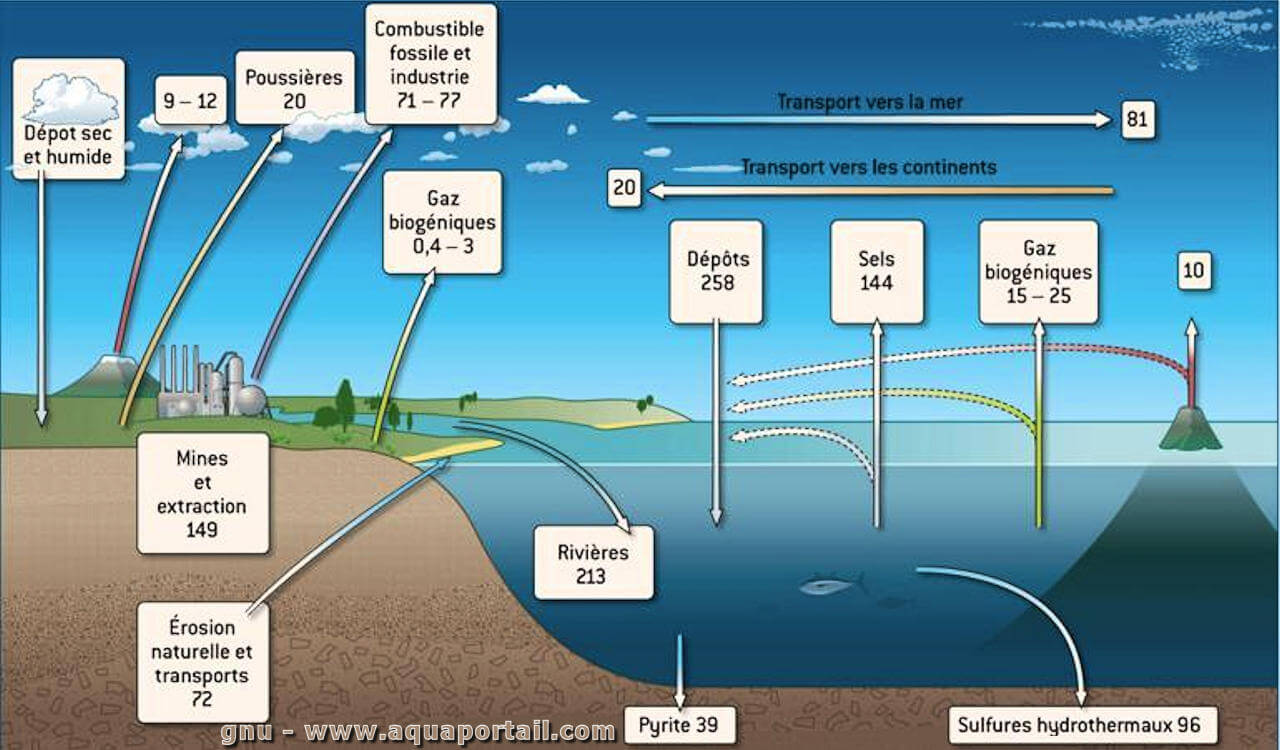
In the sulfur cycle, fluxes are expressed in Tg/yr (teragrams per year), i.e., millions of metric tons. Oxidized sulfur compounds form acids.
Explanations
The sulfur cycle is the system of chemical transformations of sulfur and sulfur-containing compounds in Earth's lithosphere, hydrosphere, atmosphere, and biosphere, as well as the exchange of these substances among these Earth spheres. The global, geochemical, and largely biotic reactions of the chemical element sulfur and its principal chemical compounds are briefly described. This biogeochemical cycle, a continuous recycling process, is directly linked to those of carbon and nitrogen.
✅ The sulfur cycle corresponds to a succession of biogeochemical phenomena alternating the reduction of sulfates by plants or microorganisms and the oxidation of reduced sulfur compounds via various biological pathways (photolithotrophic and chemolithotrophic bacteria) or physicochemical processes. The sulfur cycle encompasses the various oxidation and reduction states of sulfur in nature, resulting primarily from the action of microorganisms.
✅ In many respects, the sulfur cycle resembles the nitrogen cycle, except for the significant input of this element from the lithosphere via volcanic activity and the absence of a major biological process for direct fixation of atmospheric sulfur comparable to diazotrophy.
✅ See also acid rain and ecological recycling, nutrient cycling.
Sulfur is a constituent of sulfur-containing amino acids and other key molecules such as coenzyme A, where it occurs in reduced form (mainly as a sulfhydryl group -SH), as well as iron-sulfur clusters involved in electron transfer (such as toward NADPH). Plants and other primary producers obtain it in dissolved form, mainly as the sulfate ion (SO42-) which, after being reduced, is incorporated into their proteins in organic form. Organisms that ingest these plants incorporate it in turn into their own proteins and thus pass it on to organisms at higher trophic levels. Upon death, the reduced sulfur from proteins enters the sulfur cycle and is oxidized by bacteria, allowing plants to assimilate it again and organisms to metabolize it.
Exchanges of sulfur, primarily as sulfur dioxide (SO2), take place among aquatic, terrestrial, and marine communities, in the atmosphere, in rocks, and in sediments or ocean floors where sulfur is stored. Atmospheric SO2 dissolves in rainwater or settles as dry deposition. Local recycling of sulfur, mainly as sulfate and sulfide ions, occurs in both cases. Part of the hydrogen sulfide (H2S) produced during local sulfide recycling is oxidized, forming sulfuric acid (H2SO4) or sulfates.
Sulfide cycle
Proteins notably depend on sulfur. Sulfur occurs in soil as combinations of sulfates, sulfides, and sulfide minerals. Near volcanoes, sulfur is found in its native elemental form, explaining the presence of numerous mining operations in such regions. The sulfur cycle comprises 6 fundamental steps:
- plants absorb sulfate ions (as well as small amounts of sulfur compounds);
- during assimilation and synthesis of plant amino acids, sulfate is reduced and sulfur is incorporated as a thiol (-SH) group;
- animals and other consumers feed on plants;
- microorganisms decompose sulfur-containing amino acids present in animal and plant remains, thereby releasing hydrogen sulfide (H2S);
- elemental sulfur is extracted or oxidized from sulfide by bacteria and microorganisms;
- sulfates are produced through the action of microorganisms oxidizing sulfur in the presence of oxygen.
Description
Sulfur is an important constituent of certain amino acids, such as cysteine and methionine, and is therefore indispensable for proper protein synthesis. In many living organisms, molecules containing atoms of this element also act as cofactors for enzyme-catalyzed chemical reactions.
It involves a cycle with two major reservoirs: a larger reservoir in the sediments and rocks of Earth's crust, and a smaller reservoir in the atmosphere.
In sediments, sulfur remains stored as sulfates and sulfides. Through erosion and weathering, it dissolves into soil water and takes the ionic form of sulfate (SO42-), readily absorbed by plant roots.
In the atmosphere, sulfur exists combined with oxygen, primarily as SO2 (sulfur dioxide). Another fraction is oxidized to sulfur trioxide (SO3). Hydrogen sulfide gas (H2S), characterized by its "rotten egg" odor, has a short lifetime in the atmosphere (a few hours to a few days) and rapidly oxidizes into SO2.
These sulfur oxides (SO2 and SO3) return to the ground during precipitation (acid rain) and are subsequently converted into sulfate ions (SO42-). SO2 can also be captured directly by plant leaves via foliar absorption to be used in synthesizing amino acids.
A natural return of reduced sulfur to the atmosphere occurs through the action of decomposers producing hydrogen sulfide (H2S) and dimethyl sulfide (DMS). Sulfur bacteria carry out the reverse oxidation process, obtaining energy for chemosynthesis.
The contribution of volcanic activity to chronic sulfur accumulation in the atmosphere is smaller than current anthropogenic emissions. Artificial human input through industrial activity is predominant. Burning fossil fuels containing sulfur (often 1 to 3% in coal and 0.05 to over 1% in crude oil) produces SO2 and SO3, raising their concentration in the atmosphere of large cities. This source accounts for the majority of sulfur air pollution. Both gases are strongly irritating to the eyes and lungs, in addition to contributing to acid smog formation (a toxic mixture of smoke and fog) occurring during thermal inversions.
Human impact
The primary human disruption to the global sulfur cycle is the release of SOx (SO2 plus a small amount of SO3) into the atmosphere following the combustion of sulfur-containing coal and oil. SOx gases impair breathing in humans at high concentrations and damage plants.
Sites of occurrence
The chemical element sulfur exists in Earth's upper layers and in living organisms. Earth's crust (solid and unconsolidated rocks forming the lithosphere) contains on average about 0.5 g per kg, seawater (hydrosphere) averages about 0.9 g per kg, and living organisms (biosphere) contain about 0.5 to 2 g per kg. Sulfur also reaches Earth's surface with volcanic gases rising from below.
Sulfur exists in the lithosphere, hydrosphere, and biosphere mainly as sulfate (SO42-), hydrogen sulfide (H2S), metal sulfides, and elemental sulfur (S). These inorganic substances are relatively stable in the absence of catalysts and primarily undergo biological transformations.
In biomass, sulfur is present in organic compounds as the sulfhydryl group (-SH), disulfide bridges (-S-S-), and in certain heterocyclic compounds. Living organisms convert sulfur and sulfur compounds in their energy and biosynthetic metabolism largely via chemical and enzymatic pathways. Consequently, sulfur undergoes constant biotic turnover in the sulfur cycle, which is of major global geochemical significance.
Synonyms, antonyms
Spanish translation: ciclo del azufre
1 synonym (similar meaning) for "sulfur cycle":
0 antonyms (opposite meaning).
Related words and expressions to SULFUR CYCLE are directly connected by general or specific meaning.
The expression SULFUR CYCLE is listed on page 1 of words starting with S in the dictionary glossary.
Related to "sulfur cycle"
Calvin cycle

The Calvin-Benson cycle is the carbon dioxide reduction cycle during the so-called dark (light-independent) phase of oxygenic photosynthesis with carbon...
carbon cycle

The carbon cycle is the way nature reuses carbon atoms, which travel from the atmosphere into organisms and minerals on Earth, and then return...
xanthophyll cycle
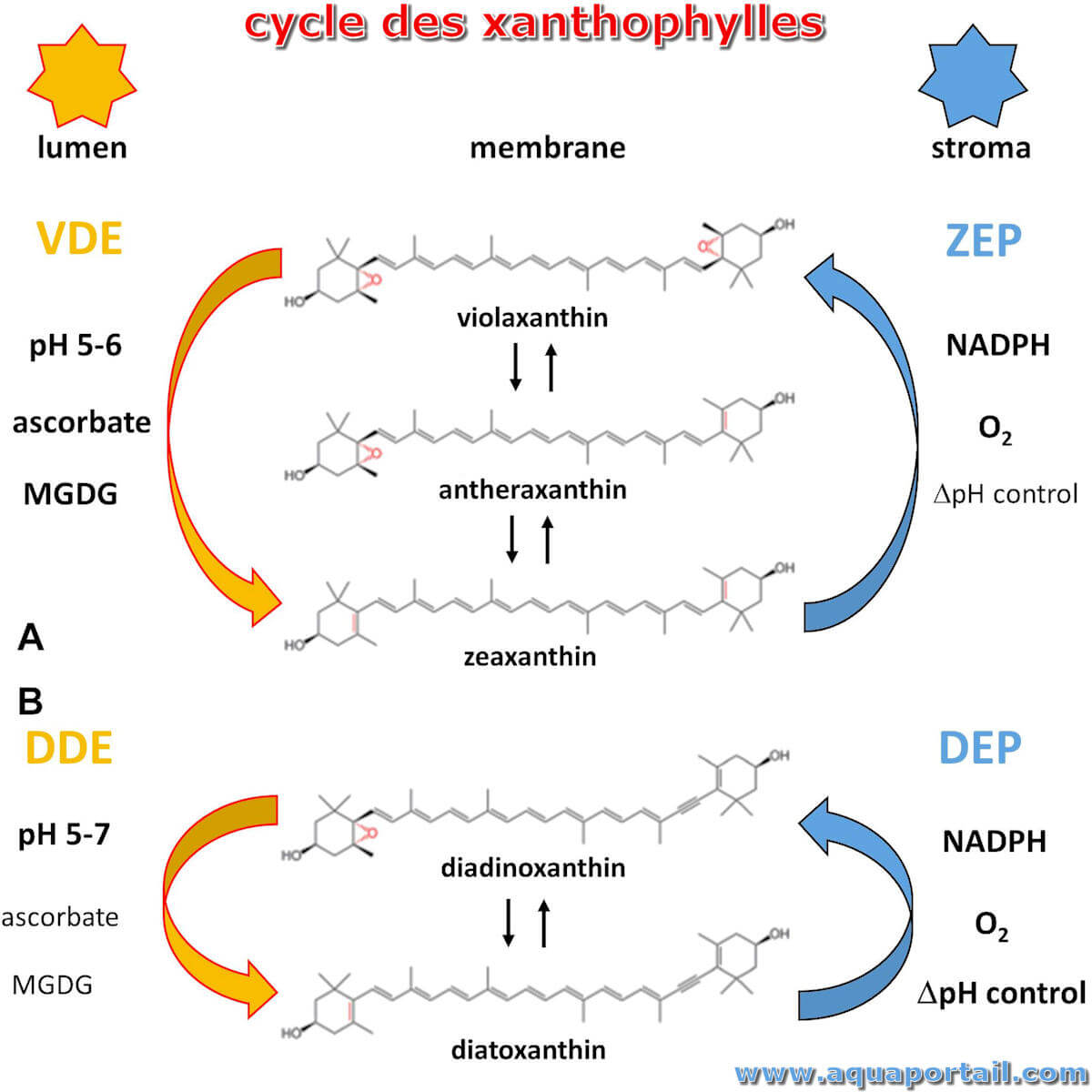
The xanthophyll cycle is a reversible enzymatic mechanism of epoxidation and de-epoxidation (reversible attachment and removal of oxygen atoms as epoxide...
saccharide
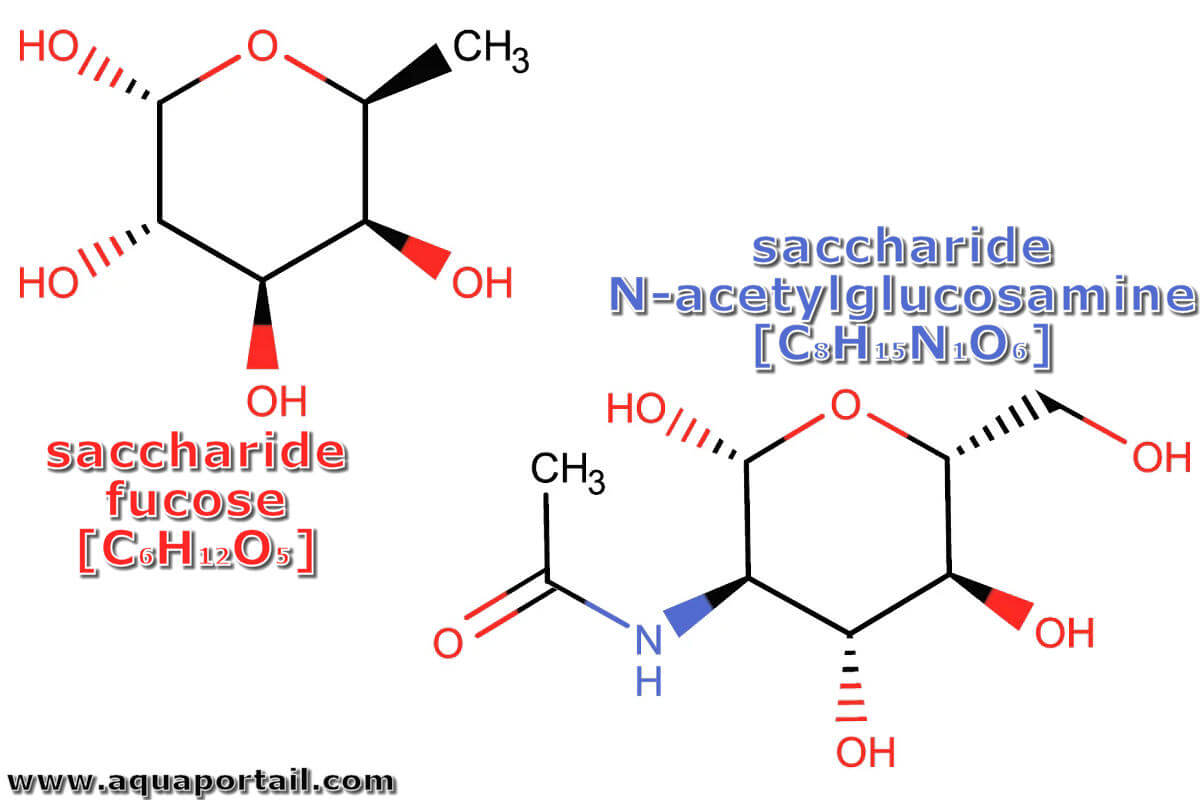
A saccharide is a carbohydrate, a biomolecule composed of carbon, hydrogen, and oxygen atoms, usually with a hydrogen-to-oxygen atomic ratio of 2 :1.
