Telophase
noun (n.)
Definition
Telophase is the final phase of mitosis during which chromosomes uncoil. This stage follows anaphase and is thus the final stage of each mitotic or meiotic division during which chromosomes gather at each pole of the dividing cell.Telophase (diagram):
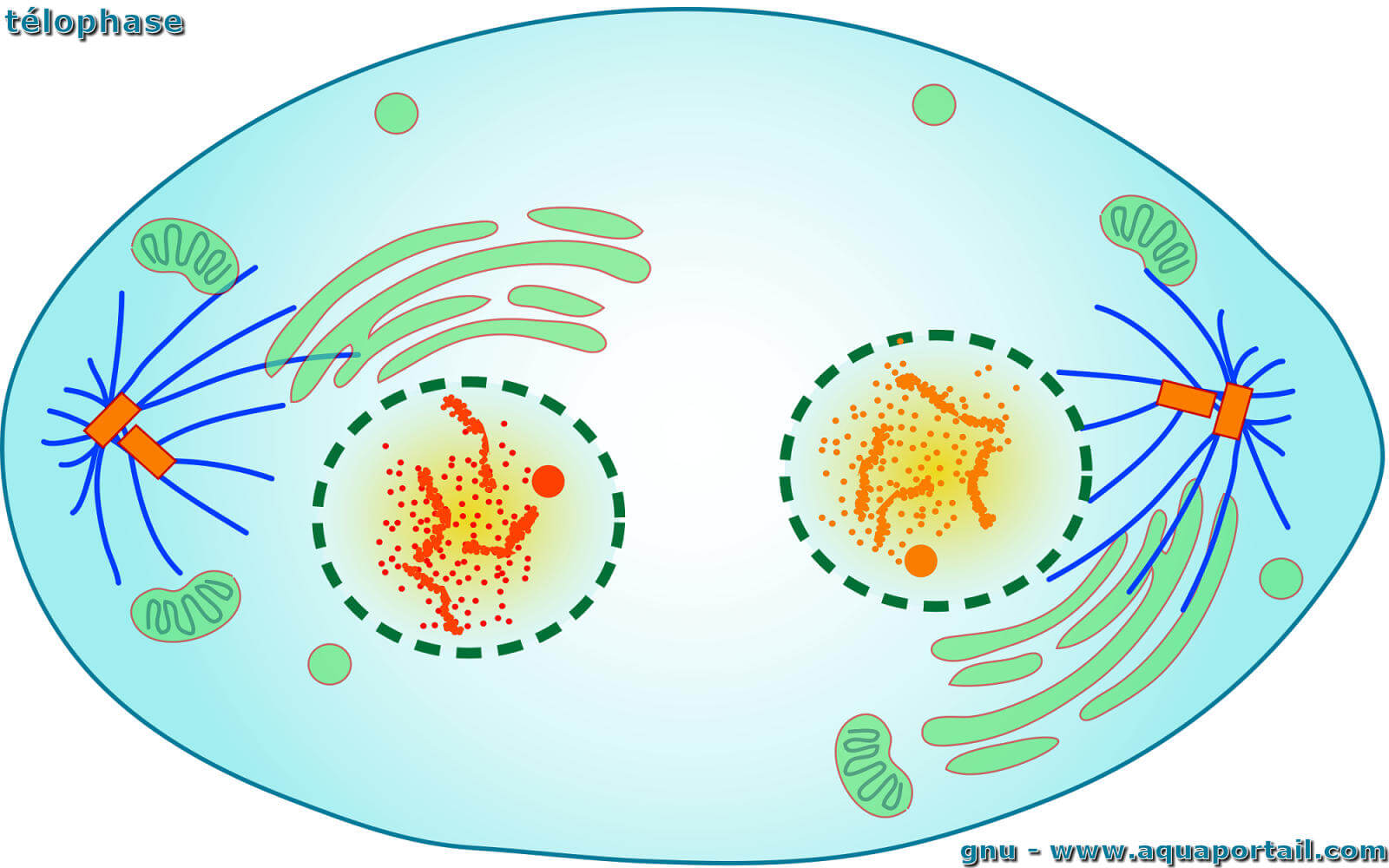
Telophase marks the near-end of cell division (mitotic or meiotic) into two daughter cells, with the cytoplasm generally dividing shortly afterward in a process called cytokinesis.
Explanations
Telophase, the terminal phase of mitosis, also occurs in the second division of meiosis, during which the nuclear envelope and nucleolus of the two daughter nuclei reform, the chromosomes decondense, and the mitotic spindle depolymerizes.
Telophase is the stage of mitotic division in eukaryotic cells during which two sets of daughter chromosomes reach the poles of the division spindle and decondense. Assembly of the nuclear envelope begins around each set of chromosomes. Division of the cytoplasm is achieved by constriction of the contractile ring (cytokinesis).
Simplified overview
Telophase, which completes cell division, begins with the arrival of chromosomes at both poles. Once the daughter chromosomes finally reach the spindle poles, the already shortened kinetochore fibers largely depolymerize.
Polar fibers may initially elongate until the poles reach their maximum separation, after which the spindle apparatus disassembles. The nuclear envelope of the daughter nuclei is now largely formed from fragments of the old nuclear membrane. The chromosomes decondense once again.
nucleoli also reappear as small bodies within their respective nuclei.
Division of the cytoplasm, and hence of the cell, is accomplished via cytokinesis.
Process description
At the final stage of mitosis, telophase, a nuclear membrane begins to form around the two daughter sets of chromosomes that separated to opposite poles of the cell during anaphase. Initially, the chromosomes retain their anaphase orientation: centromeres face the cell poles and telomeres face the center of the spindle.
Nuclear envelope formation is preceded by disassembly of the division spindle. Astral microtubules elongate and a new microtubule structure is formed—the midbody (residual body)—situated between the two distinct sets of chromosomes.
Depolymerization proceeds from the spindle poles toward the equatorial plane of the cell, from minus ends to plus ends. In this case, the microtubules of the midbody remain the longest.
During nuclear envelope assembly, cytoplasmic membrane vesicles bind to the surface of individual chromosomes, then fuse with one another to enclose groups of chromosomes, and ultimately merge to form a continuous nuclear envelope. First, the nuclear envelope forms on the lateral surfaces of the chromosomes and, lastly, over the centromeres and telomeres.
Next, nuclear pore complexes are assembled into it, a nuclear lamina forms, a nucleolus appears, and the nuclear shell reconnects with the endoplasmic reticulum. Nuclear pore complexes import nuclear proteins into the nucleus from the cytoplasm, the nucleus expands, chromosomes decondense into the interphase state, and gene transcription resumes.
Mitosis concludes with the formation of daughter nuclei, leaving only the cell cytoplasm to divide in two.
To disassemble the division spindle and form the nuclear membrane, dephosphorylation of proteins phosphorylated by mitotic cyclin-dependent kinases is required. This can be achieved both by inactivation of mitotic cyclin and by activation of phosphatases, or both simultaneously. As a rule, telophase begins 10 to 15 minutes after chromatid separation.
Telophase begins only once the level of cyclin B, which triggers mitosis, has dropped below a threshold. Premature nuclear reformation is thus prevented before the chromosome sets have diverged.
Telophases I and II of meiosis
The first and second meiotic divisions, like mitosis, are divided into prophase, metaphase, anaphase, and telophase. However, the events occurring during prophase, metaphase, and anaphase of meiosis I differ substantially from those of mitosis and meiosis II.
The two telophases of meiosis I and II:
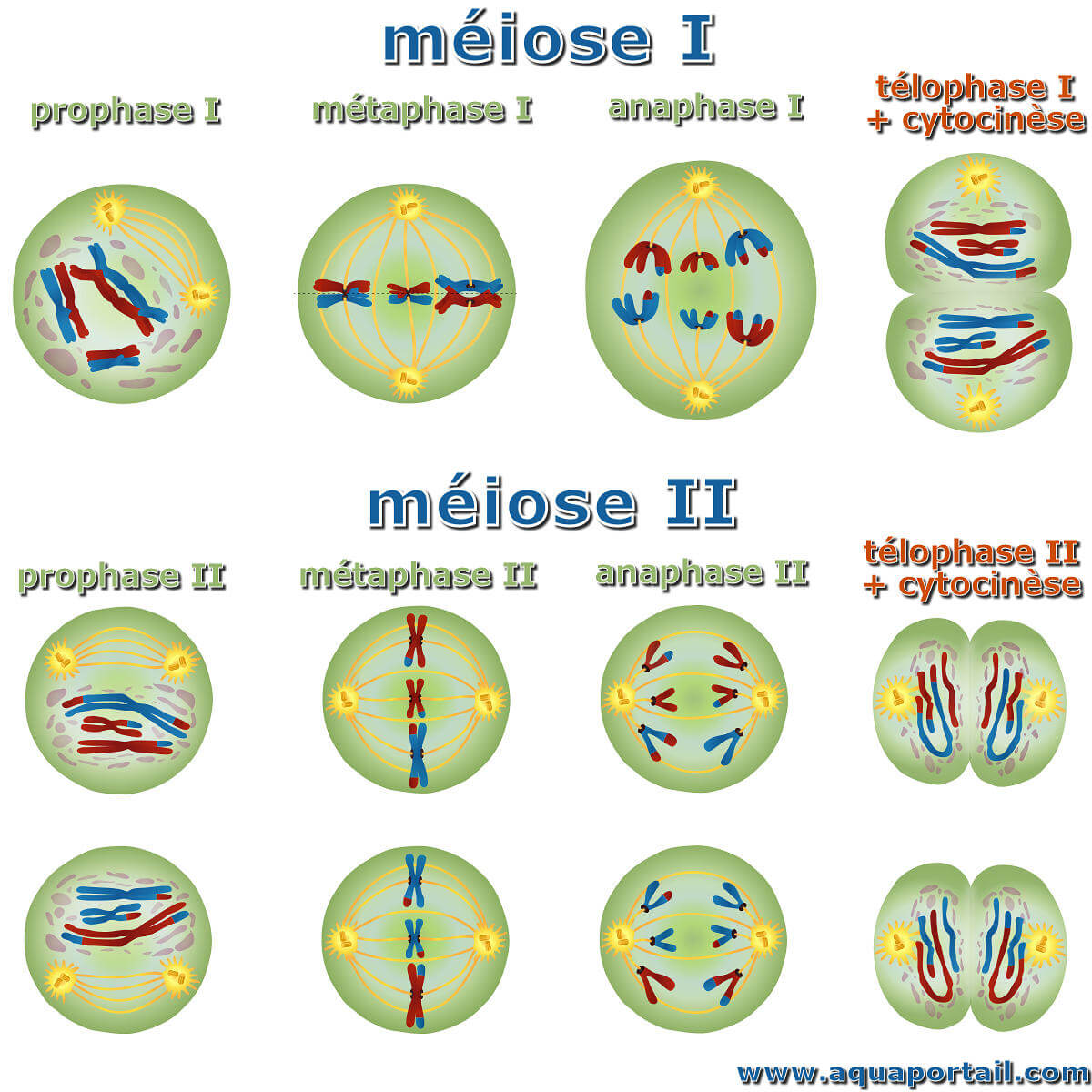
Diagram of meiosis I and II showing telophases I and II completing each meiotic half-cycle.
In this example, three pairs of homologous chromosomes, each consisting of two chromatids, are depicted and color-coded in blue and red according to the parent from which they were inherited.
Additionally, microtubules and centrosomes (both yellow-orange) are shown to better distinguish the division phases. Following (1) Prophase I (shown here in the diakinesis substage), (2) Metaphase I, (3) Anaphase I, and (4) Telophase I of the first meiotic division comes the second meiotic division with (5) Prophase II, (6) Metaphase II, (7) Anaphase II, and (8) Telophase II.
In telophase I, only a single chromosome (with two chromatids) of each type remains at each pole. A reduction in chromosome number has thus occurred. As in mitotic telophase, the chromosomes now decondense and the nuclear envelope reforms. Nuclear division is followed by cell division. The ensuing period leading up to the start of the second meiotic division is called interkinesis.
The cell nuclei resulting from telophase II thus each contain a set of haploid, unduplicated chromosomes (1n; 1c). In this way, the four chromatids of each prophase I tetrad have been randomly distributed among four different haploid cell nuclei.
Synonyms, antonyms
Spanish translation: telofase
3 synonyms (similar meaning) for "telophase":
- final stage of mitosis
- telokinesis
- telophase division
0 antonyms (opposite meaning).
Related words and expressions to TELOPHASE are directly connected by general or specific meaning.
The word TELOPHASE is listed on page 1 of words starting with T in the dictionary glossary.
Related to "telophase"
interphase
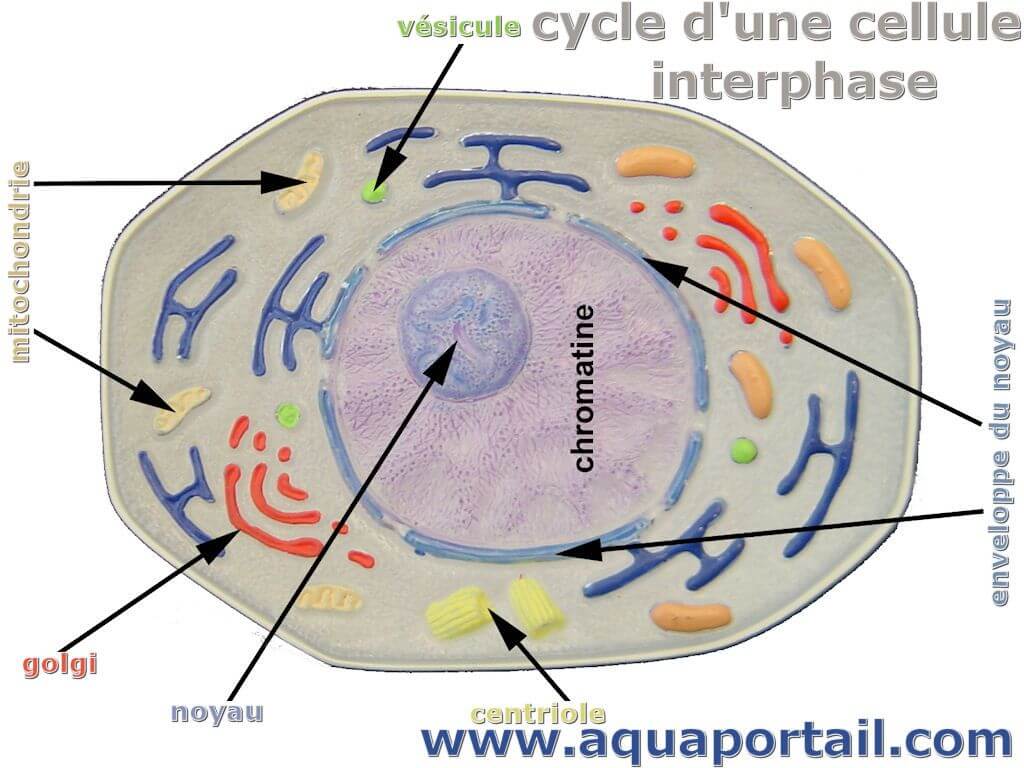
In cell biology, interphase or the resting stage is the first stage of the cell's life cycle and the time when the cell carries out its cellular maintenance...
luteal phase

The luteal phase of an ovarian or menstrual cycle occurs immediately after ovulation and the ovulatory phase.
phase
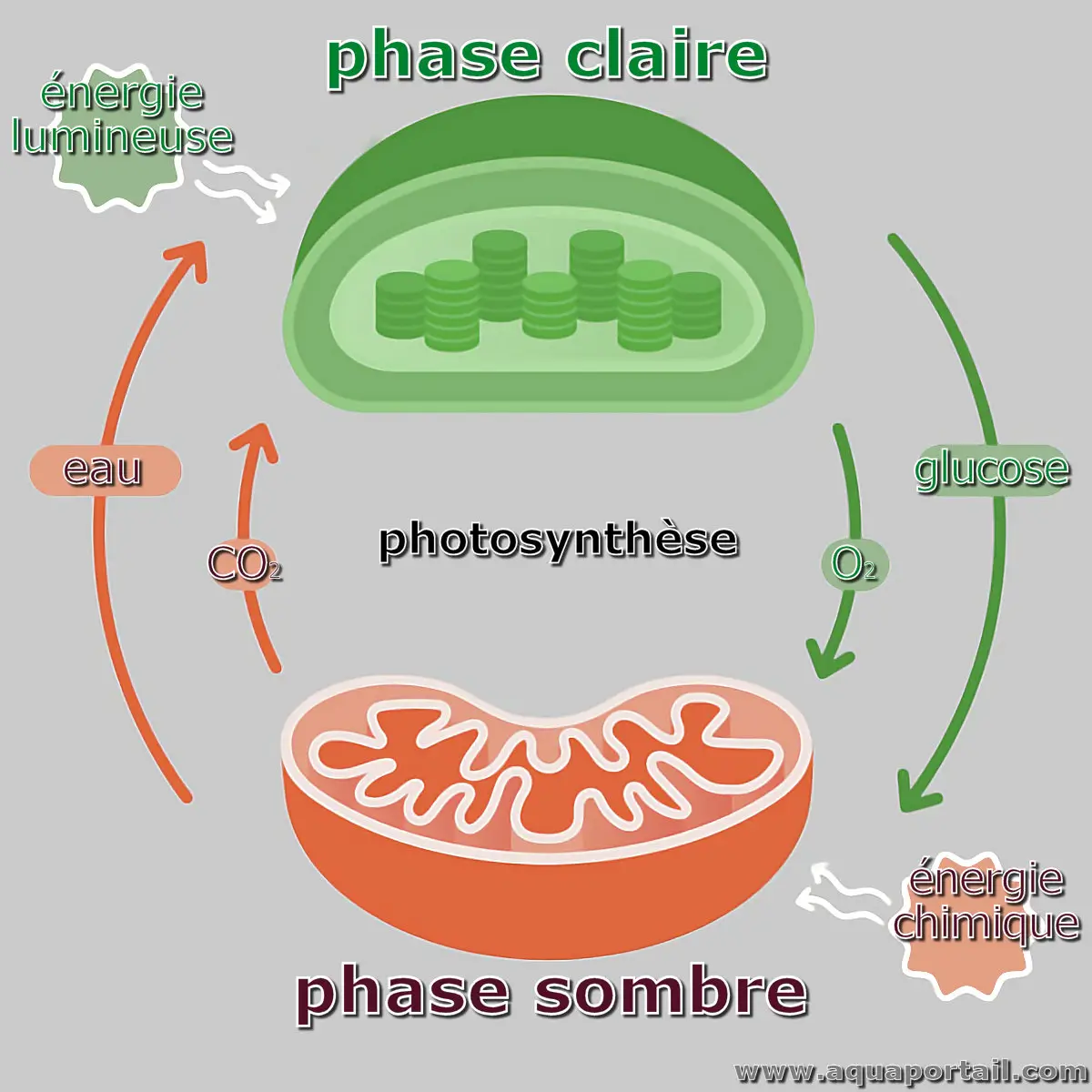
In biology, a phase is a stage of the life cycle during which the chromosome number is either n (haploid phase) or 2n (diploid phase).
prometaphase
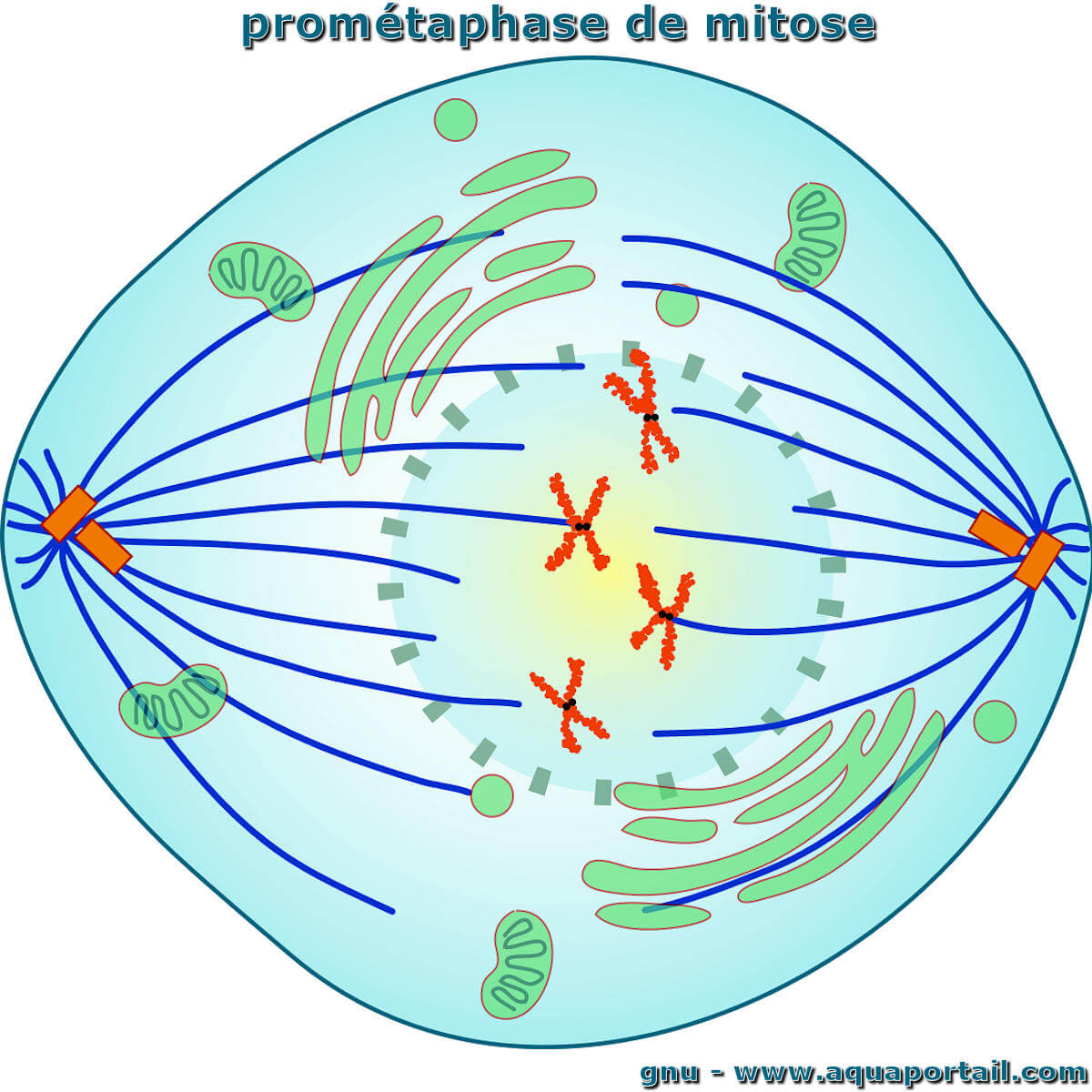
Prometaphase is the phase of mitosis following prophase and preceding metaphase during cell division in eukaryotes, involving an equational division.
Simple summary
Telophase is the final stage of cell division, occurring in both mitosis and meiosis. During this phase, the separated chromosomes, which have been pulled to opposite poles of the cell, begin to decondense, returning to their less compact, thread-like form. A new nuclear envelope forms around each set of chromosomes, creating two distinct nuclei.
