Microtubule-organizing center
abbreviation (abbr.)
Definition
MTOC (from microtubule-organizing center) refers to microtubules, and specifically to microtubule-organizing centers. The MTOC is the primary anchoring site of microtubule minus ends in the cell and the point of highest nucleation activity.
MTOC network:
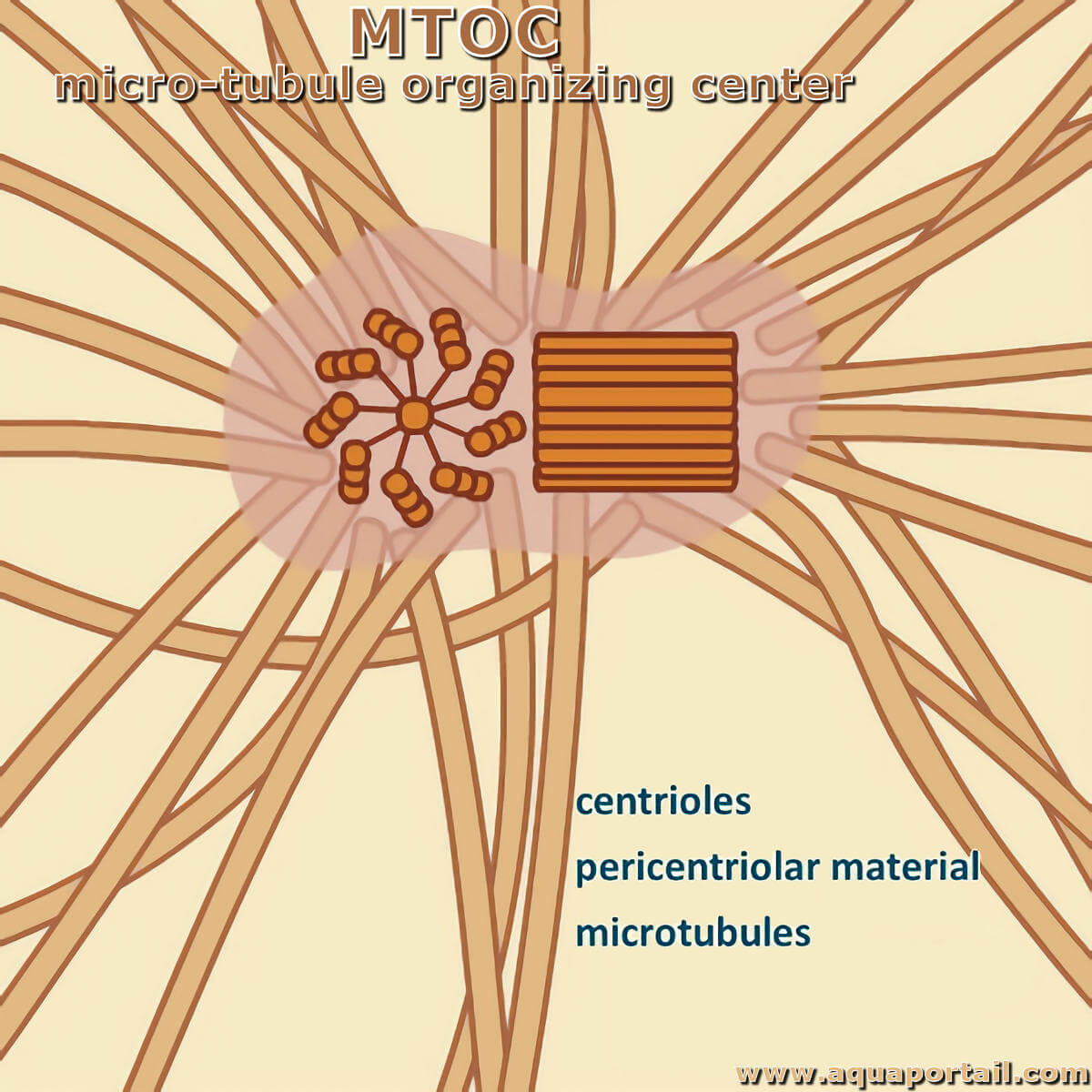
An MTOC (microtubule-organizing center) such as the centrosome in animal cells or the spindle pole body in yeast.
Explanations
The microtubule-organizing center (MTOC) is a structure found in eukaryotic cells from which microtubules emerge. MTOCs have two main functions: the organization of eukaryotic flagella and cilia, and the organization of the mitotic and meiotic spindle apparatus, which separates chromosomes during cell division.
The MTOC is a structure inside the cell from which microtubules organize after depolymerization into tubular structures arranged in a distinct pattern and number.
Microtubule detachment from microtubule-organizing centers is an important cellular process required for normal cell proliferation. When cells enter mitosis, microtubule turnover increases alongside an increase in microtubule detachment.
Polarization of MTOC-associated organelles and docking of the MTOC to the plasma membrane of NK cells and cytotoxic T lymphocytes (CTLs) stood out in early studies of the immunological synapse (IS). However, the mechanics and signaling of this cellular process are only beginning to be elucidated.
✅ The largest organelle in many cells, the endoplasmic reticulum (ER), is a network of interconnected membranous tubes and sacs that serve as sites for protein and lipid synthesis. The rough ER is studded with ribosomes where information carried by messenger RNA molecules is translated into proteins. These newly synthesized amino acid chains enter the lumen of the rough ER, where proteins are modified by folding and the addition of molecules that help target them for trafficking to different compartments. The smooth ER has no associated ribosomes (and therefore appears smooth on electron micrographs) and is a site for lipid synthesis.
Functions
Microtubule-organizing center function at the centrosome can arise from both the pericentriolar material and the centrioles, and whether one, both, or neither of these sites is used for MTOC function depends on the cell type and its state.
MTOC function is conferred to the cell cortex in many contexts, for example at the apical surface and/or adherens junctions of epithelial cells and the cortex of animal germ cells and interphase plant cells. In interphase plant cells, the majority of microtubules originate from the cortex. In this context, microtubules establish a lateral association with the cell membrane, unlike many cortical MTOCs found in animal cells that can build microtubules orthogonal to the cortex. Although the mechanisms underlying lateral attachment of microtubules to the plant cell membrane are not well understood, phospholipase D (PLD) may play a role.
Related to "microtubule-organizing center"
cell center
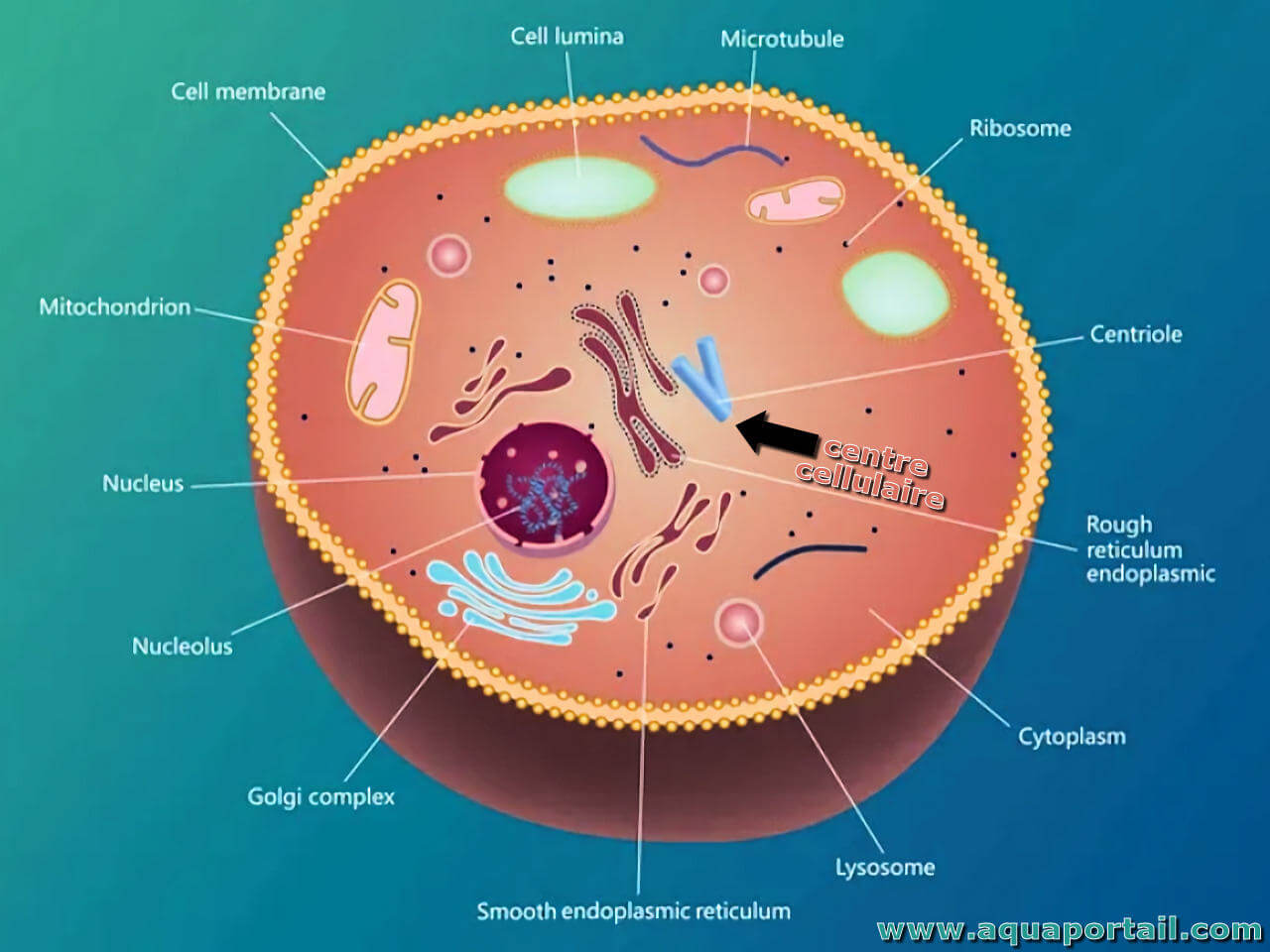
The cell center is a central region of the cytoplasm (cytocenter) containing the centrioles and generally adjacent to the cell nucleus.
photosynthesis reaction centers

Photosynthesis reaction centers are specialized sites of photosynthesis where oxidation-reduction reactions take place.
microbe

A microbe is a unicellular microorganism that can act as a vector for transmitting disease or induce fermentation.
microscopy

Microscopy is the technical field of using microscopes to visualize samples and objects that cannot be seen with the naked eye and which, due to their small...
