Methanogenesis
noun (n.)
Definition
Methanogenesis, or biomethanation, is the formation of methane by methanogenic archaea. It occurs when biomass is decomposed by these microorganisms under anoxic conditions.Methanogenesis is the final step in the overall process of anaerobic degradation of biodegradable organic matter into methane and carbon dioxide (two biogases).
Source of methane emissions with methanogenesis:
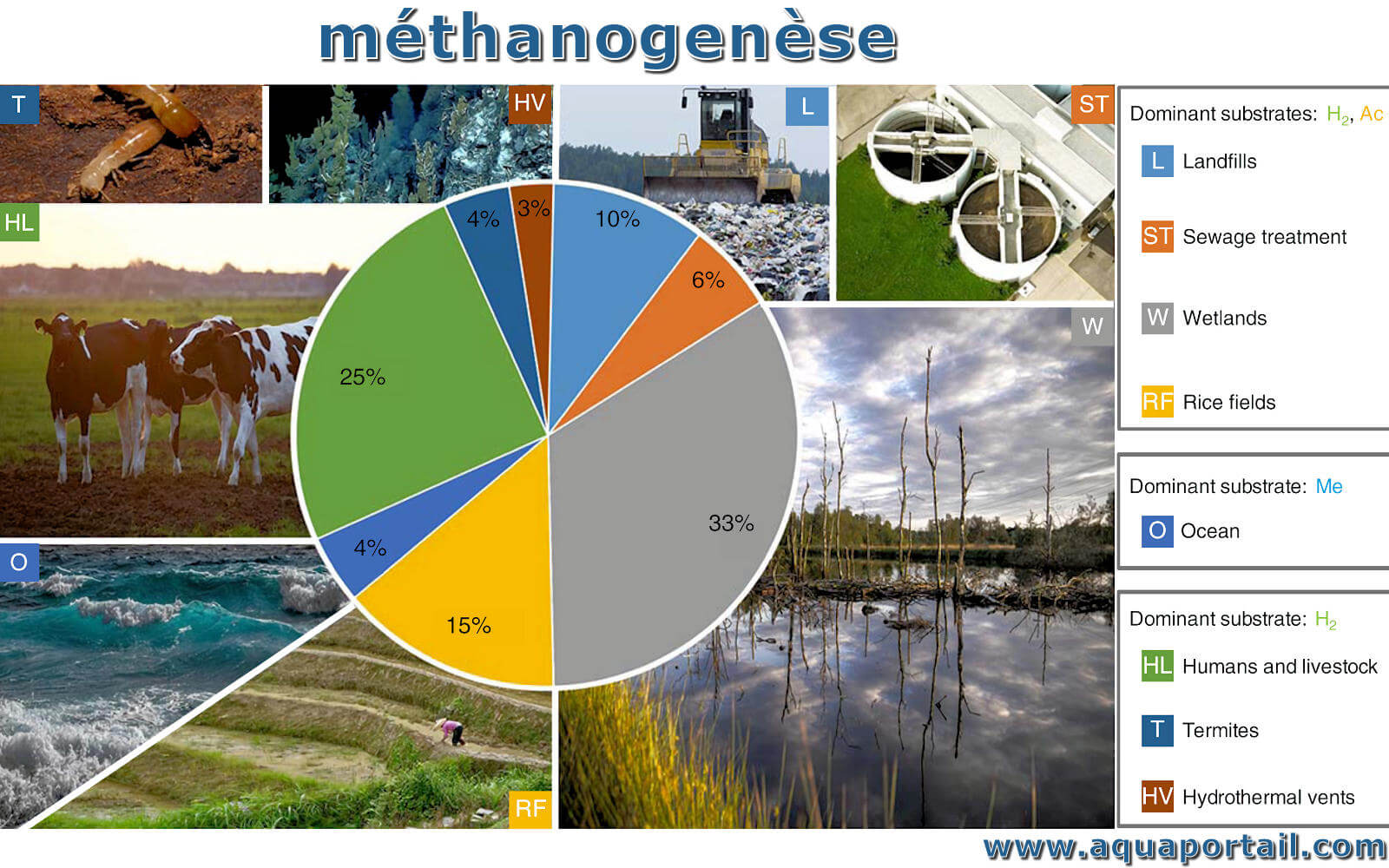
Various sources of methanogenesis with biological methane emissions into the atmosphere indicated as percentages.
The important role of methanogenesis
Methane production is an important and widespread form of microbial metabolism. Methanogenesis is responsible for a large portion of the natural gas found in the ground. The remainder is thermogenic.
The role played by methanogenesis, and consequently by organisms of the domain Archaea, in the planet's carbon cycle is essential because it provides a way to prevent carbon from accumulating in anaerobic deposits and to return it to the atmosphere, in the form of carbon dioxide or methane.
Methanogenesis is primarily treated as an anaerobic metabolic pathway specific to archaea, as a particular form of anaerobic respiration. They use exergonic (energy-releasing) methanogenesis as an energy source.
Methanogenesis is a central component of the terrestrial carbon cycle, as the degradation products involved, methane and eventually carbon dioxide, are returned to this cycle. Because these gases, particularly methane, are potent greenhouse gases, methanogenesis has also gained importance in the study and prevention of global warming. biotic methane production also likely plays a role in the formation of methane hydrate, whose economic use is of interest.
Impact on digestion
Since methanogens, associated with syntrophic bacteria, are also present in the human digestive tract, methanogenesis has an impact on digestion there.
About 10% of the anaerobes in the human gut are methanogens of the species Methanobrevibacter smithii and Methanosphaera stadtmanae. They use both products of bacterial fermentation, hydrogen and formate, for methanogenesis. A high concentration of hydrogen inhibits ATP production by other bacteria.
M. smithii thus produces methane from the hydrogen and carbon dioxide resulting from bacterial fermentation, removing excess hydrogen. Consequently, methanogens have a positive influence on the human intestinal flora. Whether they also influence the amount of energy humans can absorb from food is still under research.
The metabolism of methanogenesis draws energy from organic matter for its growth and maintenance, and releases part of the energy of the organic matter via methane. The main and most studied and known reactions are:
- acetic acid → methane + carbon dioxide
- carbon dioxide + hydrogen → methane and water
Hydrogen is generally in the form of NADH, which is the result of oxidation processes of other molecules, for example: alcohol + NAD → acetic acid + NADH.
This degradation process of organic matter and others are carried out by other microorganisms, generally anaerobic bacteria, in addition to the archaea themselves, for metabolic energy production. The consumption of NAD to form NADH would eventually halt energy production in the medium, but archaea can oxidize NADH or the hydrogen produced in its breakdown, thereby producing methane.
This process occurs in the intestines of ruminants and even in humans, in addition to marshes and seabeds.
It should be noted that five coenzymes are involved in the biochemical process of methane formation, namely coenzyme F420, coenzyme B, coenzyme M, methanofuran, and methanopterin. The conversion of the CH3-S bond into methane takes place based on a three-part complex consisting of methyl-coenzyme M, coenzyme B, and a nickel group of cofactor F430.
Biochemistry
Methanogenesis is a form of anaerobic dissimilation, meaning that methanogens do not use oxygen for this metabolic process. On the contrary: oxygen inhibits the growth and activity of methanogens.
The ultimate electron acceptor in methanogenesis is not oxygen, but carbon. This carbon atom can exist in a small number of organic compounds, all of which have low molecular weights.
In the two best-described metabolic pathways, acetic acid or inorganic carbon dioxide are the final electron acceptors.
During the anaerobic dissimilation of carbohydrates, H2 and acetate are formed in a ratio of 2:1 or less. H2 therefore contributes only 33% to methanogenesis. Under certain circumstances, for example in the digestive tract, acetate is largely absorbed into the host's blood vessels and the contribution of H2 to methanogenesis is higher.
Depending on pH and temperature, other small organic compounds can also be used for methanogenesis, such as methanol, dimethyl sulfide, and methanethiol.
Electromethanogenesis
Electromethanogenesis is a form of electrochemical energy conversion, in which methane (CH4) is produced by direct biological conversion of electric current and carbon dioxide (CO2). The redox reaction takes place in a microbial electrolysis cell.
Synonyms, antonyms
Spanish translation: metanogénesis
1 synonym (similar meaning) for "methanogenesis":
0 antonyms (opposite meaning).
Related words and expressions to METHANOGENESIS are directly connected by general or specific meaning.
The word METHANOGENESIS is listed on page 1 of words starting with M in the dictionary glossary.
Related to "methanogenesis"
methane

Methane (CH₄) is the simplest hydrocarbon and belongs to the alkane group. It is a gas at ambient room temperature and atmospheric pressure.
gametogenesis

Gametogenesis is the process by which cells undergo meiosis to form haploid gametes. It takes place in the gonads (female ovaries or male testes).
lipogenesis

Lipogenesis is the biosynthesis of fatty acids (lipids) and triglycerides from non-lipid precursors such as glucose or other substrates.
megasporogenesis
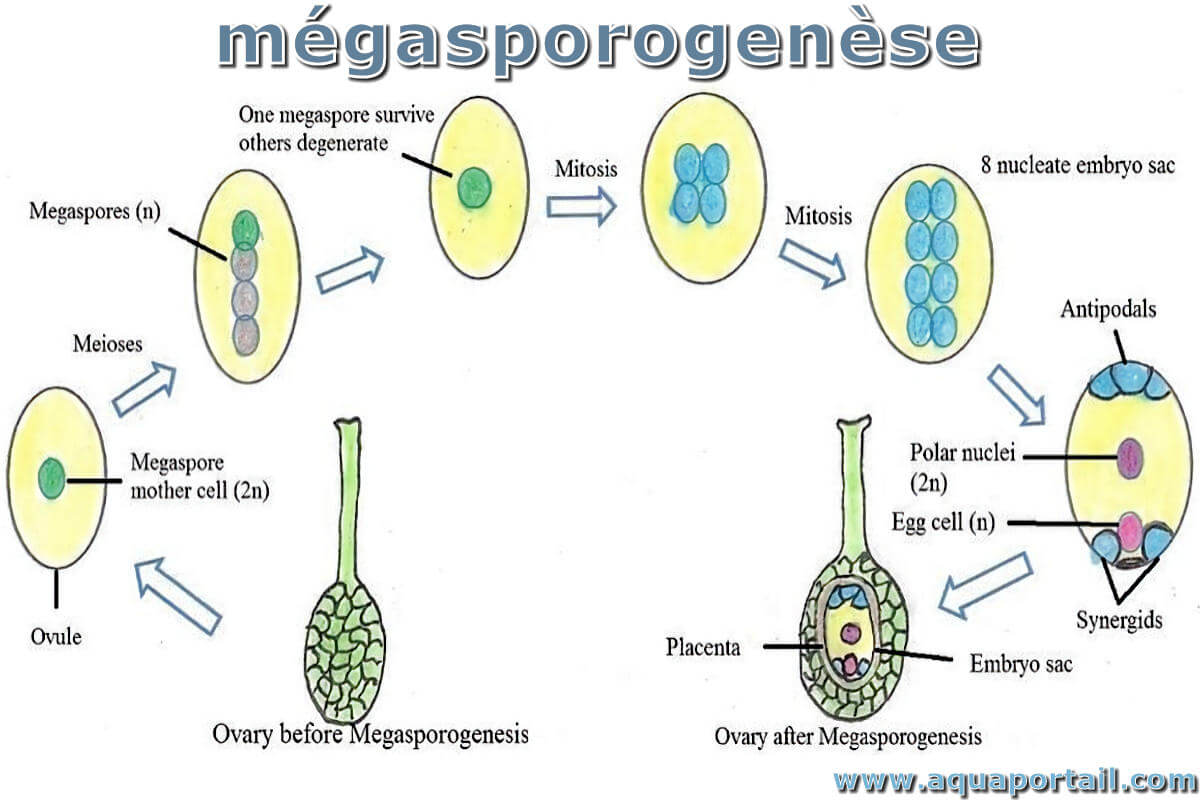
Megasporogenesis is the process of development of a megaspore from a megasporocyte mother cell.
