Pleistocene
noun and adjective (n. / adj.)
Definition
The Pleistocene is a geological epoch, the earliest of the Quaternary period (Cenozoic era), spanning from -2.58 million years to -11,700 years ago. It encompasses the most recent major glaciations, when glaciers covered vast parts of the globe. It precedes the Holocene.
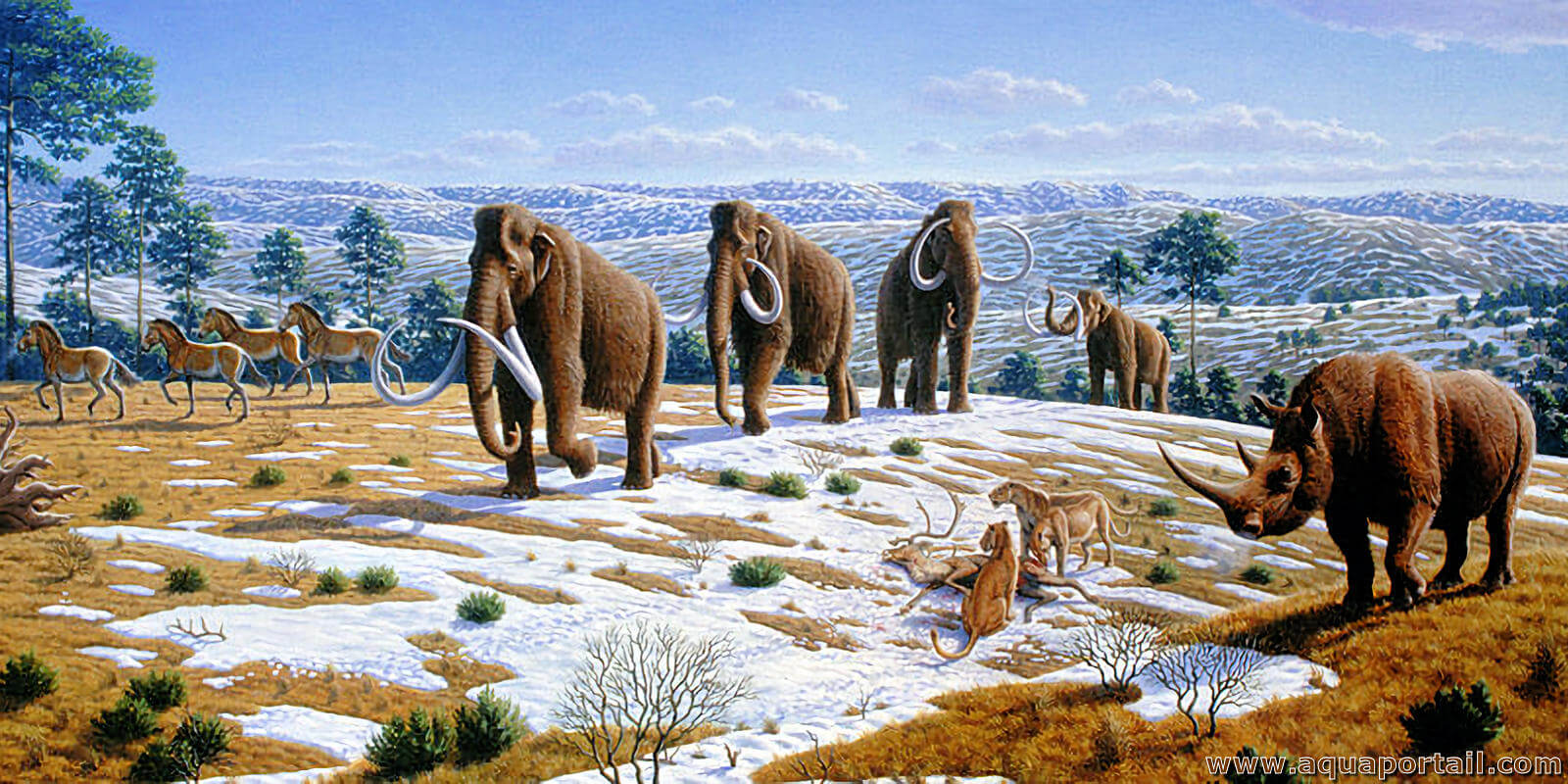
A Pleistocene ecosystem:

This ecosystem is a Pleistocene landscape during an interglacial with cave lion (Panthera spelaea), straight-tusked elephants (Palaeoloxodon antiquus), narrow-nosed rhinoceros (Stephanorhinus hemitoechus), steppe bison (Bison priscus), aurochs (Bos primigenius), and hippopotamus (Hippopotamus).
Explanations
The Pleistocene is a division of the geological time scale belonging to the Quaternary period. It covers the recent ice ages, including the Younger Dryas episode (approximately 12,900 to 11,700 years BP). The Pleistocene corresponds to the archaeological Paleolithic. It witnessed the genesis of relict paleosols and vetusols. It began 2.58 Ma ago and ended 11,700 years ago.
Initially, cooling and progressive aridity generated a world much more similar to today's. Within the Arctic Circle, tundra spread over permafrost; south of it, taiga developed, and even further south, prevailing aridity LED to the replacement of open woodlands by steppes, deserts, and semi-deserts; savannas were partly replaced by temperate grasslands. In the Upper (Late) Pleistocene (Tarantian), anatomically modern humans (Homo sapiens) dispersed out of Africa.
During this period, the sea retreated from almost the entire Iberian Peninsula, leaving an increasingly small gulf in the Guadalquivir and Murcia and remnant beaches in Huelva and Catalonia. Inland, ancient basins remained active and new fluvio-lacustrine basins emerged. Primarily during the Late Pleistocene, in the mountains and the northern peninsular belt, evidence of glacial phases appeared.
During the Pleistocene, vast expanses of land were covered by immense ice sheets, a phenomenon called glaciation. At certain periods, the size of the ice sheets shrank and the climate became warmer. These periods are called interglacials.
Over the past million years, the major Alpine glacial periods in Europe numbered four and are named after four tributaries of the Danube where their moraine deposits were first identified: Günz, Mindel, Riss, and Würm (the most recent). In North America, the classical glaciations are called Pre-Illinoian (formerly Nebraskan and Kansan), Illinoian, and Wisconsinan. With the inclusion of the Gelasian in the Pleistocene, two older Alpine glaciations, Donau and Biber, were incorporated. This epoch also saw the emergence and final decline of Beringia.
Due to climatic conditions, polar ice caps expanded and ice advanced toward the 40th parallel in some areas. Sea level dropped by about 100 to 120 meters (330 to 390 ft), and fauna and flora evolved in response to these climatic oscillations.
Climatic changes
Throughout the Pleistocene, vast expanses of glacial ice covered the highest latitudes of the planet, particularly in the Northern Hemisphere, alternating with epochs when these regions were partially ice-free.
Currently, Earth is experiencing an interglacial period (the Holocene) that began at the end of the Pleistocene, about 11,700 years ago. At high latitudes, average temperatures exceed those of the last glacial period at its peak by 4 to 6 degrees Celsius (7 to 11 °F). The current interglacial period remains slightly cooler than certain previous interglacials (such as the Eemian), during which hippopotamuses, elephants, and macaques thrived in present-day England.
In the Northern Hemisphere, several conditions favor glaciations, as there are large landmasses very close to the Arctic capable of channeling ice sheets southward. Conversely, Antarctica, although experiencing conditions as cold as those in the north, is separated from the southern continents by a circumpolar ocean extending between 55 and 60 degrees latitude; this separation from other southern continents limits the extent of continental glaciations in the Southern Hemisphere. The Drake Passage (Hoces Sea) between Antarctica and South America remained free of continental ice.
The closure of the isthmus of Panama connecting the two Americas, completed about 2.7 to 2.5 million years ago, was a decisive event. This event altered oceanic and atmospheric circulation patterns, particularly affecting warm water currents that previously flowed between the oceans and were redirected and strengthened northward (Gulf Stream). The formation of new glaciers requires abundant atmospheric moisture derived from increased precipitation associated with warm currents flowing toward high latitudes. In this case, the phenomenon appears linked to the expansion of the Arctic polar ice cap.
Vegetation changes resulting from climate change had a decisive impact on life. At the height of the last glaciation (Last Glacial Maximum), about 18,000 to 20,000 years ago, an enormous amount of water was locked up in glaciers as ice. This circumstance drove increasing aridity in tropical zones. Tropical rainforests shrank to occupy a smaller area than they would immediately after deglaciation and just before humans became farmers. Expanding deserts pushed certain large mammals of Australia and Madagascar, adapted to a tropical existence, to the brink of survival given the impossibility of migrating to other latitudes. In other tropical zones, forest species were confined to increasingly smaller refugia, with scarce food and intense competition causing major extinctions.
Synonyms, antonyms
Spanish translation: Pleistoceno
0 synonyms (similar meaning) for "pleistocene".
0 antonyms (opposite meaning).
Related words and expressions to PLEISTOCENE are directly connected by general or specific meaning.
The word PLEISTOCENE is listed on page 1 of words starting with P in the dictionary glossary.
Related to "Pleistocene"
Eocene
The Eocene epoch spans a geological time of the Cenozoic era, extending from 56 to 34 million years ago, belonging to the Paleogene period and system; within...
Holocene
The Holocene is the most recent geological epoch of the Quaternary Period, spanning the past 11,700 years and representing the current epoch of Earth's...
Paleocene

The Paleocene is the geological epoch of the Cenozoic era spanning from -66 to -56 Ma in the stratigraphic scale.
P680-P700
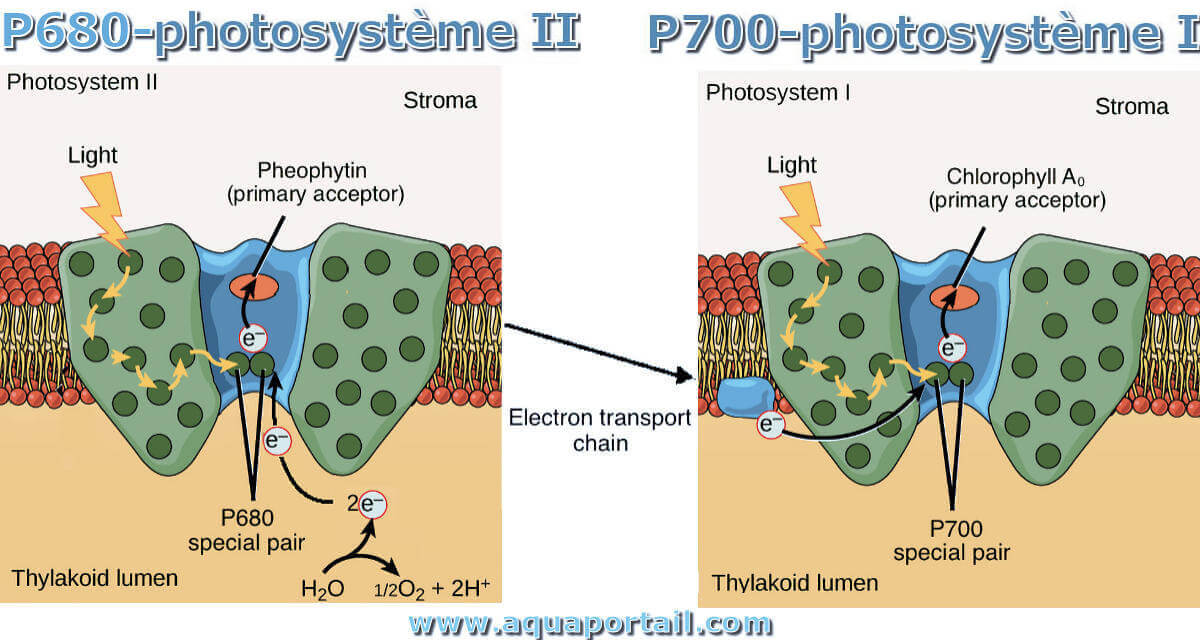
P680-P700 is an association of chlorophyll a molecules absorbing at 680 nm and 700 nm, respectively, possessing particular photochemical properties.
