Coccolith
noun (n.)
Definition
A coccolith is a tiny calcified scale located on the cell surface of certain haptophytes. Coccoliths are microscopic plates of calcite (CaCO3) that serve as the exoskeleton of unicellular marine algae: coccolithophores. The plates reach a maximum size of 10 μm (0.4 mils) and form a sphere around the coccolithophore cell, known as the coccosphere.
The coccolithophore of the coccolith Emiliania huxleyi:
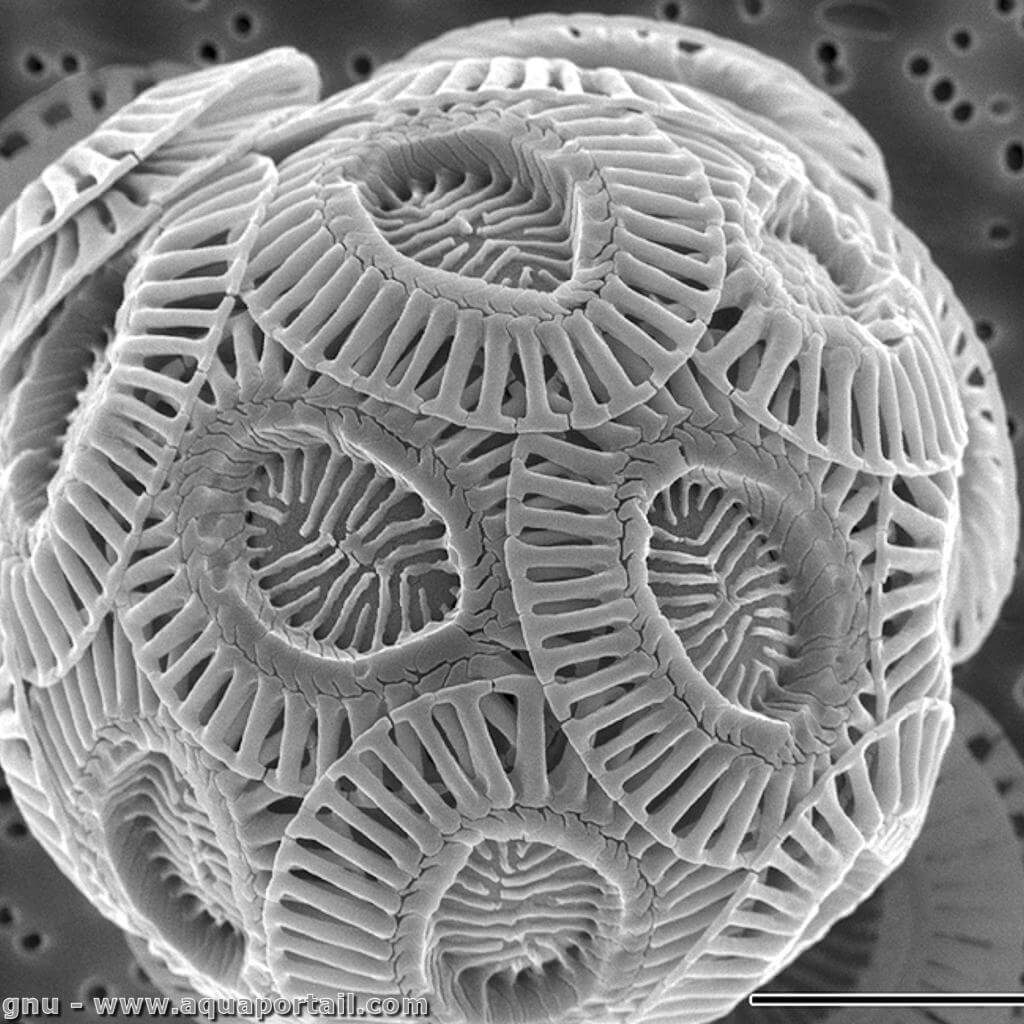
The coccosphere of the coccolithophore Emiliania huxleyi consists of overlapping placoliths forming a coccosphere.
Explanations
Two main types of coccoliths exist: heterococcoliths and holococcoliths.
Coccoliths are platelets of calcium carbonate formed by coccolithophores (unicellular algae) and arranged around them in a spherical structure called the coccosphere.
Coccoliths form inside the cell within vesicles derived from the Golgi apparatus. Once fully formed, the vesicles fuse with the cell membrane, and the coccoliths are extruded by exocytosis and incorporated into the coccosphere.
Coccoliths may be continuously shed into the sea by some species or dispersed following the death of coccolithophores and subsequent breakdown of the coccosphere. They then sink through the water column and form a major component of deep-ocean sediments.
Coccoliths are composed of calcite, a calcium carbonate mineral, and are among the primary constituents of chalky limestone deposits such as those forming the White Cliffs of Dover. In the Northeast Atlantic during the last glacial-interglacial cycle, coccoliths accounted for up to 70–80% of total carbonate during warm interglacial periods and a smaller percentage during glacial periods.
They appeared in the Late Triassic, about 200 million years ago, alongside another group of unicellular algae, the diatoms. They reached their maximum expansion in the warm epicontinental shelf seas of the Cretaceous and still retain considerable ecological and geological significance.
Coccolithic rock
The limestone created by the massive deposition of these calcium carbonate platelets is characteristic of the eponymous Cretaceous Period. When the organisms die, coccoliths sink to the seafloor and a layer of coccolith ooze can accumulate. During the Cretaceous, Western Europe experienced a much warmer climate and eustatic sea levels were roughly 100 meters (328 ft) higher, leaving much of the continental shelf submerged.
In this warm, shallow sea (the Cretaceous Sea), coccoliths thrived and coccolith ooze formation was far more extensive than today. Where older overlying strata have been eroded away, this soft white chalkstone can be found in many locations across northwestern Europe: for example, in southern Limburg, in the cliffs of Dover and Calais, or in the Baltic Sea along the cliffs of the islands of Rügen and Møn.
In the past, chalkstone was used to manufacture blackboard chalk, before gypsum plaster later replaced it for that purpose.
Heterococcolith and holococcolith
Heterococcoliths are formed by a radial arrangement of elaborately shaped crystal units. Holococcoliths consist of minute (approximately 0.1 micron) calcite rhombohedra arranged in continuous sequence.
Initially, the two types of coccoliths were thought to be produced by different families of coccolithophores. More detailed evidence from natural samples and laboratory cultures instead indicates that both types are produced by the same species, but at different stages of its life cycle: heterococcoliths are produced during the diploid phase, whereas holococcoliths are produced during the haploid phase.
Functions
Although coccoliths are intricate structures whose formation is a complex product of cellular processes, their exact function is not yet fully resolved. Proposed hypotheses include:
Coccosphere
The coccosphere denotes the calcareous shell of haptophytes (formerly coccolithophorids), marine photosynthetic flagellates forming part of the phytoplankton. Each shell is built from numerous calcareous plates called coccoliths.
Micropaleontology
Because they are composed of low-magnesium calcite, a highly stable form of calcium carbonate, coccoliths fossilize readily. They are found in sediments alongside other similar microfossils (or forms of uncertain affinity such as nannoliths) starting in the Triassic. Collectively, these microfossils are termed calcareous nannofossils or calcareous nannoplankton.
Nannoliths originate from nannoplankton.
History
Coccoliths were first observed by Christian Gottfried Ehrenberg (1795–1875), who regarded them as inorganic products, and were instead identified as biological structures produced by living organisms by Thomas Henry Huxley, who named them and recognized them as the primary constituents of carbonate ooze and derived rocks (limestone).
Synonyms, antonyms
Spanish translation: cocolito
3 synonyms (similar meaning) for "coccolith":
- heterococcolith
- holococcolith
- nannolith
0 antonyms (opposite meaning).
Related words and expressions to COCCOLITH are directly connected by general or specific meaning.
The word COCCOLITH is listed on page 1 of words starting with C in the dictionary glossary.
Related to "coccolith"
endolith
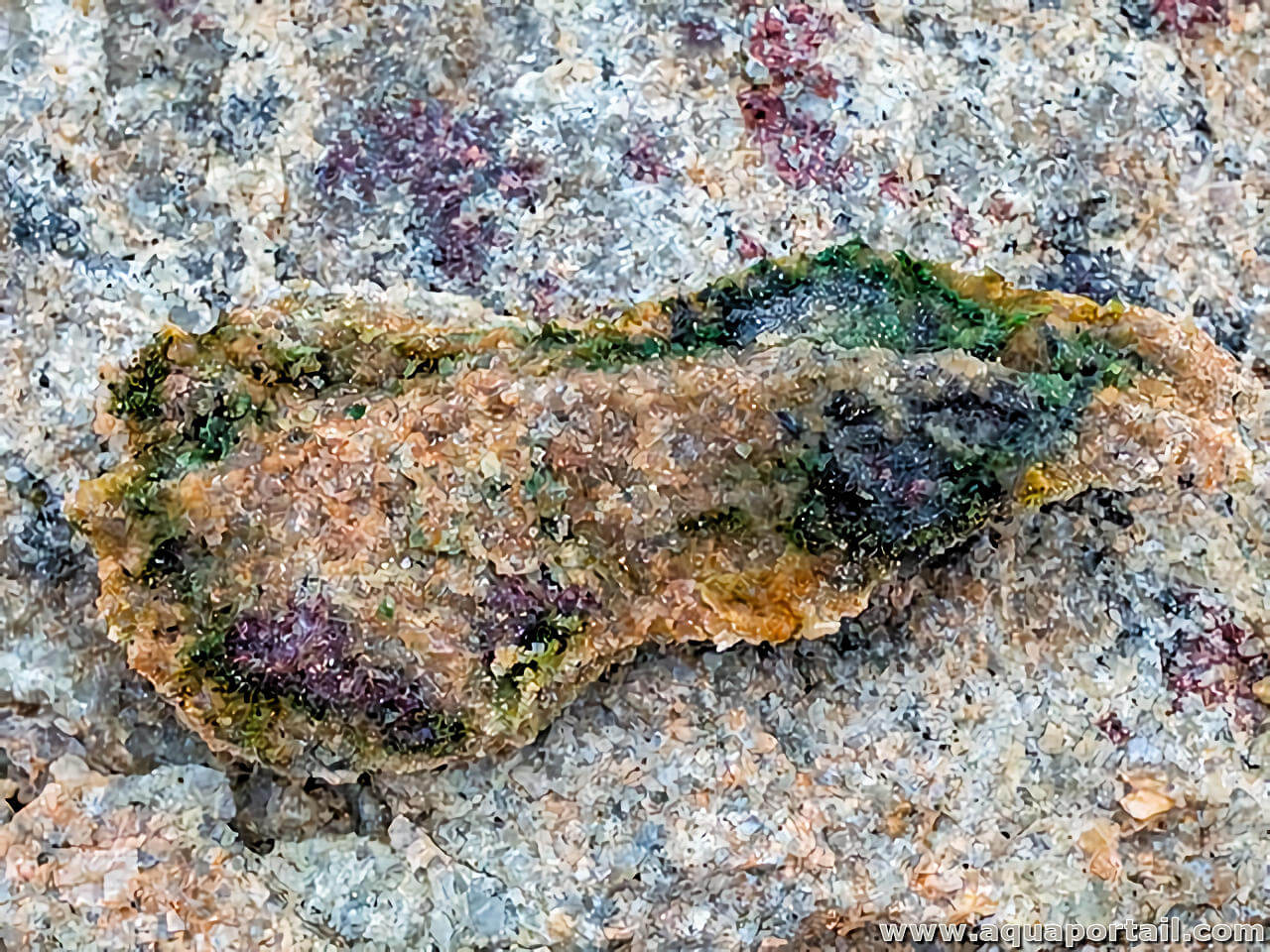
An endolith is an endolithic organism that grows inside rocks or lives within rock pores and fissures.
coccoid
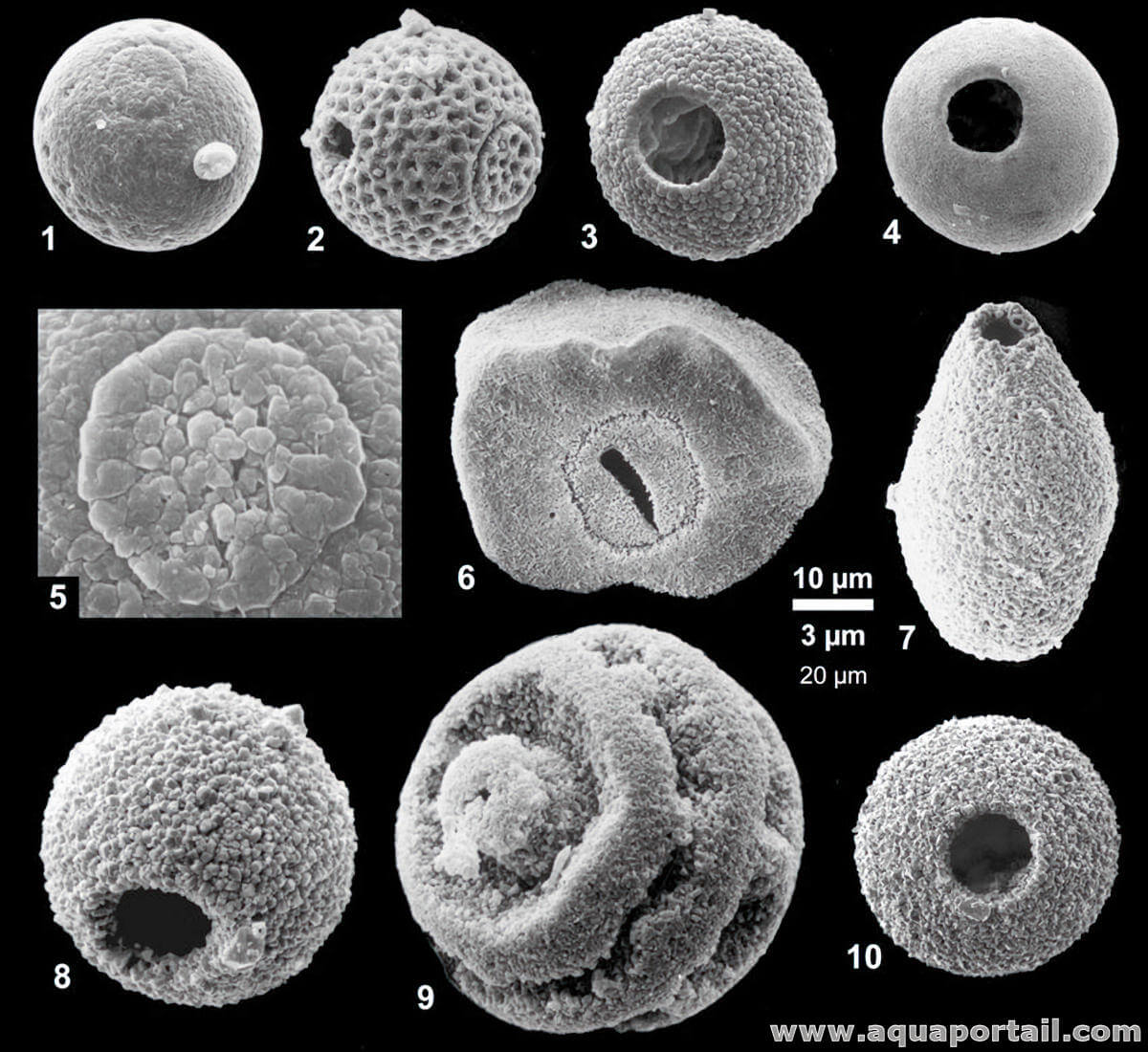
A unicellular organism that is often poorly motile or sessile, resembling a coccus—nearly spherical or globular—is described as coccoid.
cactus

A cactus is a thick, fleshy plant that grows in many hot, dry regions of the world. Cacti do not have leaves, and many are covered with spines.
caecilian

A caecilian (gymnophione) is a limbless, burrowing, worm-like amphibian whose legs are vestigial or absent.
