Karyogamy
noun (n.)
Definition
Karyogamy is a fusion of nuclei, most often involving the nuclei of two gametes of opposite sex, as in fertilization. Syngamy is the fusion of two gametes during sexual reproduction. Plasmogamy and karyogamy are the two stages of syngamy.Karyogamy is the fusion of two gametic nuclei that takes place after the fusion of two haploid eukaryotic cells, each carrying a complete copy of the organism's genome. Once the cell membranes have joined, the nuclei are called pronuclei.
Karyogamy and plasmogamy:
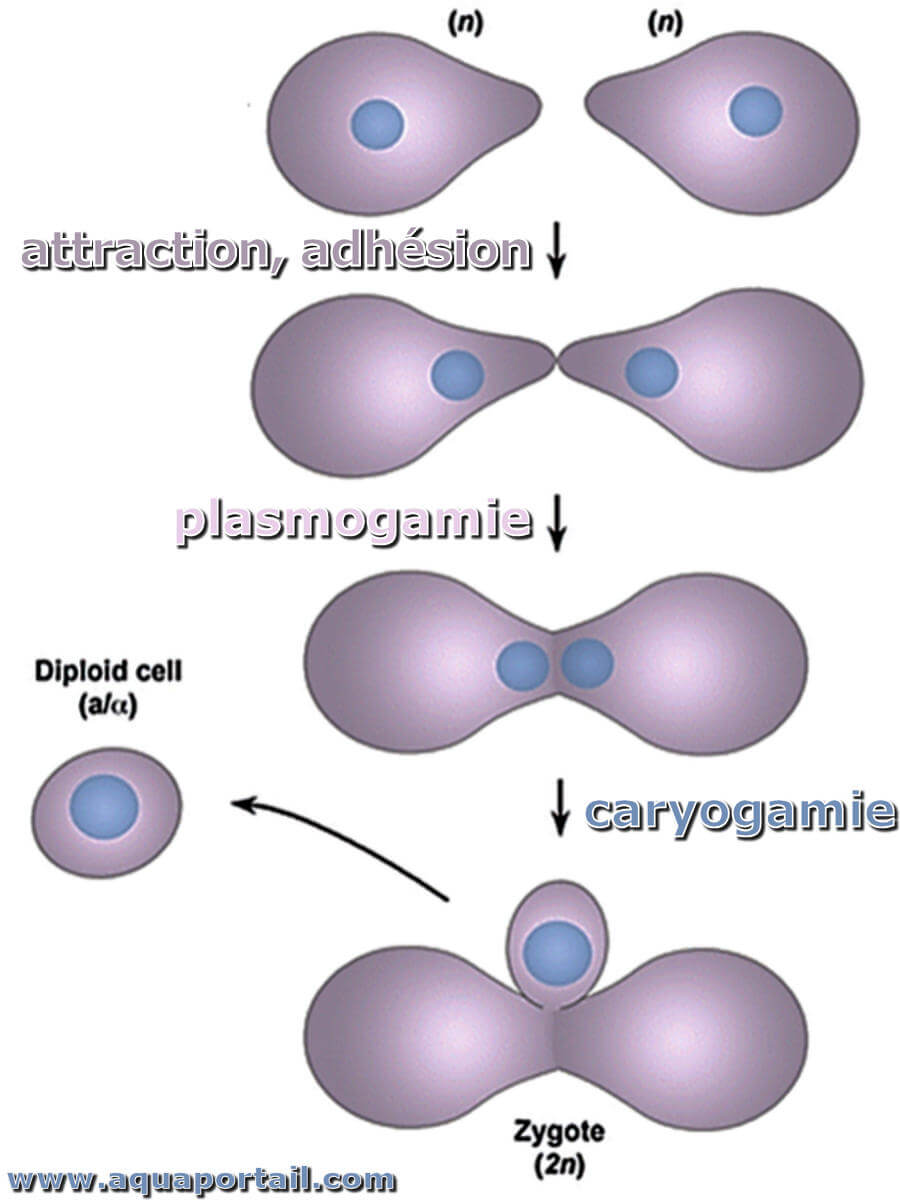
During karyogamy, following plasmogamy, the nuclei of dikaryotic cells fuse during fungal syngamy.
Explanations
Karyogamy, involving the fusion of the nuclei of two gametes, sometimes takes place long after plasmogamy, particularly in higher fungi, which leads to the existence of a dikaryophase. During the final stage of fertilization, karyogamy marks the end of the dikaryon phase (karyophase) characteristic of the sexual reproduction cycle of fungi.
⭐ The fusion of the two nuclei into a diploid zygote that undergoes meiosis occurs in the hymenium of fruiting bodies. Consequently, plasmogamy (fusion of the cytoplasm) and karyogamy (fusion of the nuclei) can be separated in time by years, which appears to be a unique feature of basidiomycetes.
✅ While karyogamy involves the fusion of two nuclei to form a diploid zygote, karyokinesis involves the division of the nucleus into two haploid or diploid daughter nuclei.
Fungi undergo plasmogamy and karyogamy simultaneously in lower forms. Syngamy is a recombination mechanism linked to fungal sexual reproduction. Plasmogamy, karyogamy, and mitotic division all take place on the developing diploid nucleus. When the cytoplasms of lower fungi fuse, this is plasmogamy. It is also conceivable for two opposite forms of fungal thalli to fuse, resulting in eukaryotic cellular stages.
Lower-level fungi use plasmogamy or karyogamy to reproduce. Higher fungi maintain cells in the dikaryotic stage for many generations by delaying karyogamy. In fungi, karyogamy is the joining of two haploid nuclei, whereas plasmogamy brings together two hyphal protoplasts.
Synonymous with amphimixis; see also cystogamy, somatogamy, and perittogamy.
✅ The final step of the syngamy process proceeds as follows. Thus, the nuclear envelope of a haploid nucleus unites in three steps. The outer membranes of the two nuclei fuse in the first step.
The dikaryotic cell becomes diploid after undergoing karyogamy. Zygotes or zygospores are the diploid cells that arise. In the fungal life cycle, the zygote is the only diploid phase. In diploid cells, meiosis follows karyogamy. By replicating chromosomes and recombining genetic information, a cell divides into four daughter cells, each haploid.
As a result, karyogamy contributes to the genetic diversity of the fungal population. Daughter cells undergo mitosis to increase their cell count. Fungi produce haploid spores following sexual reproduction.
Karyogamy is delayed in ascomycetes and basidiomycetes, and dikaryotic cells survive for many generations. Both mitotic division and conventional cytokinesis are possible in the dikaryon. The growth phase of a fungus is the dikaryotic phase. The two dikaryotic nuclei propagate into two daughter cells. Simultaneously with the expansion of the mycelium, this results in the development of both the mycelium and the dikaryon.
During meiosis, karyogamy between two haploid nuclei can lead to the formation of a diploid nucleus. Haploid spores germinate and form mycelium. The significant distinction between plasmogamy and karyogamy lies in their readily fusible structures.
Synonyms, antonyms
Spanish translation: cariogamia
1 synonym (similar meaning) for "karyogamy":
0 antonyms (opposite meaning).
Related words and expressions to KARYOGAMY are directly connected by general or specific meaning.
The word KARYOGAMY is listed on page 1 of words starting with K in the dictionary glossary.
Related to "karyogamy"
anisogamy
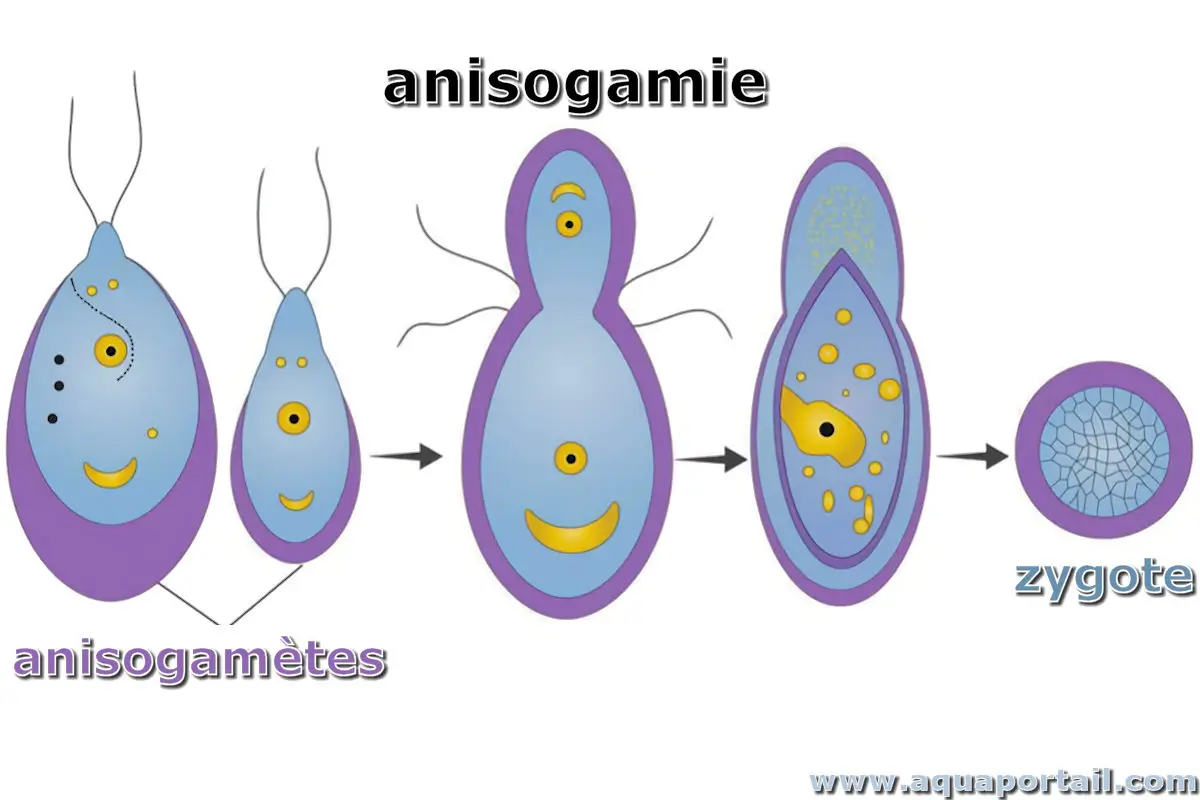
Anisogamy, a form of heterogamy, corresponds to the fusion of dissimilar gametes. Anisogamy may be morphological (the female gamete is larger than the male)...
apogamy
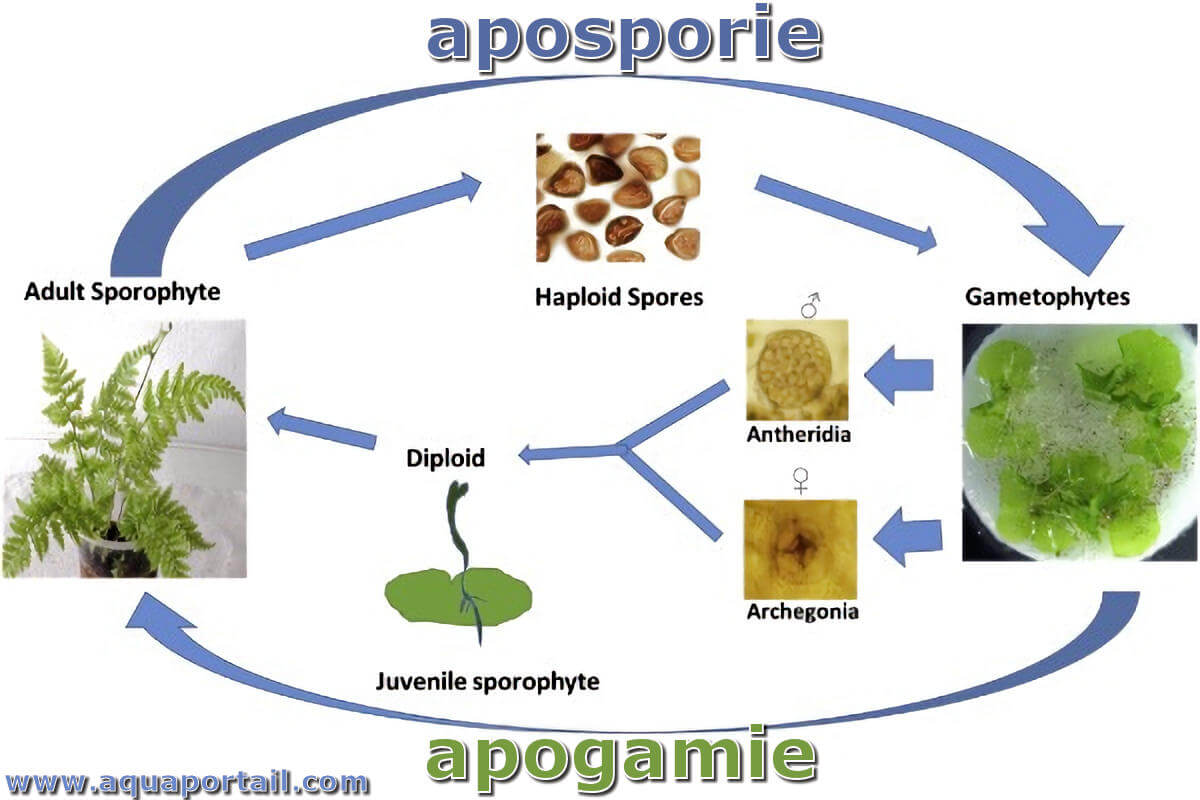
In botany, apogamy is the development of a gamete without fertilization (without gamy). A diploid cell in the embryo sac of flowering plants develops into...
isogamy
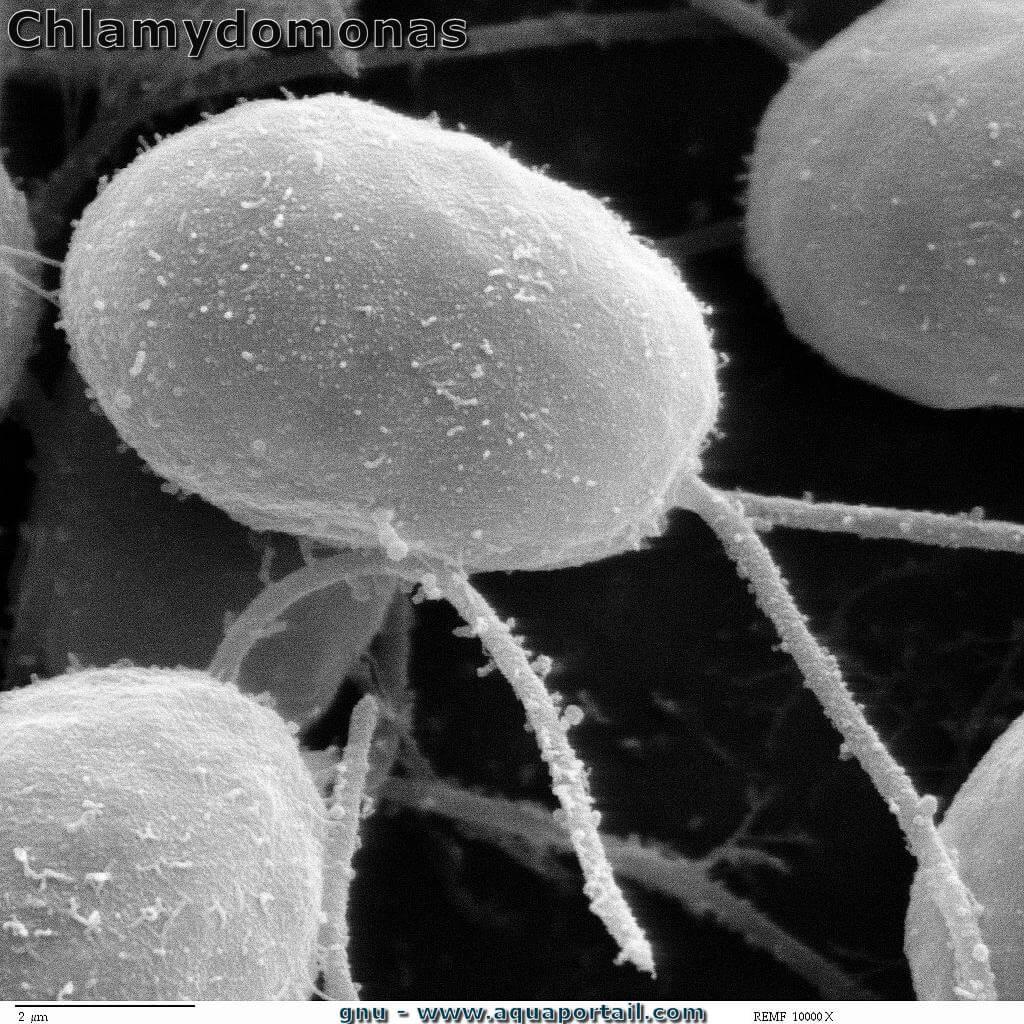
Isogamy is a mode of fertilization involving gametes of both sexes that are identical (morphologically identical gametes called isogamous).
oogamy
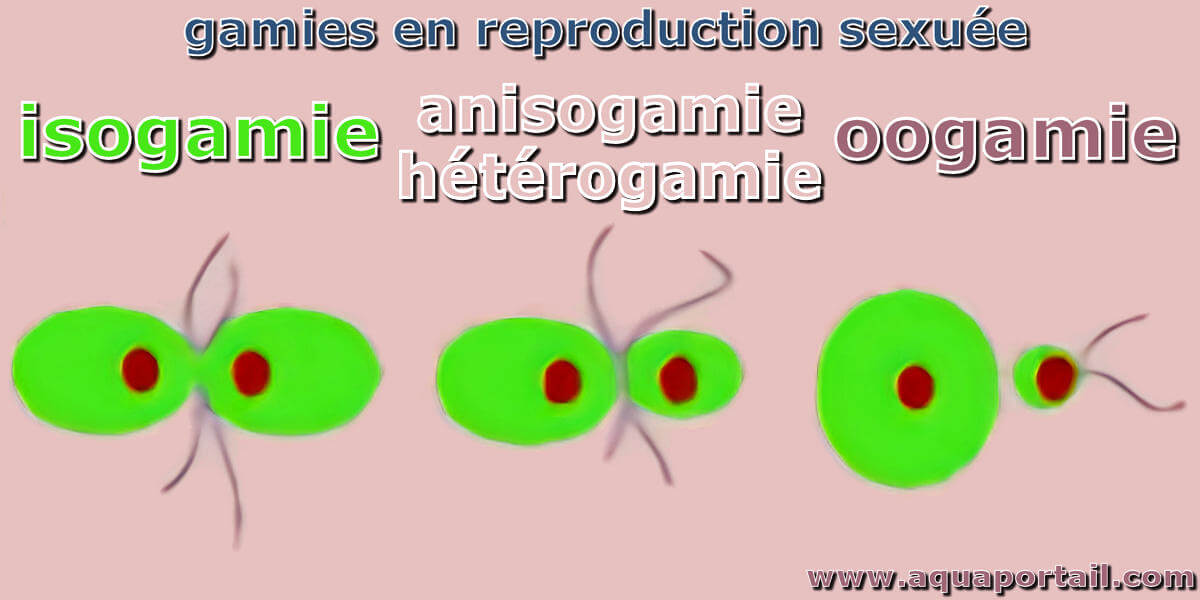
Oogamy consists of the fusion of an immotile oosphere with a small, motile male gamete. It is therefore a fertilization in which the female gamete is immotile...
