Lichen
noun (n.)
Definition
A lichen is a composite organism formed from the symbiosis of a fungus (an ascomycete, more rarely a basidiomycete) housing symbiotic algae (blue-green or green). It is a dual organism resulting from the symbiosis of an alga and a fungus, forming a lichen symbiosis.
Green lichens on a branch:

A lichen is a composite organism arising from algae or cyanobacteria living among filaments of multiple fungi in a symbiotic relationship. These greenish lichens are crustose lichens.
The green alga or blue-green alga (cyanobacterium) serves as the lichen photobiont. See also inverted lichen.
What is a lichen?
A lichen is an organism formed through a symbiotic association between a fungus (the mycobiont) and an alga (the phycobiont). The fungus provides water and mineral salts. Through photosynthesis, the alga produces various organic compounds, a portion of which it supplies to the fungus.
The two components are linked by a specialized filament (haustorium) through which various nutrients pass. Lichens are capable of withstanding extreme climatic conditions. Their growth is very slow (a few mm / fractions of an inch per year). A third component, a yeast of the division Basidiomycota, has been detected in the cortex of several stratified lichen species; although its exact role in the symbiosis is not yet fully understood, it is thought to be linked to the production of secondary metabolites.
Depending on the nature of this association, many structural types of lichens can be distinguished: from the simplest, where the fungus and alga meet by chance, to the most complex, where the mycobiont and phycobiont give rise to a morphology very different from what they form separately, and where the algae form a distinct layer protected by the fungus. Lichens are multicellular composite organisms that are exceptionally resistant to unfavorable environmental conditions and therefore capable of colonizing highly diverse ecosystems. Protection against desiccation and solar radiation provided by the fungus, combined with the photosynthetic capacity of the algae, gives the symbiont unique traits among living beings. The synthesis of compounds found exclusively in these organisms, known as lichen substances, enables better utilization of water and light as well as the elimination of harmful substances.
Lichens are capable of accumulating mineral compounds far beyond their own metabolic needs. Consequently, they are used as bioindicators of pollution. The number of lichen species is estimated at roughly 17,000, with new ones described every year.
Types of lichens
Depending on the nature of their thallus, there are three main morphological types of lichens: crustose, foliose, and fruticose. In a lichen, the mycobiont produces a thallus that houses the photobiont. Depending on the arrangement between photobiont and mycobiont, the lichen has a so-called homoiomerous or heteromerous thallus. See homoiomerous thallus and heteromerous thallus.
A lichen whose mycobiont is a basidiomycete is called a basidiolichen.
See in greater detail crustose lichens (with crustose thalli), foliose lichens (with foliose thalli), and fruticose lichens (with fruticose thalli).
See also lichen sclerosus. A podetium is an upright stalk-like structure of certain fruticose lichens.
There are few examples of lichens whose morphology is determined by the photobiont (observed, for instance, in the genera Coenogonium, Ephebe, Cystocoleus, and Racodium); in most cases, it is the mycobiont that sets the growth pattern of the symbiont. The development of a particular thallus type is important for understanding the relationships established within the symbiont; for this reason, the group has traditionally been divided according to thallus morphology into crustose, foliose, and fruticose lichens (and intermediate forms). Despite this classification, other biotypes exist among lichens, such as gelatinous lichens, which some authors nevertheless include within the preceding types.
Symbiosis
The basis of the symbiosis is the uptake of nutrients by the fungus from the alga; to this end, in almost all lichens studied, some form of fungal penetration into the algae has been found, accomplished via haustoria. Two types of haustoria or fungal penetration structures are distinguished: intracellular and intramembranous.
In crustose lichens (which form crusts) and in certain more highly structured forms, penetrations are generally intracellular when haustoria enter the protoplast of the algal (gonidial) layer; the wall of these haustoria is thinner than that of the remaining hyphae, making it easier for them to penetrate the algal cell.
In more derived morphologies, lichen haustoria are intramembranous; in these cases, they penetrate the cell wall of the algal layer but not the cytoplasm, leaving an invagination in the algal cell wall. The lichen obtains its nourishment from substances synthesized by the alga via photosynthesis; in this process, the carbohydrate ribitol is synthesized and transferred to the fungus by diffusion; inside the hypha, this ribitol is converted into mannitol, which cannot be transferred back from the fungus to the alga. In this way, the mycobiont secures its food supply while the alga continues synthesizing.
When the photobiont is a cyanobacterium, the synthesized carbohydrate is glucose, which the fungus likewise converts into mannitol. In return, the alga gains necessary protection against desiccation from the fungus and an increased capacity to absorb water thanks to the properties of fungal hyphae. In short, symbiosis allows algae or cyanobacteria to colonize ecosystems where, due to extreme weather conditions, they could not survive on their own.
Several lichens on wood with fungi:

Lichens accompany decomposer fungi on wood.
Lichen metabolites are generally a mixture of those produced by the algae for their own metabolism and those produced by the fungus. There are few instances where substances are produced for the lichen that neither biont could produce alone; among these are lichen substances, a highly heterogeneous group of lichen-specific compounds produced by the fungus, many of which are called lichen acids.
Around 200 types of lichen substances are known, although research continually adds new ones, leading to the belief that many are unique to a single species, meaning the symbiosis itself produces them. Notably, these substances appear neither in the lower cortex nor in the algal layer and almost always occur as tiny crystals and granules arranged on the surface of hyphae.
The function of lichen substances is not entirely clear. They are thought to act as herbivore deterrents or as protection against bacteria and other pathogens. They may also play an important role in water absorption or in increasing algal membrane permeability, thereby facilitating metabolite entry into the cell. They are known to protect against various pollutants, UV radiation, and even radioactivity. Some are simply by-products of the daily cellular activity of the symbiotic organism. These lichen metabolites form the basis of many taxonomic studies of these organisms.
Fruiting yellow lichens:

Yellow lichens displaying their apothecia.
Types of bionts
It can be said that the formation of symbiosis, particularly mutualistic associations by fungi with all types of photobionts, is a trait that has conferred a tremendous evolutionary advantage on the species forming them—at least as inferred from data on known symbiotic species: out of a total of 64,200 fungal species, roughly 30% (19,000 species) have adopted this type of association, with over 8% forming symbioses as mycorrhizae and 21% forming lichen associations.
The lichen Pyrenocollema halodytes:

The cyanobacterium Hyella caespitosa is associated with fungal hyphae of the lichen Pyrenocollema halodytes.
Synonyms, antonyms
Spanish translation: liquen
6 synonyms (similar meaning) for "lichen":
- ascolichen
- basidiolichen
- crustose lichen
- fruticose lichen
- inverted lichen
- lichen symbiosis
0 antonyms (opposite meaning).
Related words and expressions to LICHEN are directly connected by general or specific meaning.
The word LICHEN is listed on page 1 of words starting with L in the dictionary glossary.
Related to "lichen"
reversed lichen
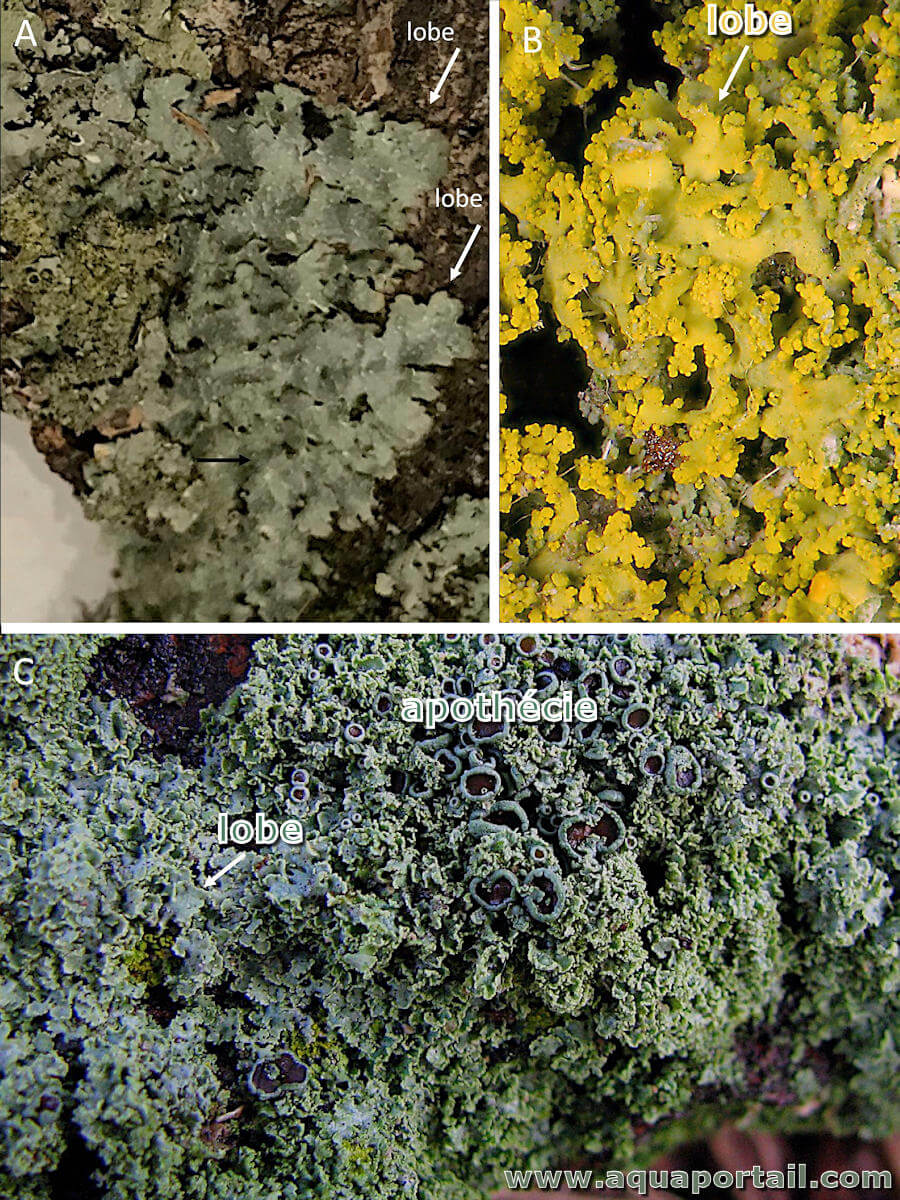
A reversed lichen belongs to a few genera of lichens that differ from other types of lichens by an inversion of the mycobiont/phycobiont association.
L-form bacteria
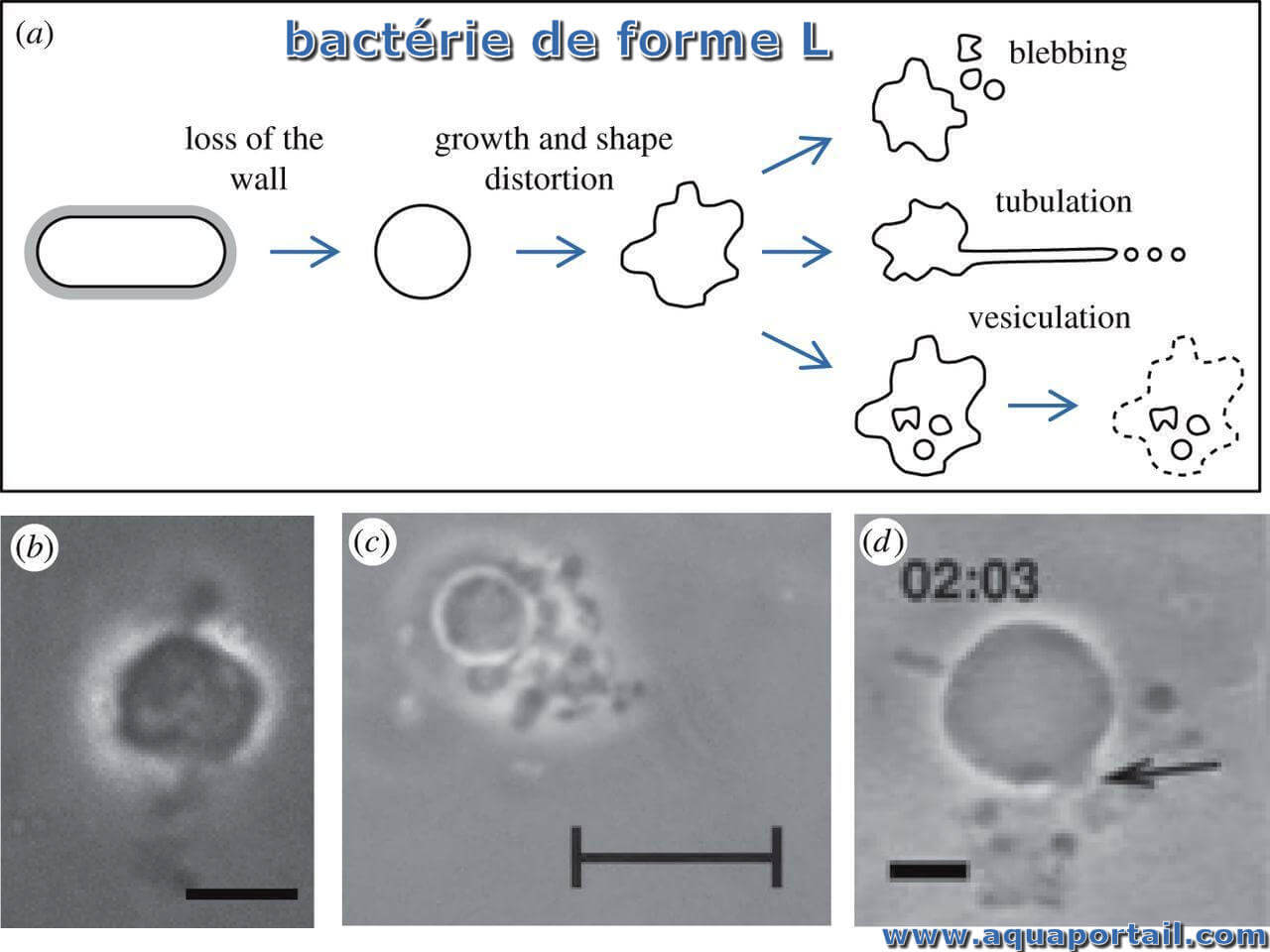
L-form bacteria originate from a strain of bacteria that lack cell walls while retaining the ability to grow.
lacustrine

A lacustrine organism lives, grows, or thrives in or near a lake. The lacustrine environment sometimes designates any body of calm, standing (lentic) water...
ladybug

The ladybug (ladybird or lady beetle) refers to a group of hemispherical coleopteran insects belonging to the family Coccinellidae.
Simple summary
Lichen is a composite organism resulting from a symbiotic relationship between a fungus and a photosynthetic partner, typically an alga or a cyanobacterium. This association allows it to survive in varied and often harsh environments, with each component providing specific nutrients or benefits to the other.
