Reversed lichen
noun phrase (n. phr.)
Definition
A reversed lichen belongs to a few genera of lichens that differ from other types of lichens by an inversion of the mycobiont/phycobiont association. See also mycophycobiosis.
Reversed lichens:
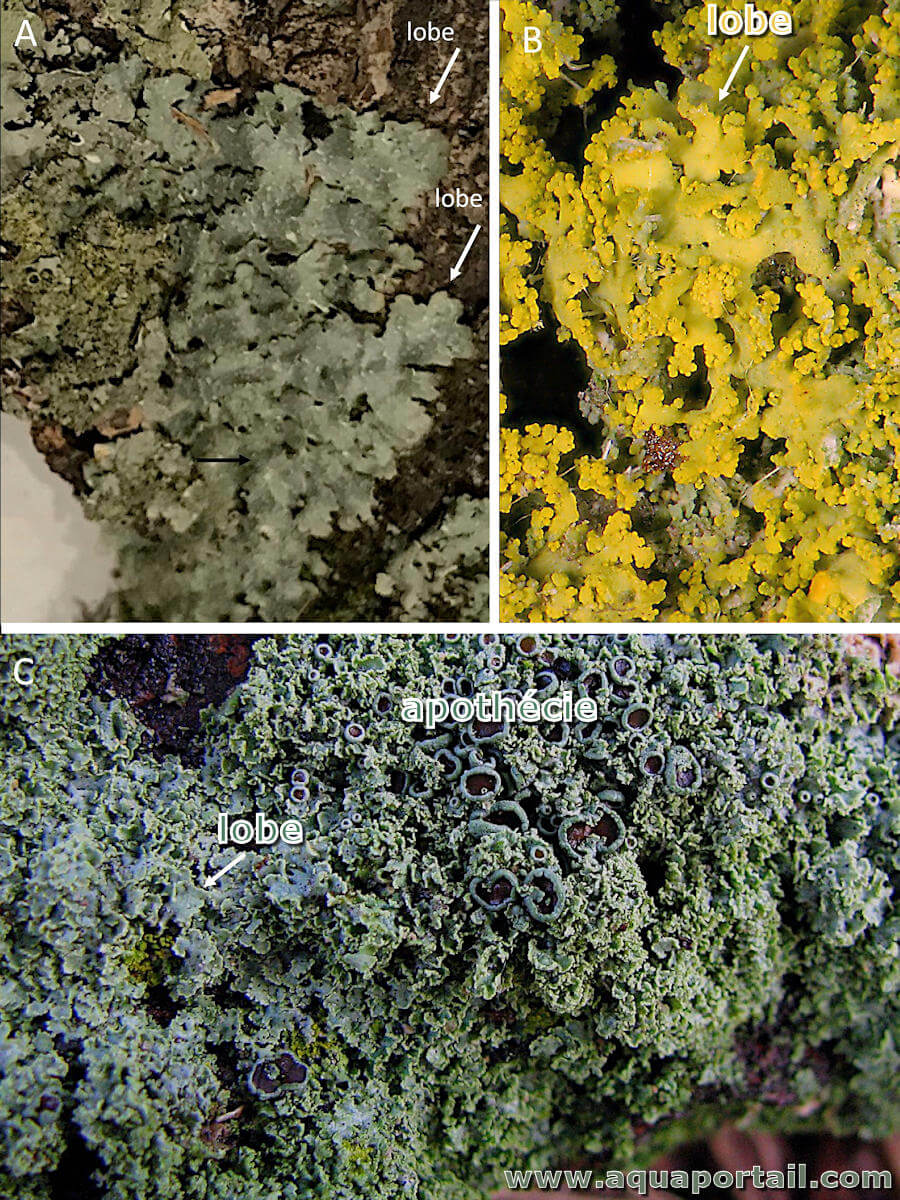
The three foliose species (A) Candelaria concolor, (B) Candelaria concolor, and (C) Physcia millegrana are reversed lichens. Candelaria concolor exhibits an accumulation of yellow pigments from the pulvinic acid family. Apothecia are visible in Physcia millegrana. These three reversed lichens differ from conventional foliose, squamulose, and fruticose lichens.
Explanations
Certain fungi, algae, and bacteria are capable of either growing independently or co-constructing and co-occupying a lichen, whose non-reproductive tissues are collectively called its thallus. About 55% of lichens, called crustose, form simple unstratified thalli; the remainder, called "morphologically advanced", form thalli that differentiate into outer, central, and inner layers. Of these, 20% are classified as "squamulose" with small leaf-like tissues called lobes and large extensions called podetia. The others are either "foliose", with large lobes, or "fruticose", with a stem-like morphology.
A reversed lichen may designate lichen structures or formations that are atypical or inverted relative to the usual orientation or growth patterns of lichen species.
Synonyms, antonyms
Spanish translation: liquen invertido
2 synonyms (similar meaning) for "reversed lichen":
0 antonyms (opposite meaning).
Related words and expressions to REVERSED LICHEN are directly connected by general or specific meaning.
The expression REVERSED LICHEN is listed on page 1 of words starting with R in the dictionary glossary.
Related to "reversed lichen"
lichen

A lichen is a composite organism formed from the symbiosis of a fungus (an ascomycete, more rarely a basidiomycete) housing symbiotic algae (blue-green...
reverse transcriptase
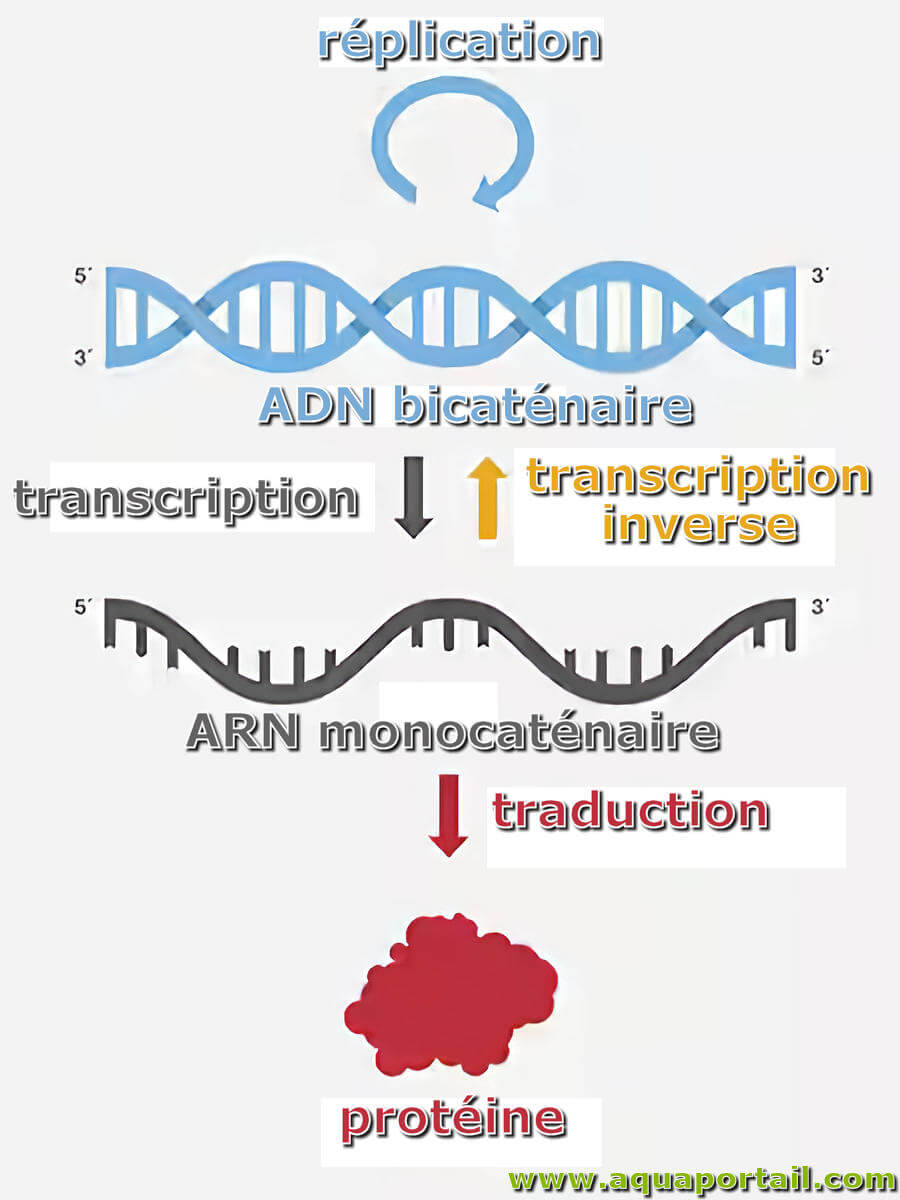
Reverse transcriptase, also called retrotranscriptase and RNA-dependent DNA polymerase, is a DNA polymerase that transcribes single-stranded RNA into DNA.
reversion

In genetic biology, reversion is the appearance of a trait resembling an ancestral morphology.
ramification

Ramification is a mode of subdivision of an axis, such as the branching of a plant; the term is defined differently in mathematics, chemistry, and in botany...
