Violaxanthin
noun (n.)
Definition
Violaxanthin is a carotenoid pigment characteristic of certain algae such as marine raphidophytes, eustigmatophytes, chrysophytes, or brown algae. This xanthophyll-type pigment plays a protective role against photooxidation.Violaxanthin:

Violaxanthin, with the molecular formula C40H56O4, is a widely distributed carotenoid pigment naturally formed in plants from zeaxanthin. Following acylation and oxidative cleavage, it is converted into tobiraxanthin.
Explanations
Violaxanthin isolated from Dunaliella salina and the chlorella Chlorella ellipsoidea exhibits antiproliferative and proapoptotic (apoptosis) effects against the human colon cancer cell line HCT-116. See also prasinoxanthin.
Under conditions of excess light, violaxanthin is de-epoxidized into zeaxanthin via antheraxanthin monoepoxide due to the activation of violaxanthin de-epoxidase, a thylakoid lumen enzyme. Another enzyme, zeaxanthin epoxidase, reverses the reaction under low light.
It is isolated from yellow pansies, Viola tricolor, hence its name.
In the xanthophyll cycle
The xanthophyll cycles of higher plants and algae represent an important photoprotection mechanism. Two main xanthophyll cycles are known: the violaxanthin cycle of higher plants, green algae, and brown algae, and the diadinoxanthin cycle of Bacillariophyceae, Xanthophyceae, Haptophyceae, and Dinophyceae.
The forward reaction of xanthophyll cycles consists of the enzymatic de-epoxidation of violaxanthin to antheraxanthin and zeaxanthin, or of diadinoxanthin to diatoxanthin, during periods of intense illumination. It is catalyzed by the enzymes violaxanthin or diadinoxanthin de-epoxidase.
During intense illumination, violaxanthin detaches from its binding site on LHCII apoproteins and diffuses into the non-bilayer lipid phase. The non-bilayer lipid phase represents an attraction site for the enzyme violaxanthin de-epoxidase (VDE), which, following pH-dependent activation and dimerization, binds to the non-bilayer lipid phase.
The non-bilayer lipid phase is characterized by reduced surface tension and thus allows penetration of the enzyme's hydrophobic catalytic site into the hydrophobic core of the non-bilayer lipid phase, where it accesses the hydrophobic pigment violaxanthin.
After conversion of violaxanthin to zeaxanthin, zeaxanthin binds to LHCII and participates in photoprotection via NPQ. Since the violaxanthin cycle domain, composed of LHCII, MGDG, VDE, and xanthophyll cycle pigments, is established only during intense illumination of plants, the domain can be described as a transient membrane domain.
Conversion to neoxanthin
The conversion of violaxanthin to neoxanthin is carried out by the enzyme neoxanthin synthase (NXS), which was unequivocally identified in a novel ABA-deficient Arabidopsis mutant, aba4. The predicted gene product is a novel chloroplast membrane protein, and constitutive expression of ABA4 in Arabidopsis LED to increased accumulation of trans-neoxanthin.
Significantly reduced levels of ABA were synthesized in dehydrated aba4 mutants, demonstrating that stress-induced ABA biosynthesis must occur primarily via neoxanthin isomer precursors. Detached aba4.1 leaves were more sensitive to oxidative stress than the wild type, and aba4.1 npq1 double mutants, lacking zeaxanthin and neoxanthin, suffered stronger PSII (photosystem II) photoinhibition.
Biosynthesis
Violaxanthin is biosynthesized from zeaxanthin by zeaxanthin epoxidase (ZEP) via antheraxanthin exclusively in photosynthetic eukaryotes, including higher plants, and is involved in the xanthophyll cycle to dissipate excess light energy.
Violaxanthin and antheraxanthin have not been commercially available, unlike the commercial production of other carotenoids contained in higher plants, such as lycopene, carotene, lutein, zeaxanthin, cryptoxanthin, and capsanthin.
One reason is that source plants or other source organisms do not exist to enable efficient supply of epoxy-carotenoids, which would have to be produced by metabolic pathway engineering using heterologous microbial hosts such as Escherichia coli and Saccharomyces cerevisiae. Heterologous production of violaxanthin has been achieved with both microorganisms.
Biosynthesis involves violaxanthin, antheraxanthin, and their derivatives, which include auroxanthin and mutatoxanthin.
Synonyms, antonyms
Spanish translation: violaxantina
2 synonyms (similar meaning) for "violaxanthin":
0 antonyms (opposite meaning).
Related words and expressions to VIOLAXANTHIN are directly connected by general or specific meaning.
The word VIOLAXANTHIN is listed on page 1 of words starting with V in the dictionary glossary.
Related to "violaxanthin"
xanthophyll

A xanthophyll is a yellow, orange, or red terpenoid pigment with a structure similar to that of carotenes, but containing oxygen atoms in addition...
astaxanthin

Astaxanthin is a natural carotenoid pigment found in certain chlorophyceans such as the genera Dunaliella and Haematococcus, or extracted from krill, notably...
fucoxanthin

Fucoxanthin is a yellow-to-brown carotenoid pigment found in certain algae, notably brown algae, absorbing wavelengths around 500–560 nm (blue-green)...
zeaxanthin
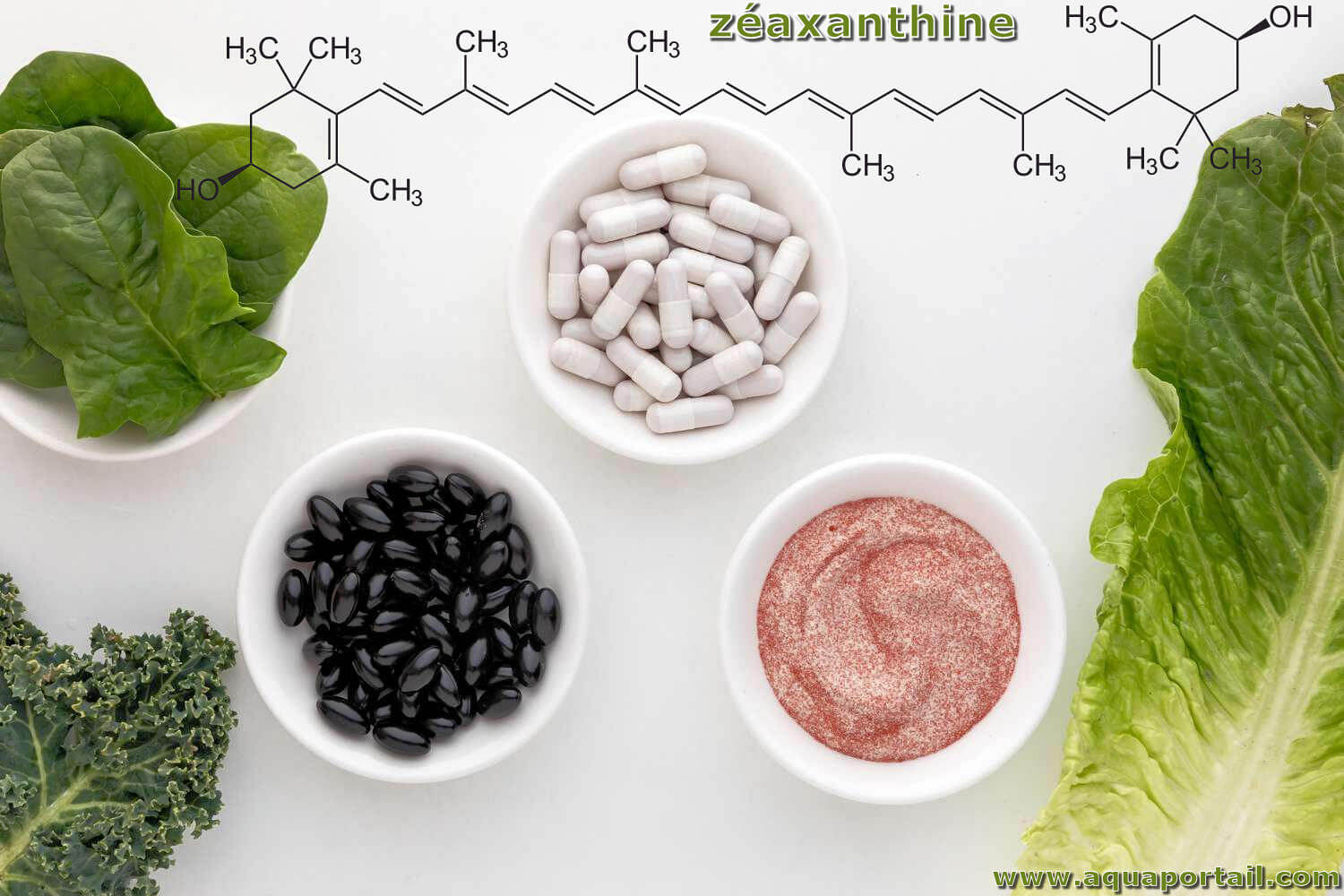
Zeaxanthin is a carotenoid pigment of certain algae such as red algae, cryptophytes, and others.
