Fucoxanthin
noun (n.)
Definition
Fucoxanthin is a yellow-to-brown carotenoid pigment found in certain algae, notably brown algae, absorbing wavelengths around 500–560 nm (blue-green) and serving as an important component of the light-harvesting antenna complex of these algae.Fucoxanthin belongs to the xanthophyll family. This xanthophyll, also called phycoxanthin, is likewise present in marine sponges, snails, and bird feathers.
Wakame seaweed and fucoxanthin:

Fucoxanthin is a dry extract from the marine wakame seaweed Undaria pinnatifida. It is widely used in human nutrition.
Explanations
This carotenoid of Phaeophyceae (brown algae) is synonymous with phycoxanthin. With the molecular formula C42H58O6, fucoxanthin is also readily found in chrysophyte algae. Phycoxanthin is a xanthophyll more commonly known as fucoxanthin.
Fucoxanthin is potentially used in anti-obesity products and in inducing apoptosis via pro-oxidant activity. It occurs in brown algae, which utilize this pigment to capture light at greater depths, as it harvests blue-green light efficiently.
Fucoxanthin belongs to the xanthophyll group and occurs alongside chlorophyll as an accessory pigment in the chloroplasts of brown algae, enabling them to carry out photosynthesis more efficiently because fucoxanthin absorbs primarily the blue-green region of the light spectrum (peaking around 510–525 nm), wavelengths that chlorophyll does not absorb effectively.
✅ In 2006, the press reported on the compound after a Japanese research group at Hokkaido University LED by Kazuo Miyashita announced findings from a study involving over 200 rats and mice. The study showed up to a 10% reduction in body fat in animals receiving the pure compound, fueling speculation about its use against obesity. According to the study, this effect relies on two distinct mechanisms of action. In obese animals, the substance stimulates protein expression of thermogenin (uncoupling protein 1, UCP1). The UCP1 gene plays a key role in regulating energy expenditure and dissipating chemical energy; when activated, excess energy is radiated as heat rather than stored as chemical energy. The compound's second effect is its ability to promote docosahexaenoic acid (DHA) synthesis in the liver.
Because brown seaweeds (such as Undaria pinnatifida) are major ingredients in Japanese miso soup and contain this pigment, weight-loss effects were also speculated for dietary seaweed. However, researchers refuted this hypothesis because fucoxanthin is bound to seaweed proteins and cannot be readily absorbed. Since nothing was known at the time regarding dosage or side effects of pure fucoxanthin in humans—and up to 10% fat loss did not constitute a cure for obesity—physicians expressed skepticism regarding the remedy.
Hexanoylfucoxanthin and butanoyloxyfucoxanthin
19'-hexanoylfucoxanthin is a carotenoid pigment derived from fucoxanthin, occurring particularly in certain Prymnesiophyceae algae.
High-performance thin-layer chromatography (HPTLC) and high-performance liquid chromatography (HPLC) have been used to separate fucoxanthin, 19'-hexanoyloxyfucoxanthin, and a 19'-butanoyloxyfucoxanthin-like pigment from algal cultures.
The three atypically pigmented dinoflagellates Gymnodinium galatheanum, Gyrodinium aureolum, and Gymnodinium breve possess plastids containing 19'-hexanoyloxyfucoxanthin as their principal carotenoid rather than peridinin, which characterizes most dinoflagellates. Analyses of plastid SSU rDNA and nuclear genomes of these dinoflagellate species indicate that they acquired their plastids via endosymbiosis of a haptophyte.
Dinoflagellate plastid sequences appear to have undergone rapid sequence evolution, with considerable divergence among the three species. Nevertheless, distance, parsimony, and maximum-likelihood phylogenetic analyses of plastid SSU rRNA gene sequences place all three species within the haptophyte clade.
Pavlova gyrans is the earliest-branching haptophyte and serves as the outgroup to a clade comprising the dinoflagellate sequences and other haptophytes. Haptophytes themselves are thought to possess secondary plastids; consequently, these dinoflagellates appear to harbor tertiary plastids. Molecular and morphological data divide the plastids into two groups, wherein G. aureolum and G. breve share similar plastid morphology, while G. galatheanum displays plastids with distinctive features.
Synonyms, antonyms
Spanish translation: fucoxantina
2 synonyms (similar meaning) for "fucoxanthin":
- butanoylfucoxanthin
- phycoxanthin
0 antonyms (opposite meaning).
Related words and expressions to FUCOXANTHIN are directly connected by general or specific meaning.
The word FUCOXANTHIN is listed on page 1 of words starting with F in the dictionary glossary.
Related to "fucoxanthin"
astaxanthin

Astaxanthin is a natural carotenoid pigment found in certain chlorophyceans such as the genera Dunaliella and Haematococcus, or extracted from krill, notably...
zeaxanthin
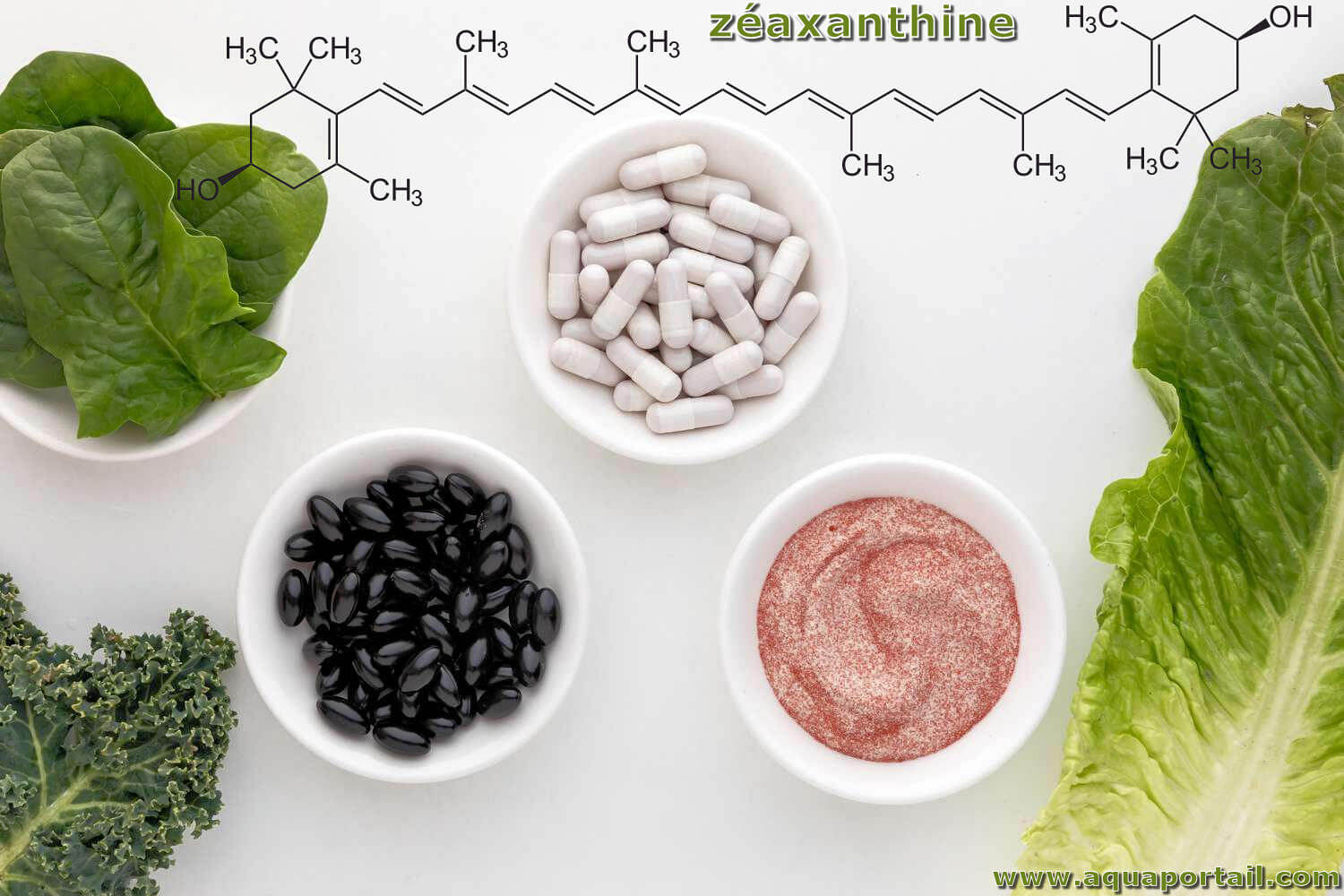
Zeaxanthin is a carotenoid pigment of certain algae such as red algae, cryptophytes, and others.
fabrication

Fabrication is the act or process of making, constructing, or inventing something. The manufacturing or fabrication process, whether artisanal or industrial...
famine

Famine is prolonged hunger with acute undernutrition or malnutrition of a population in a region (country).
