Vestigial
adjective (adj.)
Definition
Vestigial describes something of which only traces remain, reduced or rudimentary, little or not developed. A vestigial organ frequently characterizes an underdeveloped, often non-functional organ that is merely a remnant.Environmental changes have rendered these organs redundant and thus, over time, they lost their functionality. Vestigial organs demonstrate the evolutionary divergence of a species from a past activity.
A vestigial bone in a whale:
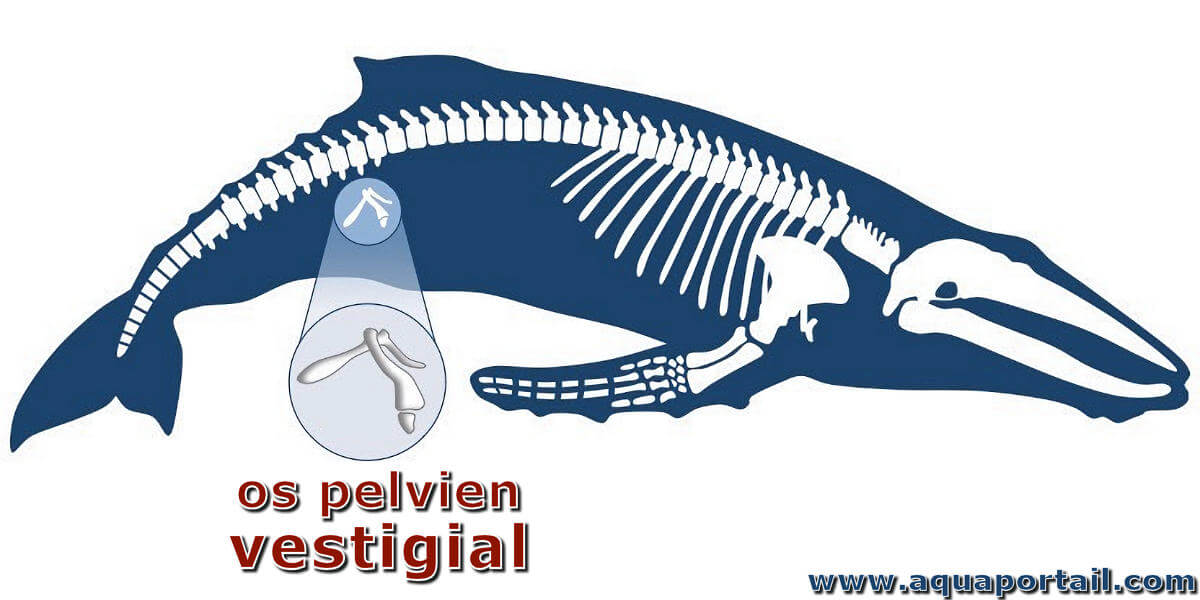
The vestigial bone structure shows the presence of reduced, non-functional remnants of organs that were once present in their ancestors. An example of a vestigial (residual) organ is the pelvic bone of whales; this bone suggests that the ancestors of whales were terrestrial mammals.
Explanations
Behavioral vestiges form a behavioral pattern shaped from remnants; behaviors are inherited. In evolutionary biology, a vestigial structure is an organ that has lost its original function. Figuratively, a vestige is what remains of something that no longer exists (a vestige or relic of an old belief).
Fleeting vestiges refer to remains too poorly preserved to be collected, often appearing as more or less distinct traces such as decomposed bones or antlers, combustion marks, ochre (hematite) stains... These remains are thus in a "fleeting" state.
A vestigial structure (or vestigiality) is the retention during evolution of genetically determined structures or attributes that have lost all or part of their ancestral function in a given species. Assessment of vestigiality must generally be based on comparison with homologous features in related species.
The emergence of traces, like archaeological traces, occurs through normal evolutionary processes, typically due to the loss of function of a trait that is no longer subject to positive selection pressures when it loses value in a changing environment. The trait may be strongly selected against when its function becomes definitively harmful, but if the absence of the trait provides no advantage and its presence poses no disadvantage, the trait may not be eliminated by natural selection and may persist across species. Typical examples of both types exist in the loss of flight ability in island-dwelling species.
Residual traits can take various forms; for example, they may be behavioral patterns, anatomical structures, or biochemical processes. However, like most other physical traits, residual functional traits in a given species may appear, develop, and persist or disappear successively at various stages of the organism's life cycle, ranging from early embryonic development to adulthood (delayed).
⭐ Vestigial structures (such as the coccyx) are often called vestigial organs, although many of them are not truly organs. These vestigial structures are generally degenerated, stunted, or rudimentary and tend to be much more variable than non-vestigial homologous parts. Although structures commonly regarded as "residual" may have lost all or part of the functional roles they played in ancestral organisms, these structures may retain minor functions or have adapted to new roles in extant populations.
Synonyms, antonyms
Spanish translation: vestigial
3 synonyms (similar meaning) for "vestigial":
- degenerated
- residual
- rudimentary
0 antonyms (opposite meaning).
Related words and expressions to VESTIGIAL are directly connected by general or specific meaning.
The word VESTIGIAL is listed on page 1 of words starting with V in the dictionary glossary.
Related to "vestigial"
vestibule
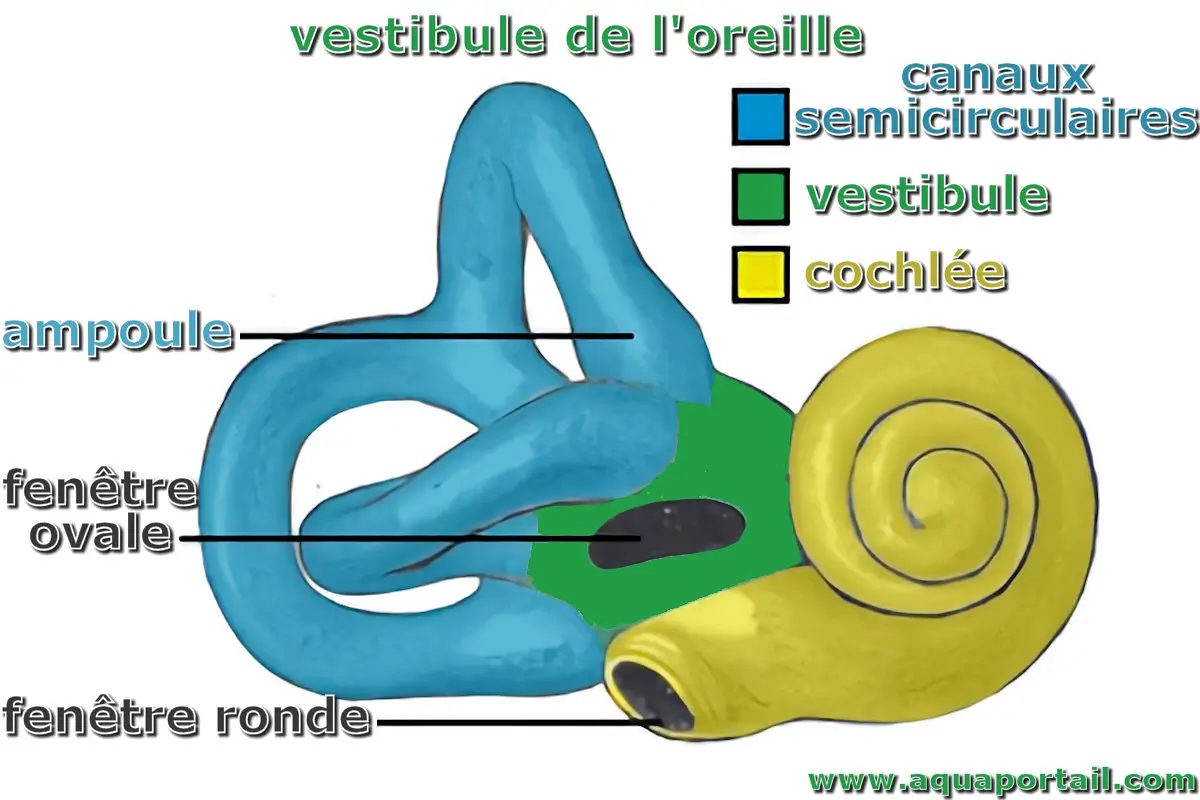
A vestibule is a cavity or channel opening into another. It serves as an entrance and passage between an exterior and an interior.
vacant

Vacant describes what is free, unoccupied, or available (referring to a place, property, job, or office).
vacation

A vacation is a non-working period, scheduled leave during which activity (such as that of a store or a school) is suspended.
vaccinal

Vaccinal pertains to vaccines or vaccination. E. g.: the inoculation of a vaccine is a vaccinal injection for the purpose of immunization against a disease.
