Anhydrous
noun and adjective (n. / adj.)
Definition
An anhydrous substance, particularly a crystalline compound, contains no water, in contrast to a hydrate. Anhydrous is used in chemistry and geology to specify that a compound contains no water molecules (H2O). Anhydrous substances exist in solid, liquid, and gaseous forms.
Silica gel is an anhydrous desiccant:

Silica gel is one of the most commonly used anhydrous desiccants. An anhydrous compound has no water in its structure; once water is removed from a hydrate, it becomes anhydrous.
Explanations and anhydrous salts
Anhydrous salts are compounds that have no water molecules bound to the salt molecules. The term is primarily used when water of crystallization is removed from hydrated salts; consequently, anhydrous refers to a dry salt.
Preparing a compound completely free of water is not easy, so handling moisture-sensitive compounds often requires specialized equipment such as a desiccator. Water molecules are removed from the compound by dehydration or heating at high temperature.
An anhydrous compound prepared from a hydrate is readily soluble in water and, when dissolved, exhibits a color similar to that of the original hydrate, even if it changed color during the transition from hydrate to anhydrous form.
For example, table salt is anhydrous sodium chloride (NaCl). Gaseous HCl is anhydrous, distinguishing it from hydrochloric acid, a 37% w/w aqueous solution of HCl. See also inorganic salt.
Desiccant anhydrates remove water and are used as drying agents (such as silica gel or absorbent paper). Anhydrates can also retain moisture in foods (and other products such as tobacco) when acting as humectants.
In organic chemistry
In organic chemistry, the prefix anhydrous indicates that no water remains in a solvent. Although water is poorly soluble in many organic solvents, it is certainly not insoluble; for example, hexane can hold up to 1% water without forming visible droplets. Another example involves ethers, such as THF or diethyl ether, which must be strictly anhydrous for certain reactions (such as the Grignard reaction).
Many organometallic compounds, such as n-butyllithium and phenylmagnesium bromide, are highly sensitive to hydrolysis.
Calcium chloride or magnesium sulfate is often used to dry an organic solvent, while lithium aluminum hydride is employed to remove every trace of water.
For instance, anhydrous ammonia is a fertilizer widely used on farms worldwide due to its ease of application and availability, serving primarily as a nitrogen fertilizer source that supports plant growth and helps control mold.
In inorganic chemistry
In inorganic chemistry, the prefix anhydrous in a chemical name indicates the absence of water of crystallization in the substance. This designation is mainly applied to hygroscopic substances. Examples include anhydrous copper(II) sulfate (CuSO4) and anhydrous calcium sulfate (CaSO4), which serve as desiccants.
In geology
In mineralogy, an anhydrous mineral or crystal is one that contains no water of crystallization (those that do are hydrates).
Difference between anhydrous and hydrate
The main difference between anhydrous and hydrated compounds is the absence or presence of water molecules: an anhydrous compound incorporates no water molecules, whereas a hydrated compound contains water.
Synonyms, antonyms
Spanish translation: anhidro
1 synonym (similar meaning) for "anhydrous":
1 antonym (opposite meaning):
Related words and expressions to ANHYDROUS are directly connected by general or specific meaning.
The word ANHYDROUS is listed on page 1 of words starting with A in the dictionary glossary.
Related to "anhydrous"
anhydrogalactose
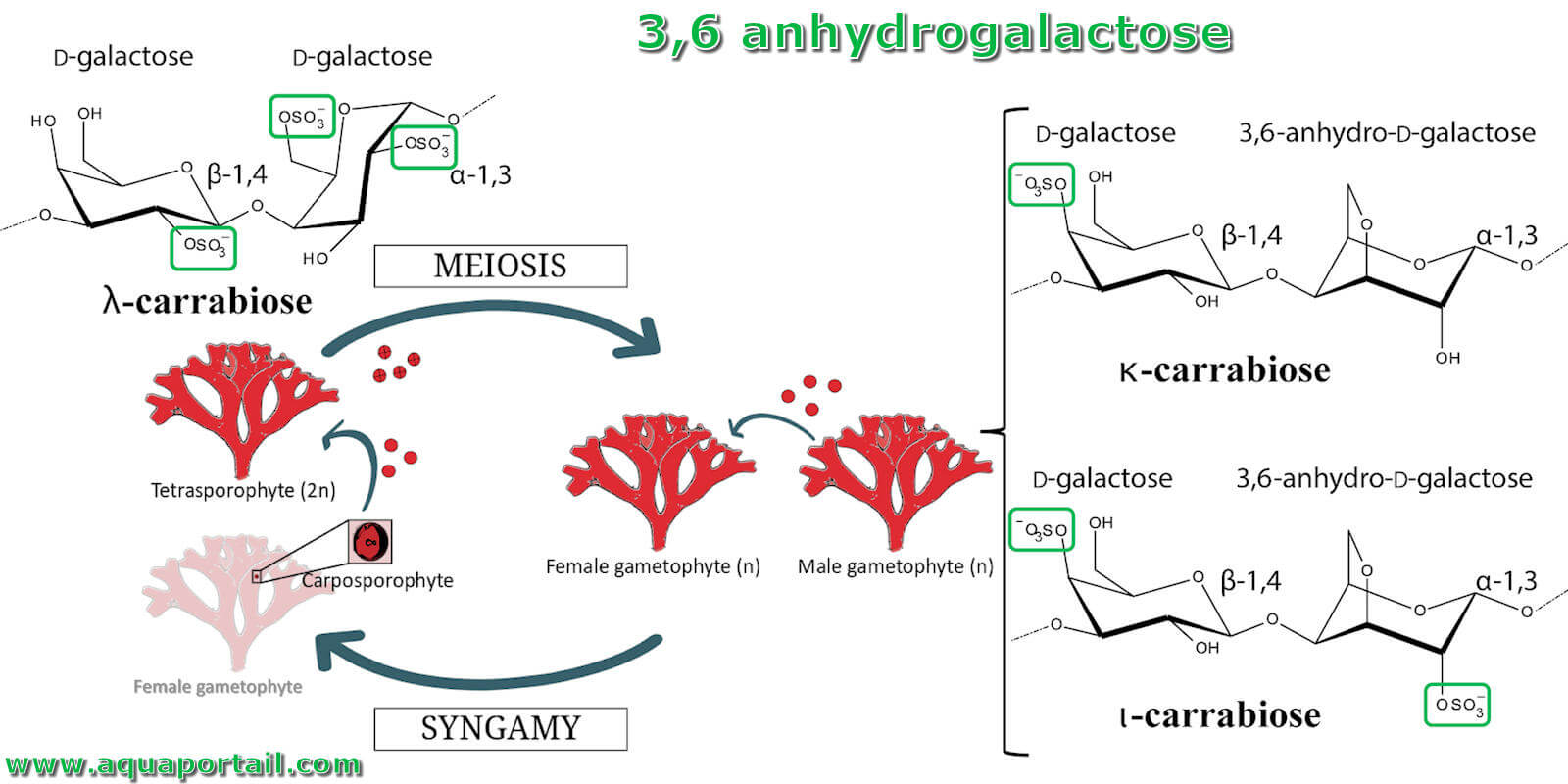
An anhydrogalactose (AHG) is a galactose that has lost a water molecule. 3,6-Anhydrogalactose, contained notably in agars, results from the elimination...
carbonic anhydrase
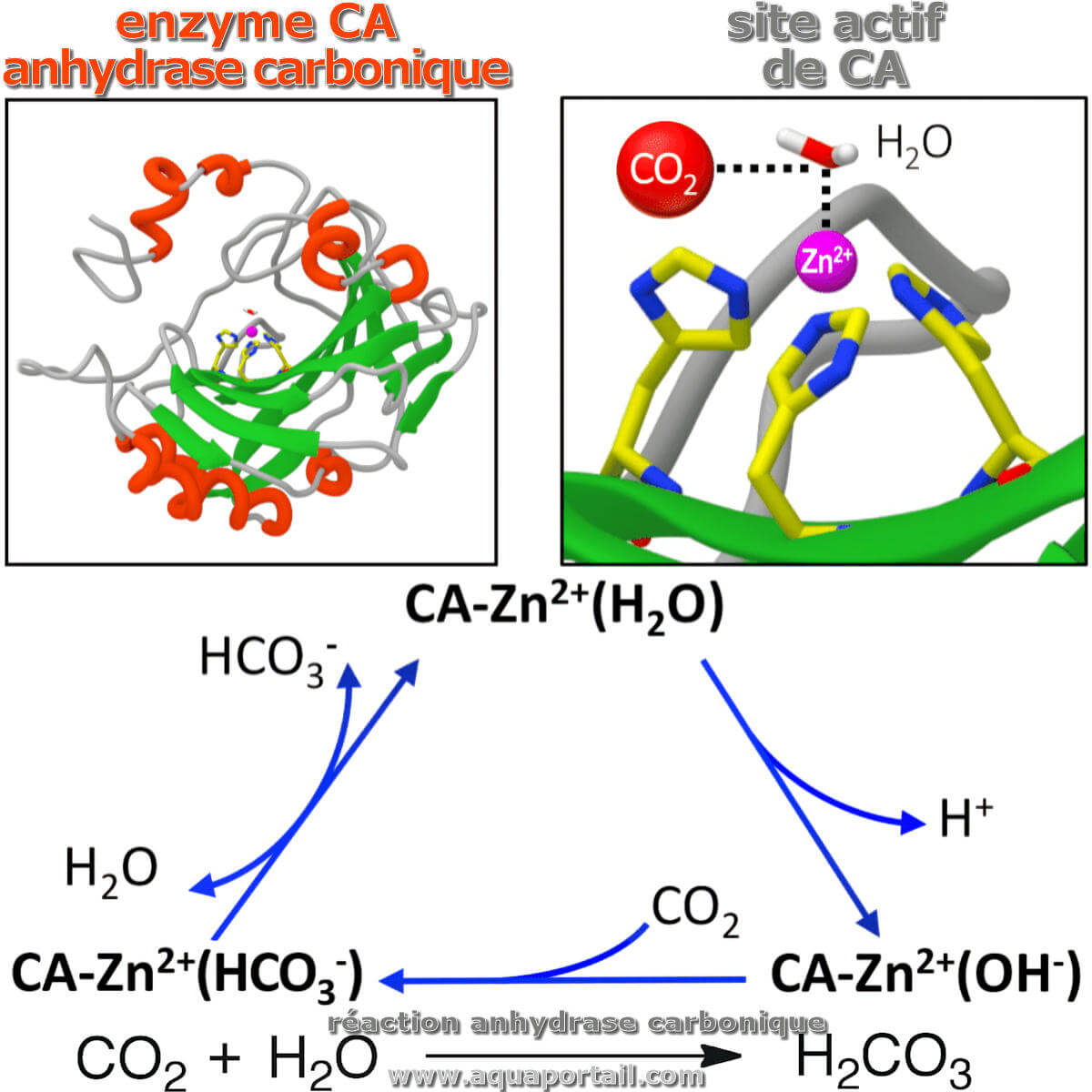
Carbonic anhydrase (CA) catalyzes the reversible hydration and dehydration reactions of CO₂/H₂CO₃.
carbohydrate

A carbohydrate is an organic compound, a biomolecule composed of carbon, hydrogen, and oxygen.
abiotic

In biology and ecology, abiotic refers to what is not biotic, that is, not part of living beings.
