Primitive soup
noun phrase (n. phr.)
Definition
The primitive soup (primordial soup) refers to the liquid environment in which life is hypothesized to have originated. This prebiotic medium consisted of a warm aqueous solution containing organic molecules in which the first living cells are thought to have formed. It is also called prebiotic broth or primordial soup.
The theory of the primitive soup—known as prebiotic broth, primordial soup, or primitive broth—is attributed to J.B.S. Haldane. It describes the prolonged accumulation of prebiotic organic molecules (prior to the existence of life itself), contributing to a warm, organic-rich primitive soup within which life originated via proteinoids assembled into microspheres (protocells).
A prebiotic primitive soup with proteinoids:
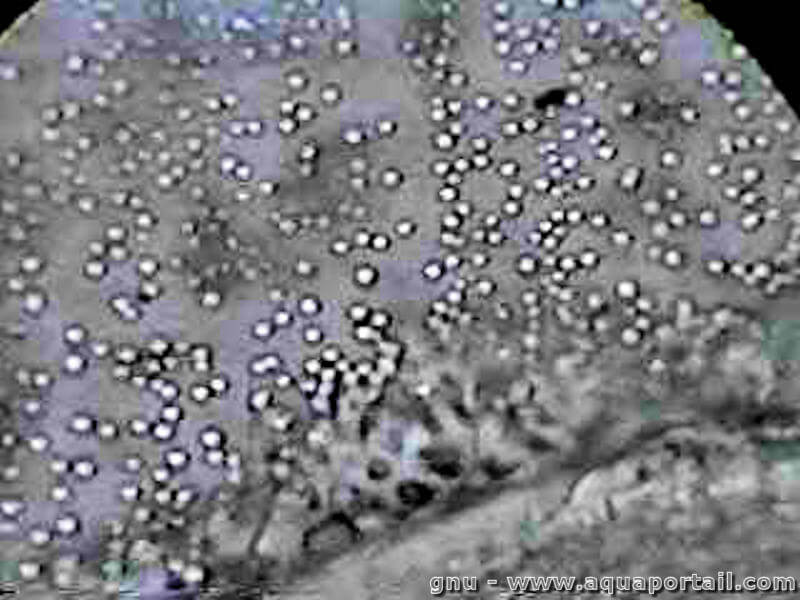
Amino acids forming proteinoids make up the prebiotic primitive soup.
Explanations
In the primitive soup theory, 5 stages are required to transition from inert matter to organic matter produced by life. The 3 primary biological stages are assimilation, growth, and reproduction.
Thus, the formation of a planet possessing elementary molecules is followed by the presence of biological building blocks (amino acids, nitrogen and nitrogenous bases, sugars, etc.), the transformation of these elements into proteins and nucleic acids (RNA, DNA), the isolation of these components from the surrounding environment by a barrier (membrane), and finally the establishment of a reproductive system enabling this first cell to pass its traits to its offspring.
⭐ The prebiotic soup theory suggests that life began in a pond or ocean following the combination of atmospheric chemicals and some form of energy to produce amino acids, the building blocks of proteins, which subsequently evolved into all living species.
⭐ The primordial soup theory states that life began in a warm pond or ocean from a combination of chemicals forming amino acids, which then yielded proteins. This is thought to have occurred at least 3.8 to 3.55 billion years ago, contributing to cell theory and biogenesis.
Russian biochemist A.I. Oparin and British geneticist J.B.S. Haldane were the first to formulate this concept, developing the theory independently in the 1920s.
In this model, the building blocks of life originated from simple molecules formed in the oxygen-free atmosphere, energized by lightning and washed down by rain to create the "biological soup". The earliest organisms would have been simple heterotrophs surviving by consuming other organic compounds for energy prior to photosynthesis, before evolving autotrophy; however, modern evidence suggests that the earliest organisms may already have been autotrophic.
✅ Chemist Stanley Miller and physicist Harold Urey conducted a famous experiment in 1953 to test this hypothesis. They mixed gases thought to be present on the early Earth:
- methane CH4
- ammonia NH3
- water H2O
- hydrogen H2
- no free oxygen.
They then applied electrical sparks to the mixture to simulate lightning. The products included amino acids, the building blocks of proteins. It was subsequently discovered that other energy sources can also excite these gases and generate amino acids:
This theory emphasizes metabolism through cooperative molecular networks and how they capture and utilize energy and molecules.
🚩 In an experiment by Sidney Fox, heating dry amino acids drove off water as vapor and produced peptide chains; however, these were proteinoids, quite distinct from true biological proteins.
Synonyms, antonyms
Spanish translation: caldo primitivo
4 synonyms (similar meaning) for "primitive soup":
- prebiotic soup
- primitive broth
- primordial broth
- primordial soup
0 antonyms (opposite meaning).
Related words and expressions to PRIMITIVE SOUP are directly connected by general or specific meaning.
The expression PRIMITIVE SOUP is listed on page 1 of words starting with P in the dictionary glossary.
Related to "primitive soup"
P680-P700
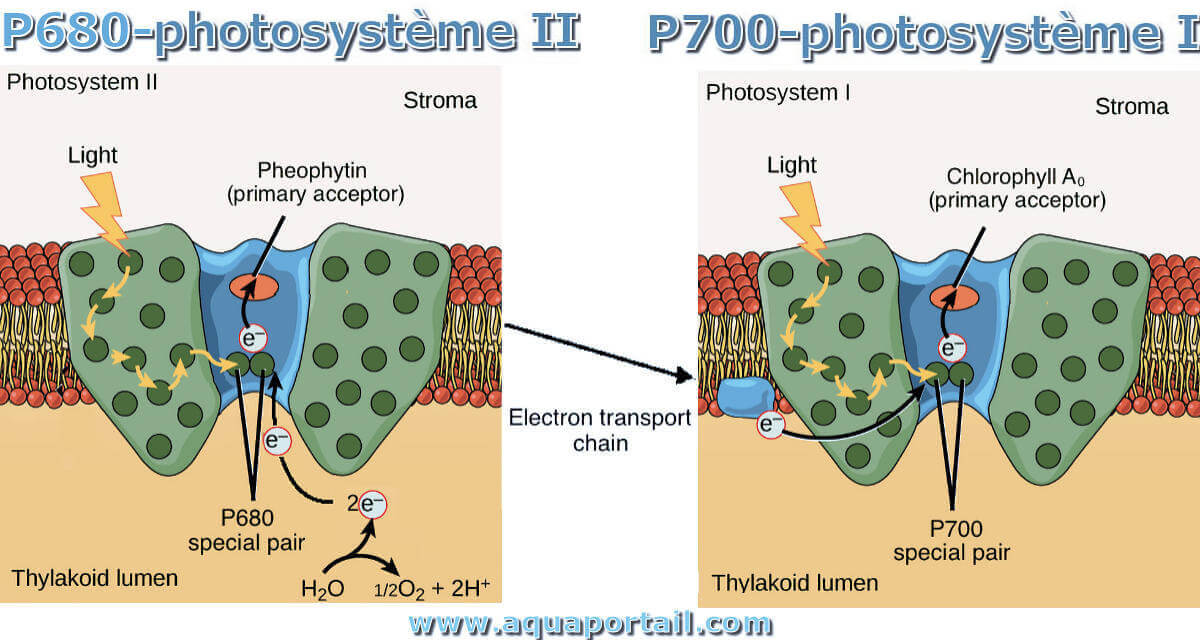
P680-P700 is an association of chlorophyll a molecules absorbing at 680 nm and 700 nm, respectively, possessing particular photochemical properties.
paedomorphosis

Paedomorphosis (juvenilization) is a phylogenetic change involving the retention of juvenile or even larval traits into a later (adult) stage.
painkiller

A painkiller, or analgesic, is a pain reliever, a medication used to soothe or eliminate pain, whether headaches, muscle aches, arthritis, etc.
Palaeoptera

Palaeoptera, or the infraclass Palaeoptera, encompasses ancient winged insects that lack the ability to fold their wings flat over the top of their abdomen.
Simple summary
The "primitive soup", often referred to as the "primordial soup", is a theoretical model aimed at explaining the origins of life on Earth. According to this hypothesis, the atmosphere and oceans of early Earth contained a mixture of organic compounds, such as amino acids and nucleotides. Under the influence of various energy sources, such as ultraviolet radiation and electrical discharges from lightning, these compounds underwent chemical reactions leading to the formation of more complex molecules. Over time, this molecular complexity increased, ultimately giving rise to primitive life forms. This concept is a foundational idea in abiogenesis, the discipline studying how biological life could arise from non-living matter.
