Pond
noun (n.)
Definition
A pond is a small, shallow (less than 2 m / 6.6 ft deep) body of standing water with no outlet, formed either naturally or artificially. It is distinguished from larger lakes or drainage ponds by its smaller size and the absence of a continuous inflowing water source, being fed instead by precipitation, surface runoff, or groundwater. Unlike a larger pond with outflow, a small pond has no outlet.
A natural pond:
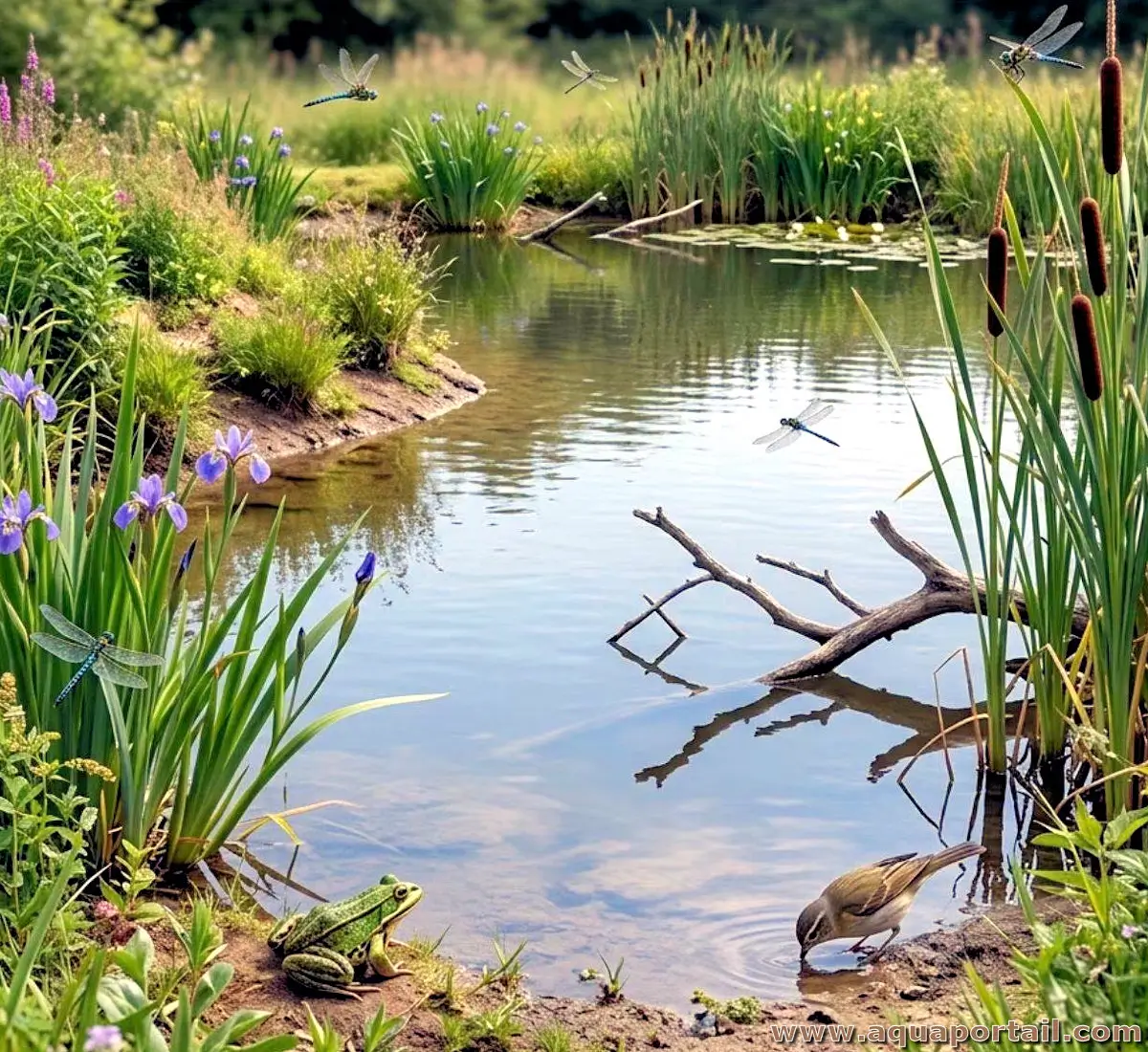
A pond is much more than a simple watering hole; it is a microcosm teeming with life that nurtures local biodiversity while offering scenic value when landscaped. Ponds occur naturally in marshes and peat bogs, and are frequently found in rural areas, forests, and meadows, as well as in gardens and landscaped parks.
Explanations
The natural formation of a pond can result from converging runoff waters or groundwater surfacing at ground level. Artificial ponds, on the other hand, are often created for various purposes, including irrigation reservoirs, stormwater retention basins, or ecological and educational projects, and they are also frequently used to enhance green spaces.
One of the defining aspects of a pond is its rich and varied biodiversity. Despite their small dimensions, ponds support a wide diversity of aquatic organisms such as frogs, newts, and various aquatic insects, alongside flora adapted to wetland environments. aquatic plants oxygenate and filter the water.
Ponds are fragile ecosystems sensitive to environmental changes. They can suffer from pollution, desiccation during prolonged droughts, or invasion by non-native plant or animal species that disrupt ecological balance. Conservation and sustainable management of ponds are therefore crucial to ensuring their longevity.
A small landscaped and decorative pond:
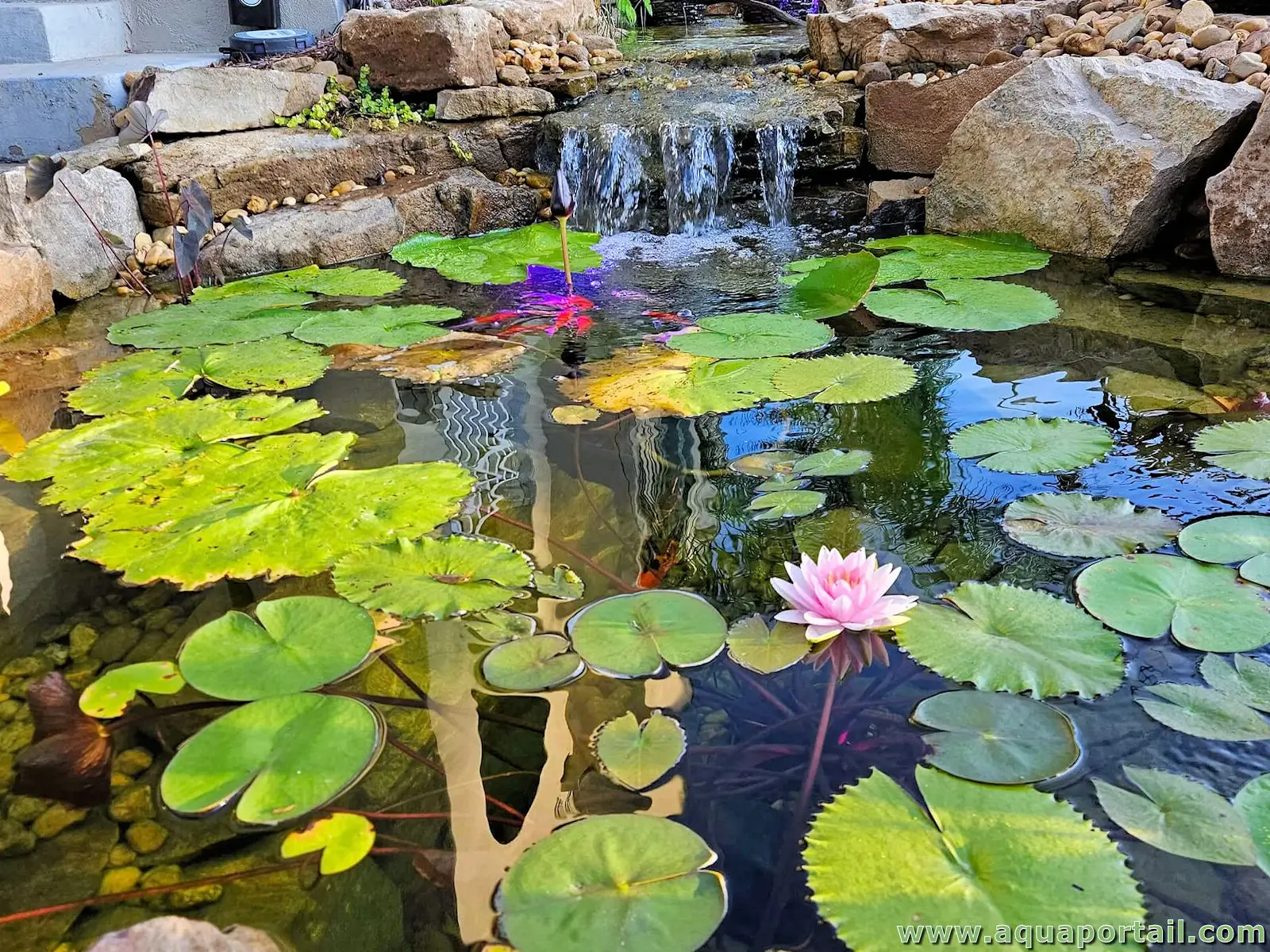
A pond can serve as a habitat for various plants and animal species, and be used for recreational activities, water storage, or aesthetic purposes. It may resemble a garden pond.
Ponds allow direct observation of species interactions as well as natural aquatic life cycles.
Finally, ponds are important in agricultural and rural landscapes as watering holes for livestock and by contributing to local climate regulation through water evaporation.
🚩 In English, the single term "pond" encompasses both a small outlet-free pool (mare) and a larger pond (étang).
Synonyms, antonyms
Spanish translation: charca
2 synonyms (similar meaning) for "pond":
0 antonyms (opposite meaning).
Related words and expressions to POND are directly connected by general or specific meaning.
The word POND is listed on page 1 of words starting with P in the dictionary glossary.
Related to "pond"
salt evaporation pond
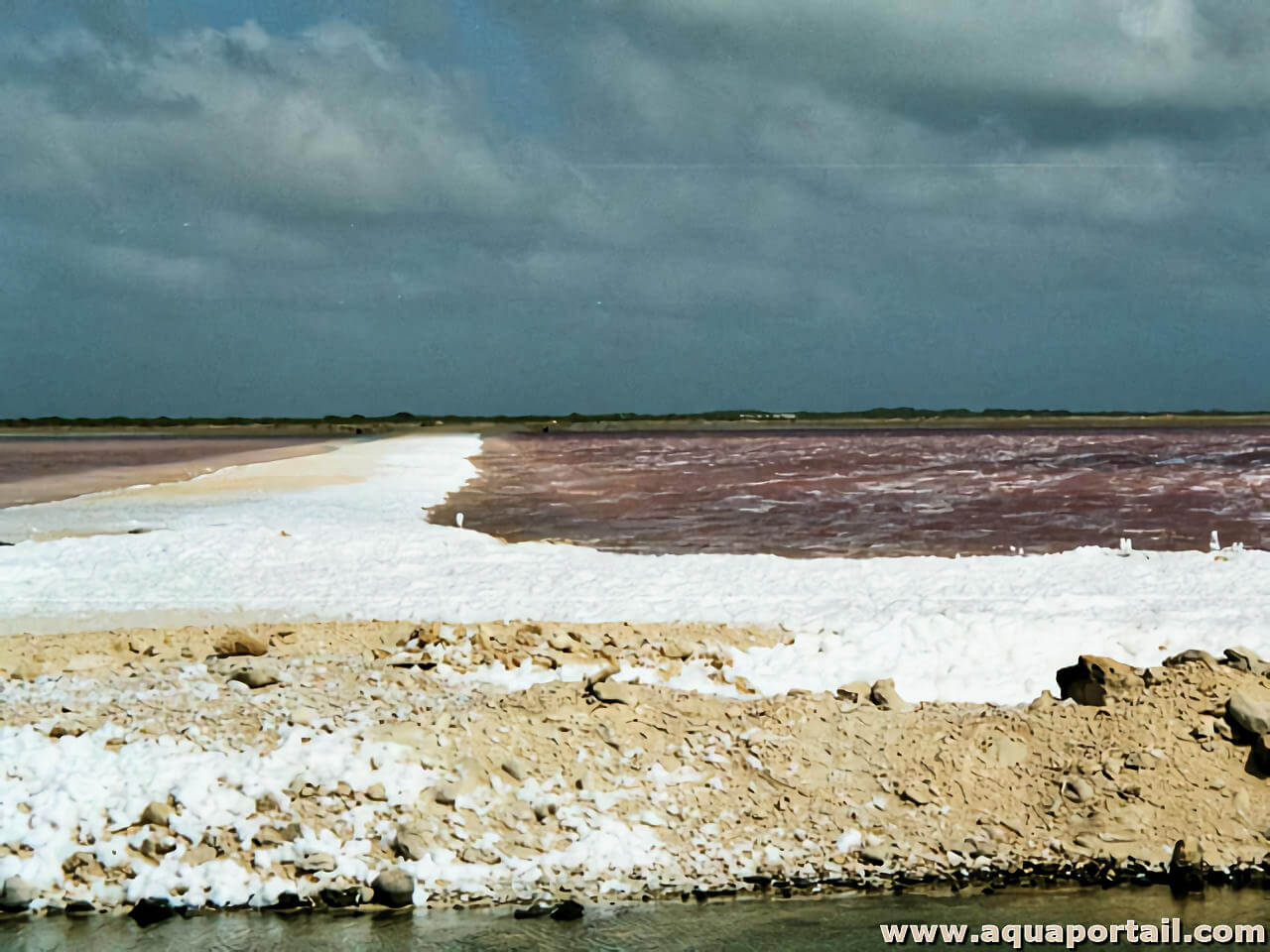
A salt evaporation pond (salina) is an artificial site for producing salt by evaporating seawater in a salt marsh, which may be ancient and no longer active.
P680-P700
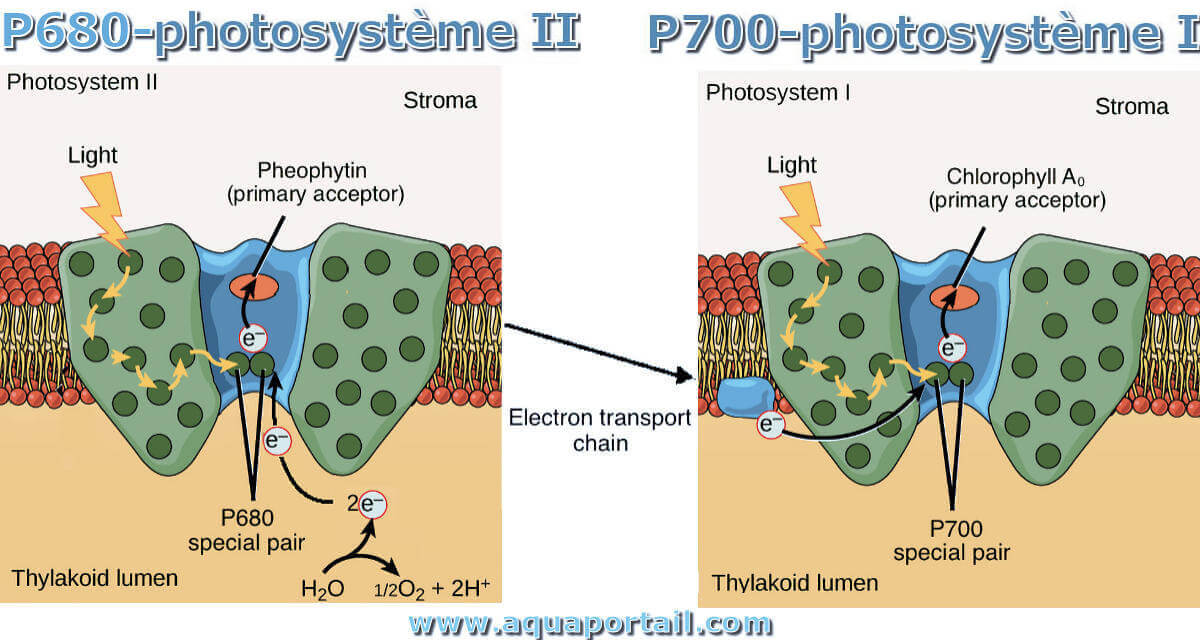
P680-P700 is an association of chlorophyll a molecules absorbing at 680 nm and 700 nm, respectively, possessing particular photochemical properties.
paedomorphosis

Paedomorphosis (juvenilization) is a phylogenetic change involving the retention of juvenile or even larval traits into a later (adult) stage.
painkiller
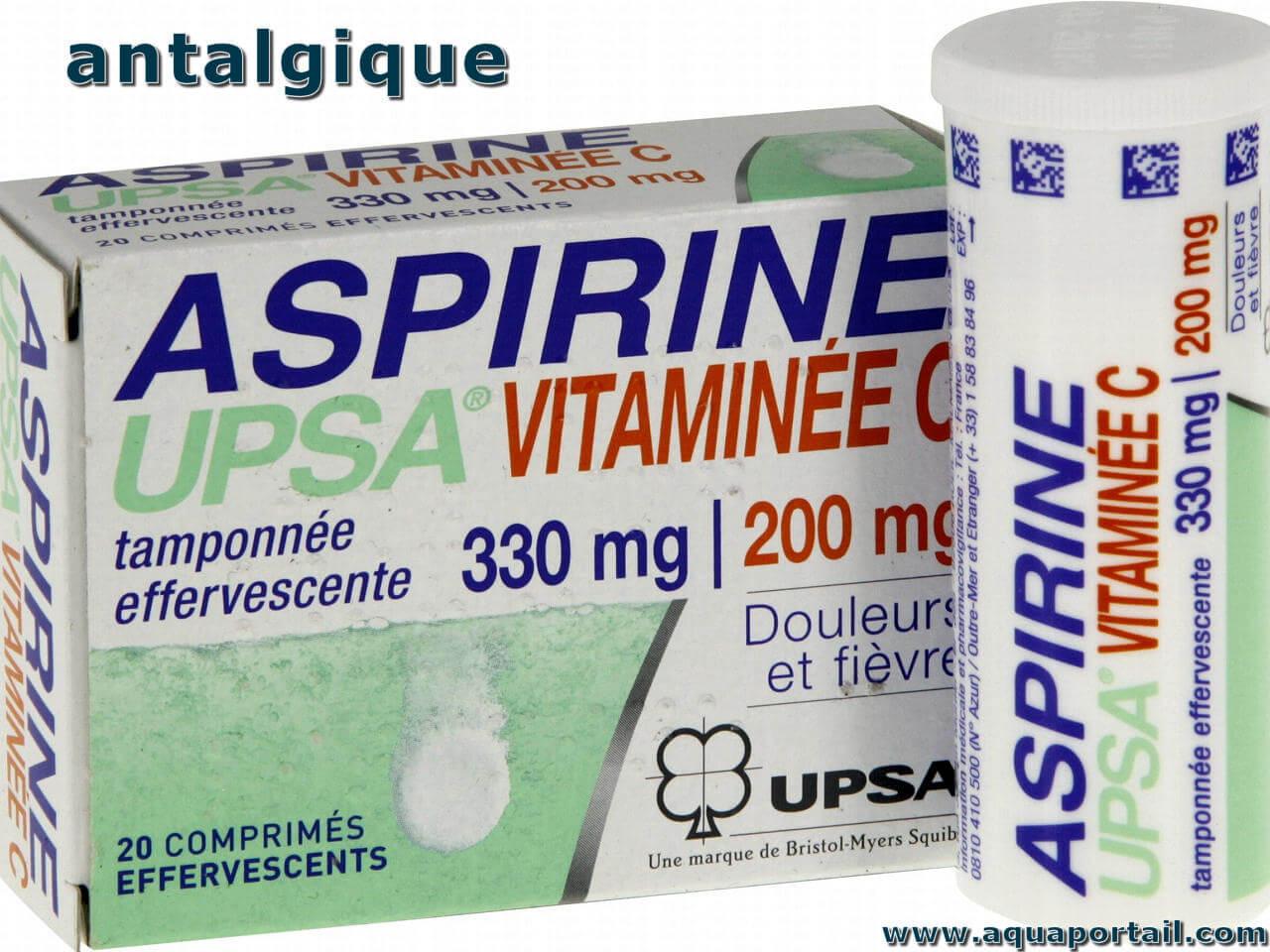
A painkiller, or analgesic, is a pain reliever, a medication used to soothe or eliminate pain, whether headaches, muscle aches, arthritis, etc.
Simple summary
A pond is a small, shallow body of standing water without an outlet, with a limited surface area and a depth of less than 2 meters (6.6 ft). It forms either naturally or artificially and can support a variety of aquatic and terrestrial life forms. Many natural ponds undergo seasonal drying during prolonged droughts.
