Thermophile
noun and adjective (n. / adj.)
Definition
A thermophile thrives at high temperatures, loving heat and growing at temperatures between 40 and 70 °C (104 and 158 °F). The optimal temperature is around 55 °C (131 °F). A thermophile contrasts with a thermophobe and a psychrophile.
In plants, a thermophilic plant (thermophyte) favors warm sites (above 30 °C / 86 °F), as opposed to psychrophytes.
Habitat of thermophilic and hyperthermophilic bacteria:

The colors are due to microbial mats formed by thermophiles and hyperthermophiles in a lake in Yellowstone National Park (United States).
Explanations
Thermophiles are "heat-loving" organisms with optimal growth between 50 and 60 °C (122 and 140 °F). Many thermophiles cannot grow below 45 °C (113 °F). Some thermophiles form extremely heat-resistant endospores. Most thermophiles, and all hyperthermophiles, are microorganisms.
Examples of thermophiles include Thermus aquaticus and Geobacillus spp.. Thermophiles are widely distributed in hot springs, geothermal soils, sunlit soils, and artificial environments such as garden compost piles where microbes break down organic waste.
Growth of psychrophiles, mesophiles, thermophiles, and hyperthermophiles as a function of temperature:

Growth rate is compared among psychrophiles, mesophiles, thermophiles, and hyperthermophiles as a function of temperature.
By definition, hygrothermophilic describes what lives in warm, humid environments. Hydrothermophilic describes what develops in warm waters, loving and thriving in heat.
See also extreme thermophile, hyperthermophile.
✅ Thermophilic anaerobic spoilage is an alteration of organisms caused by the growth of thermophilic bacteria. This phenomenon mainly applies to canned foods.
Survival strategy of thermophiles
Thermophiles require specialized thermostable enzymes that resist denaturation and unfolding. Unlike their psychrophilic counterparts, the enzymes/proteins of thermophiles are more tightly folded, making them less flexible with a less accessible catalytic site. Enzymes from these organisms are also of interest for biotechnology. It was the discovery of Thermus aquaticus that LED biochemist Kary Mullis to invent the revolutionary molecular technique of polymerase chain reaction (PCR), using the organism's heat-active DNA polymerase (Taq polymerase).
Structural proteins (e.g., ribosomal proteins), transport proteins (permeases), and enzymes of thermophiles and hyperthermophiles are highly heat-stable compared to their mesophilic counterparts. The proteins are modified in several ways, including dehydration and slight changes in their primary structure, which accounts for their thermal stability.
To maintain plasma membrane stability and functionality at higher temperatures, the membrane lipids of thermophiles contain a high proportion of saturated fatty acids. Due to their linear structures, saturated lipids pack more tightly, yielding a more organized membrane and increasing its melting temperature.
Thermophiles express protective chaperone proteins to assist in protein folding and help maintain their native structure. Additionally, the ether linkage of thermophilic and hyperthermophilic archaea is more thermostable than the ester linkage of phospholipids.
Applications in industry and agriculture
Thermophiles have applications in industry and agriculture. In industrial settings, archaeal lipases are used in both dairy products (e.g., cheese production) and detergent applications. Thermophilic and psychrophilic enzymes meet a variety of different needs, with the latter being useful for washing laundry at lower temperatures, an energy-saving method. Archaeal proteases are also used for baking, brewing, meat tenderizing, papermaking, and in contact lens cleaning solutions.
Haloarchaea (as well as halophilic bacteria) have long been used in fermentation processes involved in producing fermented foods, such as Thai fish sauce (Nam Pla). Their enzymes possess biodegradation capabilities as well as synthetic potential. Useful thermophilic enzymes include amylases and beta-glucosidases for use as flavoring agents, in baking, and in brewing, while trehaloses can be used in food preparation and as preservatives.
Applications of haloarchaeal photopigments, such as bacteriorhodopsin in the purple membrane, include holography and light- and color-sensitive photoelectric devices. If predictions prove accurate, this may enable the development of optical storage devices capable of storing 50 TB of data on a single disc in the future.
Synonyms, antonyms
Spanish translation: termófilo
2 synonyms (similar meaning) for "thermophile":
- hygrothermophile
- hyperthermophile
2 antonyms (opposite meaning):
Related words and expressions to THERMOPHILE are directly connected by general or specific meaning.
The word THERMOPHILE is listed on page 1 of words starting with T in the dictionary glossary.
Related to "thermophile"
thermocline
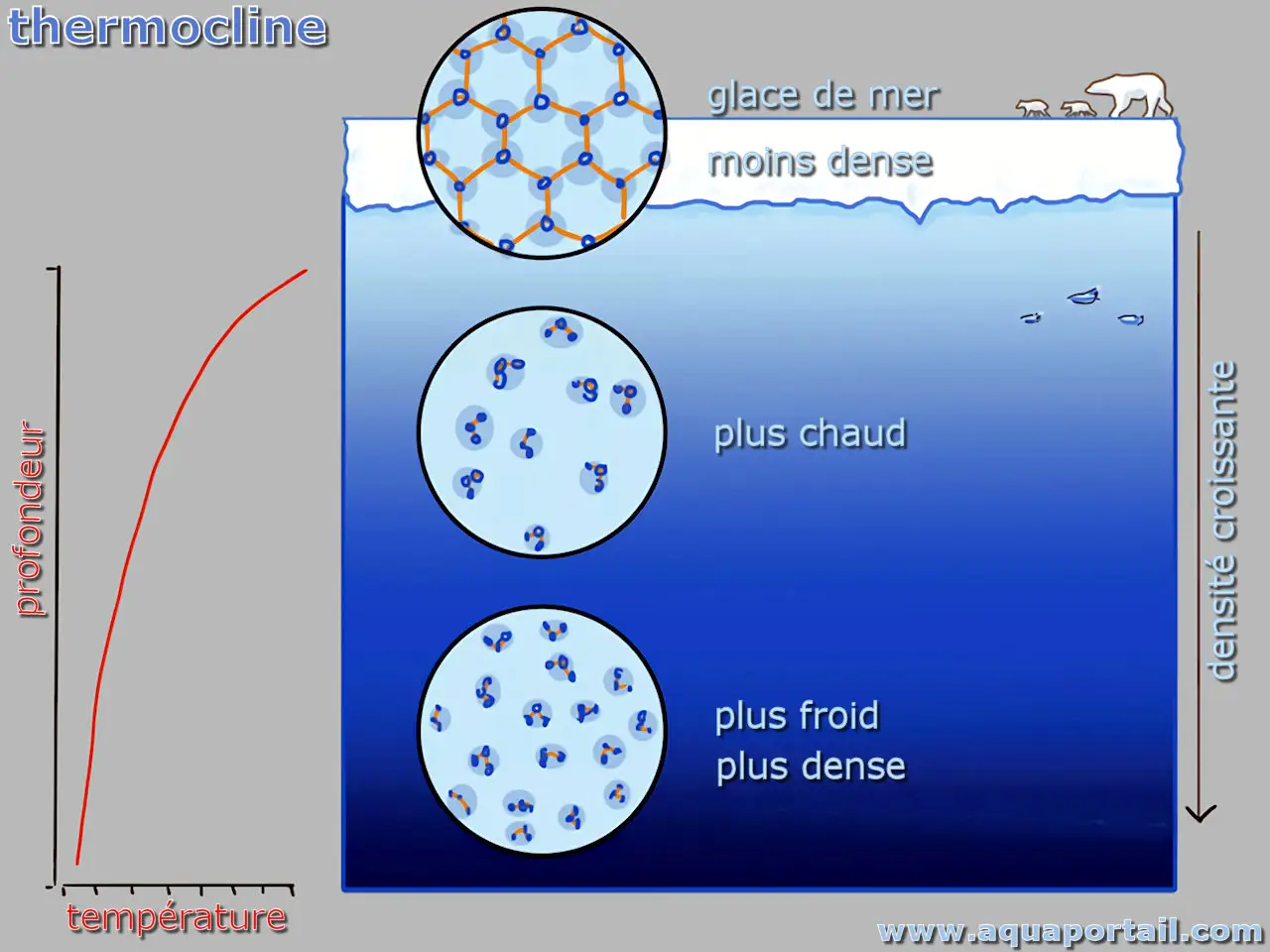
A thermocline distinguishes an aquatic water layer, a cline whose temperature decreases rapidly with depth, altitude, or height.
thermal water

Thermal water is mineral water that naturally has an elevated temperature at its source, such as moderately warm groundwater (up to 50°C / 122°F).
thermie

The thermie (symbol th) is a heat energy unit equivalent to 1 million calories. One thermie equals 106 calories, 1 Mcal, 1,000 kcal, 4. 1868 MJ, or 3,968.
tagma

A tagma is a group of fused segments formed by series of metameres differentiated from the rest of an arthropod's body.
