Neurogenesis
noun (n.)
Definition
Neurogenesis is the process by which new neurons are formed in the brain. It is crucial during embryonic development. However, neurogenesis also continues in certain regions of the brain after birth and throughout life.Adult neurogenesis:

Adult neurogenesis in the hippocampus: stem cells (red) give rise to rapidly proliferating progenitor cells (orange-yellow) that eventually exit the cell cycle (green) and mature into newborn neurons (blue). They integrate into the surrounding granule cell network (gray).
Summary
The mature brain has many specialized functional domains and neurons that differ in their structure and connections. The hippocampus, for example, which is a brain region playing an important role in memory and spatial navigation, alone contains at least 27 different types of neurons.
The incredible diversity of neurons in the brain results from regulated neurogenesis during embryonic development. During the process, neural stem cells differentiate, meaning they become one of many specialized cell types, at specific times and in specific regions of the brain.
Explanations
Development of the mammalian central nervous system (CNS) is a spatially and temporally regulated process that progresses from a small number of cells that proliferate, acquire regional identities, and give rise to different cell types. These cells have been classified as neural stem cells (NSCs) and have the ability to produce identical NSC progeny through symmetric cell division (self-renewal) and to differentiate into specialized brain cell types such as neurons, astrocytes, and oligodendrocytes. Under physiological conditions, adult neurogenesis is confined to neurogenic niches located in two different regions of the brain: the subventricular zone (SVZ) of the lateral ventricle, where new neurons are generated and then migrate to the olfactory bulb (OB), and the subgranular zone (SGZ) of the dentate gyrus (DG) of the hippocampus.
Although the process of neurogenesis is complex and highly regulated, it can be divided into six distinct stages. Stage 1 occurs 1 to 3 days after birth and is called the proliferation phase; during this time, neural progenitor cells (NPCs) are capable of multipotent proliferation and differentiation but are unable to self-renew. Stages 2 to 4 occur about 1 week after birth and are collectively called the differentiation phase; during this time, neural progenitors exit the cell cycle and become committed to the neuronal lineage. After commitment, immature neurons enter stage 5, known as the migration phase, to reach their final destination. This event occurs between 2 and 3 weeks after birth. Post-mitotic neurons begin extending their axonal projections and dendritic growth commences. Finally, stage 6 of adult neurogenesis occurs about 4 weeks after birth and corresponds to synaptic integration, where newly generated neurons establish their synaptic contacts within preexisting circuits. Overall, it takes about 2 to 4 months for adult-born neurons, indistinguishable from mature neurons, to fully integrate with surrounding cells and into hippocampal circuits.
Multiple lines of evidence indicate that extrinsic signals and intrinsic pathways are required for regulating this developmental process. Among intrinsic pathways, multilayered regulatory networks display connections between several complex transcription factors, epigenetic control, non-coding RNAs, signaling, and metabolic pathways.
Understanding how neuronal differentiation is regulated in adulthood is crucial for understanding the pathogenesis of several disorders affecting the CNS, including neurodegenerative diseases, psychiatric disorders, and neurodevelopmental disorders.
Adult neurogenesis
Adult neurogenesis is a multistep process by which neurons are generated and integrated into existing neural circuits. In the adult brain, neurogenesis is mainly localized in two specialized niches, the subgranular zone (SGZ) of the dentate gyrus and the subventricular zone (SVZ) adjacent to the lateral ventricles.
Neurogenesis plays a fundamental role in the postnatal brain, where it is required for neuronal plasticity. Moreover, disruption of adult neurogenesis contributes to several human diseases, including cognitive disorders and neurodegenerative diseases. The interplay between extrinsic and intrinsic factors is fundamental in regulating neurogenesis.
The main stages of adult neurogenesis:

Schematic representation of the main stages of neurogenesis and the epigenetic machinery involved in regulating neurogenesis along with synaptogenesis. Expression profile of the main epigenetic regulators for which a function in adult neurogenesis has been described or proposed. Most regulators play an important role in self-renewal, proliferation, and fate specification during neurogenesis.
Over recent decades, several studies on intrinsic pathways, including transcription factors, have highlighted their fundamental role in regulating each stage of neurogenesis. However, transcriptional regulation is likely part of a more sophisticated regulatory network that includes epigenetic modifications, non-coding RNAs, and metabolic pathways.
Recent discoveries advance knowledge of the epigenetic, transcriptional, and metabolic regulation of adult neurogenesis in the hippocampal SGZ, with particular attention to the p53 family of transcription factors.
Retinal neurogenesis in vertebrates
retinal neurons integrate and transmit essentially all visual information that our eyes see to the brain. Defects in retinal development lead to abnormal vision. Intriguingly, developing retinal cells are capable of choosing multiple fates, yet ultimately become a single cell type. A better understanding of these principles will facilitate the future design of more effective therapies against retinal diseases.
At the onset of optic vesicle and optic cup growth, progenitor cells contact both sides of the tissue, except during division. During mitosis, progenitor cells retract their cellular processes from each surface, divide apically, and then reattach to both edges. In addition, the nuclei of retinal progenitor cells (RPCs) undergo interkinetic nuclear migration between the apical and basal surfaces of the eye. In S phase, nuclei are located basally, but migrate toward the apical surface during G2 phase. The first RPCs exiting the cell cycle migrate basally. An architectural landmark accompanying retinal neurogenesis is tissue lamination, driven by waves of progenitors differentiating and stacking into layers, where they extend an axon and form a synaptic connection.
The mature retina contains three cellular layers: the outer nuclear layer (ONL), the inner nuclear layer (INL), and the ganglion cell layer (GCL). The primary sensory neurons of the retina are photoreceptors, which absorb light photons in their outer segments, and are divided into two major classes: rods (detect dim light) and cones (detect bright light and color).
Bipolar neurons transmit information from photoreceptors to retinal ganglion cells (RGCs), which in turn relay this sensory information to specific brain regions. Amacrine and horizontal neurons modulate and integrate visual signals within retinal circuits. In the adult vertebrate retina, Müller glial nuclei reside in the INL, though their cell bodies span the entire thickness.
Synonyms, antonyms
Spanish translation: neurogénesis
1 synonym (similar meaning) for "neurogenesis":
0 antonyms (opposite meaning).
Related words and expressions to NEUROGENESIS are directly connected by general or specific meaning.
The word NEUROGENESIS is listed on page 1 of words starting with N in the dictionary glossary.
Related to "neurogenesis"
neuropil
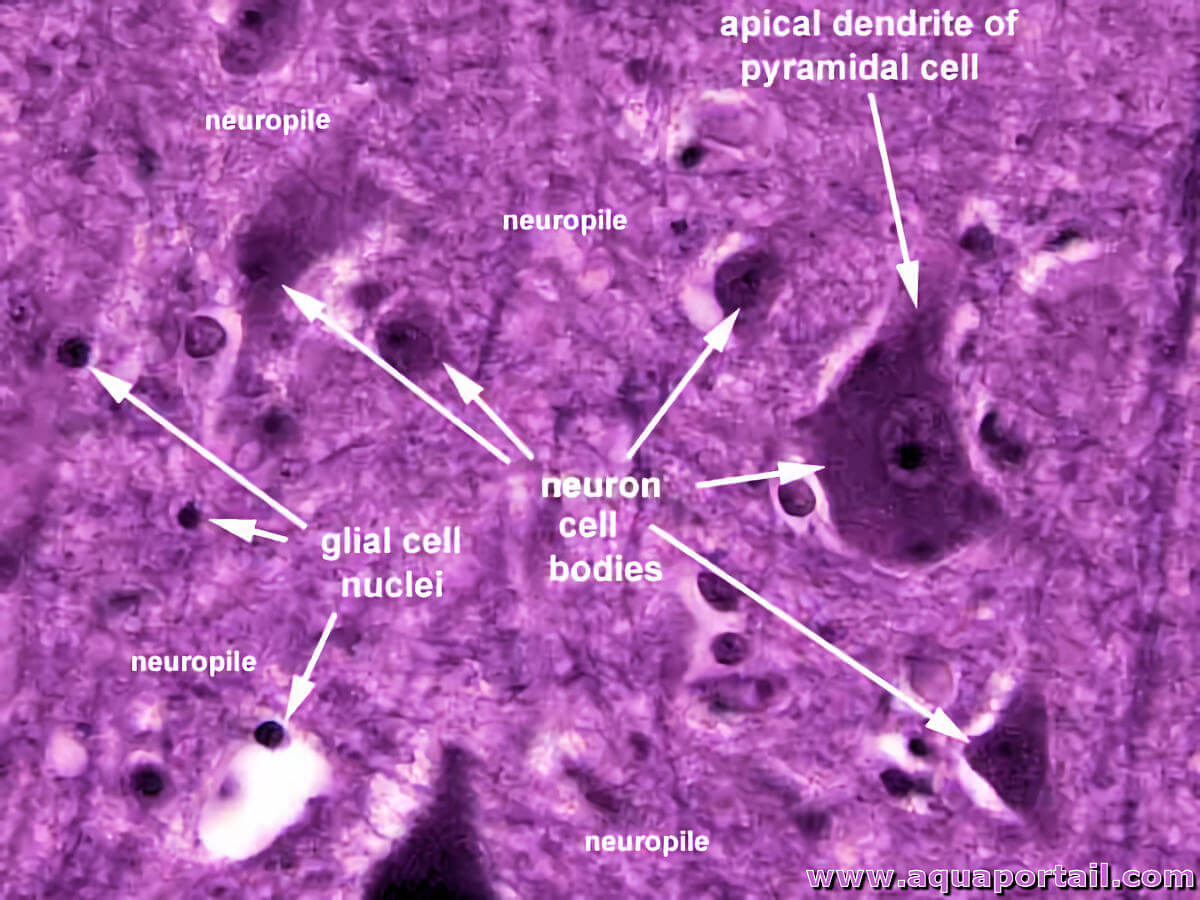
Neuropil is a dense network of intertwined nerve fibers and their branches and synapses, as well as glial filaments.
neurotoxin

A neurotoxin is a toxin that acts specifically on nervous system tissue, even at low doses. The active substance is toxic or destructive, with adverse effects...
gametogenesis

Gametogenesis is the process by which cells undergo meiosis to form haploid gametes. It takes place in the gonads (female ovaries or male testes).
kinesis

Kinesis is an unoriented movement (to be distinguished from taxis or tropism), sometimes accompanied by a change in locomotor activity.
